Introduction To Transforming Experiences Through AI
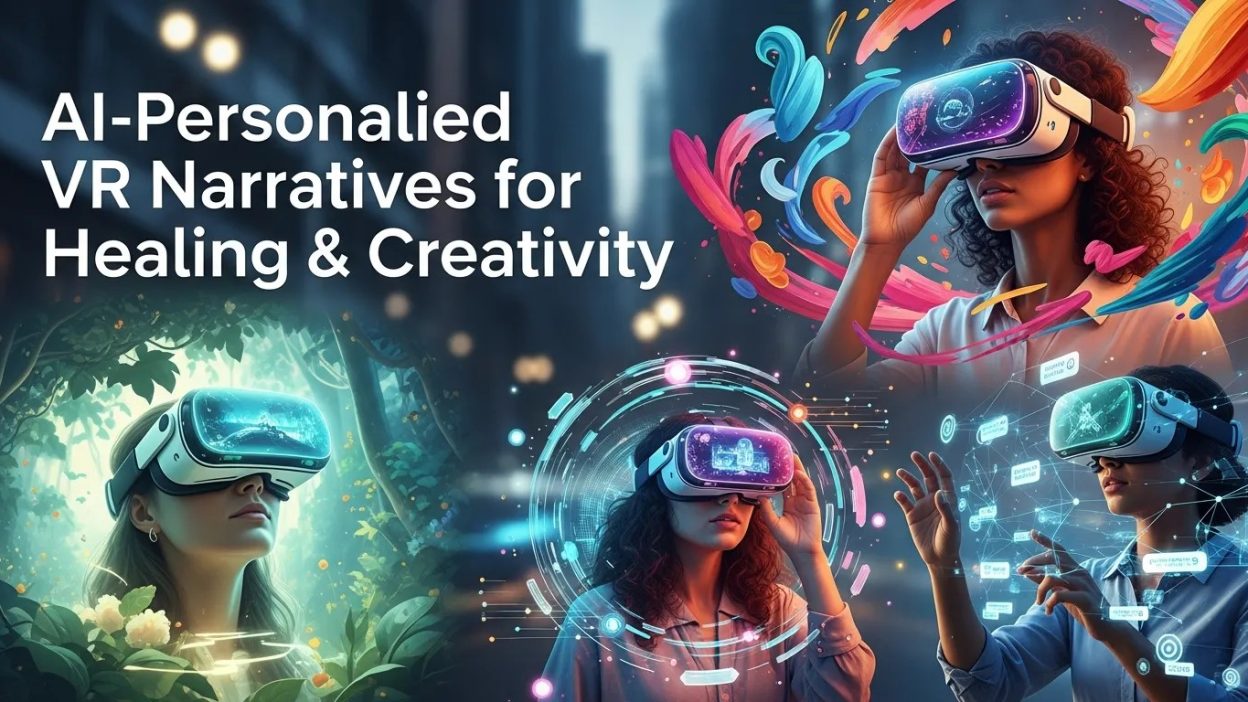
The way we experience stories, therapy, and creativity is evolving rapidly. AI Personalized VR Narratives represent the next frontier in immersive digital experiences. Unlike traditional virtual reality, which offers static environments or pre-set storylines, AI-powered narratives adapt dynamically to the user’s emotions, choices, and actions. The result is a deeply personal journey that can foster healing, inspire creativity, and encourage self-exploration.
In today’s fast-paced world, stress, anxiety, and creative blocks are common challenges. Digital tools that merely entertain no longer suffice. AI Personalized VR Narratives go beyond entertainment, combining technology and psychology to provide experiences that are emotionally and mentally enriching. Users step into virtual worlds that feel alive, responsive, and uniquely tailored to their needs.
One fascinating example of how immersive VR affects the human mind is Phantom Touch VR. This technology demonstrates that the brain can perceive touch or presence in virtual spaces even when there’s no physical interaction. AI Personalized VR Narratives leverage similar principles, stimulating the senses and creating environments where users feel fully present and emotionally engaged.
What Are AI-Personalized VR Narratives?
At its core, an AI-Personalized VR Narrative is an adaptive virtual experience shaped by artificial intelligence. Unlike traditional storytelling, the narrative evolves in real time based on the user’s behavior, emotional cues, and interaction patterns.
Key technologies powering these narratives include:
- Artificial Intelligence Engines: Interpret user data and adapt storylines.
- Natural Language Processing: Allows interactive conversations within the virtual world.
- Emotional Recognition Systems: Detects stress, excitement, or curiosity to adjust the experience.
- Real-Time Rendering: Generates responsive, high-quality visuals instantaneously.
Imagine a user exploring a virtual forest. If they exhibit curiosity, the AI may introduce hidden pathways or creative challenges. If stress is detected, the environment may shift toward tranquil scenery, soothing music, or guided meditation sequences. These experiences are designed to be fluid, immersive, and highly personalized, creating a sense of presence and emotional connection that traditional media cannot replicate.
The Science Behind Immersive Healing
The effectiveness of AI Personalized VR Narratives lies in human psychology. Immersive environments stimulate multiple senses simultaneously, amplifying emotional responses and enhancing cognitive engagement.
When an experience is tailored to the individual, the brain reacts more strongly, memories become more vivid, and creative thinking flourishes. Therapeutically, AI Personalized VR Narratives can simulate controlled exposure to challenging situations, allowing users to confront fears or process emotions safely.
Research in Augmented Reality in Research shows that combining digital environments with personalized stimuli improves learning, emotional resilience, and mental well-being. By incorporating AI, these narratives adapt moment-to-moment, providing the precise level of challenge, stimulation, or calm that a user needs.
Furthermore, AI Personalized VR Narratives provide a safe and private space for exploration. Users can experiment with creative ideas, rehearse social interactions, or simply relax without judgment. This combination of personalization and immersion makes the technology both innovative and impactful.
Integrating AR and VR for Deeper Engagement
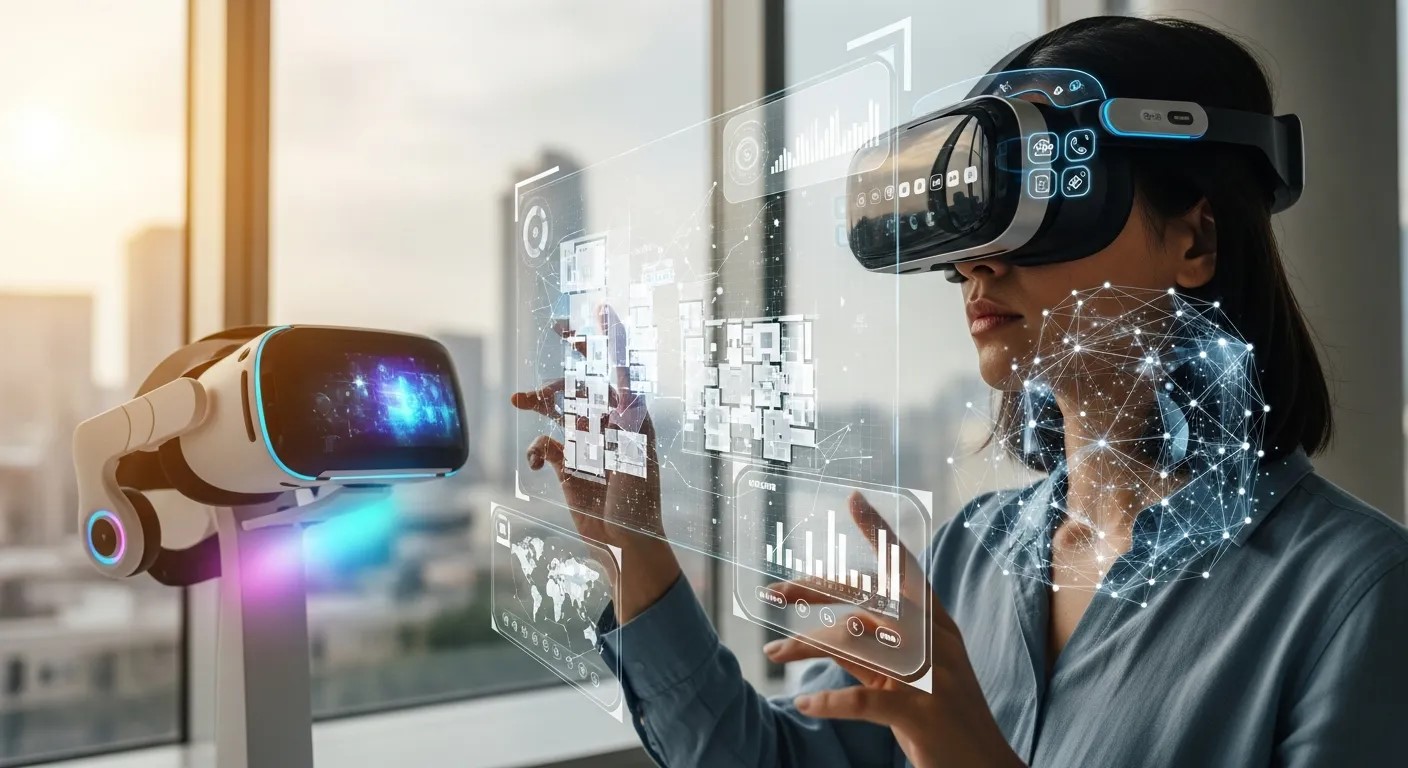
While VR offers full immersion, blending it with augmented reality creates hybrid experiences that expand the narrative’s reach. Developers often use Software Used for Augmented Reality to layer interactive digital elements onto real-world environments. This integration allows AI Personalized VR Narratives to extend beyond headsets, enabling users to continue their journey in more flexible settings.
Exploring Augmented Reality Use Cases, these hybrid approaches can support therapy, education, and creative workshops. For example, a virtual meditation session may begin in VR, but elements like floating visuals or interactive prompts can appear in a user’s real-world surroundings through AR, reinforcing the experience.
By combining AI, VR, and AR, these narratives push the boundaries of what storytelling, therapy, and creativity can achieve. The result is a seamless, multi-dimensional experience that is responsive, personalized, and deeply engaging.
Why AI-Personalized VR Narratives Matter
- Healing and Mental Wellness: Tailored environments help reduce anxiety, process emotions, and encourage mindfulness.
- Creative Exploration: Users can manipulate worlds, test ideas, and collaborate in ways impossible in traditional media.
- Learning and Engagement: Adaptive storytelling increases attention, retention, and comprehension.
- Personalization at Scale: AI ensures that each experience is unique, enhancing relevance and emotional impact.
By harnessing insights from psychology, neuroscience, and AI, these narratives create an unprecedented connection between technology and the human mind.
Therapeutic Applications of AI-Personalized VR Narratives
One of the most compelling uses of AI Personalized VR Narratives is in mental health and therapy. Unlike traditional approaches, these narratives immerse users in environments that respond dynamically to their emotional state. This makes therapy more interactive, engaging, and effective.
Exposure Therapy: AI Personalized VR Narratives can simulate anxiety-inducing situations in a safe, controlled way. For example, a person with social anxiety may practice public speaking or social interactions in a virtual space, with the AI adjusting difficulty and intensity based on real-time feedback.
Stress Reduction: Virtual environments crafted with calming visuals, gentle soundscapes, and guided narratives can significantly reduce stress. Users navigate AI Personalized VR Narratives at their own pace, experiencing environments that intuitively adapt to soothe their mind.
Trauma Processing: For individuals dealing with trauma, AI-Personalized VR Narratives offer a controlled environment to gradually revisit memories. The AI ensures the pacing is appropriate, preventing emotional overload while still promoting healing. Research on Phantom Touch VR demonstrates that immersive sensory experiences can deeply influence emotional processing, which is why combining VR with AI creates powerful therapeutic potential.
Creative Exploration Through AI-Personalized VR Narratives
AI-Personalized VR Narratives are not limited to therapy—they are a playground for creativity. Artists, writers, and designers can immerse themselves in responsive virtual worlds, experimenting with ideas that were once impossible to visualize.
Creators can step inside their own concepts, seeing their stories, artworks, or designs unfold dynamically. For instance:
- A writer exploring a dystopian cityscape can watch the AI adapt the environment based on narrative choices.
- A visual artist can paint or sculpt in 3D, with AI-Personalized VR Narratives responding to gestures or emotional cues.
- Teams of creators can collaborate virtually, each experiencing a personalized version of the same world, fostering shared creativity in unique ways.
Integrating Software Used for Augmented Reality further amplifies this creativity. AR elements allow creators to interact with virtual objects while remaining grounded in the real world, enhancing imagination and practical experimentation. Augmented Reality Use Cases include design prototyping, collaborative storytelling, and immersive workshops.
AI-Personalized VR Narratives in Education and Learning
AI-Personalized VR Narratives are also transforming education. Traditional teaching methods often fail to engage all learners equally. By tailoring virtual experiences to individual learning styles, AI-Personalized VR Narratives make education more interactive and effective.
For example, students studying history can explore reconstructed historical sites in VR. The AI adapts lessons based on student engagement and curiosity, highlighting areas of interest or providing additional context as needed. Similarly, science learners can perform virtual experiments that adjust complexity in real time.
Research into Augmented Reality in Research has shown that immersive, interactive learning improves retention and understanding. By combining AR with AI-Personalized VR Narratives, educators can deliver content that adapts to each student’s pace, creating a deeply personalized educational experience.
Business and Marketing Potential
Beyond personal growth and education, AI-Personalized VR Narratives have immense potential in business and marketing. Companies are exploring these narratives to create immersive brand experiences that resonate personally with users.
For example, AI-driven experiences can complement Paid Search Marketing strategies by providing engaging, interactive follow-ups for high-intent leads. Instead of static ads, users can explore virtual brand environments tailored to their preferences, increasing engagement and conversions.
Brands can also incorporate AI-Personalized VR Narratives into Social Media Strategies. Imagine personalized virtual stories that users can experience and share online, creating organic buzz and strengthening brand identity. By combining social sharing, interactive content, and adaptive AI storytelling, businesses can create campaigns that feel personal, memorable, and shareable.
The Power of Data in AI-Personalized VR Narratives

All these applications are powered by data-driven personalization. AI-Personalized VR Narratives continuously gather feedback from user interactions to refine the experience. Biometric sensors, voice analysis, and behavioral tracking help the AI understand the user’s emotional state and adapt in real time.
This approach ensures every interaction is meaningful, whether for therapy, creativity, learning, or marketing. The combination of adaptive AI and immersive environments allows users to feel genuinely seen and understood something traditional media or even conventional VR cannot achieve.
Technical Architecture of AI-Personalized VR Narratives
Behind every seamless experience, AI-Personalized VR Narratives rely on a sophisticated technical framework. These systems combine AI, VR engines, emotional recognition, and real-time analytics to create fully adaptive environments.
Core Components Include:
- AI Engines: Analyze user input, emotional cues, and behavioral patterns to generate adaptive storylines.
- VR Platforms: Deliver immersive 3D environments, realistic textures, and interactive spaces.
- Emotion Recognition: Sensors detect stress, excitement, or curiosity, allowing the narrative to respond dynamically.
- Data Analytics Modules: Track interactions and provide feedback for continual improvement.
- Real-Time Rendering Systems: Ensure environments change fluidly without lag, creating a sense of presence and immersion.
This infrastructure allows AI-Personalized VR Narratives to adjust in real time. For instance, if a user’s heart rate indicates stress, calming visuals and soundscapes can be introduced instantly. If curiosity or excitement is detected, challenges and creative tasks can emerge naturally.
Future Trends in AI-Personalized VR Narratives
The future of AI-Personalized VR Narratives promises even more immersive and intelligent experiences. Here are the key trends shaping the next generation:
- Brain-Computer Interfaces (BCIs): Direct neural input could allow AI to interpret thoughts and emotions instantly, enabling the most personal narratives ever created.
- Hyper-Realistic Avatars: AI-generated avatars will replicate subtle expressions, gestures, and tone, enhancing social and therapeutic interactions.
- Cross-Reality Experiences: Seamless integration of VR and AR will allow users to transition between fully immersive worlds and augmented overlays in the real world.
- Advanced Emotional Analytics: AI will become even better at predicting user needs, tailoring experiences for therapeutic, creative, or educational goals.
- Collaborative Virtual Spaces: Multi-user environments where each participant experiences a personalized narrative within shared worlds.
These trends highlight how AI-Personalized VR Narratives will evolve into multi-dimensional platforms that merge human psychology, creativity, and technology like never before.
Challenges Facing AI-Personalized VR Narratives
Despite their potential, AI-Personalized VR Narratives face significant hurdles:
- High Development Costs: Building adaptive VR systems requires advanced AI, specialized software, and high-quality graphics.
- Hardware Limitations: Not all users have access to high-end VR devices, limiting accessibility.
- Data Privacy and Ethics: Personalized experiences rely on sensitive emotional and behavioral data, requiring strict ethical standards.
- Emotional Overload Risks: Too intense or poorly adapted narratives can cause stress or discomfort if AI adaptation fails.
- Integration Complexity: Combining VR, AR, and AI seamlessly remains a technical challenge for developers.
Addressing these challenges is essential for broader adoption and ensures that experiences remain safe, meaningful, and effective.
Human Connection in AI-Personalized VR Narratives
At the heart of AI-Personalized VR Narratives is the human experience. Despite advanced AI, these narratives succeed because they prioritize empathy, creativity, and emotional engagement.
Users feel “seen” in ways that traditional media cannot provide. Whether through therapeutic interactions, creative collaboration, or immersive learning, AI-Personalized VR Narratives adapt to the unique needs, moods, and goals of each individual.
Moreover, these experiences foster a deeper connection between humans and technology. By understanding behavior and emotion, AI-Personalized VR Narratives create interactions that are not only effective but profoundly meaningful.
Measuring Impact and Success
The effectiveness of AI-Personalized VR Narratives can be assessed using several metrics:
- Emotional Engagement: How deeply users connect with the narrative.
- Time Spent in Experience: Longer engagement indicates relevance and immersion.
- Behavioral Outcomes: Stress reduction, creativity enhancement, or learning improvements.
- User Feedback: Subjective reports of satisfaction, enjoyment, and personal growth.
These measures help developers fine-tune experiences, ensuring AI-Personalized VR Narratives continue to evolve toward more meaningful and effective outcomes.
Industry Applications of AI-Personalized VR Narratives
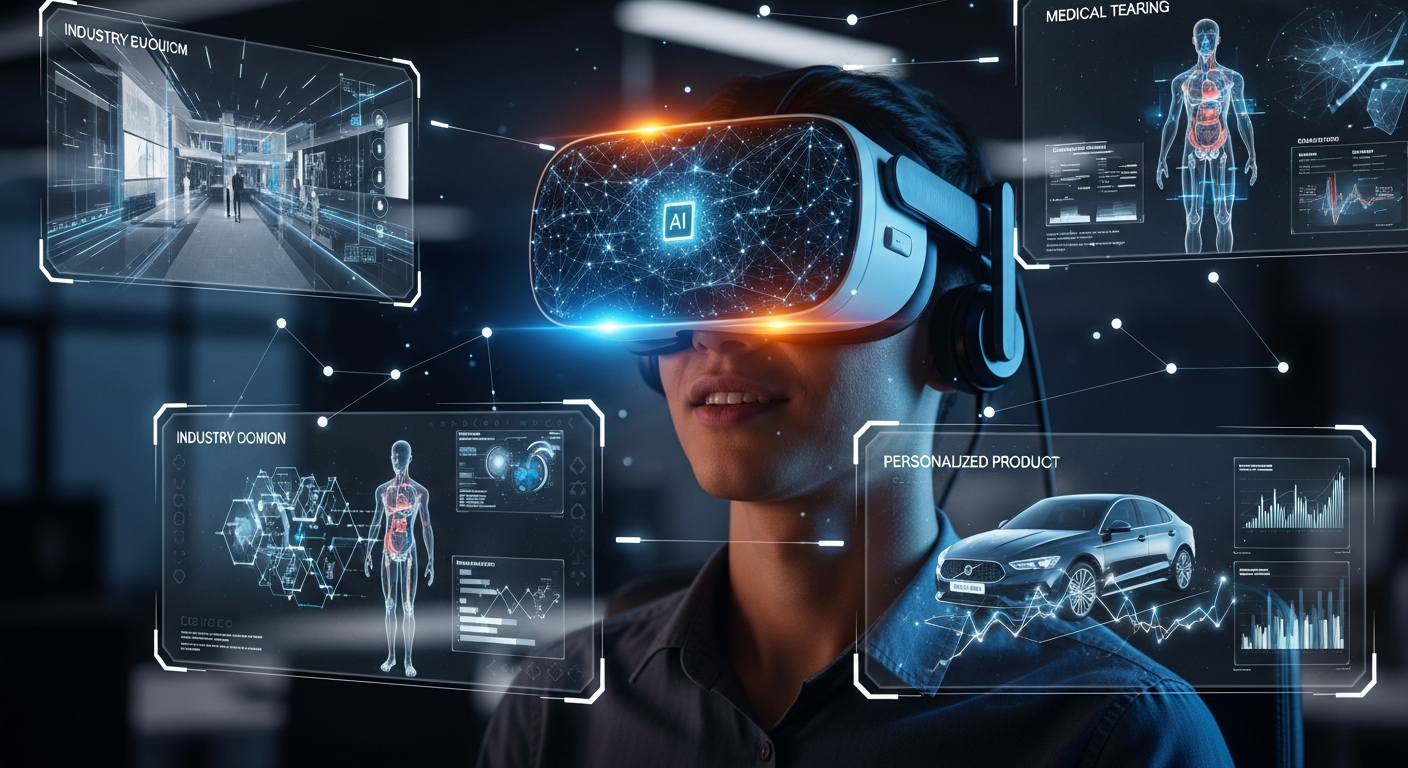
AI-Personalized VR Narratives are no longer limited to therapy or personal creativity—they are making a significant impact across industries. Businesses, educators, healthcare providers, and marketers are discovering the transformative potential of immersive, adaptive experiences.
Healthcare and Rehabilitation
In healthcare, AI-Personalized VR Narratives are used for both mental and physical rehabilitation. Patients recovering from injuries or managing chronic conditions can engage in immersive exercises designed to be motivating and safe. Virtual scenarios can adapt to a patient’s energy levels and emotional state, encouraging consistency and promoting faster recovery.
Therapists use AI-Personalized VR Narratives for anxiety reduction, PTSD therapy, and stress management. Controlled, adaptive environments allow patients to face challenges gradually, making therapy safer and more effective.
Education and Training
Education benefits enormously from personalized virtual experiences. AI-Personalized VR Narratives create tailored learning environments where students explore complex subjects interactively. Science simulations, historical reconstructions, and creative workshops all benefit from adaptive storytelling.
For example, students can interact with historical events in VR, with AI adjusting the depth of detail based on the learner’s engagement and prior knowledge. Similarly, professional training programs can simulate high-pressure scenarios safely, adjusting difficulty in real time to maximize learning outcomes.
Marketing and Customer Engagement
Companies are leveraging AI-Personalized VR Narratives to redefine marketing and customer engagement. Personalized virtual experiences align perfectly with modern Paid Search Marketing, where high-intent users are presented with immersive content that resonates personally.
Brands can also integrate these experiences into Social Media Strategies, offering interactive storytelling that users can share organically. Imagine a personalized virtual product tour or an immersive brand story each user experiences it slightly differently, creating a sense of uniqueness that builds loyalty and engagement.
Even hybrid experiences, where virtual elements blend with real-world AR, amplify the impact. Using Software Used for Augmented Reality, brands can extend AI-Personalized VR Narratives beyond headsets, offering compelling touchpoints that reinforce customer connection.
Key Benefits of AI-Personalized VR Narratives
-
Enhanced Emotional Engagement: By tailoring experiences to individual emotions and actions, users feel truly involved.
-
Creative Exploration: Virtual environments encourage experimentation and imagination, enabling users to explore ideas in ways not possible in the physical world.
-
Personalized Learning: Adaptive narratives ensure content matches the learner’s style, improving retention and comprehension.
-
Therapeutic Value: Controlled, immersive environments support mental health interventions, relaxation, and trauma processing.
-
Business Growth: Personalized experiences drive engagement, increase brand loyalty, and complement modern digital marketing strategies.
Long-Term Outlook
The future of AI-Personalized VR Narratives is promising and multi-dimensional. As AI, VR, and AR technologies continue to evolve:
-
Cross-Platform Experiences: Users will seamlessly transition between VR, AR, and real-world environments.
-
Higher Personalization: AI algorithms will predict user needs with greater precision, making experiences more effective and emotionally resonant.
-
Wider Accessibility: Lower-cost hardware and cloud-based VR platforms will make immersive narratives accessible to a broader audience.
-
Collaborative Virtual Worlds: Multi-user experiences will allow shared creativity and social engagement, while each participant still experiences a personalized narrative.
-
Integration with Health, Education, and Entertainment: AI-Personalized VR will become a standard tool across sectors, combining therapeutic, educational, and recreational benefits.
By embracing these innovations, industries can not only engage users more effectively but also improve outcomes in learning, creativity, therapy, and marketing.
Measuring Impact Across Industries

To evaluate the success of AI-Personalized VR, organizations track:
-
User Engagement Metrics: Time spent, interaction depth, and repeat usage.
-
Emotional Response Tracking: Heart rate, facial expressions, and behavioral cues.
-
Outcome-Based Metrics: Learning performance, therapy progress, or marketing ROI.
-
Feedback and Satisfaction Surveys: Subjective experiences provide insights for continuous improvement.
Through careful measurement, AI-Personalized VR can evolve, maintaining relevance and maximizing their transformative potential.
Conclusion
AI-Personalized VR are redefining how we experience stories, creativity, therapy, and learning. By combining adaptive artificial intelligence with immersive virtual reality, these narratives create experiences tailored to individual emotions, choices, and interactions. Users can explore safe, therapeutic environments, enhance creative expression, and engage with educational content in ways that feel natural and deeply personal.
Beyond personal growth, these narratives offer significant potential for industries, from healthcare and education to marketing and brand engagement. By integrating VR with augmented reality and using data-driven AI, experiences become more interactive, engaging, and impactful. As technology continues to evolve, AI-Personalized VR are poised to shape the future of immersive digital experiences, delivering meaningful, memorable, and transformative interactions for individuals and organizations alike.
Frequently Asked Questions (FAQ)
What are AI-Personalized VR Narratives?
AI-Personalized VR Narratives are immersive virtual experiences powered by artificial intelligence that adapt in real time to a user’s emotions, choices, and interactions, creating personalized storytelling, therapeutic, and creative experiences.
How can AI-Personalized VR Narratives help with therapy?
These narratives provide safe, controlled environments for stress reduction, trauma processing, and exposure therapy. They adjust dynamically to the user’s emotional state, making mental health interventions more engaging and effective.
Can AI-Personalized VR Narratives enhance creativity?
Yes! They allow artists, writers, and designers to explore ideas in immersive virtual spaces. The AI adapts the environment to user input, enabling experimentation, collaboration, and innovative creative exploration.
How are these narratives used in education?
AI-Personalized VR Narratives create adaptive learning environments. Lessons, simulations, and interactive content adjust to individual learning styles, improving engagement, comprehension, and retention.
What industries benefit from AI-Personalized VR Narratives?
Healthcare, education, marketing, and entertainment are primary industries. Businesses can integrate them into Paid Search Marketing and Social Media Strategies, while educators and therapists can use them for immersive learning and therapy sessions.
Do AI-Personalized VR Narratives use AR technology?
Yes. Many experiences integrate Software Used for Augmented Reality to combine VR immersion with AR elements, creating hybrid experiences that enhance interactivity and engagement.
What does the future hold for AI-Personalized VR Narratives?
The future includes seamless VR-AR integration, hyper-personalized experiences, collaborative virtual worlds, and applications across therapy, education, creativity, and business, making these narratives increasingly accessible and impactful.