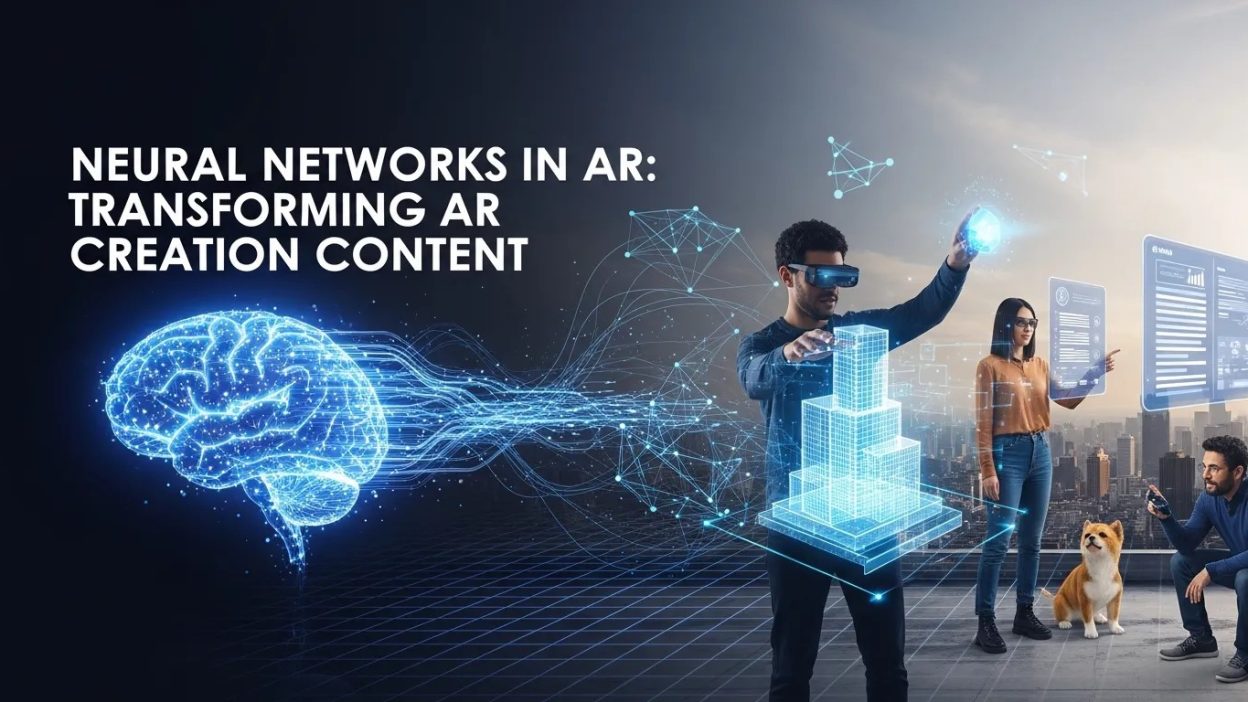
Neural Networks in AR transform augmented reality content creation through intelligent automation, personalization, and real-time interaction. They enhance creative workflows, improve performance, and enable adaptive storytelling. This technology empowers creators to build immersive, scalable experiences while shaping the future of human-centered digital design.
Neural Networks in AR: Transforming AR Creation Content
Augmented reality has rapidly evolved from a niche experimental technology into a mainstream creative platform. At the center of this transformation are Neural Networks in AR, which empower developers and creators to build immersive, intelligent, and adaptive experiences. These systems combine artificial intelligence with spatial computing to automate complex creative tasks, improve realism, and enhance user interaction.
Neural Networks in AR function as the cognitive layer of modern augmented reality systems. Instead of relying solely on manual programming, AR platforms now leverage machine learning to interpret environments, predict user behavior, and optimize visual output. This shift enables creators to produce high-quality AR content faster while maintaining flexibility and scalability.
From a psychological perspective, intelligent AR experiences resonate more deeply with users. When digital environments respond dynamically to human behavior, they create a stronger sense of presence and engagement. This emotional connection is one of the key reasons Neural Networks in AR are becoming essential in content creation.
The Foundations of Neural Intelligence in AR
To understand the impact of Neural Networks in AR, it is important to explore the foundational technologies that support them. Deep learning models process massive volumes of visual and spatial data, allowing AR systems to understand real-world contexts with remarkable accuracy.
One of the most important pillars is Computer Vision in AR. Through advanced image recognition and spatial mapping, AR systems can identify surfaces, objects, and movement. This capability allows digital elements to blend seamlessly with the physical environment, making experiences feel natural and convincing.
Neural Networks in AR also rely on sensor fusion, combining camera input with motion and depth data. This integration improves tracking precision and stability. As a result, creators can design experiences that maintain consistency even in complex or changing environments.
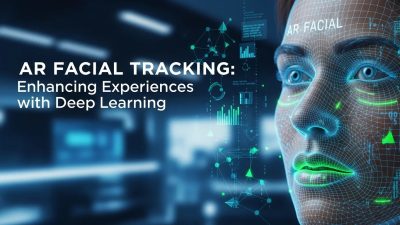
Another foundational aspect is AR Facial Tracking. By analyzing facial expressions and micro-movements, AR systems can create expressive avatars and interactive characters. This technology enhances communication and storytelling, particularly in social and collaborative applications.
Intelligent Automation in Creative Workflows
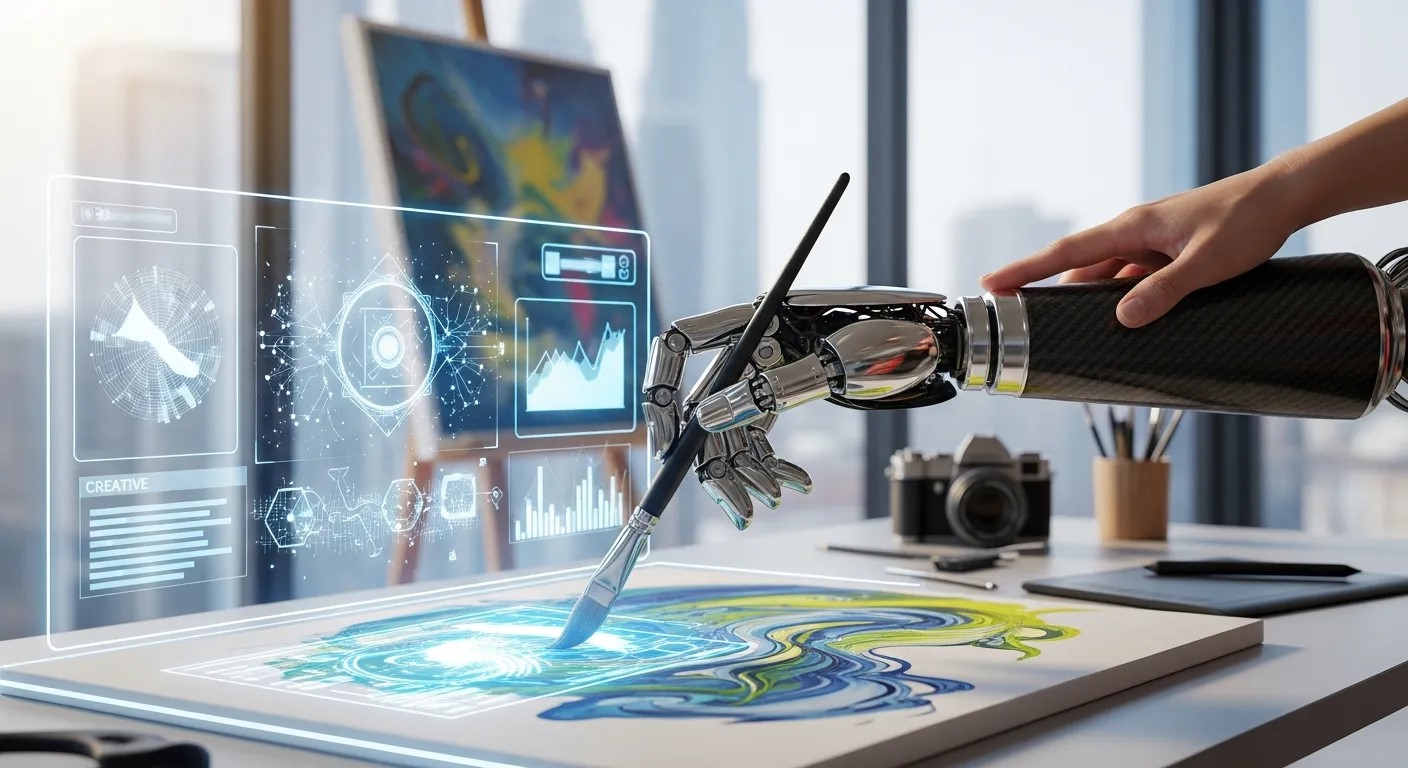
Content creation in augmented reality traditionally required extensive manual effort. Neural Networks in AR streamline this process by automating repetitive and technically demanding tasks.
AI-powered tools can generate textures, lighting effects, and 3D assets with minimal human intervention. These capabilities accelerate production timelines and allow creators to focus on conceptual design and narrative development. Automated scene reconstruction further simplifies environment creation by converting real-world spaces into digital models.
Edge Computing in AR plays a crucial role in supporting these workflows. By processing data closer to the user, edge systems reduce latency and enable real-time interaction. This infrastructure ensures that even complex neural computations occur smoothly without disrupting the immersive experience.
Neural Networks in AR also enable predictive editing. By analyzing user engagement and performance metrics, AI systems suggest optimizations that improve usability and immersion. This data-driven approach blends artistic creativity with analytical precision.
Human-Centered Design and Interaction
A defining strength of Neural Networks in AR is their ability to enhance human-centered design. Intelligent systems adapt to user preferences and behaviors, creating personalized experiences that feel intuitive and meaningful.
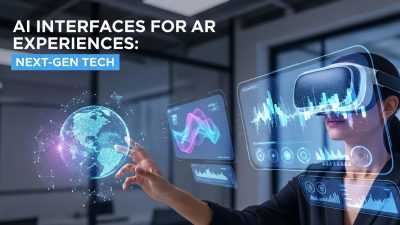
AI Interfaces for AR Experiences interpret gestures, voice commands, and gaze patterns. These interfaces mirror natural human communication, reducing friction and making interaction more accessible. When users feel understood by the system, engagement increases significantly.
Neural Networks in AR also support emotional responsiveness. By recognizing patterns in user interaction, systems can adjust pacing, visuals, or feedback to maintain interest and comfort. This adaptability reflects a deep understanding of human psychology and attention.
In commercial environments, immersive platforms increasingly integrate AI Conversational Commerce strategies. Virtual assistants embedded in AR experiences guide users through product exploration and decision-making processes. This fusion of conversation and visualization creates engaging and informative customer journeys.
Insights derived from Chatbots in B2B Marketing further influence AR design strategies. Data about customer behavior and communication preferences informs the development of targeted immersive solutions. These insights help businesses align AR experiences with strategic objectives.
Performance Optimization and Scalability
Performance is a critical factor in delivering successful augmented reality experiences. Neural Networks in AR address this challenge through intelligent optimization techniques.
Machine learning models predict user movement and pre-load visual elements to reduce rendering delays. Dynamic resource allocation ensures that processing power is distributed efficiently. This approach maintains smooth performance even on devices with limited hardware capabilities.
Scalability is another important advantage. Neural Networks in AR enable creators to deploy experiences across multiple platforms without extensive reconfiguration. Adaptive algorithms automatically adjust graphical complexity to match device performance.
These optimizations contribute to a consistent user experience. Whether accessed through smartphones, tablets, or specialized headsets, AR applications maintain visual quality and responsiveness.
Data-Driven Creativity and Adaptive Storytelling
Neural Networks in AR introduce new possibilities for storytelling and interactive design. Instead of static narratives, creators can develop adaptive experiences that evolve based on user interaction.
AI systems analyze engagement patterns and adjust narrative elements accordingly. This dynamic storytelling approach transforms audiences into active participants. Each interaction becomes unique, shaped by individual choices and behaviors.
Data analytics provide valuable insights into audience preferences. Creators use this information to refine content and enhance emotional impact. By combining artistic vision with empirical feedback, Neural Networks in AR support a new form of hybrid creativity.
Collaborative tools further expand creative potential. Cloud-based platforms allow distributed teams to work simultaneously on shared projects. Intelligent synchronization ensures consistency while accommodating diverse hardware environments.
Ethical Considerations and Responsible Development
As augmented reality becomes more sophisticated, ethical considerations gain increasing importance. Neural Networks in AR process sensitive environmental and behavioral data, raising questions about privacy and security.
Responsible development requires transparent data practices and informed user consent. Developers must design systems that prioritize trust and protect personal information. Ethical frameworks guide decision-making and promote sustainable innovation.
Bias in machine learning models is another critical concern. Training datasets influence how systems interpret the world. Inclusive data collection and continuous evaluation help mitigate disparities and ensure fair representation.
Neural Networks in AR should also support accessibility. Adaptive interfaces can accommodate diverse physical and cognitive needs, making immersive experiences available to a broader audience.
Industry Applications and Economic Transformation

The influence of Neural Networks in AR extends across numerous industries. In education, immersive simulations enhance learning by visualizing complex concepts. Students interact with three-dimensional models that deepen understanding and retention.
Healthcare professionals use AR systems for training and procedural guidance. Intelligent overlays provide real-time information during operations, improving accuracy and safety. Manufacturing industries benefit from remote collaboration tools that streamline maintenance and design processes.
These applications contribute to significant economic growth. Businesses leverage immersive analytics to optimize workflows and customer engagement. As adoption expands, new professional roles emerge at the intersection of creativity and artificial intelligence.
Neural Networks in AR also foster innovation ecosystems. Startups and research institutions collaborate to develop cutting-edge solutions. Investment in immersive technology accelerates progress and creates competitive advantages.
The Future Landscape of Intelligent Augmented Reality
Looking ahead, Neural Networks in AR will continue to evolve alongside advances in hardware and software. More efficient algorithms will enable increasingly complex computations on lightweight devices.
Wearable technology is expected to become more integrated into daily life. As hardware improves, AR experiences will blend seamlessly with routine activities. Intelligent systems may anticipate user needs and provide contextual assistance without explicit input.
Research in artificial intelligence will drive further breakthroughs. Enhanced reasoning capabilities and improved learning efficiency will expand the creative possibilities of augmented reality. Neural Networks in AR will support environments that adapt continuously to human behavior.
The boundary between physical and digital spaces will gradually dissolve. Future AR platforms will function as extensions of human perception, enriching communication, education, and entertainment. Creators will design experiences that integrate naturally into everyday environments.
As these technologies mature, collaboration between designers, engineers, and ethicists will shape responsible innovation. Neural Networks in AR represent not only a technical advancement but also a cultural shift in how people interact with digital information.
Advanced Development Frameworks and Toolchains
As the ecosystem matures, the tools used to build immersive experiences are becoming more sophisticated. Neural Networks in AR are deeply integrated into modern development frameworks that simplify complex engineering challenges. These frameworks provide pre-trained models, real-time simulation tools, and modular pipelines that accelerate experimentation.
Developers now rely on AI-assisted authoring environments that automate debugging and optimization. Intelligent compilers analyze performance bottlenecks and suggest architectural improvements. This reduces development friction and allows teams to focus on creative problem-solving.
Cross-platform toolchains further expand accessibility. Unified development environments enable creators to design once and deploy across multiple devices. Neural Networks in AR adapt automatically to different hardware constraints, preserving consistency and quality.
Open-source communities also contribute to rapid innovation. Shared libraries and collaborative research accelerate the evolution of immersive technologies. This collective knowledge base empowers independent creators to compete with larger organizations.
Spatial Understanding and Environmental Mapping
A critical capability of modern immersive systems is accurate spatial awareness. Neural Networks in AR interpret physical environments with increasing precision, enabling realistic integration of digital objects.
Advanced mapping algorithms construct detailed three-dimensional representations of surroundings. These models update continuously as users move, ensuring stable alignment between virtual and real elements. Accurate spatial understanding is essential for maintaining immersion.
Environmental context also influences interaction design. Intelligent systems recognize lighting conditions, surface textures, and object relationships. This awareness allows digital content to respond naturally to physical constraints.
Neural Networks in AR enhance occlusion handling, depth perception, and collision detection. Virtual objects behave according to real-world physics, strengthening the illusion of coexistence. These improvements elevate the credibility of immersive storytelling.
Machine Learning Models for Real-Time Interaction
Real-time responsiveness is fundamental to compelling AR experiences. Neural Networks in AR employ specialized machine learning architectures optimized for speed and efficiency.
Convolutional neural networks process visual input rapidly, identifying patterns and features within milliseconds. Recurrent models track motion and predict future states, reducing perceptible latency. Together, these systems create fluid interaction loops.
Model compression techniques make advanced AI accessible on portable devices. Pruning and quantization reduce computational overhead without sacrificing accuracy. This balance ensures that high-performance interaction remains feasible on consumer hardware.
Continuous learning mechanisms further enhance adaptability. Systems refine their behavior through ongoing exposure to user interactions. Over time, Neural Networks in AR become more attuned to individual preferences and usage patterns.
Integration with Cloud and Distributed Systems

While local processing is essential for responsiveness, cloud infrastructure provides additional computational power. Neural Networks in AR leverage hybrid architectures that balance edge and cloud resources.
Cloud platforms handle large-scale data analysis and model training. Insights derived from aggregated datasets inform improvements across entire user populations. Distributed systems synchronize updates seamlessly.
This architecture supports collaborative experiences in shared virtual spaces. Multiple users interact within synchronized environments, enabling teamwork and social engagement. Real-time data exchange maintains consistency across devices.
Security protocols protect information during transmission and storage. Encryption and access controls safeguard user privacy. Responsible data management remains a priority in distributed AR ecosystems.
Design Principles for Immersive User Experience
Creating meaningful AR content requires thoughtful design principles. Neural Networks in AR support designers by providing analytical feedback on user behavior.
Attention modeling identifies focal points within visual scenes. Designers use this information to guide narrative flow and emphasize critical elements. Effective composition enhances clarity and engagement.
Cognitive load management is another important consideration. Intelligent systems adjust complexity dynamically to prevent user fatigue. Balanced pacing maintains interest without overwhelming perception.
Neural Networks in AR also facilitate inclusive design. Adaptive interfaces accommodate varying physical abilities and sensory preferences. Accessibility features broaden participation and enrich diversity within immersive communities.
Education and Skill Development for Creators
As immersive technologies expand, education becomes essential for sustainable growth. Neural Networks in AR influence how creators learn and refine their skills.
Interactive training environments simulate real-world development scenarios. Learners experiment with complex systems in safe, controlled settings. Immediate feedback accelerates comprehension.
Educational institutions increasingly incorporate AR into curricula. Students explore abstract concepts through experiential learning. This approach strengthens problem-solving and creativity.
Professional development programs support continuous skill evolution. Workshops and online platforms connect creators with emerging research and industry practices. Knowledge sharing fosters innovation and collaboration.
Economic Ecosystems and Market Expansion
The commercial landscape surrounding immersive technology continues to evolve. Neural Networks in AR drive new business models and revenue streams.
Content marketplaces enable creators to distribute digital assets globally. Subscription services provide access to specialized tools and resources. These ecosystems encourage entrepreneurship.
Investment in immersive startups accelerates technological advancement. Venture capital supports experimentation and rapid scaling. Competitive markets stimulate innovation and diversification.
Neural Networks in AR also influence employment trends. Demand grows for professionals skilled in AI, design, and interactive media. Interdisciplinary expertise becomes increasingly valuable.
Sustainability and Environmental Impact
Technological progress must align with environmental responsibility. Neural Networks in AR contribute to sustainability through efficient resource utilization.
Virtual prototyping reduces the need for physical materials. Designers test concepts digitally before manufacturing. This practice minimizes waste and conserves energy.
Remote collaboration tools decrease travel requirements. Teams work together across distances without environmental cost. Reduced carbon footprints support global sustainability goals.
Energy-efficient hardware and algorithms further enhance ecological performance. Optimized systems consume less power while delivering advanced functionality. Responsible innovation balances progress with stewardship.
Emerging Research and Experimental Directions

Research laboratories continue exploring new frontiers in immersive computing. Neural Networks in AR serve as a foundation for experimental breakthroughs.
Scientists investigate brain-computer interfaces that connect neural signals directly to digital environments. These explorations aim to deepen human-machine integration.
Quantum computing research may eventually transform data processing capabilities. Although still theoretical for AR applications, such advances could redefine computational limits.
Neural Networks in AR also intersect with fields such as neuroscience and cognitive science. Collaborative research expands understanding of perception and interaction. Insights from these disciplines inform more intuitive design.
Cultural Influence and Social Transformation
Immersive media reshapes cultural expression and communication. Neural Networks in AR enable new artistic forms that blend physical and digital creativity.
Artists experiment with interactive installations that respond to audience behavior. These works challenge traditional boundaries between creator and observer. Participation becomes part of the artistic narrative.
Social platforms incorporate AR features that enrich digital communication. Shared virtual spaces foster connection and collaboration. Communities form around immersive experiences.
Neural Networks in AR influence how societies perceive technology. As digital layers integrate into daily life, cultural norms evolve. Dialogue about ethics, identity, and creativity becomes increasingly important.
Long-Term Vision and Human-Machine Synergy
The long-term trajectory of immersive technology points toward deeper integration between humans and intelligent systems. Neural Networks in AR will continue refining how machines interpret and augment perception.
Future environments may function as cognitive extensions, supporting memory, learning, and decision-making. Seamless interaction will blur distinctions between natural and artificial intelligence.
Designers and engineers share responsibility for shaping this future thoughtfully. Collaboration across disciplines ensures balanced development. Ethical considerations remain central to progress.
Neural Networks in AR ultimately represent a step toward harmonious human-machine synergy. By enhancing creativity and communication, they expand the possibilities of digital expression.
Conclusion
Neural Networks in AR are redefining how immersive content is imagined, designed, and delivered. By combining intelligent automation with human creativity, these systems enable faster workflows, richer interactivity, and deeply personalized experiences. From real-time environmental understanding to adaptive storytelling, AI-driven AR tools empower creators to push beyond traditional technical limits. As industries continue adopting immersive solutions, the role of intelligent systems will only expand. Responsible innovation, ethical data practices, and inclusive design will remain essential. Ultimately, the fusion of neural intelligence and augmented reality represents a transformative shift that will shape the future of digital creativity and human interaction.