Immersive AR Tourism merges physical travel with digital experiences, enhancing engagement, personalization, and accessibility. By leveraging AR technology, gamification, and AI insights, travelers enjoy interactive, educational, and memorable journeys that redefine exploration in both cultural and adventure tourism.
The Rise of Immersive AR Tourism
Travel has always been about exploration, discovery, and creating memories that last a lifetime. From ancient pilgrimages to modern backpacking adventures, humans have sought meaningful experiences. Today, Immersive AR Tourism is changing the way we interact with destinations. By blending the digital and physical worlds, augmented reality enhances the traveler’s journey, providing dynamic information, interactive storytelling, and visual overlays that transform every visit into a multi-dimensional experience.
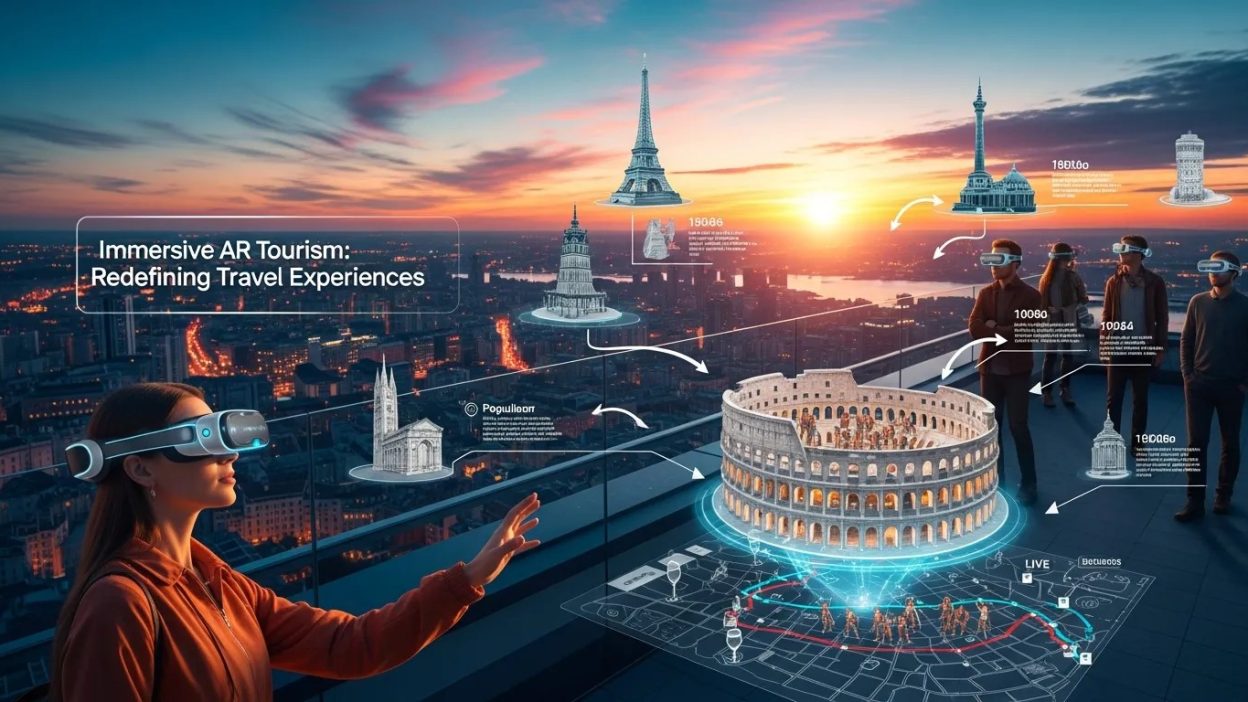
Visitors can now engage with landmarks in unprecedented ways. Imagine walking through a historic city where Immersive AR Tourism overlays historical reconstructions on present-day streets or provides guided tours through ancient architecture. By integrating interactive maps, visual narratives, and gamified elements, AR turns passive sightseeing into an engaging and memorable adventure.
How Immersive AR Tourism Transforms Travel
The power of Immersive AR Tourism lies in its ability to create contextually relevant experiences. AR-enabled devices, such as smartphones, AR glasses, or wearable tech, allow travelers to explore destinations with real-time insights and visual enhancements. Tourists can interact with exhibits, historical sites, and cultural landmarks in ways that were previously impossible.
In cities, Immersive AR Tourism can guide travelers through streets with augmented navigation, highlight hidden attractions, and provide historical context that transforms ordinary sightseeing into an educational journey. Interactive AR layers also allow users to customize their experience based on interests, whether they prefer art, history, adventure, or culinary exploration.
Meanwhile, AR Hologram Technology is expanding possibilities even further. Holographic guides can appear in museums, historic sites, and city squares, offering personalized narratives and interactive demonstrations. Travelers can virtually witness historical events, explore digital reconstructions of landmarks, or observe wildlife simulations in natural reserves, making tourism more immersive than ever before.
Benefits of AR in Tourism
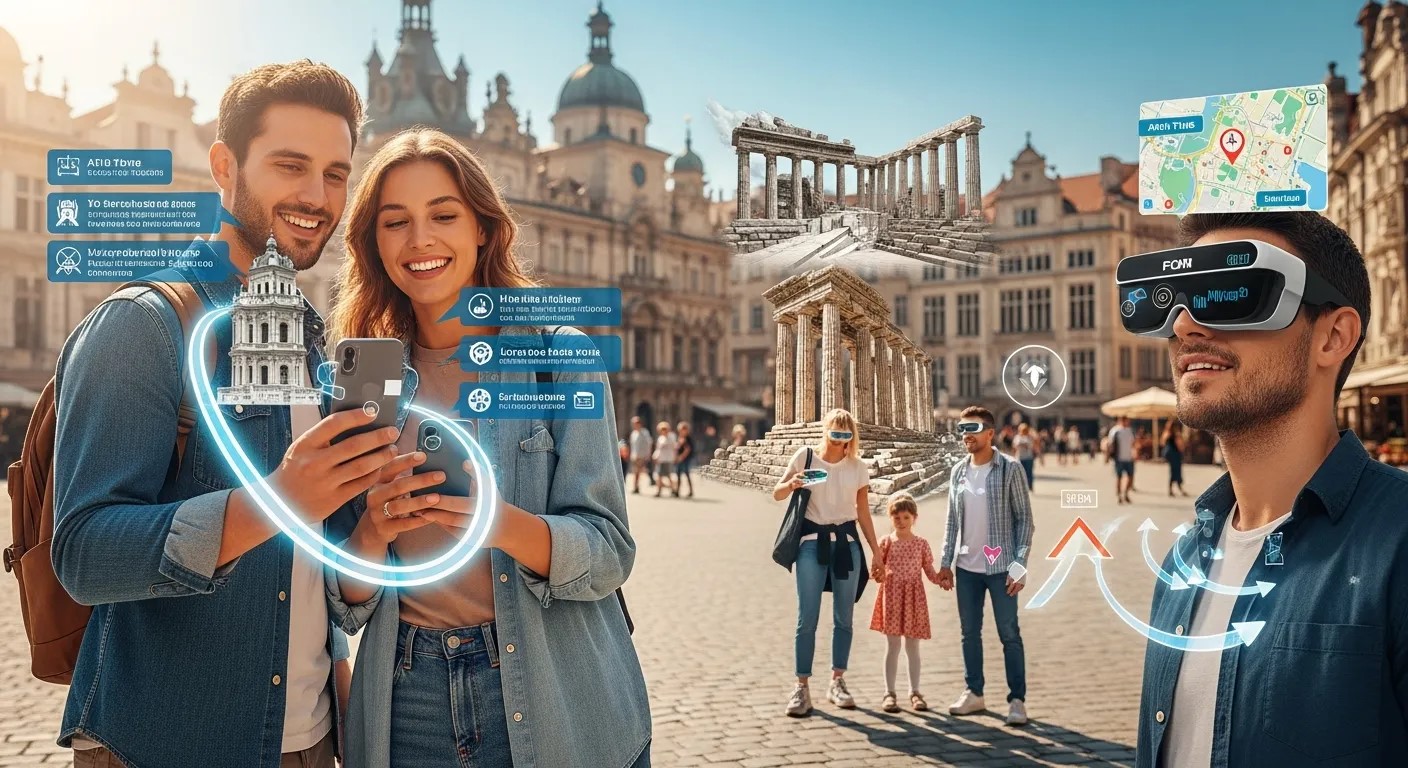
The benefits of AR for modern travelers extend beyond engagement. AR improves navigation, safety, and planning. Real-time overlays can provide directions in complex urban areas, highlight nearby attractions, or alert users to local events. By offering context-specific information, AR reduces uncertainty, enhances convenience, and ensures tourists make informed decisions, improving overall satisfaction.
From a psychological standpoint, Immersive AR Tourism taps into curiosity, attention, and intrinsic motivation. Humans are naturally drawn to novelty, and AR transforms routine travel into an interactive narrative. Visitors become participants in the story of a location rather than passive observers. This engagement boosts retention of information, emotional connection, and overall travel satisfaction, aligning with human behavior principles for memorable experiences.
Cultural Heritage and Museum Experiences
Museums and heritage sites have been transformed by Immersive AR Tourism. Visitors can explore ancient artifacts in 3D, witness historical reconstructions, or interact with exhibits through mobile apps. AR makes cultural sites more engaging and accessible, allowing tourists to understand history, art, and science in dynamic ways.
Interestingly, AR’s influence even extends into wellness aspects. Integrating AR in Healthcare features during tours such as stress-reducing guided AR experiences ensures tourism not only educates but also supports mental well-being. For instance, mindfulness overlays in natural parks or calming guided AR museum tours enhance both cognitive engagement and emotional satisfaction.
Smart Cities and AR Intelligence
The rise of Immersive AR Tourism is closely connected to the development of smart cities. Urban planners and tourism authorities are increasingly using AR to enhance public spaces, improve navigation, and provide cultural insights. Interactive AR maps, historical overlays, and immersive tours make urban exploration seamless and engaging.
Underlying these systems is AR Intelligence, which personalizes experiences by analyzing user behavior and preferences. A traveler interested in art exhibitions might receive live suggestions for nearby AR-enhanced galleries, while another focused on history could see reconstructed battles or monuments. This adaptive approach increases engagement, reinforces autonomy, and makes experiences more meaningful—key drivers of memorable travel.
Marketing and Travel Engagement
Immersive AR Tourism is reshaping tourism marketing as well. Agencies and destination marketers use AR previews to excite potential travelers before they even arrive. Interactive itineraries, virtual walkthroughs of attractions, and augmented storytelling help travelers visualize experiences and make informed booking decisions.
Additionally, AI Chatbot Marketing Funnels enhance pre-trip planning. Chatbots can guide users through virtual AR experiences, suggest personalized travel routes, and even answer destination-specific queries. Integrating AR previews with conversational AI ensures tourists remain engaged from research to arrival. Similarly, Chatbots in Brand Marketing provide seamless communication, enabling destinations to deliver personalized recommendations while leveraging AR to create anticipation and excitement for future visits.
The Future Potential of Immersive AR Tourism
As technology evolves, Immersive AR Tourism promises even more transformative possibilities. Augmented reality could integrate with wearable devices, creating hands-free travel guides. Travelers might experience fully interactive city tours, AR-enhanced adventure sports, or virtual cultural festivals alongside physical participation. With the continuous growth of AI, AR Intelligence will further personalize experiences, making every trip unique, tailored, and deeply engaging.
Moreover, AR can bridge the gap between digital and physical accessibility. Individuals with mobility or sensory challenges will have equal opportunities to explore and enjoy destinations, making tourism more inclusive. By combining technology, psychology, and storytelling, Immersive AR Tourism is poised to redefine travel in the decades to come.
Destination-Specific Immersive AR Tourism Experiences
One of the most exciting aspects of Immersive AR Tourism is its ability to tailor experiences to specific destinations. Cities, historical landmarks, and natural wonders are no longer just visited—they are interacted with. Imagine exploring the streets of Paris while AR overlays highlight hidden cafés, secret art installations, or historical facts about each monument. Travelers can experience the Eiffel Tower in new ways, seeing its construction evolve through historical simulations and AR guides.
Similarly, in ancient cities like Rome, Immersive AR Tourism allows visitors to walk through reconstructions of the Colosseum or Roman Forum. Historical battles, gladiator events, and cultural rituals can be visualized in augmented layers, making history tangible and engaging. By merging physical exploration with digital storytelling, AR transforms sightseeing into an interactive adventure, heightening memory retention and emotional connection.
Even natural attractions benefit from AR. National parks and conservation areas now use Immersive AR Tourism to overlay educational content on flora and fauna. Hikers can receive AR-generated guidance on trails, learn about ecosystems, and even visualize wildlife in their habitats. This approach increases environmental awareness while enhancing the overall experience.
Adventure Tourism and AR Integration
Adventure tourism has gained a new dimension through Immersive AR Tourism. Outdoor sports, trekking, and extreme activities are no longer purely physical experiences—they can be enhanced with augmented layers. For instance, mountain climbers can access AR navigation overlays, safety alerts, and historical context about the peaks they are ascending.
In water sports, AR provides real-time environmental data, such as tidal patterns and underwater topography. Tourists engaging in scuba diving or kayaking can see digital overlays of marine species, coral health, and underwater landmarks. These immersive enhancements increase engagement while providing educational value.
Moreover, AR gamification is becoming popular in adventure tourism. Scavenger hunts, treasure trails, and interactive challenges embedded in landscapes transform standard tours into story-driven adventures. Such experiences align with human psychology’s desire for exploration, problem-solving, and reward-driven engagement, making Immersive AR Tourism both entertaining and enriching.
Hospitality and AR Experiences
Hotels, resorts, and other hospitality providers are adopting Immersive AR Tourism to elevate guest experiences. AR-enhanced rooms offer virtual guides to amenities, interactive concierge services, and immersive previews of local attractions. Guests can explore nearby sites, restaurants, or cultural events with on-demand AR overlays, creating seamless and personalized stays.
Additionally, AR can enhance event tourism within hospitality settings. Conferences, weddings, and corporate retreats can feature AR-enhanced experiences, interactive presentations, or virtual art installations. Hospitality providers increasingly leverage AR to differentiate their services, enhance customer satisfaction, and encourage repeat visits.
AR in Cultural and Health-Oriented Travel
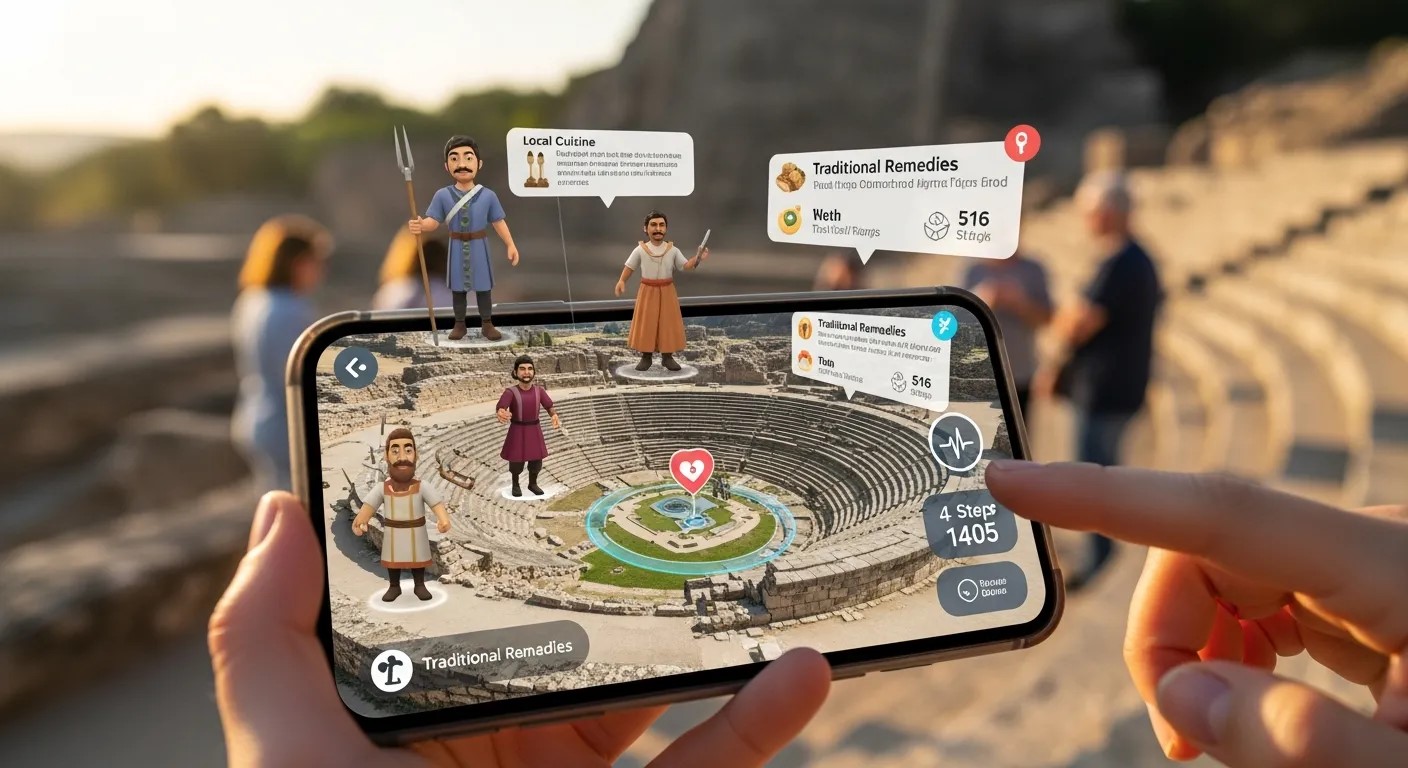
Cultural tourism benefits greatly from Immersive AR Tourism. Travelers can explore museums, galleries, and performance spaces with augmented insights, including 3D reconstructions, interactive storytelling, and historical overlays. Exhibits come alive as visitors engage directly with content rather than merely observing it.
Interestingly, AR also intersects with wellness and mental health. Certain tourism programs now incorporate AR in Healthcare features, such as guided meditation, mindfulness overlays in parks, or interactive exercises for stress reduction during travel. These innovations make tourism not only informative and entertaining but also restorative, enhancing the overall well-being of visitors.
Real-World AR Tourism Case Studies
Several destinations have successfully implemented Immersive AR Tourism. For example, in Tokyo, AR guides overlay cultural and historical narratives on Shibuya and Asakusa districts, providing travelers with real-time insights and interactive storytelling. In Egypt, AR recreations of ancient temples and tombs allow visitors to witness historical events and architectural marvels as they explore physical sites.
Even cities in Europe, such as Barcelona and Prague, leverage Immersive AR Tourism to enrich urban experiences. Holographic guides, AR maps, and interactive cultural layers provide visitors with deep engagement, bridging the gap between information and experience. These case studies illustrate how AR transforms traditional tourism into dynamic, personalized, and memorable journeys.
Technology Behind Immersive AR Tourism
The effectiveness of Immersive AR Tourism relies on sophisticated technology. High-resolution AR devices, real-time mapping, and cloud-based AI systems enable seamless overlays of digital content on the real world.
By integrating AR Intelligence, these systems analyze user preferences, behavior, and location to deliver personalized experiences. A traveler showing interest in art museums might receive AR prompts highlighting nearby exhibitions, while someone exploring natural parks might see wildlife simulations. This adaptive technology ensures experiences remain relevant, engaging, and aligned with individual interests.
Additionally, AR Hologram Technology is driving innovation by enabling interactive 3D representations of guides, historical figures, or wildlife. Holographic AR enriches tours in ways static displays cannot, providing visual, auditory, and sometimes tactile layers to experiences, increasing emotional impact and learning outcomes.
Marketing Implications for Tourism
The growth of Immersive AR Tourism is also reshaping marketing strategies for destinations and travel brands. By integrating AR previews into online campaigns, marketers can offer potential visitors an immersive glimpse of attractions before their trips. Travelers can virtually explore landmarks, museums, or adventure trails, creating anticipation and enhancing booking likelihood.
Moreover, AI Chatbot Marketing Funnels enable personalized communication with travelers. Chatbots can suggest AR-enhanced itineraries, provide travel tips, and respond to questions in real-time. Complementing these, Chatbots in Brand Marketing facilitate pre-trip engagement, allowing travelers to experience destinations digitally, driving higher interest and conversion rates.
AR-Enhanced Transportation in Tourism
One of the key innovations in Immersive AR Tourism is its integration with transportation systems. Travelers can now navigate airports, train stations, and city transit with AR overlays, receiving real-time directions, gate information, and local insights. By merging digital guidance with physical spaces, tourists experience seamless journeys that reduce stress and increase efficiency.
AR-enabled transit apps can also display travel times, crowd density, and even suggest alternative routes. For instance, visitors in major cities like New York or London can use AR to identify the fastest subway line while discovering nearby attractions along the route. Such features not only streamline travel but also increase engagement, allowing visitors to explore cities more spontaneously and confidently.
Moreover, Immersive AR Tourism enhances the ride experience itself. Public transportation can feature interactive AR panels showing historical facts, cultural highlights, or live storytelling about neighborhoods. This approach transforms mundane commutes into learning opportunities, keeping tourists informed and entertained throughout their journey.
Gamification and Interactive AR Experiences
Gamified AR experiences are becoming a cornerstone of Immersive AR Tourism. By blending exploration with play, tourists are encouraged to interact with their surroundings in creative ways. For example, AR treasure hunts, city challenges, and interactive quests turn sightseeing into an engaging, story-driven adventure.
These experiences align with human psychology principles such as reward, curiosity, and achievement. Travelers are motivated to explore more, share experiences socially, and retain information better. In addition, gamified AR tours provide a unique avenue for education, encouraging users to learn about history, art, or nature through interactive challenges rather than passive observation.
Adventure parks, cultural districts, and urban centers are increasingly adopting AR gamification. For instance, walking through a historical district might involve collecting AR-based “artifacts” or unlocking stories about local legends, creating a multi-sensory journey that appeals to both children and adults. These immersive elements enhance engagement while ensuring that tourism experiences remain memorable.
Virtual-Physical Hybrid Tours
Another trend within Immersive AR Tourism is the rise of hybrid tours, blending virtual and physical exploration. Travelers can visit a location in person while experiencing AR-generated content that enriches the environment. For example, walking through a medieval fortress, tourists might see reconstructed interiors, virtual historical figures, or animated battle scenes superimposed over real structures.
Hybrid tours also extend tourism accessibility. Visitors unable to travel physically can explore destinations virtually through AR simulations, interacting with real-world data and environments remotely. This approach democratizes travel experiences, providing access to cultural, historical, and natural sites globally. By offering both physical and virtual layers, Immersive AR Tourism ensures that every visitor’s experience is personalized, interactive, and deeply engaging.
Hospitality and Local Business Integration
Hotels, restaurants, and local attractions are integrating AR to enhance visitor engagement. For example, AR menus can provide interactive previews of dishes, while AR city guides suggest nearby points of interest based on user preferences. By offering Immersive AR Tourism features directly in hospitality services, businesses create unique value propositions that attract tech-savvy travelers.
Furthermore, AR-driven loyalty programs can gamify guest experiences, rewarding exploration of local culture or participation in interactive events. This strategy not only increases engagement but also encourages repeat visits, as travelers associate technology-enhanced experiences with convenience, entertainment, and personalization.
Safety and Accessibility Through AR
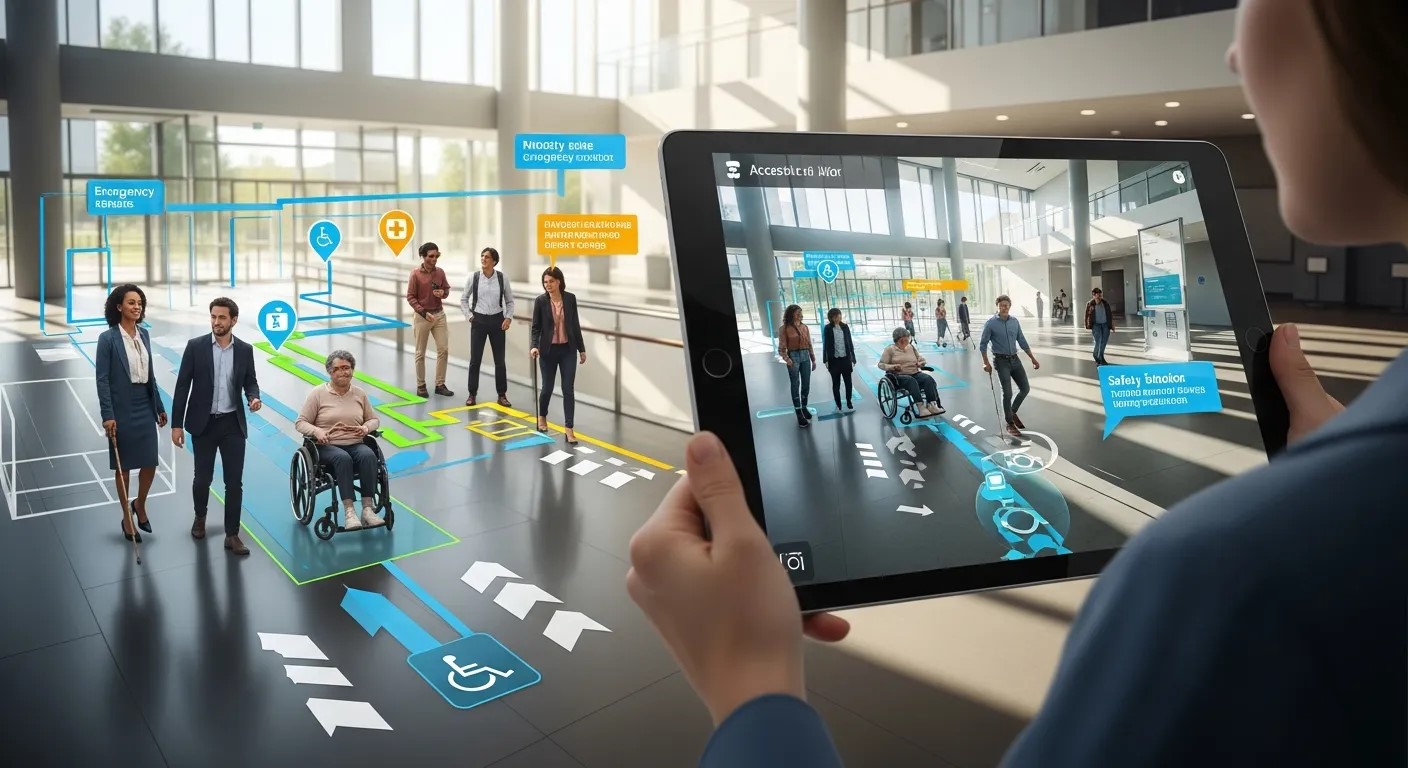
Safety and accessibility are crucial in modern tourism, and AR plays a significant role. Immersive AR Tourism provides real-time alerts for environmental hazards, restricted areas, or emergency instructions. Travelers can access AR overlays showing safe routes, nearby medical facilities, or evacuation plans, increasing confidence and reducing stress during trips.
Accessibility is equally enhanced. AR enables auditory guidance for visually impaired tourists, haptic feedback for mobility-challenged travelers, and customizable overlays for different cognitive needs. By incorporating AR into safety and accessibility measures, destinations ensure inclusive experiences that cater to all types of visitors.
Future Trends in Immersive AR Tourism
Looking ahead, Immersive AR Tourism is set to evolve with AI, IoT, and wearable technology. AR glasses, smart contact lenses, and real-time environmental sensors will create seamless, hands-free experiences. Travelers may see personalized cultural narratives, interactive wildlife simulations, or live historical reconstructions without needing to hold a device.
Additionally, AI-driven content will adapt dynamically. For example, AR systems could analyze visitor preferences, engagement levels, and movement patterns to provide real-time adjustments to experiences. This integration of AR Intelligence will ensure that each journey is unique, educational, and emotionally resonant.
Collaboration between tourism boards, local businesses, and tech developers will likely expand AR-enhanced experiences, integrating gamification, wellness-focused content, and cultural immersion into everyday tourism. These innovations promise a future where Immersive AR Tourism is not just a novelty but a standard expectation for travelers seeking meaningful, personalized adventures.
Conclusion
Immersive AR Tourism is transforming how travelers experience the world, blending physical exploration with digital interactivity. From destination-specific tours to adventure sports, hospitality, and gamified experiences, AR enhances engagement, accessibility, and learning. By integrating AR Hologram Technology, AR Intelligence, and personalized AI-driven guidance, tourists gain richer, more memorable journeys. This evolution not only elevates sightseeing but also fosters emotional connection, curiosity, and well-being. As AR continues to advance, tourism will shift toward fully immersive, interactive experiences that are inclusive, educational, and transformative, making every trip a unique story shaped by both technology and human creativity.
Frequently Asked Questions (FAQ)
What is Immersive AR Tourism?
It’s a form of travel where augmented reality enhances real-world destinations with interactive digital content, providing personalized, educational, and engaging experiences.
How does AR improve tourism experiences?
AR offers real-time information, interactive storytelling, gamified exploration, and holographic guides, making travel more engaging, accessible, and memorable.
Can Immersive AR Tourism benefit accessibility?
Yes, AR provides auditory guidance, haptic feedback, and visual overlays, ensuring inclusive experiences for travelers with disabilities or special needs.
Which technologies support Immersive AR Tourism?
AR glasses, smartphones, wearable devices, AR Hologram Technology, AR Intelligence, and AI-powered chatbots all contribute to immersive travel experiences.
What is the future of AR in tourism?
The future includes AI-driven personalization, hybrid physical-virtual tours, real-time interactive content, and fully immersive city, cultural, and adventure experiences worldwide.