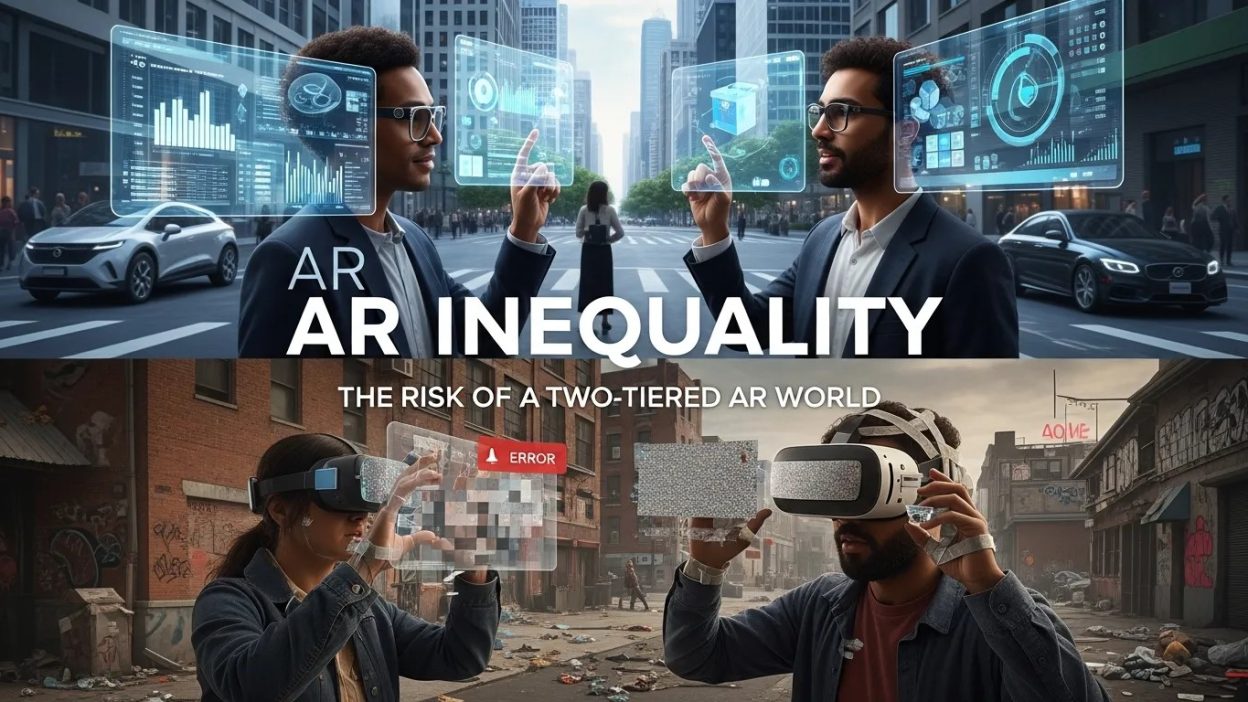
AR Inequality highlights the growing gap in augmented reality experiences, where access, hardware, and personalization create a two-tiered world. Understanding its impact on education, business, and society is essential to ensure inclusive, equitable, and immersive AR for all users.
AR Inequality: Understanding the Growing Gap
Augmented reality is no longer a futuristic concept reserved for science fiction or experimental labs. It is already shaping how people learn, work, shop, socialize, and understand the world around them. From navigation overlays in cities to immersive product previews and educational simulations, augmented reality is quietly becoming a daily companion. Yet beneath this rapid adoption lies a growing concern that many experts now describe as AR Inequality a widening gap between those who can fully access and benefit from augmented experiences and those who cannot.
Unlike earlier digital divides that centered on internet access or device ownership, this new form of inequality is more subtle and more powerful. It is not only about who owns AR hardware, but also about who receives richer, smarter, and more responsive augmented experiences. As AR systems evolve, they increasingly rely on high-end devices, advanced sensors, fast connectivity, and intelligent personalization. This creates a risk where one group lives in an enhanced, context-aware world while another experiences a stripped-down digital layer that offers little real value.
Understanding this shift is critical because AR is not just an entertainment tool. It is becoming a cognitive interface between humans and information. When access to that interface is unequal, the consequences extend far beyond convenience and into education, employment, economic mobility, and social participation.
Understanding the Concept of a Two-Tiered AR World
A two-tiered AR world emerges when the quality of augmented experiences differs dramatically based on socioeconomic status, geography, or institutional access. In this environment, premium users interact with highly responsive, spatially aware, and personalized AR layers, while others receive generic or outdated overlays that fail to adapt to their needs.
This divide is not hypothetical. High-end AR systems already offer features such as real-time environment mapping, gesture recognition, eye tracking, and AI-driven contextual feedback. These features demand powerful processors, advanced sensors, and constant data connectivity. Users without access to such infrastructure encounter slower, less immersive experiences that reduce AR to little more than novelty.
Over time, this disparity compounds. Those with better AR tools learn faster, make more informed decisions, and navigate both physical and digital environments with greater efficiency. Meanwhile, those excluded from high-quality AR remain dependent on traditional interfaces that cannot compete with the speed and clarity of augmented information.
This is where AR Inequality becomes a systemic issue rather than a temporary technology gap.
The Psychological Impact of Unequal Augmented Experiences
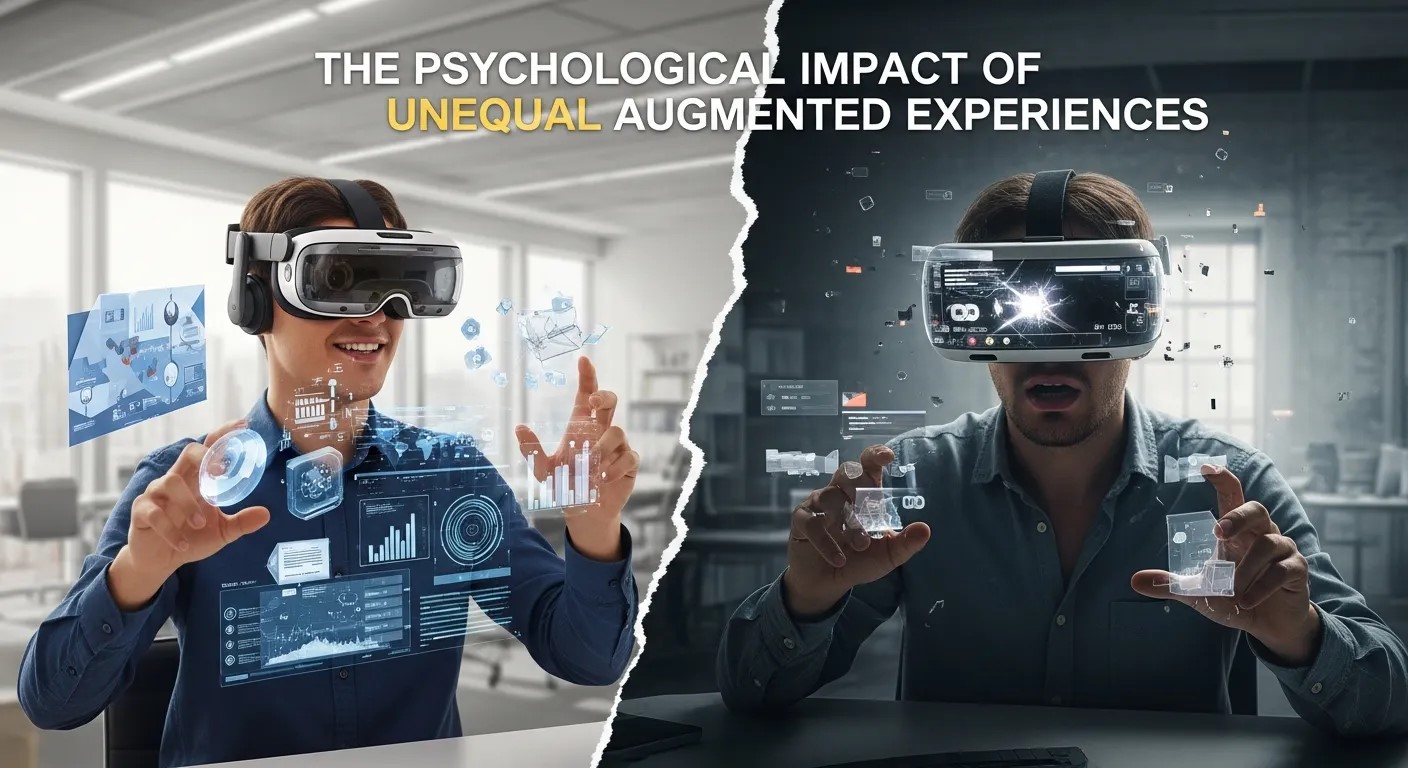
Human perception is deeply influenced by the tools used to interpret reality. When augmented layers provide guidance, validation, and context, they shape confidence and decision-making. Individuals with access to refined AR experiences gain a psychological advantage because information appears seamlessly integrated into their surroundings.
In contrast, users who experience laggy, inaccurate, or minimal augmentation may develop frustration or distrust toward the technology itself. This emotional divide reinforces adoption gaps, where disadvantaged users disengage from AR entirely, further limiting their exposure and skills.
Psychologically, this creates a feedback loop. Enhanced users feel empowered and capable, while others feel excluded from a rapidly evolving digital culture. Over time, this can influence career choices, learning behaviors, and even self-perception in technology-driven environments.
The danger of AR Inequality lies in how invisibly it reshapes confidence and agency.
Hardware, Infrastructure, and the Foundations of AR Access
At the core of unequal AR experiences lies hardware disparity. Advanced AR relies on depth sensors, high-resolution displays, spatial audio, and continuous environmental scanning. These components are expensive and often limited to flagship devices or enterprise solutions.
Infrastructure further amplifies this gap. High-quality AR depends on low-latency networks, cloud processing, and real-time data synchronization. In regions with limited connectivity or outdated networks, AR experiences degrade quickly, losing precision and responsiveness.
Educational institutions, businesses, and governments that can afford enterprise-grade AR systems gain a strategic advantage. They train employees faster, visualize complex data more effectively, and simulate real-world scenarios with accuracy. Those without access are left behind, not due to lack of talent, but due to technological exclusion.
This imbalance directly feeds into AR Inequality, turning technological progress into a gatekeeping mechanism rather than a universal benefit.
Sensory Depth and the Emerging Experience Gap
Modern augmented reality is moving beyond visual overlays and into multisensory engagement. Haptic feedback, spatial sound, and tactile simulations are increasingly integrated into immersive systems. These features deepen realism and improve learning retention.
Experiments blending tactile sensations with immersive environments, such as Phantom Touch VR, demonstrate how sensory augmentation can alter perception and memory. However, access to such advanced experiences is limited to research labs, high-budget enterprises, or premium consumers.
When sensory depth becomes a differentiator, the experience gap widens further. Users with access to multisensory AR gain deeper understanding and stronger emotional engagement, while others remain limited to flat, visual-only interactions.
This sensory divide reinforces AR Inequality at a neurological level, affecting how people process information and form long-term knowledge.
Economic Power and the Commercialization of AR Experiences
As AR becomes monetized, businesses prioritize audiences that deliver higher returns. This commercial reality shapes which users receive the most advanced features, updates, and support. Premium experiences are often reserved for paying customers, enterprise clients, or data-rich demographics.
Marketing teams increasingly rely on immersive strategies aligned with evolving AR Marketing Trends to capture attention and influence purchasing behavior. These strategies often depend on high-end AR capabilities, such as spatial personalization and real-time interaction, which are inaccessible to lower-tier users.
The result is an uneven marketplace where certain consumers receive richer brand interactions, exclusive previews, and enhanced decision-making tools, while others encounter basic or static content. Over time, this skews market influence toward already advantaged groups.
Economic incentives, when unchecked, can transform AR Inequality into a profit-driven system that normalizes exclusion.
Education, Learning Speed, and the Augmented Advantage
Education is one of the most promising domains for augmented reality, yet it is also one of the most vulnerable to AR Inequality. AR-enhanced learning environments can visualize abstract concepts, simulate dangerous experiments safely, and adapt content to individual learning styles.
However, these benefits depend on access to capable devices and software ecosystems. Well-funded institutions deploy immersive labs and personalized AR modules, while under-resourced schools struggle to implement even basic digital tools. This reinforces AR Inequality, as students without advanced AR tools fall behind their peers despite similar effort and potential.
This creates a learning-speed gap. Students exposed to advanced AR grasp concepts faster, retain information longer, and develop spatial reasoning skills earlier. Those without access are often limited to outdated interfaces or low-quality simulations. Over time, AR Inequality directly influences future workforce readiness, digital literacy, and long-term economic mobility.
Personalization, AI, and the Risk of Algorithmic Exclusion

The next evolution of AR lies in personalization. Systems increasingly adapt content based on user behavior, preferences, and context. Advanced environments integrate AI-Personalized VR Narratives that reshape stories, training modules, or simulations around individual users.
While personalization enhances engagement, it also introduces risks. Personalized systems require large datasets, continuous feedback, and sophisticated algorithms. Users without sufficient profiles or access to intelligent platforms receive generic experiences, widening the gap. Algorithmic bias can reinforce AR Inequality if models favor data-rich demographics over underrepresented groups.
Hence, the intersection of personalization and AR creates a subtle yet powerful form of exclusion. Users with access to AI-driven experiences gain cognitive and emotional advantages, while others remain at a technological and psychological disadvantage.
Corporate Responsibility and Inclusive AR Design
As AR becomes mainstream, companies face both ethical and practical pressure to address AR Inequality. Inclusive design is no longer optional; it affects brand reputation, user retention, and social impact.
Design teams must consider accessibility for a wide spectrum of users, including low-bandwidth environments, budget-friendly devices, and adaptive content layers. For example, companies that create entry-level AR applications alongside premium experiences help mitigate inequality. Those ignoring inclusive design risk creating a permanent two-tiered AR world.
Investing in inclusive AR also aligns with long-term ROI. By expanding the user base and ensuring meaningful engagement across demographics, businesses can generate data, feedback, and loyalty that are otherwise limited to high-end users. This approach reduces AR Inequality while promoting sustainable growth.
Governance, Policy, and Ethical Considerations
Addressing AR Inequality requires systemic solutions beyond corporate initiatives. Governments, educational institutions, and non-profits play a vital role in setting standards, ensuring fair access, and incentivizing equitable development.
Policies could include subsidies for affordable AR hardware, network improvements, and educational grants for immersive learning programs. Regulatory frameworks may also enforce transparency in personalization algorithms to prevent data-driven exclusion.
Without oversight, the risk remains that AR Inequality will entrench social and economic disparities, as premium experiences become the standard for career readiness, civic participation, and access to public services.
Urban, Workplace, and Social Implications
The impact of AR Inequality extends into cities, workplaces, and social interactions. Urban environments increasingly integrate augmented layers into public transport, navigation, retail, and cultural landmarks. Those with advanced AR devices gain enriched experiences, while others are relegated to basic or obsolete overlays.
In workplaces, AR tools improve training, collaboration, and operational efficiency. Employees with access to high-end systems gain better understanding, faster skill acquisition, and stronger situational awareness. Workers without these tools face a cognitive disadvantage, deepening workplace inequality.
Socially, shared AR experiences shape cultural participation. Popular AR games, events, and interactive storytelling become accessible primarily to those with capable devices, reinforcing both AR Inequality and social stratification.
Measuring Impact and Business Insights
Modern organizations rely on data to measure the effectiveness of augmented reality. Tools focused on ROI Tracking for AR Campaigns allow businesses to quantify engagement, conversion, and behavioral impact.
However, users on lower-tier systems often remain invisible in these metrics. Without representation, these groups receive fewer updates, optimizations, or personalized experiences. In effect, measurement practices unintentionally reinforce AR Inequality, prioritizing profitable or high-end users while leaving others behind.
By incorporating inclusive metrics and considering underrepresented groups in AR analytics, organizations can make informed decisions that reduce disparity while improving overall adoption and satisfaction.
Mitigating AR Inequality Through Technology Design
Addressing AR Inequality begins with thoughtful technology design. Developers must consider both the capabilities of premium devices and the limitations of entry-level hardware. Adaptive systems can scale features depending on user access, ensuring that everyone receives meaningful augmented experiences, even if advanced sensors or high-end processors are unavailable.
For example, optimizing visual overlays, caching environmental data, or simplifying gesture recognition can make immersive AR applications accessible to a wider audience. Platforms that ignore these considerations risk widening AR Inequality, leaving less-privileged users with subpar or frustrating interactions.
Cross-industry solutions also demonstrate how inclusive design reduces AR Inequality. In healthcare, scalable AR simulations allow hospitals with limited budgets to train staff effectively, while enterprise-grade systems offer enhanced haptic feedback and complex scenario mapping. Similarly, educational software can adapt lessons to students’ devices, reducing disparities in learning speed and engagement caused by AR Inequality.
Bridging the Gap with Infrastructure and Network Solutions
Infrastructure remains a major factor in AR Inequality. High-quality AR relies on low-latency networks, cloud computing, and seamless data synchronization. Regions with weak connectivity often experience degraded experiences, exacerbating inequality.
Governments and private organizations can mitigate this through investments in broadband expansion, edge computing, and cloud-optimized AR applications. By improving network accessibility, developers can deliver smoother experiences to previously underserved users.
Even marketing strategies, including AR Marketing Trends, must account for infrastructure limitations. Campaigns designed without considering access constraints risk excluding large portions of potential audiences, further reinforcing AR Inequality. Smart planning ensures that immersive campaigns reach the broadest user base possible.
Corporate Strategies to Combat AR Inequality
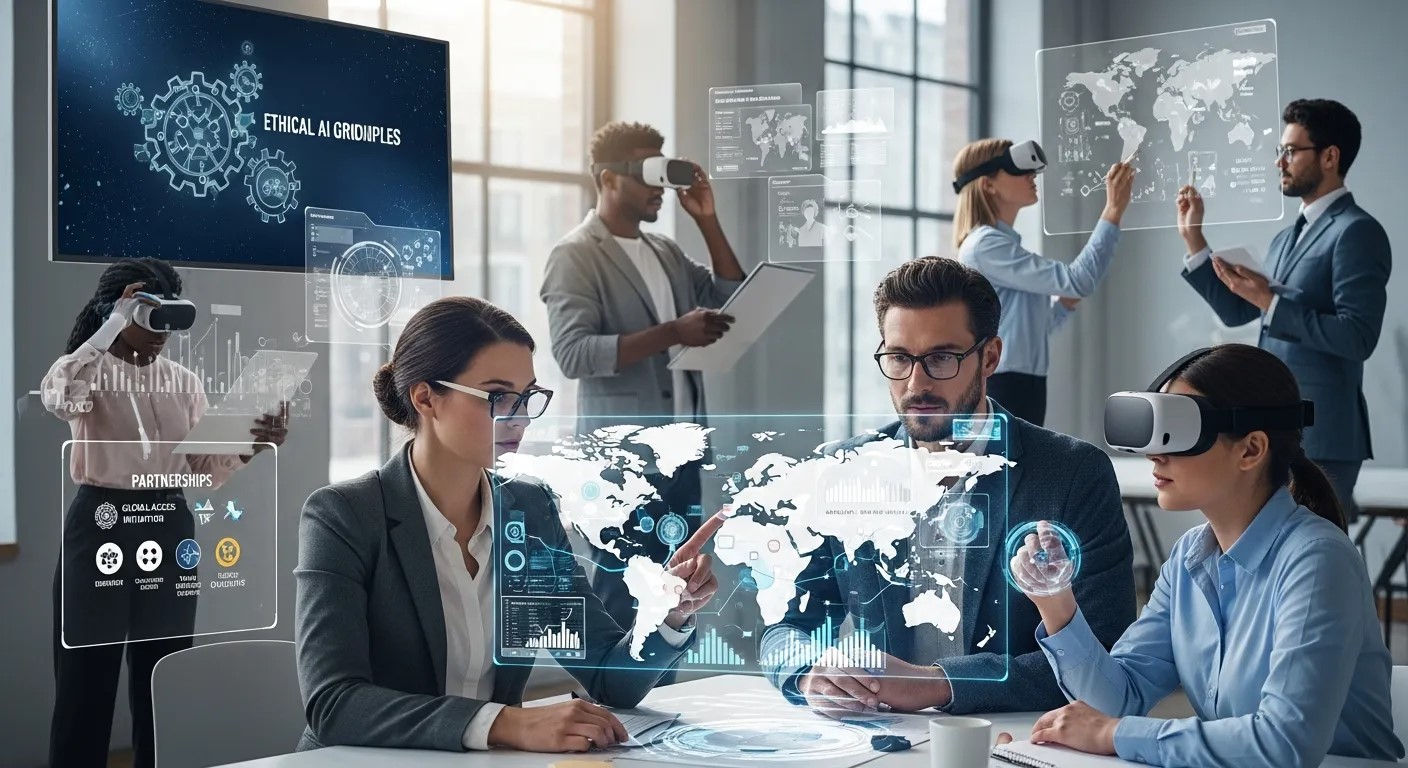
Companies increasingly recognize that tackling AR Inequality is both ethical and commercially strategic. Businesses that provide tiered experiences, support multiple devices, and design for inclusivity expand their market reach and improve long-term ROI.
One approach is integrating AI-Personalized VR Narratives into scalable applications. By tailoring content dynamically, users with varying device capabilities receive meaningful experiences. High-end users enjoy fully immersive narratives, while lower-tier users still engage with functional, contextually relevant content. Such strategies reduce the risk of permanent exclusion and combat AR Inequality.
Another effective method is leveraging ROI Tracking for AR Campaigns to measure engagement across all user segments. This ensures that business decisions consider marginalized or low-end users, rather than only the high-value demographic, preventing data-driven reinforcement of AR Inequality.
Social and Cultural Implications of AR Inequality
Beyond technology and business, AR Inequality has profound social and cultural implications. Urban spaces are increasingly augmented with interactive public content, digital art, and spatial storytelling. Citizens with advanced AR devices experience these layers fully, while others encounter incomplete or static versions, leading to uneven participation in shared cultural experiences.
Similarly, AR-enabled social interactions—gaming, networking, or collaborative experiences—may favor those with high-end devices. Over time, AR Inequality shapes not just access to information but also social dynamics, inclusion, and community engagement.
Phantom Touch VR and other sensory-enhanced technologies highlight this trend. Users with access gain richer, more immersive interactions, while those without devices capable of processing these experiences remain spectators rather than participants. Addressing these disparities is essential to prevent AR from deepening social divides.
Cross-Industry Applications Highlighting AR Inequality
Several industries illustrate the stakes of AR Inequality:
- Healthcare: AR can guide surgeries, visualize anatomy, or train medical staff. Hospitals with advanced systems benefit from accuracy and speed, while smaller clinics face limited access.
- Education: Schools using adaptive AR lessons close learning gaps, while under-resourced institutions struggle, reinforcing AR Inequality.
- Retail and Marketing: Immersive shopping experiences, driven by AR Marketing Trends, enhance consumer engagement for high-end users but leave lower-tier shoppers with basic interactions.
- Workplace Training: Spatial simulations improve employee skills and safety, yet not all workers gain access, creating workplace inequity rooted in AR Inequality.
Across sectors, proactive design, scalable platforms, and inclusive policies are the most effective strategies to reduce disparity while maintaining immersive quality for all users.
Policy Recommendations to Reduce AR Inequality
Governments, educational institutions, and industry bodies play a critical role in addressing AR Inequality. Recommendations include:
- Subsidizing hardware and software access to ensure entry-level devices can run functional AR applications.
- Funding network and cloud infrastructure in underserved areas to improve low-latency AR delivery.
- Setting accessibility standards for immersive content to guarantee usability across device tiers.
- Monitoring algorithmic fairness in AI-Personalized VR Narratives to prevent bias-driven exclusion.
- Encouraging inclusive ROI measurement in campaigns so lower-tier users inform development decisions.
Implementing these policies helps prevent AR from creating entrenched two-tiered experiences and mitigates AR Inequality on a societal scale.
Conclusion
AR Inequality is no longer a distant concern it is shaping how people access, learn from, and interact with augmented reality. As high-end devices, personalized experiences, and advanced infrastructure become the norm, a two-tiered AR world threatens to leave many users behind. Addressing this gap requires thoughtful technology design, inclusive policies, and strategic investments to ensure equitable access. By proactively bridging the divide, developers, businesses, and institutions can create a future where augmented reality empowers everyone, rather than deepening existing social and economic disparities.
Frequently Asked Questions (FAQ)
What is AR Inequality?
AR Inequality refers to the gap in access, quality, and experience of augmented reality across different users, devices, and regions. It highlights how some people benefit from advanced AR features while others receive limited or outdated experiences.
What causes AR Inequality?
Several factors contribute to AR Inequality, including high-end hardware requirements, limited network infrastructure, lack of inclusive design, and personalized AI-driven content that favors high-value users.
How does AR Inequality affect education and learning?
Students with access to immersive AR tools can grasp complex concepts faster and retain knowledge better, while those without face slower learning and fewer interactive opportunities, reinforcing existing educational gaps.
Can businesses address AR Inequality?
Yes. Companies can reduce AR Inequality by designing scalable applications, measuring engagement across all user segments with ROI Tracking for AR Campaigns, and integrating inclusive strategies to reach a wider audience.
How do personalization and AI impact AR Inequality?
AI-Personalized VR Narratives enhance engagement for some users, but if algorithms favor data-rich profiles, marginalized or low-end users receive generic experiences, unintentionally widening AR Inequality.
What are the social implications of AR Inequality?
AR Inequality affects access to cultural events, urban AR experiences, and social interactions. Users with advanced devices enjoy richer engagement, while others remain on the sidelines, reinforcing digital and social divides.
How can AR Inequality be mitigated?
Solutions include inclusive hardware and software design, infrastructure investment, adaptive content scaling, ethical AI, and policy measures to ensure fair access and reduce disparities across all user groups.