AR app development enables immersive, interactive experiences across industries, combining AI, holograms, and smart design. From healthcare to marketing, developers can create scalable, user-centric apps that engage audiences, enhance learning, and redefine how users interact with the real world.
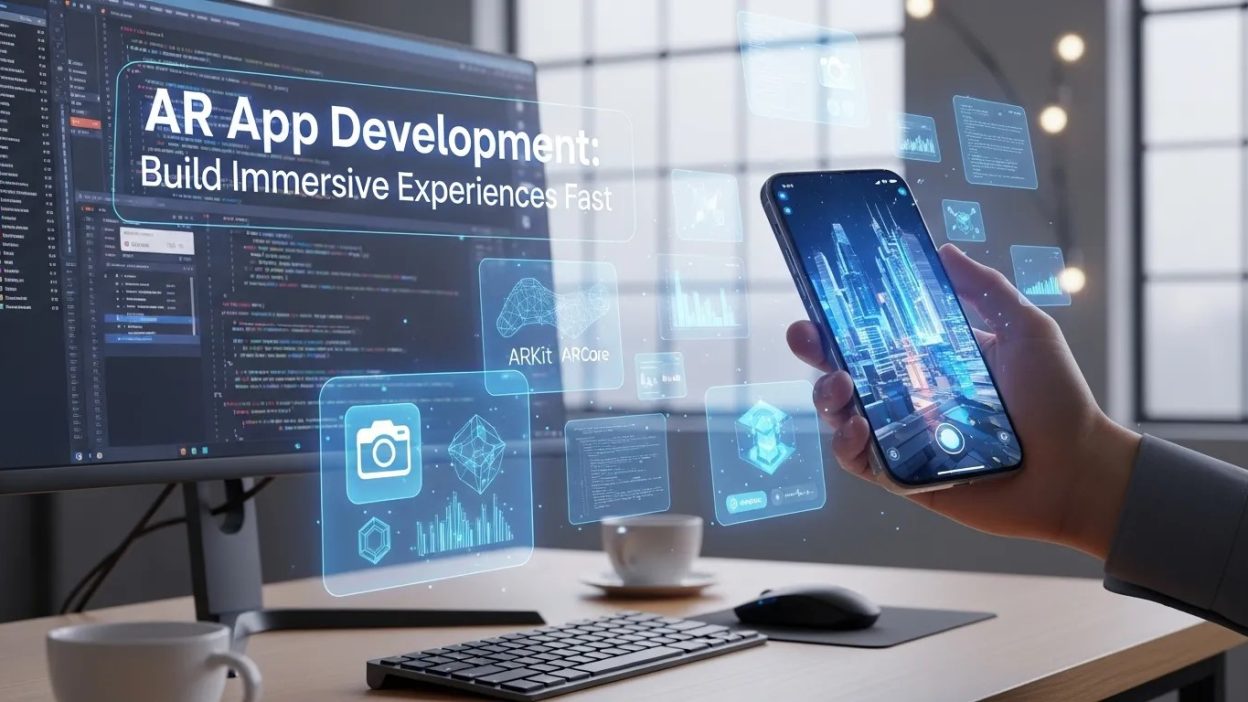
AR App Development: Build Immersive Experiences Fast
Augmented reality has moved from a futuristic idea to a core component of modern digital experiences. AR app development has become a critical tool for businesses, developers, and creative professionals looking to deliver interactive, immersive, and engaging solutions. By merging digital elements with the physical world, AR apps allow users to experience content in entirely new ways, creating memorable interactions that go far beyond traditional screens.
Understanding AR App Development
At its core, AR app development involves designing and coding applications that overlay virtual objects or information onto real-world environments. Unlike virtual reality, which immerses the user entirely in a digital environment, AR enhances the real world, adding a layer of interactivity that feels natural and intuitive. This ability to blend real and digital experiences has made AR indispensable in sectors ranging from entertainment to healthcare.
When beginning the journey of AR app development, understanding the foundational technologies is essential. Tools such as ARKit for iOS and ARCore for Android provide robust frameworks for detecting surfaces, tracking movement, and rendering virtual objects. Meanwhile, cross-platform engines like Unity and Unreal Engine allow developers to create sophisticated AR experiences without being limited to a single operating system.
Key Components of an AR App
Successful AR app development relies on several key components:
-
Object Recognition and Tracking: This allows AR apps to identify and interact with physical objects in real-time. For example, retail AR apps can recognize a product in a store and provide additional digital content.
-
Rendering Engine: High-quality visuals are critical for immersive experiences. Rendering engines handle the complex task of projecting digital objects seamlessly into the real world.
-
User Interface (UI) and Interaction Design: Unlike traditional apps, AR apps demand intuitive gestures, voice commands, or even gaze tracking to ensure smooth user interaction.
-
Data Integration: Many AR apps integrate real-time data, such as location-based services, AI-driven insights, or IoT devices, to create context-aware experiences.
AR in Social Media: A Rising Trend
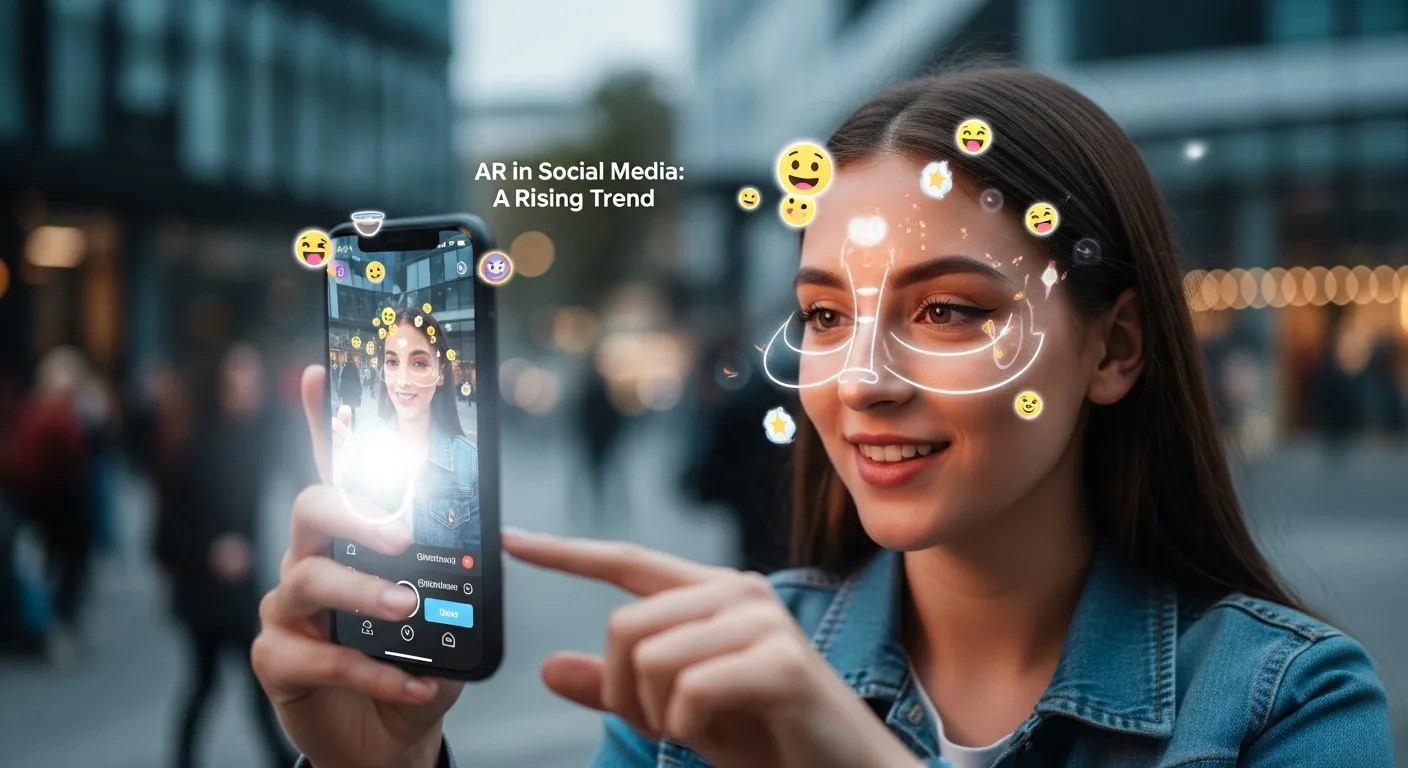
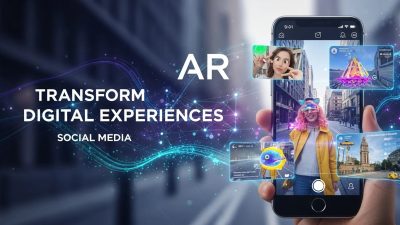
Social media platforms have been among the earliest adopters of AR technology. The use of AR in social media allows users to apply filters, try on virtual accessories, or experience interactive ads in a fun and engaging way. For brands, this opens a direct line to audience engagement, making AR a powerful marketing tool. Social media AR campaigns often rely on AR app development expertise to integrate these immersive experiences seamlessly.
The Role of AR Hologram Technology
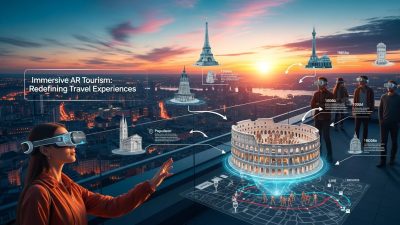
Another exciting aspect influencing AR app development is AR hologram technology. By projecting lifelike holographic images into physical spaces, apps can create immersive environments for education, entertainment, and professional training. Imagine attending a virtual conference where speakers appear as holograms in your living room or exploring a museum exhibit where historical figures are projected in real space. These innovations are transforming how users perceive digital content and interact with it.
AR App Development in Healthcare
The healthcare industry has embraced AR for training, surgery planning, and patient care. With AR in healthcare, medical professionals can visualize complex anatomical structures, simulate surgeries, and provide interactive rehabilitation exercises. For example, a surgeon might use an AR app to overlay critical information on a patient’s body during a procedure, enhancing precision and safety. This application demonstrates the immense potential of AR app development in improving human outcomes.
AR Intelligence: Smarter Apps, Better Experiences
The integration of AR intelligence is another leap forward. By combining artificial intelligence with AR, developers can create apps that recognize objects, predict user behavior, and adapt in real-time. For instance, retail apps can suggest products based on users’ gestures or past behavior, while educational apps can offer personalized learning experiences. This combination makes AR app development not just about creating visuals but delivering intelligent, adaptive experiences that feel personal and engaging.
Key AR Technologies for App Development
| Technology | Purpose | Example Use Case |
|---|---|---|
| ARKit / ARCore | Platform-specific AR frameworks | Surface detection, motion tracking |
| Unity / Unreal Engine | Cross-platform AR development | Game-based AR experiences |
| SLAM (Simultaneous Localization and Mapping) | Real-time environment mapping | Navigation apps, AR measurement tools |
| AI & Machine Learning | Adaptive and predictive AR behavior | Personalized recommendations, object recognition |
| Holographic Displays | Immersive visual projections | Virtual meetings, interactive museums |
Planning an AR App: Step-by-Step
Effective AR app development begins with careful planning. Here’s a structured approach:
-
Define the Objective: Determine what the app aims to achieve. Is it educational, commercial, or entertainment-focused? Clarity at this stage informs all future design choices.
-
Research Target Audience: Understanding user behavior is crucial. Identify the devices, environments, and preferences that will shape the app’s experience.
-
Choose the Right Technology Stack: Decide whether to use ARKit, ARCore, or a cross-platform engine. Consider integration with AI tools for AR intelligence and data processing.
-
Prototype Early: Create low-fidelity prototypes to visualize interactions and test functionality before full-scale development.
-
Iterative Testing: AR apps require extensive testing in real environments to ensure stability, usability, and responsiveness.
By following these steps, developers can reduce costly errors and ensure that the final product delivers a smooth and engaging user experience.
Advanced Features in AR App Development

As AR app development matures, developers are focusing on advanced features that make applications more engaging, interactive, and contextually aware. These enhancements go beyond simple overlays of digital objects, leveraging cutting-edge technologies to create truly immersive experiences.
AI-Powered AR Apps
One of the most transformative trends in AR app development is the integration of artificial intelligence. AI allows AR apps to interpret user inputs, recognize objects, predict behaviors, and adapt content dynamically. For instance, a retail app can recommend products by analyzing user interactions, while a museum AR experience can offer contextual explanations for exhibits based on visitor preferences.
AI integration also benefits developers. Access to AI Chatbot Learning Resources helps teams implement conversational agents inside AR apps, guiding users through complex tasks or providing support in real-time. By combining AI with AR, developers create applications that are both intelligent and immersive, improving user engagement and retention.
AR in Education and Training
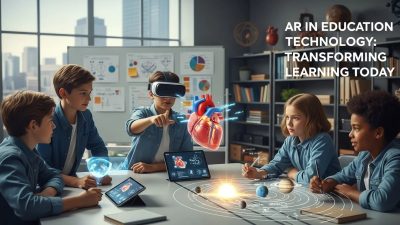
The educational sector has been revolutionized by AR app development. Interactive learning modules allow students to explore complex concepts through visual and spatial interactions. Medical students, for example, can study anatomy using AR in healthcare applications, overlaying virtual organs on mannequins for realistic practice. Similarly, industrial training programs leverage AR to simulate hazardous scenarios safely, reducing risks and improving skill acquisition.
Furthermore, AI-enhanced AR tools provide adaptive learning experiences. By analyzing user performance, AR apps can adjust difficulty levels, suggest resources, and personalize instruction. This synergy between AR and AI ensures that learning is both efficient and memorable.
AR in Marketing and Retail
Businesses have recognized the potential of AR to transform customer experiences. AR in social media campaigns create interactive brand engagements, while retail apps allow users to try products virtually before purchasing. For example, furniture companies can let customers visualize how items fit into their homes using AR room planners, while fashion brands offer virtual try-ons to boost confidence and reduce returns.
A growing trend is the use of AR Hologram Technology for live marketing events. Brands can project holographic models, speakers, or products into physical spaces, attracting attention and creating a buzz that standard advertisements cannot achieve. Such innovations demonstrate how AR app development can enhance both digital and in-person engagement.
Cross-Industry Applications of AR
AR applications are not limited to entertainment or marketing. Several industries have leveraged AR app development for specialized tasks:
-
Healthcare: AR apps provide surgeons with real-time overlays of anatomical structures, improving accuracy. Patients can also benefit from AR-guided rehabilitation exercises.
-
Manufacturing: AR assists technicians with machine maintenance, displaying instructions overlaid on equipment to reduce errors.
-
Real Estate: Prospective buyers can visualize properties with AR tours, exploring layouts and design options virtually.
-
Education: Interactive AR modules make learning more engaging, improving comprehension and retention.
By applying AR in diverse contexts, developers expand their audience reach while demonstrating the versatility of AR app development.
Integrating Chatbots with AR Apps
Combining AR with conversational AI introduces a new layer of interactivity. Businesses can implement B2B and B2C chatbot solutions inside AR apps, offering guidance, support, or personalized recommendations. In a retail AR app, a chatbot can answer questions about product specifications or suggest complementary items based on user preferences. In enterprise applications, chatbots guide employees through training modules or technical workflows.
Using chatbots strategically within AR apps ensures that users receive real-time assistance without breaking immersion. This approach also leverages AI Chatbot Learning Resources for developers to enhance the natural language understanding capabilities of their applications.
Designing User-Centric AR Experiences
The success of AR app development depends heavily on user experience design. Developers must consider factors such as:
-
Intuitive Interactions: Gestures, voice commands, and touch inputs should feel natural.
-
Environment Awareness: AR apps should adjust visuals and interactions based on lighting, surfaces, and user movement.
-
Performance Optimization: Smooth performance is critical. Lag or glitches can break immersion.
-
Privacy and Security: AR apps often use cameras and sensors, so protecting user data is essential.
Investing in these design principles ensures that AR applications are not only functional but also delightful to use, increasing adoption and user satisfaction.
AR App Development Tools and Frameworks
Developers rely on a variety of tools to bring AR concepts to life. Some of the most popular include:
| Tool/Framework | Purpose | Example Use Case |
|---|---|---|
| ARKit (iOS) | Device-based AR framework | Interactive furniture placement |
| ARCore (Android) | Platform-specific AR support | Motion tracking for games |
| Unity / Unreal Engine | Cross-platform AR development | Mixed reality training apps |
| Vuforia | Image and object recognition | AR product packaging |
| Blippar | AR campaign creation | Interactive advertising |
These frameworks streamline AR app development, allowing developers to focus on creative design while leveraging robust underlying technology.
Strategies for Effective AR App Development
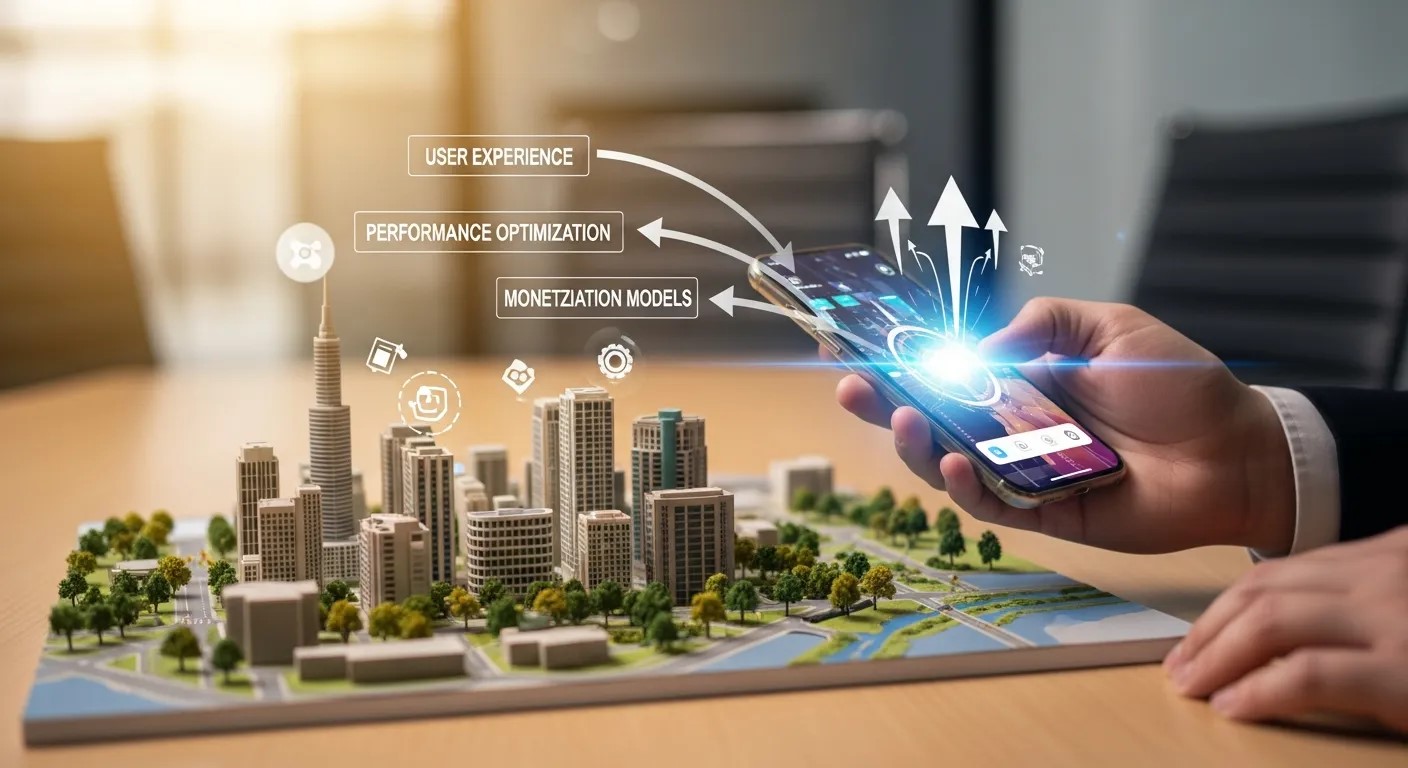
Developing a successful AR application requires careful planning, iterative testing, and strategic alignment with business goals. AR app development is not just about coding virtual objects into reality; it’s about creating meaningful experiences that resonate with users while leveraging the full potential of augmented reality technologies.
Step-by-Step AR Development Strategy
A systematic approach ensures that AR apps are engaging, functional, and scalable:
-
Conceptualization: Define the problem your AR app solves. Whether it’s enhancing retail engagement, improving learning outcomes, or providing medical visualization, having a clear objective guides the development process.
-
Platform Selection: Determine if your app will target iOS, Android, or both. Utilizing ARKit for Apple devices and ARCore for Android ensures native performance. For cross-platform solutions, engines like Unity or Unreal Engine are highly effective.
-
Feature Prioritization: Decide on core functionalities, such as object recognition, spatial mapping, or interactive holograms. Advanced features like AR intelligence can enhance personalization and engagement.
-
Prototyping: Early mockups and prototypes help visualize interactions. Testing these prototypes in real-world environments is crucial to understand how users will engage with your AR content.
-
Iterative Development: Employ agile methodologies to refine features continuously. Feedback from beta testers informs adjustments to improve usability and performance.
-
Integration with AI & Chatbots: Incorporate conversational interfaces, leveraging AI Chatbot Learning Resources to guide users through app functionalities or provide contextual support.
Monetization Models in AR Apps
Once your AR application is functional, generating revenue requires careful consideration of monetization strategies. Common approaches include:
-
Freemium Model: Offering a free version with basic features while charging for premium content or tools. Many AR retail apps use this model to showcase limited virtual try-ons before unlocking full catalogs.
-
Subscription-Based Access: Particularly effective for educational AR apps or enterprise solutions. Users pay monthly or annually for ongoing access to content updates.
-
In-App Purchases (IAPs): Users can buy virtual objects, filters, or additional content. Gaming AR apps often use this model to enhance engagement.
-
Advertising and Sponsorships: AR in social media campaigns allows brands to create interactive sponsored content, blending marketing seamlessly with user experiences.
-
Enterprise Licensing: B2B clients may license AR solutions for employee training, simulation, or product visualization.
These strategies highlight the versatility of AR app development in both consumer-facing and enterprise contexts.
Testing and Deployment Best Practices
Thorough testing is essential for any AR app development project. Unlike traditional apps, AR applications must function flawlessly in varied physical environments, considering lighting, surfaces, and device capabilities. Key testing practices include:
-
Field Testing: Evaluating app performance in real-world environments ensures object tracking, overlays, and interactions work seamlessly.
-
User Feedback Loops: Beta testing with target audiences uncovers usability issues and helps refine the interface.
-
Performance Optimization: Optimizing graphics rendering, memory usage, and sensor integration improves app stability and user experience.
-
Security Assessments: Ensuring that data collected through cameras or sensors is secure, adhering to privacy regulations.
Once testing confirms the app’s stability, deployment can proceed through app stores, enterprise distribution, or direct download, depending on the target audience.
AR App Case Studies
Retail and E-Commerce
Several brands have successfully implemented AR app development to boost customer engagement. For instance, fashion retailers offer virtual try-ons via mobile apps, while furniture companies allow users to place digital models in their homes. By leveraging AR Hologram Technology, marketing campaigns can project products into physical spaces, providing interactive experiences that drive sales.
Healthcare and Medical Training
AR in healthcare applications provide surgeons and medical students with immersive visualizations of anatomy, helping them plan procedures and simulate surgeries. AR apps have also been used in patient rehabilitation, allowing for guided exercises with real-time feedback. These practical implementations highlight the transformative potential of AR app development in critical industries.
Education and Training
Educational institutions use AR apps to enhance learning through interactive content. Science students can explore complex chemical structures or planetary models, while vocational training programs simulate industrial environments safely. Incorporating AR intelligence ensures personalized guidance, making learning more effective and engaging.
AI-Powered Support Integration
Some AR apps integrate conversational AI using B2B and B2C chatbot frameworks. Retail apps, for example, offer live virtual assistants to answer questions, suggest products, and improve the customer journey. Developers rely on AI Chatbot Learning Resources to implement these intelligent interfaces efficiently.
Scaling AR App Development

As AR technology evolves, scalability becomes a critical factor. Developers must design apps that can handle larger datasets, additional content, and growing user bases without performance degradation. Leveraging cloud services for AR object storage, streaming, and AI computation allows apps to scale seamlessly across devices and regions.
Conclusion
AR app development is transforming the way businesses, educators, and creators engage with users. By combining interactive visuals, intelligent features, and seamless real-world integration, AR apps deliver immersive experiences that captivate and inform. From retail and social media campaigns to healthcare, education, and enterprise solutions, AR is bridging the gap between digital and physical worlds. Incorporating AI, chatbots, and holographic technologies enhances personalization, usability, and scalability. As devices, frameworks, and user expectations evolve, developers who strategically plan, test, and innovate in AR app development will lead the way in creating experiences that are not only functional but unforgettable.
Frequently Asked Questions (FAQ)
What is AR app development?
AR app development involves creating applications that overlay digital objects or information onto the real world, enhancing user interaction and engagement.
Which tools are best for AR app development?
Popular tools include ARKit, ARCore, Unity, Unreal Engine, and Vuforia, depending on the platform and project needs.
How is AR used in healthcare?
AR in healthcare allows surgeons, medical students, and patients to visualize anatomy, simulate procedures, and conduct interactive rehabilitation exercises.
Can AR apps integrate AI chatbots?
Yes, using B2B and B2C chatbot frameworks, AR apps can provide real-time assistance, guidance, and personalized interactions.
What industries benefit most from AR apps?
Retail, social media, healthcare, education, real estate, and enterprise training are key sectors leveraging AR app development for engagement and efficiency.