AI-Powered AR Vision enhances AR experiences through real-time object recognition, predictive insights, and intelligent interfaces. With applications in commerce, education, and industry, it merges AI with AR to create immersive, efficient, and context-aware interactions for users.
AI-Powered AR Vision: Transforming Object Recognition in the Modern Era
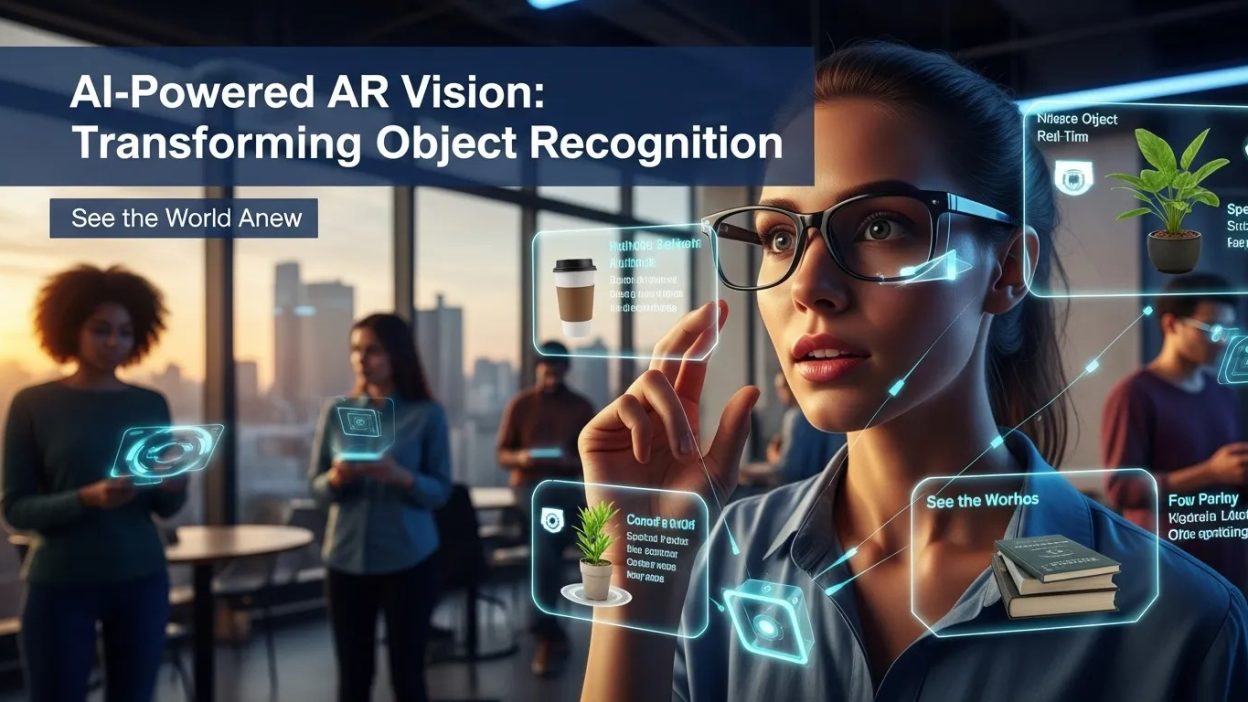
Augmented Reality (AR) has rapidly evolved from a futuristic concept to a tangible technology that integrates seamlessly with our everyday lives. One of the most pivotal advancements driving this transformation is AI-Powered AR Vision, which enhances object recognition, environment interaction, and immersive experiences. By combining artificial intelligence with AR systems, developers can now create intelligent applications capable of understanding, predicting, and interacting with real-world objects in ways previously thought impossible.
The Rise of AI in Augmented Reality
The integration of artificial intelligence into AR systems has fundamentally altered how users perceive and interact with digital environments. Traditional AR relied heavily on predefined markers and manual calibration, often limiting the adaptability and responsiveness of AR applications. With AI-Powered AR Vision, systems can dynamically identify objects, map surroundings, and provide context-aware responses, bridging the gap between the physical and virtual worlds.
At the core of this innovation lies computer vision in AR, a technology that allows machines to interpret visual data similarly to human perception. By processing images and video streams in real-time, computer vision enables AR devices to recognize objects, track movements, and understand spatial relationships. This capability is crucial for applications ranging from gaming and retail to industrial maintenance and healthcare, where precision and adaptability are paramount.
How AI Enhances Object Recognition
Object recognition in AR involves the detection and classification of real-world items within a digital interface. Previously, object recognition systems relied on rigid datasets and static algorithms, which limited their accuracy in diverse environments. AI introduces adaptive learning techniques, allowing AR systems to improve recognition over time. Through neural networks and deep learning models, neural networks in AR can identify subtle patterns, variations in lighting, and occlusions, ensuring consistent and reliable performance across varied scenarios.
One of the key benefits of AI-Powered AR Vision is its ability to perform context-aware analysis. For instance, in a retail AR application, the system can distinguish between products, suggest complementary items, and even provide personalized offers. In industrial settings, AI can identify components, detect wear or damage, and guide technicians through repair processes, dramatically increasing efficiency and reducing error rates.
Mapping the AR Environment Intelligently

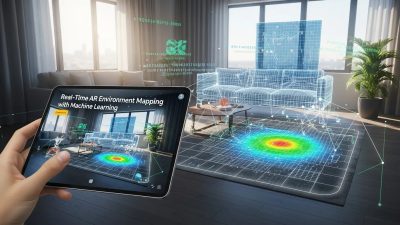
Beyond object recognition, understanding the surrounding environment is critical for immersive AR experiences. AR Environment Mapping enables devices to create detailed 3D representations of physical spaces, including walls, furniture, and obstacles. When combined with AI, these maps are not just static; they are dynamically updated to reflect real-world changes, allowing users to interact with AR content naturally and safely.
Advanced environment mapping allows AR applications to adapt to lighting conditions, surface textures, and spatial constraints. This creates seamless overlays where digital objects interact convincingly with physical spaces. From interior design apps that let users visualize furniture placement to navigation tools guiding people through complex indoor spaces, AI-enhanced environment mapping ensures accuracy, reliability, and immersion.
Neural Networks Driving Real-Time Recognition
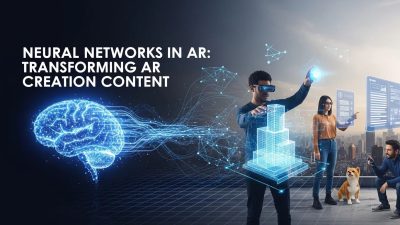
At the heart of AI-Powered AR Vision are neural networks, which enable systems to process vast amounts of visual data with high efficiency. Convolutional neural networks (CNNs), recurrent neural networks (RNNs), and other AI architectures allow AR devices to detect patterns, predict movements, and recognize objects with remarkable precision. These networks continuously learn from user interactions and environmental changes, refining object recognition capabilities in real-time.
Neural networks also facilitate multi-modal analysis, where visual data can be combined with audio, haptic feedback, and contextual information. This capability is particularly transformative in professional AR applications, such as surgical training, remote collaboration, and industrial maintenance, where understanding complex, multi-layered data is essential.
AI Interfaces for Enhanced AR Experiences
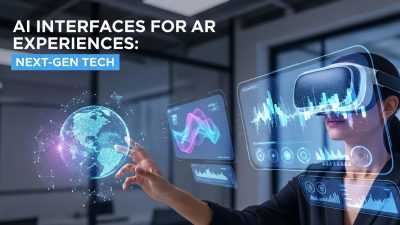
While the underlying AI technologies drive object recognition and environment mapping, AI interfaces for AR experiences provide the bridge between intelligent systems and end-users. These interfaces allow users to interact naturally with digital content through gestures, voice commands, and contextual prompts. The integration of AI ensures that interactions are adaptive and responsive, reducing friction and enhancing usability.
For example, an AI-powered AR interface in a museum could recognize an exhibit and provide interactive narratives, quizzes, or guided tours. Similarly, in retail, users could point their device at a product to receive real-time recommendations, user reviews, and virtual try-on options, creating an intuitive, personalized shopping experience.
Expanding Applications Across Industries
The implications of AI-Powered AR Vision extend across multiple sectors. In healthcare, AI-enhanced AR can assist surgeons with real-time overlays of anatomical structures, improving precision and outcomes. In manufacturing, AR guides powered by AI facilitate complex assembly tasks, maintenance, and safety training. Retailers leverage AR object recognition to provide interactive product demonstrations and virtual try-ons, transforming consumer engagement.
Even marketing has seen profound effects. Companies exploring chatbots in B2B marketing and AI conversational commerce increasingly integrate AR interfaces to create interactive product demonstrations, intelligent customer support, and immersive storytelling. AI-powered AR systems enable these interactions to feel intuitive and context-aware, ultimately increasing engagement and conversion rates.
Challenges and Considerations in AI-Driven AR
Despite its transformative potential, implementing AI-Powered AR Vision comes with challenges. High computational requirements, data privacy concerns, and ensuring robustness across diverse environments remain significant hurdles. Additionally, training AI models requires extensive datasets, often necessitating collaboration between AR developers, AI specialists, and domain experts.
Furthermore, balancing responsiveness with resource consumption is crucial for mobile and wearable AR devices. Optimizing neural networks for low-latency inference without compromising accuracy is an ongoing area of research, essential for delivering seamless user experiences.
Advanced Capabilities of AI-Powered AR Vision
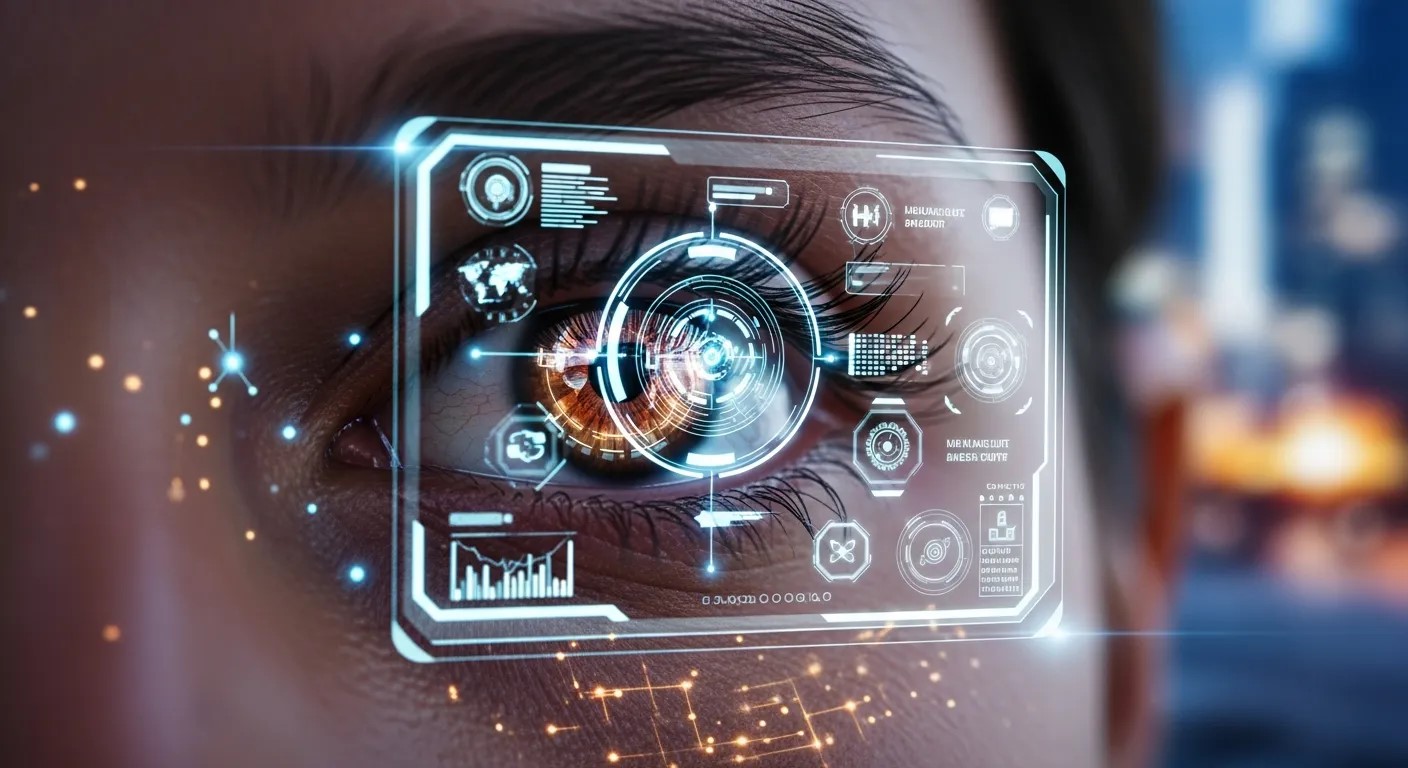
The capabilities of AI-Powered AR Vision extend far beyond basic object detection. Today’s AR systems are powered by sophisticated algorithms that allow real-time recognition, predictive modeling, and immersive interactions. By leveraging deep learning, computer vision, and neural network architectures, AI-Powered AR Vision can not only identify objects but also understand their context within a dynamic environment. This makes interactions with AR applications more intuitive, seamless, and human-centric.
Real-Time Object Recognition
One of the most impressive aspects of AI-Powered AR Vision is its ability to perform real-time object recognition. Unlike earlier AR systems that required pre-defined markers or extensive manual input, AI-enabled AR can dynamically recognize objects as they appear. This capability is powered by computer vision in AR, which processes video streams and applies convolutional neural networks to detect and classify objects instantaneously.
Real-time recognition opens up numerous possibilities. For example, in industrial applications, AI-Powered AR Vision can detect machinery components, assess operational status, and alert workers to potential issues without interrupting workflow. In retail, it allows for instant recognition of products, providing customers with detailed information, virtual try-ons, and interactive experiences.
Context-Aware AR Applications
Beyond simply recognizing objects, AI-Powered AR Vision can understand the context in which an object exists. This is achieved through predictive modeling and neural networks that interpret not only visual data but also spatial, temporal, and environmental cues. For instance, in an educational AR application, the system can identify a historical artifact and provide contextual insights about its origin, usage, and significance, all in real time.
Integrating AR environment mapping ensures that recognized objects are accurately placed within a digital overlay. This allows for seamless interaction where digital elements can respond to changes in the physical environment, such as lighting, movement, or obstruction. By combining AI-Powered AR Vision with environment mapping, developers can create experiences that are not just visually impressive but also highly functional.
Neural Networks Optimizing Accuracy
At the heart of AI-Powered AR Vision are neural networks in AR. These networks continuously learn from vast datasets, improving the system’s ability to recognize objects under varying conditions. For example, a neural network can differentiate between a real-world object partially obscured by another object and one fully visible, enhancing AR accuracy.
The application of neural networks allows AI-Powered AR Vision to handle complex scenes and multi-object scenarios efficiently. In healthcare, this means AR surgical guides can identify multiple organs and surgical tools simultaneously, improving procedural accuracy. In manufacturing, neural networks help identify defects, missing parts, or misaligned components, reducing errors and operational downtime.
AI Interfaces for Immersive Interaction
A critical element of AI-Powered AR Vision is the development of AI interfaces for AR experiences. These interfaces translate the intelligence of AI systems into intuitive user interactions. Gesture recognition, voice commands, and context-sensitive prompts enable users to interact naturally with AR environments. The more sophisticated the AI, the more seamlessly it integrates into daily workflows, entertainment, and education.
Consider an AR training module for technicians. AI-Powered AR Vision allows trainees to receive real-time guidance overlayed on physical equipment. The system identifies each component, provides instructions, and offers corrective feedback instantly, all while tracking user performance. This creates a deeply immersive and highly effective learning experience.
Transforming B2B Marketing and Commerce
The potential of AI-Powered AR Vision extends beyond industrial and educational applications into business and commerce. Companies exploring chatbots in B2B marketing can leverage AR to provide interactive demonstrations, real-time product visualizations, and personalized presentations. AI-Powered AR Vision ensures that these interactions are contextually relevant and visually accurate, enhancing engagement and lead conversion.
Similarly, AI conversational commerce benefits from AR integrations, allowing consumers to explore products interactively. A furniture retailer, for instance, can enable customers to place virtual products in their homes, powered by AI-Powered AR Vision. The system recognizes the environment, scales objects correctly, and even adjusts textures and lighting to match real-world conditions.
Enhancing AR Gaming and Entertainment
In entertainment, AI-Powered AR Vision has unlocked new dimensions for AR gaming. Games can now recognize real-world objects and integrate them seamlessly into gameplay. By understanding object placement, movement, and context, AI-Powered AR Vision transforms physical spaces into dynamic game environments. Players experience a level of immersion previously unattainable, bridging the gap between digital and physical worlds.
Moreover, computer vision in AR combined with AI allows for multiplayer synchronization, where multiple users share the same AR environment, each interacting with objects in real-time. This creates collaborative experiences that feel natural and engaging.
Industrial Applications and Smart Workflows
Manufacturing, logistics, and maintenance sectors are some of the most immediate beneficiaries of AI-Powered AR Vision. AR-assisted assembly lines now use AI to identify parts, verify their orientation, and guide workers through complex procedures. The integration of AR environment mapping ensures that virtual instructions are aligned precisely with real-world equipment, reducing errors and increasing efficiency.
In warehouse management, AI-Powered AR Vision can track inventory, identify misplaced items, and provide workers with optimal picking paths. This not only streamlines operations but also reduces cognitive load on employees, making workflows safer and more productive.
Overcoming Challenges with AI Optimization
Despite its transformative potential, deploying AI-Powered AR Vision is not without challenges. Computational demands, latency issues, and the need for high-quality training data are significant hurdles. Neural networks must be optimized for real-time inference, especially on mobile or wearable AR devices, without sacrificing accuracy.
Privacy is another critical concern. As AI-Powered AR Vision captures and processes visual data from the environment, robust safeguards are essential to ensure user trust. Secure data handling, anonymization techniques, and compliance with regional regulations are integral to responsible AR deployment.
Future Trends in AI-Powered AR Vision
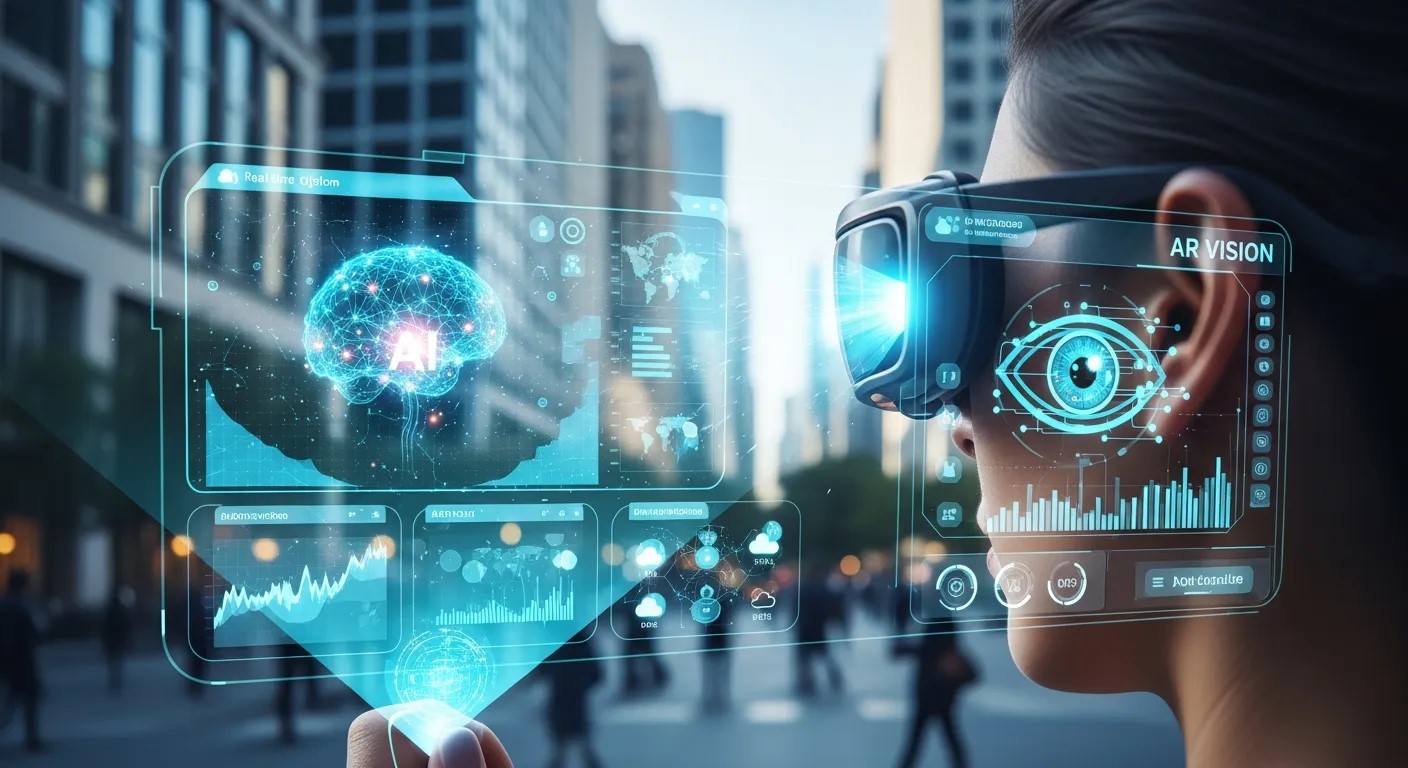
As AR technology continues to evolve, AI-Powered AR Vision is positioned at the forefront of innovation. Future applications promise even more sophisticated object recognition, predictive analytics, and immersive experiences. By leveraging advancements in neural networks, edge computing, and AI interfaces, AI-Powered AR Vision will redefine how individuals and businesses interact with digital content in physical spaces.
Predictive Object Recognition
One of the emerging capabilities of AI-Powered AR Vision is predictive object recognition. Unlike traditional AR systems that react to visual input, predictive recognition allows AR devices to anticipate object movements and user interactions. This predictive capability enhances gaming, industrial workflows, and navigation systems by providing proactive guidance.
For instance, in autonomous manufacturing environments, AI-Powered AR Vision can forecast machinery needs, identify potential hazards, and suggest corrective actions before issues arise. This predictive intelligence reduces downtime, increases safety, and boosts operational efficiency. Similarly, in AR navigation, predictive models allow systems to anticipate pedestrian or vehicle movement, ensuring smoother and safer user experiences.
Integration with Advanced Neural Networks
The power of AI-Powered AR Vision stems largely from neural networks in AR. Advanced architectures, such as transformer-based models and deep convolutional networks, enable AR systems to process vast quantities of visual and contextual data. By doing so, AI-Powered AR Vision can recognize subtle patterns, complex object interactions, and environmental nuances that earlier models could not detect.
These networks are critical in enabling AR applications in high-stakes sectors like healthcare and aerospace. For example, surgeons using AI-Powered AR Vision can receive real-time overlays of patient anatomy, while engineers can simulate complex maintenance tasks on aircraft using AR systems enhanced with neural networks.
Enhanced AR Environment Mapping
Accurate spatial awareness is essential for AR applications, and AI-Powered AR Vision excels in this domain through AR environment mapping. By combining AI-driven object recognition with precise mapping algorithms, AR devices create detailed 3D models of physical spaces. These models update dynamically, accounting for changes in lighting, object placement, and movement within the environment.
This capability allows AR systems to overlay virtual objects in a physically consistent and believable manner. From interactive museum exhibits to smart home applications, AI-Powered AR Vision ensures that virtual content aligns perfectly with the real world, enhancing immersion and usability.
AI Interfaces for Natural Interaction
As AR experiences become more complex, AI interfaces for AR experiences are critical in ensuring intuitive user interactions. These interfaces leverage AI-Powered AR Vision to interpret gestures, voice commands, and contextual cues, enabling seamless engagement with AR content.
Consider enterprise training programs that employ AR headsets. AI-Powered AR Vision identifies tools, components, and even user actions in real time. The AI interface then provides context-aware instructions, ensuring accurate task completion while minimizing the learning curve. This combination of recognition and interaction forms a holistic AR experience that is both intelligent and user-friendly.
AI-Powered AR Vision in Retail and Commerce
The impact of AI-Powered AR Vision in retail and commerce is transformative. By integrating AR with AI conversational commerce, retailers can deliver interactive product experiences that are personalized and immersive. Shoppers can visualize furniture in their homes, try on clothing virtually, or interact with products in entirely new ways.
Additionally, companies leveraging chatbots in B2B marketing can use AI-Powered AR Vision to provide clients with interactive product demos and virtual walkthroughs. This creates a richer engagement experience, increases trust, and accelerates decision-making processes in complex sales cycles.
Conclusion
AI-Powered AR Vision is revolutionizing how we perceive and interact with the physical world. By combining advanced computer vision in AR, neural networks in AR, and AR environment mapping, this technology enables real-time object recognition, immersive experiences, and context-aware interactions. Businesses, educators, and developers can leverage AI interfaces for AR experiences to enhance productivity, engagement, and customer satisfaction. From chatbots in B2B marketing to AI conversational commerce, the applications are limitless. As computational power grows and algorithms improve, AI-Powered AR Vision will continue to expand its impact, transforming industries and everyday life.
Frequently Asked Questions (FAQ)
What is AI-Powered AR Vision?
It is the integration of AI with augmented reality to enable intelligent object recognition, environment mapping, and immersive user interactions.
How does it improve AR experiences?
By using neural networks in AR and real-time object recognition, it allows context-aware, predictive, and interactive AR applications.
Which industries benefit most?
Retail, healthcare, manufacturing, education, and marketing leverage AI-Powered AR Vision for interactive training, virtual try-ons, and smarter workflows.
Can it be used with conversational AI?
Yes, integrating chatbots in B2B marketing and AI conversational commerce with AR provides personalized, engaging, and intuitive user experiences.
What are future trends?
Future developments include predictive recognition, edge computing optimization, cross-platform AR integration, and smarter environment mapping, expanding the possibilities of AI-Powered AR Vision.