Apple’s Vision Pro has sparked significant buzz since its unveiling, with many debating whether it is primarily an AR (augmented reality) or VR (virtual reality) device. Positioned as Apple’s most advanced wearable device, it represents a monumental leap into spatial computing. But what exactly is it? Is it an AR headset, a VR headset, or perhaps a hybrid of both?
This article will break down everything you need to know about the Apple Vision Pro, including its features, functionalities, and whether it leans more toward AR, VR, or a new category entirely.
Understanding AR versus VR
To answer whether the Apple Vision Pro is AR or VR, it’s essential to first define these terms and their differences.
Augmented Reality
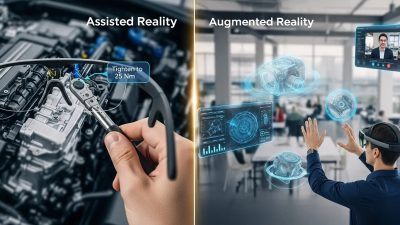
AR overlays digital information on the real world. Think of applications like Pokémon Go or AR-powered filters on social media platforms where you see digital objects placed within your real environment. AR enhances what you see around you without completely replacing your field of view. It’s essentially “virtual objects in the real world.”
Virtual Reality
On the other hand, VR creates a fully immersive digital experience, blocking out the real world entirely. Modern VR headsets take users into simulated environments, whether for gaming, training, or virtual collaboration. It’s more about “leaving reality behind” and stepping into artificial surroundings.
Understanding this difference is critical because Apple Vision Pro straddles elements of both these technologies.
What is Apple Vision Pro
Apple Vision Pro, introduced as a “spatial computing device,” merges computing, interaction, and immersion into one wearable system. The Vision Pro differs from standard AR and VR headsets by incorporating mixed reality (MR) technology that allows for seamless transitions between augmented and virtual experiences.
Equipped with Apple’s custom-designed R1 chip and M2 chip, Vision Pro boasts ultra-high-resolution displays, 3D camera arrays, advanced sensors, and a remarkable level of comfort. It enables users to interact with their digital environment naturally, using their eyes, hands, and voice.
Here’s where it gets interesting for the AR vs. VR debate.
The Apple Vision Pro Experience
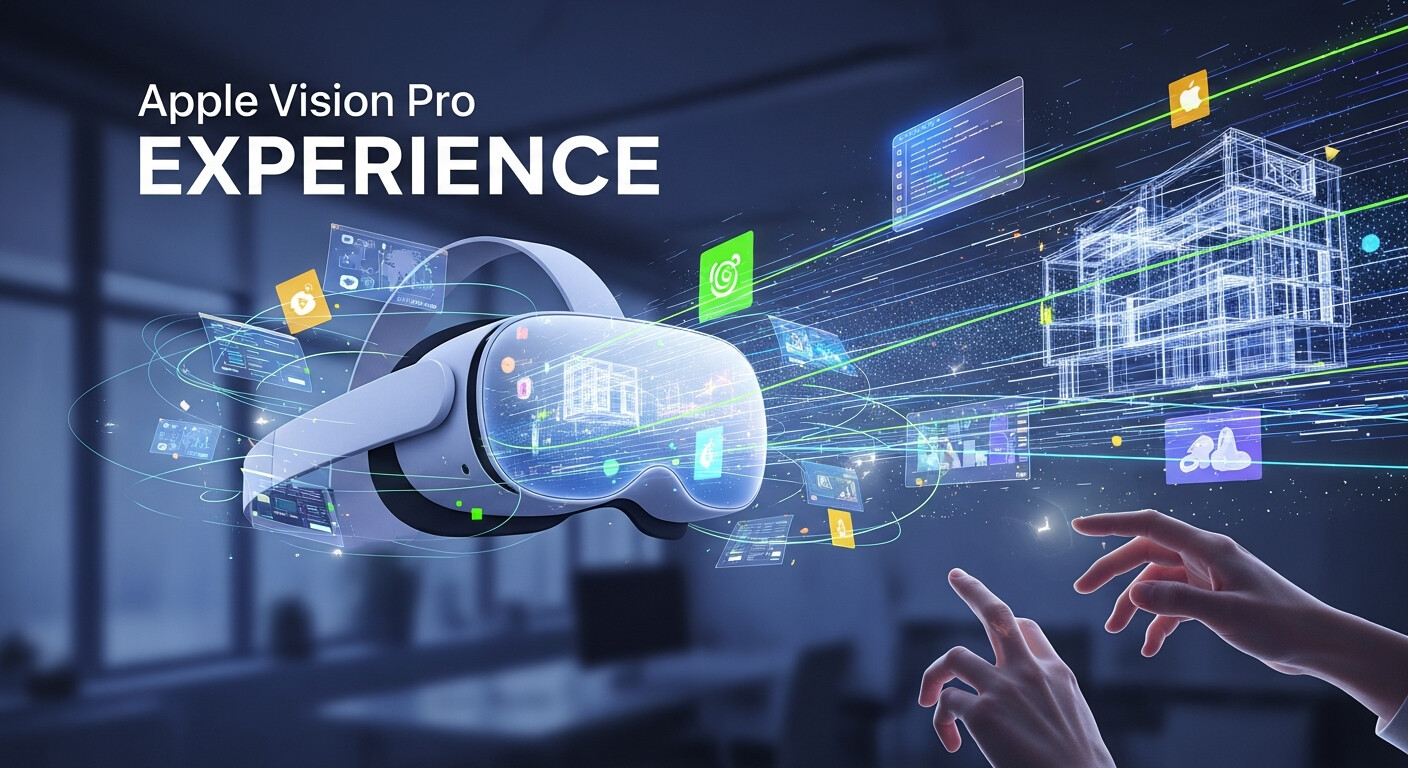
The Vision Pro offers what Apple calls a “spatial experience,” which takes the user beyond discrete AR or VR boundaries.
Augmented Reality Mode
When utilizing Vision Pro’s “augmented reality” mode, the user views their surroundings with overlaid apps, virtual objects, and widgets. This is achieved via pass-through technology, where the cameras and sensors on the headset map the user’s environment and project it onto the device’s ultra-high-definition screen.
For instance, you could have a video chat with life-sized AR friends projected into your living room or overlay digital screens and graphs onto your workspace without blocking your peripheral vision. This level of interaction blurs the line between physical reality and augmented reality.
Virtual Reality Mode
Vision Pro also lets users engage in fully immersive VR experiences. By adjusting the headset’s Digital Crown, users can control how much of the real world they see. Twist it to one setting, and your surroundings dissolve entirely into a virtual environment.
For example, users might find themselves viewing an IMAX-sized virtual movie screen in a cozy, VR-rendered cabin or experiencing an alternate 3D gaming world. Virtual reality on Vision Pro is designed to be extremely immersive, offering crystal-clear images with a field of view devoid of traditional “screen-in-front-of-eyes” constraints.
Is Vision Pro AR or VR
Now to the big question—is the Apple Vision Pro AR, VR, or something in between?
The short answer is that it’s a mixed reality device capable of offering both AR and VR experiences on demand. This flexibility positions Vision Pro in a unique category that bridges the gap between the two technologies. It’s neither solely AR nor VR but rather a combination that allows users to seamlessly switch from one environment to another.
What Makes Vision Pro Unique
-
Pass-through Technology
Unlike typical VR headsets, Vision Pro’s cameras allow users to view the real world in augmented modes with no noticeable lag or distortion.
-
Digital Crown Customization
Think of this feature as a blend slider. Users can dial in exactly how much reality or virtual content they want to interact with at any moment. This ensures the device can cater to both AR and VR applications.
-
High-Resolution Displays
Equipped with Apple’s ultra-high-resolution micro-OLED displays, Vision Pro creates realistic AR overlays and VR worlds with unparalleled clarity. Apple claims it delivers more pixels than a 4K TV per eye.
-
Contextual Interface
Vision Pro’s technology adapts to its surroundings, fostering interactions where digital content becomes an integral part of the user’s physical space. The gesture, eye tracking, and voice inputs add to the seamless integration of AR and VR elements.
Healthcare and Medical Innovation

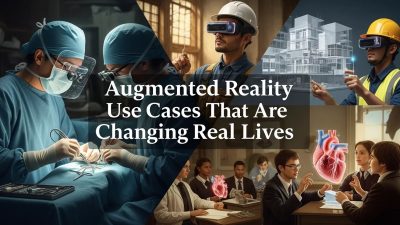
Apple Vision Pro has the potential to significantly impact healthcare by enabling immersive visualization and interactive medical tools. Doctors and surgeons can analyze 3D models of organs, review patient scans in spatial detail, and conduct remote consultations with enhanced clarity. In clinical environments, augmented visuals can assist during procedures by displaying critical information in real time without diverting attention from the patient. The integration of Augmented Reality and Mobile Medical Apps allows healthcare professionals to access data hands-free, improving accuracy and efficiency. Beyond treatment, Vision Pro could support rehabilitation programs, medical training, and patient education, creating safer and more effective healthcare experiences through advanced spatial computing capabilities.
Marketing and Brand Experiences

Vision Pro opens new doors for brands looking to create immersive and memorable customer experiences. Companies can design interactive product demos, virtual showrooms, and engaging storytelling environments that place consumers at the center of the experience. Using an Augmented Reality Marketing Strategy, brands can allow customers to visualize products in their own spaces, explore features in 3D, and make more confident purchasing decisions. This level of engagement goes beyond traditional digital ads by creating emotional connections and deeper brand recall. As consumers increasingly value experience-driven interactions, Vision Pro may redefine how businesses connect with audiences in retail, real estate, and experiential marketing campaigns.
Scientific Research and Data Visualization

Researchers often work with complex datasets that are difficult to interpret on flat screens. Vision Pro can transform how scientific data is analyzed by presenting information in three-dimensional, interactive environments. Through Augmented Reality in Research, scientists can explore molecular structures, simulate experiments, and visualize large datasets spatially. This approach enhances pattern recognition and collaboration, allowing teams to share insights more effectively. Whether in biology, physics, or environmental science, spatial visualization can accelerate discovery and improve accuracy. By turning abstract data into tangible experiences, Vision Pro has the potential to become a powerful tool for innovation, experimentation, and cross-disciplinary research.
Creative Industries and Design Workflows
Creative professionals such as designers, architects, and filmmakers can benefit greatly from Vision Pro’s spatial capabilities. Instead of imagining concepts on 2D screens, creators can design and review projects at a real-world scale. Architects can walk through virtual buildings, designers can manipulate 3D assets in midair, and filmmakers can preview scenes before production. This immersive workflow reduces errors, speeds up iteration, and enhances creative freedom. Collaboration also becomes more intuitive, as teams can work together in shared virtual spaces regardless of location. Vision Pro may redefine creative processes by bridging imagination and execution in ways traditional tools cannot.
Long-Term Impact on Everyday Computing
Beyond specific industries, Apple Vision Pro hints at a broader shift in how people interact with technology daily. Traditional screens, keyboards, and mice may gradually be supplemented—or even replaced—by spatial interfaces. Tasks like browsing the web, attending meetings, or managing personal projects could become more natural and immersive. As users grow accustomed to interacting with digital content around them, expectations for computing will evolve. Vision Pro represents an early step toward a future where technology adapts to human behavior rather than the other way around. Over time, this shift could reshape productivity, communication, and digital lifestyles worldwide.
Applications of Apple Vision Pro in Real Life
Apple Vision Pro’s versatility allows it to cater to different industries, from work and entertainment to education and communication. Here’s a look at some of its notable applications.
Productivity and Workspaces
Apple’s Vision Pro can replace traditional physical screens with virtual workspace that are customizable and scalable. Users can have multiple large screens hovering above their desk and interact with them as they would a regular monitor.
Entertainment
Vision Pro users can stream movies, play immersive VR games, or engage in 3D storytelling. Apple’s collaboration with Disney to bring exclusive content to Vision Pro highlights its entertainment potential.
Training and Education
Using Vision Pro, educators and trainers can offer simulations and virtual learning environments that provide hands-on experiences without needing physical locations or equipment.
Communication
From FaceTime calls projecting participants as life-size video avatars to enhanced collaborative tools, Vision Pro redefines communication like never before.
The Future of Apple Vision Pro
Positioning Vision Pro as an all-in-one AR and VR solution signals Apple’s ambition to lead in the next era of spatial computing. It’s likely that the Vision Pro marks the beginning of a broader movement toward wearable mixed reality tech designed for mainstream users.
While its initial price tag makes it a luxury for early adopters, the technology could become more integral as adoption rises and costs decrease over time.
Takeaway
The Apple Vision Pro doesn’t fit cleanly into the traditional categories of AR or VR. Instead, it transcends these boundaries by offering a unified device that blends augmented and virtual realities seamlessly.
Apple’s venture into spatial computing may change how we interact with both the virtual and physical worlds, making Vision Pro less a question of “AR or VR” and more a game-changer in both.
Curious about more tech innovations? Keep following our blog for the latest.
Frequently Asked Questions (FAQ) – Apple Vision Pro
1. Is Apple Vision Pro an AR or VR headset?
Apple Vision Pro is neither purely AR nor purely VR. It is a mixed reality (MR) device that combines both augmented reality and virtual reality, allowing users to seamlessly transition between real-world overlays and fully immersive virtual environments.
2. What does Apple mean by “spatial computing”?
Spatial computing refers to interacting with digital content as if it exists in your physical space. With Vision Pro, apps, screens, and media are placed around you and respond naturally to your eyes, hands, and voice, making computing feel more immersive and intuitive.
3. How does Vision Pro switch between AR and VR modes?
Vision Pro uses a Digital Crown that lets users control immersion levels. Turning the crown increases or decreases how much of the real world is visible, enabling smooth transitions from augmented reality to full virtual reality.
4. Does Apple Vision Pro block the real world completely?
It can, but only when the user chooses. In full VR mode, Vision Pro blocks out the real environment. In AR or mixed modes, advanced pass-through cameras display the real world with digital elements layered on top.
5. What makes Vision Pro different from other VR headsets?
Vision Pro stands out due to its ultra-high-resolution displays, low-latency pass-through technology, eye and hand tracking, and a contextual interface that adapts to physical surroundings. It’s designed for both productivity and immersive experiences, not gaming alone.
6. What chips power Apple Vision Pro?
Apple Vision Pro runs on two chips: the M2 chip for computing performance and the R1 chip for real-time sensor processing. This combination ensures smooth visuals, minimal latency, and highly responsive interactions.
7. Can Vision Pro be used for work and productivity?
Yes. Vision Pro can replace traditional monitors with virtual screens, support multitasking, and integrate with Apple’s ecosystem, making it suitable for professional workflows, creative tasks, and collaboration.
8. Is Apple Vision Pro good for entertainment?
Absolutely. It supports immersive movie viewing, 3D content, and virtual environments, offering cinema-like experiences. Partnerships with content providers like Disney enhance its entertainment value.
9. Is Apple Vision Pro meant for everyday users?
At its current price point, Vision Pro is targeted toward early adopters, professionals, and tech enthusiasts. However, it sets the foundation for future, more accessible mixed reality devices.
10. Will Apple Vision Pro shape the future of AR and VR?
Yes. Vision Pro represents Apple’s long-term vision for spatial computing and wearable technology. Its hybrid approach could redefine how people interact with digital content, blending physical and virtual worlds more naturally than ever before.