Understanding Phantom Touch in VR Commerce
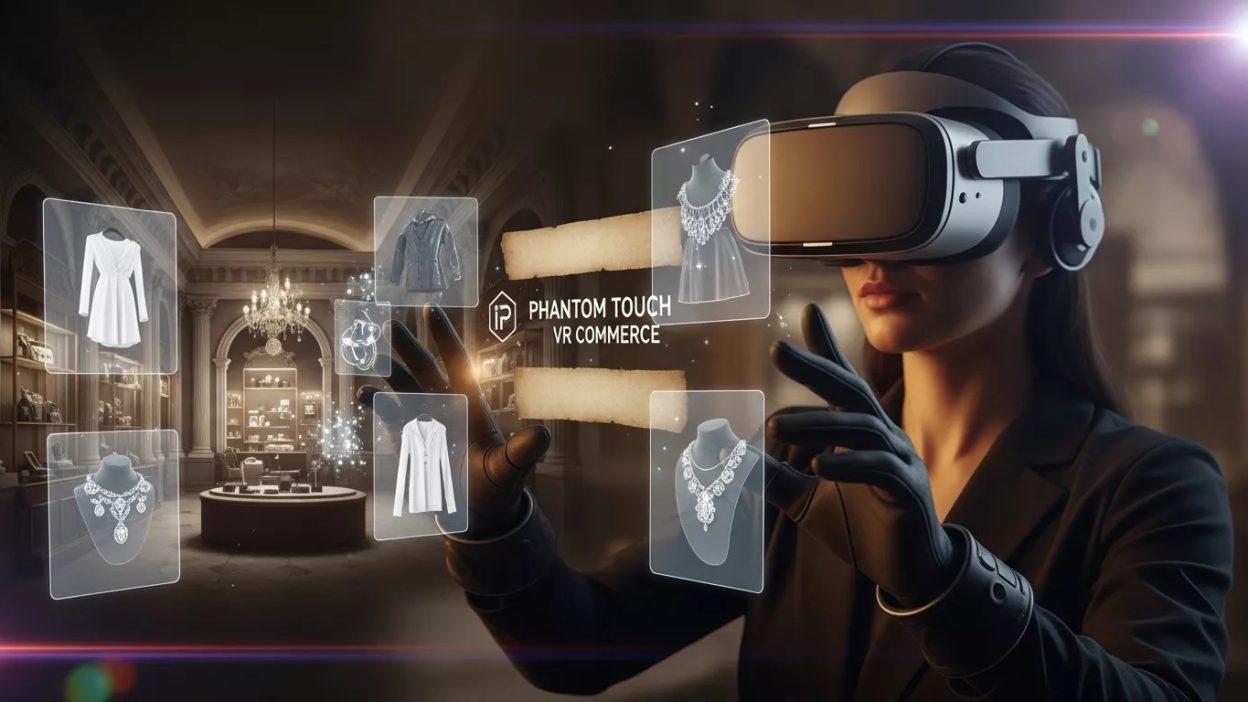
In today’s digital-first world, immersive experiences are no longer optional they are expected. Modern consumers demand interactivity, sensory feedback, and instant gratification. Phantom Touch VR Commerce has emerged as a game-changer by merging tactile illusions with visual and auditory cues, creating deeply engaging and addictive experiences. This technology goes beyond mere novelty, delivering measurable business outcomes by influencing attention, trust, and purchasing behavior. Naturally and fully naturally, brands adopting this approach are transforming how users interact with products and services in virtual spaces.
This article explores how Phantom Touch VR Commerce works, the psychology behind sensory hijacking, actionable design strategies, and real-world applications across B2C and B2B industries.
What is Phantom Touch?
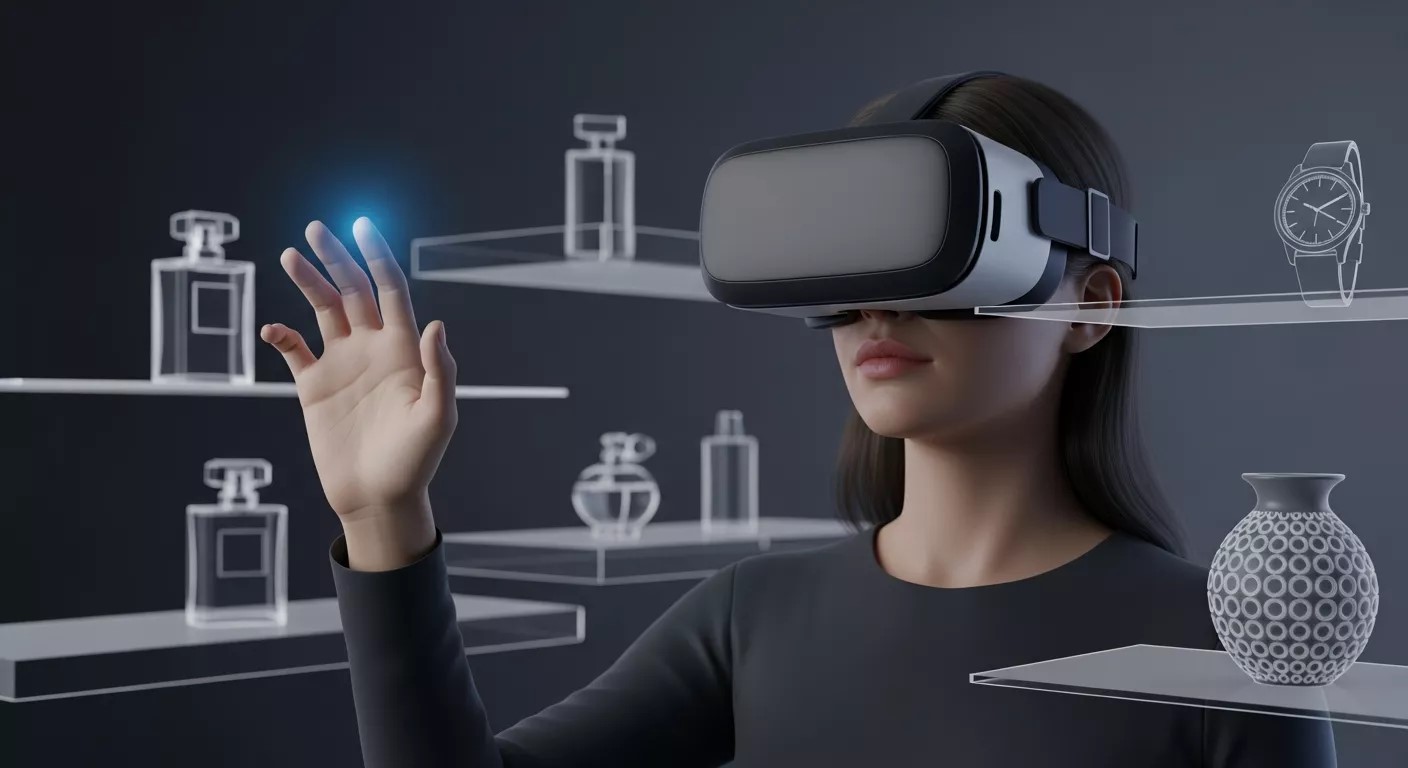
Phantom touch refers to the illusion of tactile feedback within virtual reality environments without physical contact. When users perceive touch sensations from purely visual and audio cues, their brains interpret them as real. This creates a sense of presence, immersion, and agency.
Neuroscience studies have shown that even minimal sensory cues can trick the brain into feeling physical interactions. In VR commerce, this means a user can “feel” a product, texture, or surface virtually, boosting confidence in their purchase decision.
Example: Fashion retailers are using Phantom Touch VR Commerce to allow users to feel fabric textures through simulated haptic feedback, increasing try-on satisfaction and reducing returns.
Sensory Hijacking and Engagement
Sensory hijacking is the practice of strategically engaging multiple senses simultaneously to maximize attention and retention. In VR, this includes:
-
Visual cues: Color contrasts, lighting, and spatial design
-
Auditory cues: Footstep sounds, object interaction sounds
-
Tactile illusions: Simulated touch or pressure sensations
When combined, these elements create addiction-level engagement, where users naturally spend more time exploring products, completing interactions, and returning to the platform.
Cognitive Mechanisms
Phantom Touch VR Commerce works by activating key cognitive triggers:
-
Novelty without confusion: Users are drawn to new experiences but guided intuitively
-
Pattern recognition: Spatial and interactive cues improve memory encoding
-
Emotional resonance: Personalized interactions create attachment
-
Behavioral reinforcement: Positive experiences encourage repeated visits
These mechanisms explain why VR commerce powered by Phantom Touch often results in higher conversion and engagement compared to traditional online shopping.
Why Phantom Touch is Revolutionizing VR Shopping
From Passive to Immersive
Traditional e-commerce relies on static visuals and text, which are passive and often fail to capture attention in the first three seconds. Phantom Touch VR Commerce converts passive viewers into active participants through immersive and interactive experiences.
| Feature | Traditional VR | Phantom Touch VR Commerce |
|---|---|---|
| Sensory Feedback | Minimal | Haptic illusions + touch simulation |
| Engagement Time | Short | Long due to immersion |
| Conversion Impact | Low | High confidence-based purchases |
| Emotional Resonance | Medium | Strong emotional connection |
| Replayability | Medium | High due to novelty and personalization |
Naturally and fully naturally, this design approach ensures the experience feels intuitive and rewarding, not gimmicky.
Psychological Drivers
Phantom Touch VR Commerce taps into several psychological drivers:
-
Fear of Missing Out (FOMO): Exclusive VR interactions increase urgency
-
Instant gratification: Users receive immediate feedback on their actions
-
Perceived control: Tactile illusions create a sense of agency, reinforcing trust
These triggers encourage users to explore, interact, and share experiences, turning engagement into measurable ROI.
AI-Curated Personalized VR Narratives
Tailoring Experiences in Real Time
AI-Curated Personalized VR Narratives can analyze user behavior, preferences, and interaction history to dynamically adjust VR experiences. In Phantom Touch VR Commerce, this personalization includes:
-
Real-time adaptation of product layout or virtual space
-
Context-aware recommendations
-
Adaptive haptic intensity and feedback
By delivering relevant content within seconds, brands increase dwell time and satisfaction.
Examples in Retail and Education
-
Retail: Customized product arrangements, virtual try-on, and personalized touch feedback
-
Education & Training: Skill simulations with immediate sensory reinforcement
-
B2B Demonstrations: Interactive product showcases that allow decision-makers to explore virtually before committing
Metrics to track include:
-
Interaction depth
-
Session duration
-
Conversion uplift
-
Repeat engagement
Augmented Reality vs. Virtual Reality in Commerce
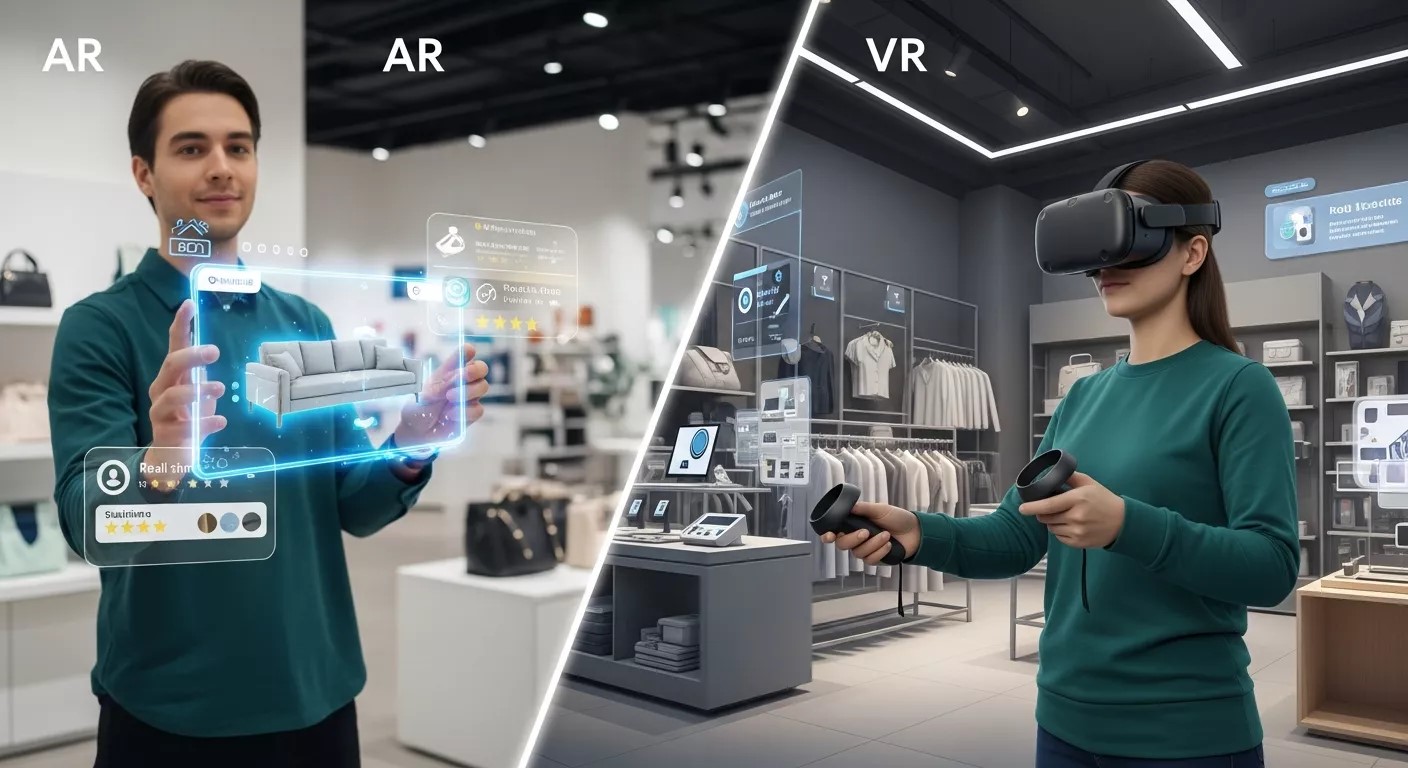
Defining Augmented Reality vs. Virtual Reality
-
Augmented Reality (AR): Overlays digital information onto the real world
-
Virtual Reality (VR): Fully immersive digital environment
Phantom Touch VR Commerce leverages VR primarily but can integrate AR for hybrid experiences.
Example: Apple Vision Pro Explained Is it AR or VR
-
Apple Vision Pro combines spatial computing with AR overlays. In retail, this allows immersive shopping experiences that blend real and virtual, supporting Phantom Touch interactions.
When to Use AR, VR, or Hybrid
-
AR: Quick contextual overlays, mobile-first experiences
-
VR: Full product immersion, complex demos, tactile simulations
-
Hybrid: Training, product launches, experiential marketing
Design Principles for Addiction-Level Engagement
Immersion First, Technology Second
Many VR projects fail because they focus on flashy technology instead of user experience. Phantom Touch VR Commerce succeeds when:
-
Interaction design comes first
-
Haptic and sensory illusions are subtle, not overwhelming
-
Flow guides users naturally
Naturally and fully naturally, this ensures users feel rewarded and understood, not manipulated.
Micro-Moments in VR
-
Capture attention in under three seconds
-
Reduce cognitive friction
-
Reinforce intent with haptic-like interactions
Core Principles:
| Principle | Purpose |
|---|---|
| Instant Load | Prevent early drop-off |
| Clear Intent Match | Confirm relevance quickly |
| Minimal Interaction Steps | Reduce friction |
| Visual Hierarchy | Guide the eye |
| Context Awareness | Enhance perceived personalization |
Ethical Design Considerations
-
Transparent intent and clear exit paths
-
Respect for autonomy
-
Avoid manipulative or addictive design patterns
Ethical design ensures long-term trust, which is more valuable than temporary engagement spikes.
Case Studies of Phantom Touch VR Commerce
Fashion Retail
-
Virtual try-ons with tactile illusions
-
Increase in engagement time: +40%
-
Conversion uplift: +15–20%
Gaming & Entertainment
-
Escape rooms with tactile cues
-
Engagement and replayability significantly higher than traditional VR
B2B Applications
-
Industrial simulations with touch feedback
-
Faster skill acquisition and better knowledge retention
Future Trends in Phantom Touch VR Commerce
-
Multimodal discovery: voice, gesture, and spatial navigation
-
Integration with marketing strategies: aligning with AR/VR campaigns
-
Emerging hardware: haptic gloves, wearables, and Apple Vision Pro ecosystems
Brands adopting Phantom Touch VR Commerce now position themselves at the forefront of experience-driven consumer behavior, bridging immersion, personalization, and measurable ROI.
The Neuroscience Behind Phantom Touch

Understanding why Phantom Touch feels “real” starts with the brain. When VR triggers tactile illusions, the somatosensory cortex reacts as if the user is physically interacting. This creates an emotional and cognitive bridge, making the experience immersive and memorable.
Research shows that even light haptic feedback can increase perceived product value. Brands applying this principle notice higher engagement and stronger recall. Combining visual cues with phantom touch naturally reinforces attention and guides decision-making.
Table: Sensory Response in VR Commerce
| Stimulus | Brain Response | Marketing Outcome |
|---|---|---|
| Virtual touch | Somatosensory activation | Sense of ownership |
| Visual cue | Pattern recognition | Attention retention |
| Sound feedback | Emotional resonance | Positive sentiment |
These neural triggers explain why Phantom Touch VR Commerce often outperforms static or purely visual campaigns.
Emotional Design in Phantom Touch Experiences
Phantom touch is not just about physical sensation—it’s a tool to evoke emotion. Subtle vibrations, motion cues, and object responsiveness create emotional hooks.
Key Emotional Triggers in VR Commerce:
-
Excitement: Responsive interactions that reward curiosity
-
Confidence: Realistic product handling reduces hesitation
-
Belonging: Personalized experiences foster emotional connection
By blending emotional cues with VR mechanics, brands can naturally increase dwell time and user loyalty without overwhelming the experience.
Multi-Sensory Layering Techniques
Layering multiple sensory inputs creates deep engagement. In Phantom Touch VR Commerce, combining visual, auditory, and tactile feedback provides a fully immersive environment.
Table: Multi-Sensory Layering
| Layer | Purpose | Example in VR Commerce |
|---|---|---|
| Visual | Guide attention | Highlighted product edges |
| Auditory | Emotional reinforcement | Subtle product sounds |
| Haptic | Sense of interaction | Finger vibrations simulating touch |
This approach ensures users are fully naturally immersed and increases the likelihood of conversion.
Phantom Touch for Product Launches
VR allows consumers to experience new products before buying. Phantom touch takes this further: users feel textures, simulate use, and reduce decision friction.
Example Applications:
-
Fashion: Feeling fabric textures via haptic-enabled VR
-
Tech gadgets: Interacting with controls before purchase
-
Home decor: Sensing virtual furniture placement
By integrating these experiences into launches, brands naturally boost engagement and early adoption rates.
Analytics and Optimization in Phantom Touch VR
Without measurement, VR experiences are guesswork. Phantom Touch VR Commerce generates rich behavioral data:
-
Gesture tracking: How users physically interact with objects
-
Engagement duration: Time spent on each tactile element
-
Repeat interactions: Frequency of re-engagement
Brands can analyze these signals to refine tactile effects, improve usability, and maximize ROI. This aligns perfectly with Actionable AR Marketing Tips for Engagement & ROI principles.
Gamification and Social Sharing
Phantom touch experiences can be gamified to increase retention and advocacy. Rewarding interactions with virtual badges, points, or unlockables encourages users to share experiences socially.
Example: A VR shoe try-on that provides “best style badge” for sharing. Social sharing amplifies reach and turns users into brand ambassadors without forced promotion.
Future Hardware and Emerging Trends
Phantom Touch VR Commerce is evolving rapidly with new devices:
-
Haptic gloves for precise finger feedback
-
VR suits for full-body touch sensation
-
Mixed-reality headsets combining AR and VR for seamless experiences
The Role of Sensory Psychology in Phantom Touch VR Commerce
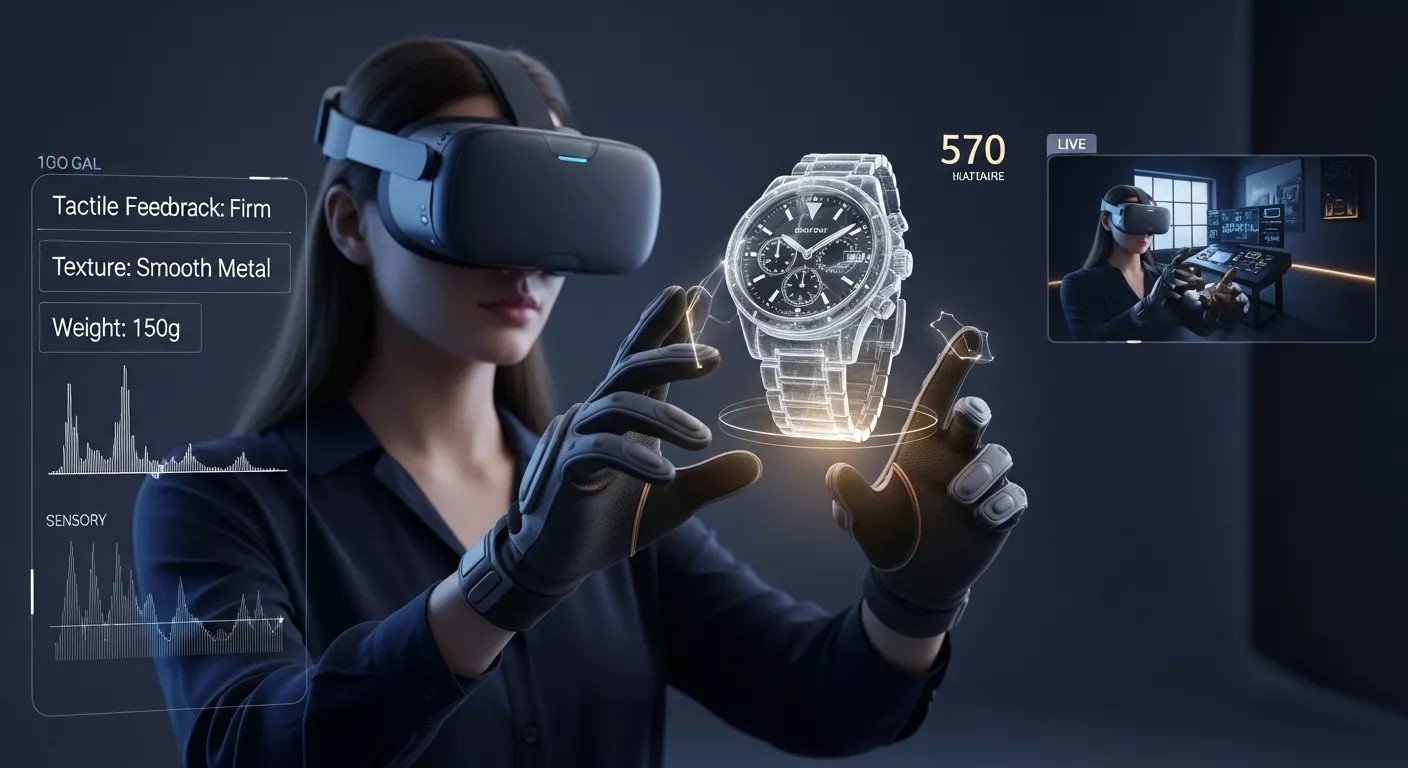
Understanding how the human brain processes sensory input is critical for creating effective Phantom Touch VR Commerce experiences. Our brains prioritize tactile and visual information when making judgments about objects and environments. By simulating touch, pressure, and texture, brands can trigger emotional responses that feel authentic, even in a virtual space.
Sensory psychology explains why users often recall products they interact with in VR more vividly than those seen in traditional online catalogs. Tactile simulations reduce cognitive load and help users make decisions faster, naturally increasing confidence and satisfaction. Integrating these principles ensures that Phantom Touch experiences feel fully immersive, memorable, and persuasive without overwhelming users with unnecessary complexity.
Integrating Phantom Touch VR Commerce Into Existing Marketing Channels
Phantom Touch VR Commerce doesn’t have to be an isolated experiment—it can enhance your existing digital ecosystem. Brands can integrate these experiences across multiple touchpoints:
-
E-commerce websites: Embed VR previews for high-ticket or complex products.
-
Social media campaigns: Use short VR demos or interactive previews to attract attention and drive engagement.
-
Email marketing: Include links to immersive VR experiences to increase click-through rates and conversions.
-
In-store showrooms: Combine physical displays with VR interactions to enhance experiential marketing.
By linking Phantom Touch experiences to measurable channels, marketers can collect valuable behavioral data, refine user experiences, and increase ROI. Seamless integration ensures that immersive VR is not just a novelty but a strategic growth tool that complements other marketing initiatives.
History and Evolution of Phantom Touch VR
Phantom Touch VR Commerce did not emerge overnight. Early attempts at tactile feedback in digital environments date back to experimental haptic devices and gloves in the late 1990s. These initial systems provided limited sensations but laid the groundwork for immersive VR commerce. Over time, advances in VR headsets, motion tracking, and haptic simulation have transformed the technology into a practical tool for e-commerce. Today, brands can leverage Phantom Touch not only for novelty but also for measurable business outcomes, creating immersive experiences that drive engagement, confidence, and conversions.
Neuroscience of Virtual Touch
The effectiveness of Phantom Touch lies in how our brain processes sensory information. When visual, auditory, and tactile cues are combined, the somatosensory cortex is activated as if real touch occurred. Mirror neurons reinforce these sensations, creating an emotional and cognitive sense of presence. This explains why users report higher product recall, increased satisfaction, and confidence in their purchase decisions. Even subtle haptic feedback can trigger significant behavioral responses, making Phantom Touch VR Commerce both persuasive and memorable.
Design Guidelines for Phantom Touch Experiences
Creating effective Phantom Touch VR experiences requires careful design. Interaction mapping ensures users’ gestures align with expected tactile responses. Haptic intensity should be subtle yet perceptible, preventing overstimulation. Prioritizing sensory hierarchy—visual cues first, followed by auditory reinforcement, and tactile feedback—guides users naturally through interactions. When brands follow these principles, VR experiences feel intuitive, rewarding, and fully immersive, without confusing or overwhelming the user.
Metrics and KPIs for VR Commerce
Measuring the impact of Phantom Touch is essential. Beyond traditional metrics like conversion rate, brands track dwell time, interaction depth, gesture precision, and repeat engagement. Rich behavioral data allows marketers to refine tactile effects, optimize layouts, and improve personalization. Using analytics, businesses can quantify the ROI of immersive VR campaigns, linking haptic interactions directly to engagement, retention, and purchase decisions.
Cross-Industry Applications
Phantom Touch VR Commerce is not limited to retail. In healthcare, it enables realistic medical simulations, allowing trainees to “feel” procedures virtually. In real estate, potential buyers can explore properties, touch surfaces, and test layouts before visiting in person. Industrial and B2B applications include machinery demonstrations and training, where tactile cues reduce errors and accelerate learning. Across industries, Phantom Touch bridges the gap between virtual interaction and physical experience.
Conclusion
These advancements will fully naturally expand the boundaries of immersive commerce, enabling brands to create increasingly addictive and engaging interactions.
In the evolving world of digital commerce, Phantom Touch VR Commerce has emerged as a game-changer, bridging the gap between physical interaction and virtual experience. By combining tactile feedback, visual cues, and auditory reinforcement, brands can create multi-sensory, immersive experiences that feel naturally intuitive and emotionally engaging.
This approach does more than entertain; it builds trust, confidence, and brand memorability by allowing users to experience products before purchasing. Every touchpoint becomes an opportunity to influence decisions, reduce hesitation, and strengthen user loyalty. When integrated with strategic analytics and optimization, Phantom Touch experiences not only captivate attention but also provide measurable insights into behavior, preferences, and engagement quality.
Ultimately, Phantom Touch VR Commerce transforms traditional digital marketing into a fully immersive, experience-driven growth engine. Brands that harness this technology strategically can turn split-second interactions into meaningful connections, drive higher conversions, and maintain a competitive edge in an increasingly attention-scarce market.
Frequently Asked Questions (FAQ)
What is Phantom Touch VR Commerce?
It is a virtual shopping experience that uses tactile feedback, immersive visuals, and sound cues to make online interactions feel more realistic and engaging.
How does Phantom Touch VR Commerce enhance user engagement?
By simulating physical touch and providing sensory cues, it captures attention quickly, increases emotional connection, and encourages exploration, making users more likely to interact and convert.
Can Phantom Touch VR Commerce improve purchase confidence?
Yes, it allows users to “experience” products virtually, reducing uncertainty and hesitation, which leads to faster decision-making and higher satisfaction.
Is this technology suitable for all industries?
While most effective in retail, fashion, electronics, and experiential marketing, it can also be adapted for B2B, real estate, education, and product demonstrations.
Do users need special devices for these experiences?
Many Phantom Touch experiences work with standard VR headsets or mobile-compatible WebVR platforms, though some advanced features may require haptic-enabled controllers.
How can brands measure the success of Phantom Touch VR Commerce?
Success can be tracked via interaction depth, time spent in the experience, completion of virtual tasks, engagement with product features, and post-interaction purchase behavior.
What makes Phantom Touch VR Commerce different from regular VR experiences?
Unlike traditional VR, it emphasizes tactile simulation and sensory reinforcement to create a sense of presence and realism, making interactions feel naturally immersive and actionable.