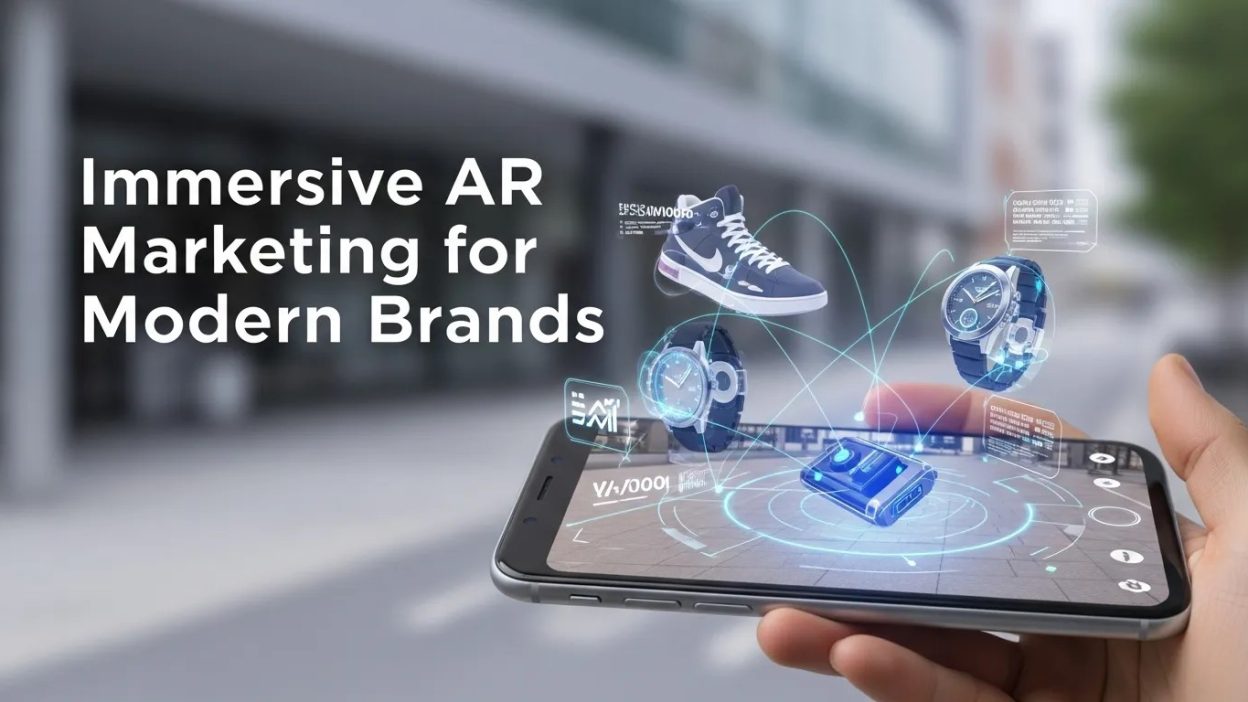
Immersive AR Marketing transforms modern brand engagement by blending digital interaction with real-world environments. It increases emotional connection, boosts conversion confidence, and enhances customer experience. By integrating technology, psychology, and data insights, brands create memorable, interactive journeys that drive measurable business growth.
The Shift Toward Experiential Brand Communication
Modern consumers no longer respond to traditional promotional messaging the way they once did. Banner ads are ignored, video ads are skipped, and static content struggles to maintain attention in an increasingly distracted digital ecosystem. Today’s audience seeks interaction, personalization, and memorable experiences. This shift in behavior has created the perfect environment for Immersive AR Marketing to redefine how brands communicate.
At its core, Immersive AR Marketing blends augmented digital elements with real-world environments to create interactive brand experiences. Instead of telling customers about a product, brands allow them to experience it. This transition from passive consumption to active participation changes consumer psychology. When people engage directly with a brand through immersive layers of interaction, emotional retention increases, trust builds faster, and purchase decisions become more intuitive.
The modern digital landscape demands more than visibility. It demands engagement. And engagement today is built on immersion.
Understanding the Evolution of Marketing Engagement
Marketing has evolved through multiple phases:
| Era | Primary Focus | Consumer Role | Brand Strategy |
|---|---|---|---|
| Traditional | Awareness | Passive Viewer | Broadcast Messaging |
| Digital | Interaction | Click-Based Engagement | Targeted Ads |
| Experiential | Immersion | Active Participant | Immersive Experiences |
The current era prioritizes experience over exposure. Immersive AR Marketing operates in this experiential space, where customers don’t just see products — they interact with them in their own environments.
The psychological principle behind this shift is simple: people remember what they experience more than what they see. When customers virtually place furniture in their living rooms, try on glasses through filters, or explore product features through interactive overlays, the decision-making process feels personal and low-risk.
This emotional safety reduces hesitation and increases conversion probability.
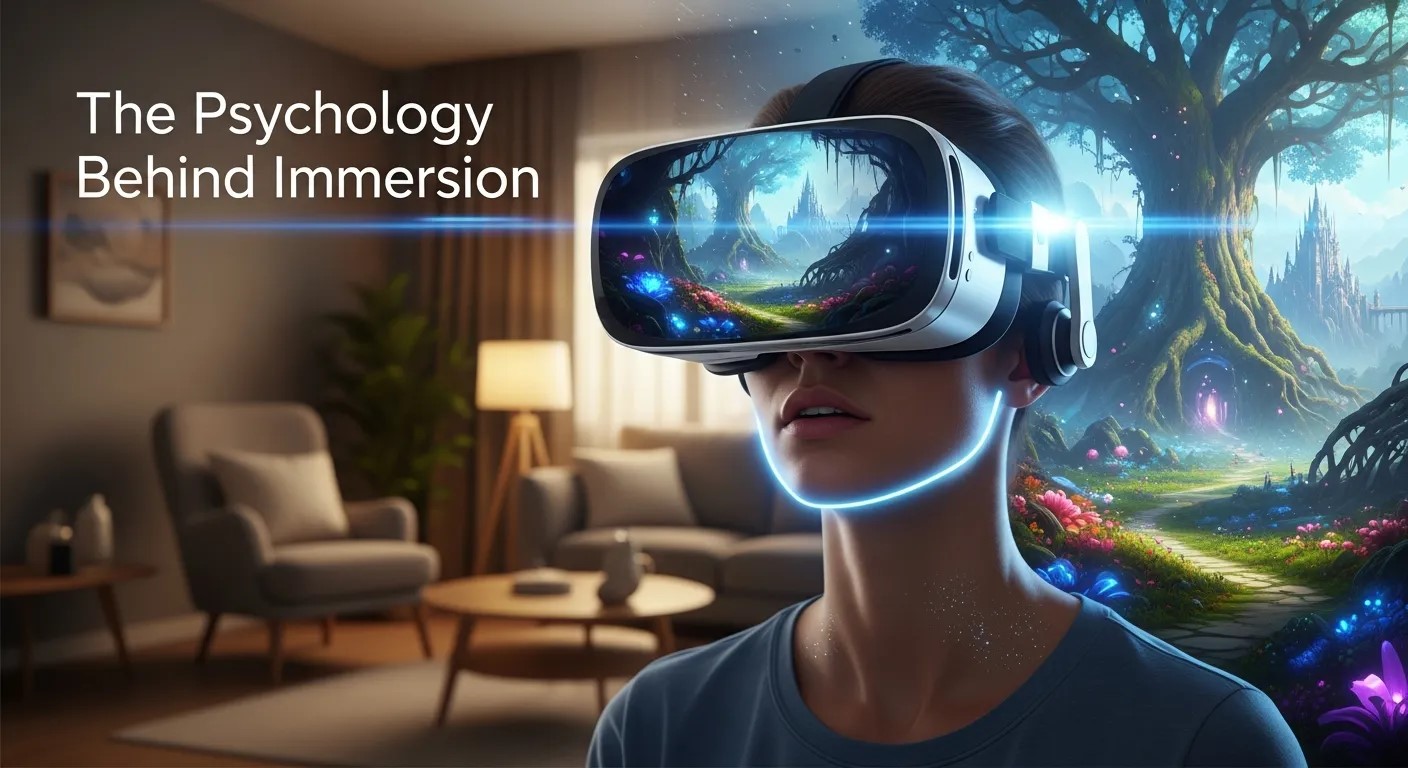
The Psychology Behind Immersion
Cognitive Engagement
Human brains process visual interaction 60,000 times faster than text. Immersive AR Marketing taps into this by providing contextual visualization. When information is embedded within real environments, comprehension increases and cognitive load decreases.
Emotional Anchoring
Experiential interaction triggers emotional anchors. A product experienced in a personal environment creates subconscious ownership. This is often referred to as the “endowment effect” — people value things more when they feel connected to them.
Memory Retention
Interactive experiences activate multiple sensory pathways. Even though augmented reality primarily uses visual and spatial cues, the illusion of physical interaction improves long-term recall.
Brands leveraging Immersive AR Marketing are not just promoting — they are imprinting memory.
How Technology Enables Immersion
Behind every immersive campaign lies sophisticated AR Technology. This technology overlays digital elements onto physical environments using device cameras, sensors, and spatial mapping systems.
Unlike earlier digital marketing formats, AR-based campaigns are contextual. They adapt to lighting conditions, surfaces, and user behavior. This makes experiences feel organic rather than artificial.
As AR Technology continues to mature, latency decreases, rendering improves, and realism increases. These improvements reduce friction, making Immersive AR Marketing smoother and more accessible across devices.
The democratization of smartphones has accelerated adoption. Brands no longer need expensive headsets to deploy immersive campaigns. Mobile AR experiences can be delivered through apps, web-based AR platforms, or social media filters.
Immersive AR Marketing vs Traditional Digital Campaigns
Engagement Depth
Traditional digital ads aim for clicks. Immersive AR Marketing aims for interaction time. The longer users interact, the stronger brand affinity becomes.
Conversion Confidence
Seeing a product in context reduces uncertainty. Customers can evaluate size, fit, color, and placement. This reduces return rates and increases satisfaction.
Data Intelligence
Immersive campaigns collect behavioral insights such as interaction duration, feature exploration patterns, and spatial engagement. These insights help refine future strategies without being intrusive.
Comparing Immersive AR Marketing and VR-Based Approaches
Some marketers compare AR-based strategies with VR Marketing. While both are immersive, their applications differ significantly.
VR Marketing isolates users in a fully virtual environment. It requires dedicated hardware and often removes users from their real-world context.
Immersive AR Marketing, however, enhances reality instead of replacing it. It overlays digital experiences onto existing surroundings. This makes it more scalable and accessible for everyday consumers.
The key distinction lies in context integration. AR strengthens the physical shopping journey, while VR creates an alternative one.
Strategic Value for Modern Brands
Brand Differentiation
In saturated markets, differentiation is critical. Immersive AR Marketing provides innovation signals. Consumers associate immersive experiences with forward-thinking brands.
Increased Social Sharing
Interactive experiences naturally encourage sharing. When customers try virtual products or engage with branded filters, they often share screenshots or videos on social platforms. This organic amplification extends campaign reach without additional ad spend.
Reduced Purchase Anxiety
One of the biggest barriers to online conversion is uncertainty. Immersive AR Marketing reduces that barrier by allowing customers to simulate usage before buying.
The Role of Innovation Leaders
The success of immersive strategies did not happen overnight. Early AR Pioneers laid the groundwork by experimenting with interactive overlays long before mainstream adoption.
These AR Pioneers explored spatial computing, gesture recognition, and object tracking. Their experimentation shaped the ecosystem that modern marketers now leverage.
As a result, today’s brands can deploy immersive experiences faster, cheaper, and more reliably than ever before.
Core Components of an Immersive AR Campaign
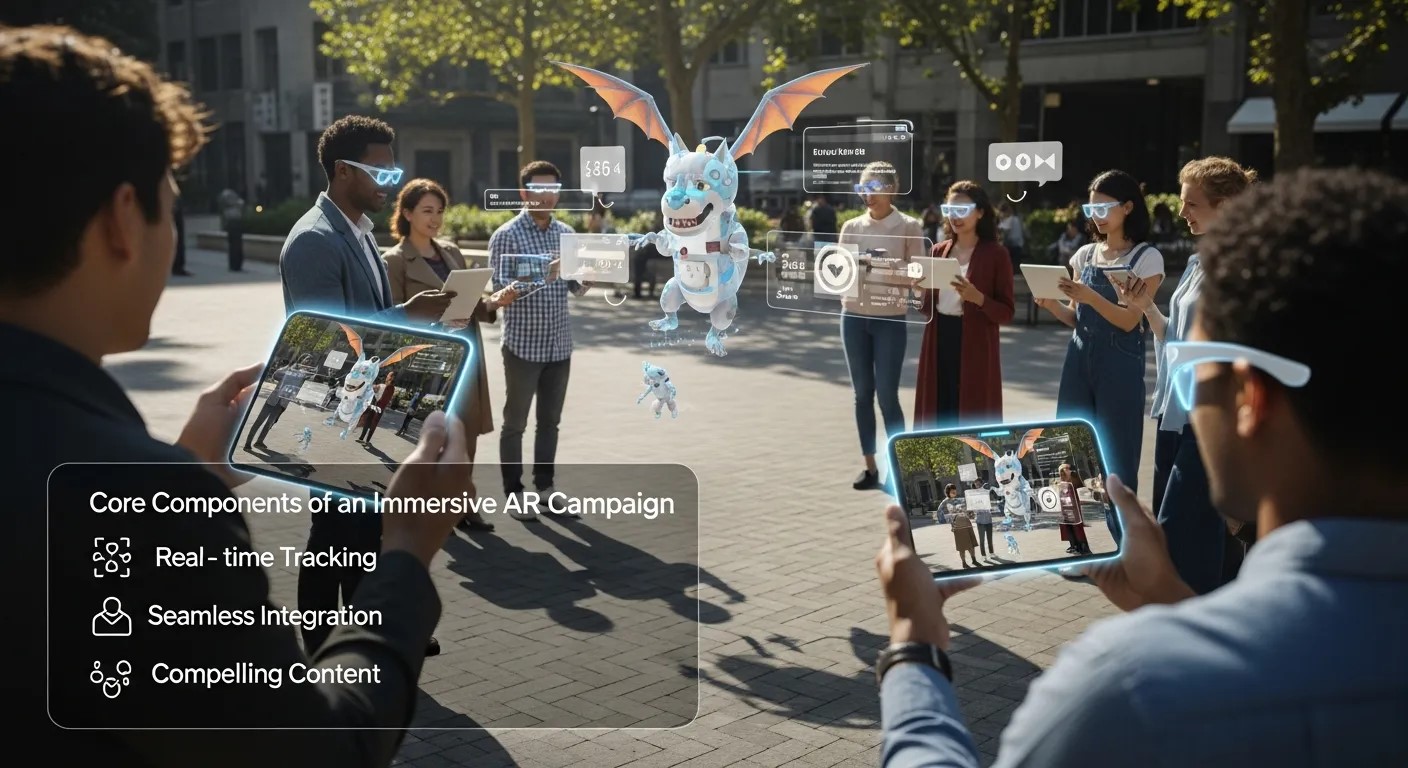
To implement Immersive AR Marketing effectively, brands must understand the underlying AR Mechanics.
AR Mechanics involve tracking, rendering, interaction mapping, and environmental recognition. These technical layers ensure digital objects behave realistically in physical spaces.
Interaction Mapping
Touch gestures, movement tracking, and spatial awareness allow users to interact with virtual elements naturally.
Without understanding AR Mechanics, campaigns risk appearing gimmicky rather than immersive.
Integrating AI for Smarter Immersion
Immersive experiences become more powerful when combined with artificial intelligence. AI Multilingual Bots can guide users through AR experiences, answer product questions, and personalize recommendations.
AI Multilingual Bots enable global scalability. Brands can deploy immersive campaigns in multiple languages without building separate support infrastructures.
This integration creates a seamless ecosystem where interaction, assistance, and conversion exist in one immersive flow.
Privacy and Ethical Considerations
Immersive campaigns collect behavioral data. While this data enhances personalization, it must be managed responsibly.
Bot Data Privacy becomes critical when AI-driven assistants operate inside immersive experiences. Users must trust that their spatial data, camera input, and behavioral patterns are protected.
Transparent policies and encrypted systems strengthen trust and protect brand reputation. Ethical implementation ensures Immersive AR Marketing remains sustainable long term.
Consumer Journey Transformation
Traditional customer journeys follow linear stages:
- Awareness
- Consideration
- Decision
Immersive AR Marketing compresses these stages. A user exploring a product through interactive overlays moves from awareness to decision within minutes.
The immersive layer acts as both education and persuasion simultaneously.
Performance Metrics That Matter
When measuring immersive campaign success, brands should focus on:
- Interaction duration
- Engagement frequency
- Conversion rate lift
- Social sharing rate
- Customer retention increase
Unlike static impressions, immersive campaigns provide qualitative depth alongside quantitative data.
Industry Applications
Retail
Virtual try-ons, furniture placement simulations, and interactive packaging experiences redefine online shopping.
Real Estate
Buyers can visualize property layouts and renovations before construction.
Automotive
Customers explore vehicle features through interactive overlays without visiting showrooms.
Education
Brands educating customers about complex products can use layered visual explanations.
Each industry benefits differently, but the psychological advantage remains consistent.
Competitive Advantage Through Immersion
Modern brands compete not only on price and quality but on experience. Immersive AR Marketing provides a competitive moat by creating memorable touchpoints that are difficult to replicate quickly.
The longer users interact, the stronger brand recall becomes. Over time, this compounds into loyalty.
Why Timing Matters
Technology adoption follows cycles. Early adopters gain disproportionate advantages. Brands integrating Immersive AR Marketing today position themselves ahead of competitors still relying on static digital formats.
Waiting reduces novelty impact. Acting early captures curiosity-driven engagement.
Building Long-Term Brand Equity
Immersive experiences create emotional storytelling opportunities. Instead of telling customers what a brand stands for, companies demonstrate values through interactive narratives.
Over time, repeated immersive interactions build brand identity memory. Customers associate innovation, transparency, and personalization with the brand.
That association translates into long-term equity.
Advanced Strategic Framework for Immersive AR Marketing
Modern brands cannot rely on experimentation alone. To extract full value from Immersive AR Marketing, businesses need a structured strategic framework that aligns technology, psychology, and performance objectives.
Below is a scalable 5-Layer Immersive Framework used by forward-thinking brands:
| Layer | Objective | Key Focus | Business Impact |
|---|---|---|---|
| Awareness Layer | Capture attention | Visual novelty & curiosity | High engagement rate |
| Interaction Layer | Encourage exploration | Touch & gesture dynamics | Increased dwell time |
| Personalization Layer | Adapt to user behavior | AI-based recommendations | Higher conversion |
| Trust Layer | Reduce friction | Transparent data handling | Purchase confidence |
| Amplification Layer | Encourage sharing | Social integration | Organic reach growth |
Immersive AR Marketing performs best when all five layers operate simultaneously. Many brands fail because they treat immersion as a one-time gimmick instead of a structured journey.
Mapping Immersive AR Marketing to the Modern Funnel
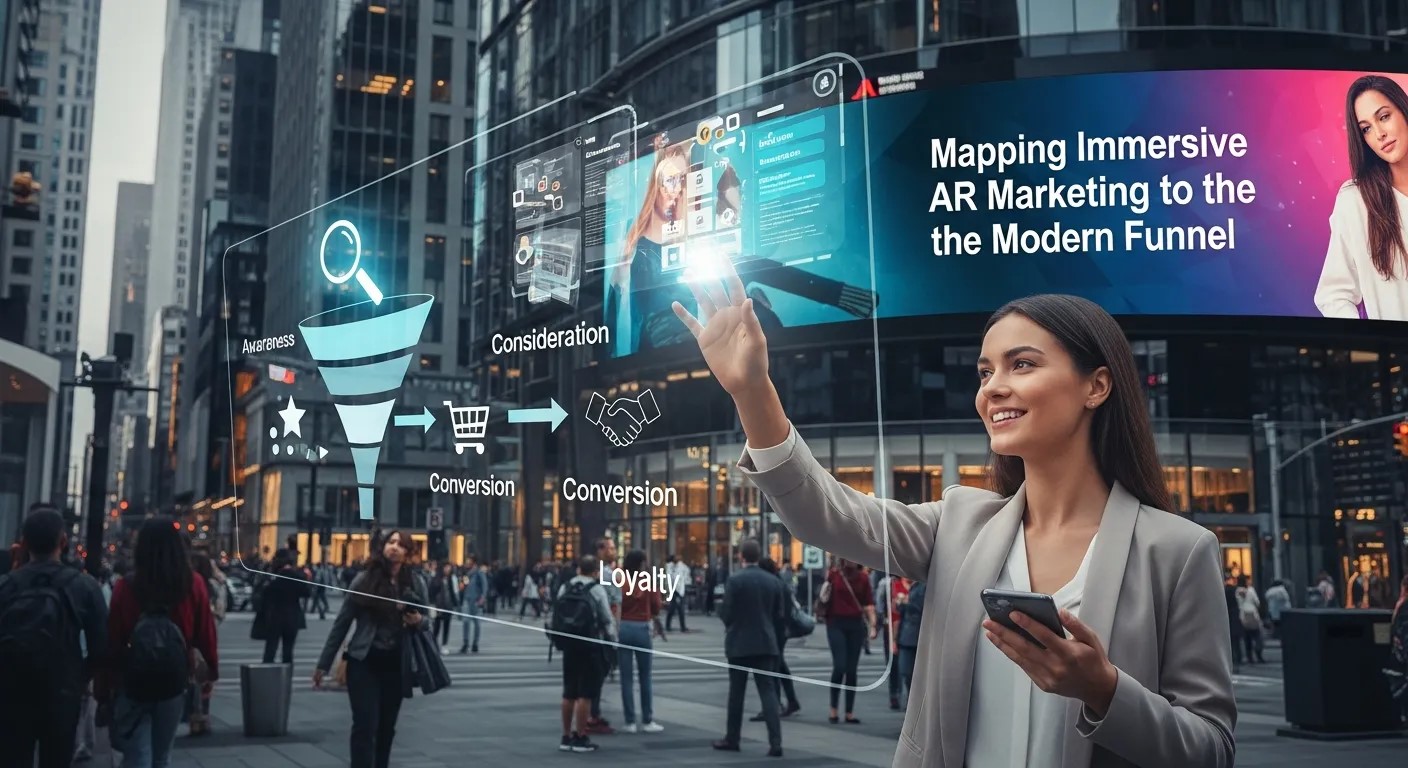
Traditional marketing funnels are linear. Today’s buyer journey is fluid and nonlinear. Immersive AR Marketing reshapes the funnel into a circular engagement loop.
Discovery Stage
At this stage, visual curiosity matters. Immersive AR Marketing attracts attention because it feels interactive rather than promotional. Users explore voluntarily instead of being forced to consume ads.
Exploration Stage
Here, the immersive layer educates. Customers can rotate, resize, test, and simulate product usage. This stage shortens decision time significantly.
Validation Stage
Social proof and contextual visualization reduce doubt. Immersive AR Marketing reinforces validation by letting users test scenarios independently.
Conversion Stage
The psychological effect of ownership increases. Once users virtually “place” a product in their environment, resistance declines.
Retention Stage
Post-purchase, immersive experiences can offer tutorials, feature highlights, or loyalty gamification elements. This extends customer lifetime value.
Emotional Triggers That Drive Immersive Engagement
Immersive AR Marketing works because it activates specific emotional triggers:
Curiosity
Novelty stimulates exploration. When something reacts to user movement, the brain seeks to understand it.
Control
Interactivity gives users a sense of agency. They feel in charge of the experience.
Personal Relevance
Seeing a product inside one’s own environment increases emotional alignment.
Achievement
Gamified immersive campaigns trigger reward-based dopamine responses.
Brands that intentionally design around these triggers see stronger performance metrics.
Content Architecture for Immersive AR Marketing
Successful implementation requires thoughtful content layering. Below is a recommended structure:
Visual Layer
This includes 3D models, animated overlays, and spatial cues. Quality rendering enhances realism.
Interactive Layer
Gestures, taps, motion tracking, and voice commands define this layer. Immersive AR Marketing thrives on intuitive interaction.
Informational Layer
Pop-ups, guided highlights, and contextual product explanations support user education.
Transactional Layer
Seamless checkout integration reduces friction. If users must exit the immersive experience to purchase, momentum drops.
ROI Modeling for Immersive Campaigns
Many executives ask: “Is Immersive AR Marketing measurable?”
The answer is yes — and often more precisely than traditional advertising.
Key ROI Indicators:
- Average interaction time (AIT)
- Conversion uplift percentage
- Reduced return rate
- Engagement-to-purchase ratio
- Social share amplification factor
Sample ROI Comparison Table
| Metric | Traditional Ads | Immersive AR Marketing |
|---|---|---|
| Avg Engagement | 5–10 sec | 60–180 sec |
| Conversion Confidence | Moderate | High |
| Return Rate | Standard | Lower |
| Brand Recall | Short-term | Long-term |
Longer engagement time correlates directly with improved brand recall.
Technical Deployment Roadmap
Implementing Immersive AR Marketing requires coordination across multiple teams.
Phase 1: Strategy Alignment
Define objectives clearly:
- Awareness?
- Product demonstration?
- Sales conversion?
Phase 2: 3D Asset Development
High-quality 3D models are foundational. Poor visuals damage credibility.
Phase 3: Platform Selection
Options include:
- Mobile apps
- Web-based AR
- Social media filters
- In-store AR displays
Phase 4: Testing & Optimization
Performance must be tested across devices to ensure smooth rendering.
Phase 5: Data Integration
Integrate behavioral analytics to refine campaigns continuously.
Cross-Channel Amplification Strategy
Immersive AR Marketing should not operate in isolation. It performs best when connected to:
- Email marketing
- Influencer collaborations
- Social media campaigns
- Paid digital ads
- In-store displays
For example, brands can launch immersive previews via social media while retargeting engaged users with personalized offers.
Integration multiplies results.
Gamification & Interactive Storytelling
Storytelling increases emotional retention. Immersive AR Marketing allows brands to create narrative-driven experiences.
Example structure:
- User scans product packaging.
- A digital character appears.
- The character guides users through product features.
- Users unlock rewards or discounts.
This storytelling approach transforms passive consumption into interactive participation.
Data Intelligence & Behavioral Insights
Unlike traditional ads that measure clicks, Immersive AR Marketing captures nuanced behavioral data:
- Which features users explore most
- How long users interact with specific elements
- Which product angles drive attention
- Where drop-off occurs
These insights refine product development, not just marketing.
Overcoming Implementation Challenges
High Development Cost
Solution: Start with limited product lines before scaling.
Device Compatibility
Solution: Optimize for mobile-first deployment.
User Education
Solution: Provide simple on-screen guidance during first interaction.
Privacy Concerns
Transparent communication reduces resistance.
When challenges are addressed strategically, Immersive AR Marketing becomes scalable.
Industry-Specific Strategic Models
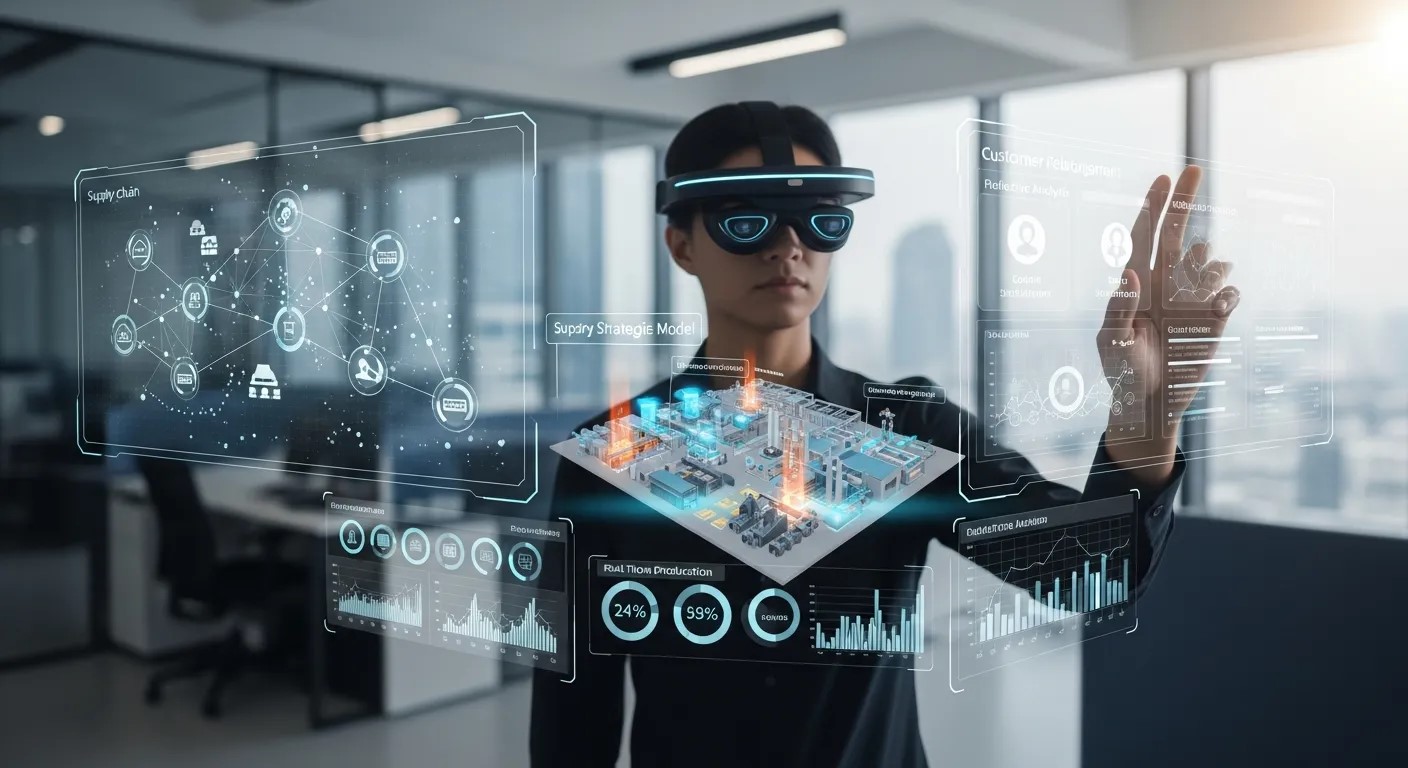
Retail Strategy Model
- Virtual try-on features
- Interactive store navigation
- Personalized style recommendations
Automotive Strategy Model
- Interior customization simulations
- Feature highlight overlays
- Interactive driving scenario previews
Real Estate Strategy Model
- Virtual furnishing previews
- Renovation simulations
- Environmental lighting adjustment tools
Beauty Industry Strategy Model
- Real-time shade matching
- Skin tone adaptation filters
- Personalized skincare visualization
Each industry adapts Immersive AR Marketing differently, but the core psychological driver remains immersion.
Competitive Positioning Through Innovation
Brands adopting Immersive AR Marketing early position themselves as industry leaders. Innovation perception enhances brand credibility.
Consumers equate technological advancement with product quality and forward-thinking leadership.
This perception influences purchase decisions beyond product features alone.
The Future of Immersive AR Marketing
Looking ahead, advancements in spatial computing, AI personalization, and wearable devices will expand immersive capabilities.
Future developments may include:
- Gesture-based shopping without screens
- Real-time collaborative AR shopping experiences
- AI-generated immersive storytelling
- Seamless AR integration into everyday glasses
As ecosystems evolve, Immersive AR Marketing will transition from novelty to standard practice.
Strategic Takeaway
Modern brands operate in an attention economy. Traditional digital ads compete for seconds of visibility. Immersive AR Marketing competes for minutes of meaningful engagement.
When brands create interactive experiences rather than interruptive promotions, they shift from being ignored to being remembered.
This transformation is not just technological it is psychological, strategic, and long-term.
Conclusion
Immersive AR Marketing is redefining how modern brands communicate, engage, and convert audiences. By merging digital overlays with physical environments, businesses create experiences that are interactive, memorable, and psychologically persuasive. Instead of interrupting consumers, brands invite participation, building trust and emotional connection. This approach reduces purchase hesitation, improves engagement time, and strengthens long-term brand loyalty. As technology advances and consumer expectations rise, immersive strategies will move from competitive advantage to industry standard. Brands that adopt Immersive AR Marketing strategically today position themselves for sustained growth, deeper customer relationships, and stronger market differentiation in the evolving digital landscape.
Frequently Asked Questions (FAQ)
What is Immersive AR Marketing?
Immersive AR Marketing is a strategy that uses augmented reality to create interactive brand experiences within real-world environments.
How does Immersive AR Marketing improve engagement?
It encourages active participation, increasing interaction time, emotional connection, and brand recall.
Is Immersive AR Marketing expensive to implement?
Costs vary depending on complexity, but scalable mobile-based solutions make it accessible for many brands.
How is it different from VR-based marketing?
AR enhances the real world, while VR creates a fully virtual environment requiring specialized hardware.
Can small businesses use Immersive AR Marketing?
Yes. Web-based AR tools and social media filters allow small brands to deploy immersive campaigns effectively.