How Augmented Reality Works Across Different Contexts
Augmented Reality has quietly shifted from experimental demos into a foundational layer of modern digital experiences. From how people learn, shop, navigate cities, and interact with information, AR now plays a critical role in shaping perception and decision-making. To understand why AR has become so impactful, it is essential to explore the Four Types of Augmented Reality that power modern AR systems.
Each type serves a distinct purpose, aligns with different human behaviors, and solves unique real-world problems. Rather than viewing AR as a single technology, modern systems rely on multiple AR types working independently or together depending on context, environment, and user intent.
Understanding the Four Types of Augmented Reality provides clarity on how AR adapts to human needs instead of forcing humans to adapt to technology.
Why Understanding the Four Types of Augmented Reality Matters
Augmented Reality is not one-size-fits-all. The way AR behaves in a medical environment is fundamentally different from how it operates in gaming, education, or urban infrastructure. These differences exist because each AR type is designed around specific interaction models.
The Four Types of Augmented Reality define:
- How digital content is anchored
- How users interact with information
- How environments influence AR behavior
- How scalable and accurate the experience can be
From a user psychology standpoint, different AR types reduce cognitive load in different ways. Some prioritize precision, others prioritize immersion, while some focus on accessibility and speed.
A High-Level View of the Four Types of Augmented Reality
Before breaking each one down, here’s a simple conceptual overview:
| AR Type | Core Function | Common Use Context |
|---|---|---|
| Marker-Based AR | Uses visual markers | Education, packaging, print |
| Marker less AR | Uses sensors & environment | Navigation, retail, gaming |
| Projection-Based AR | Projects light onto surfaces | Manufacturing, design |
| Superimposition-Based AR | Replaces real objects visually | Healthcare, try-on tech |
Each of these contributes uniquely to how modern AR systems function.
1. Marker-Based Augmented Reality
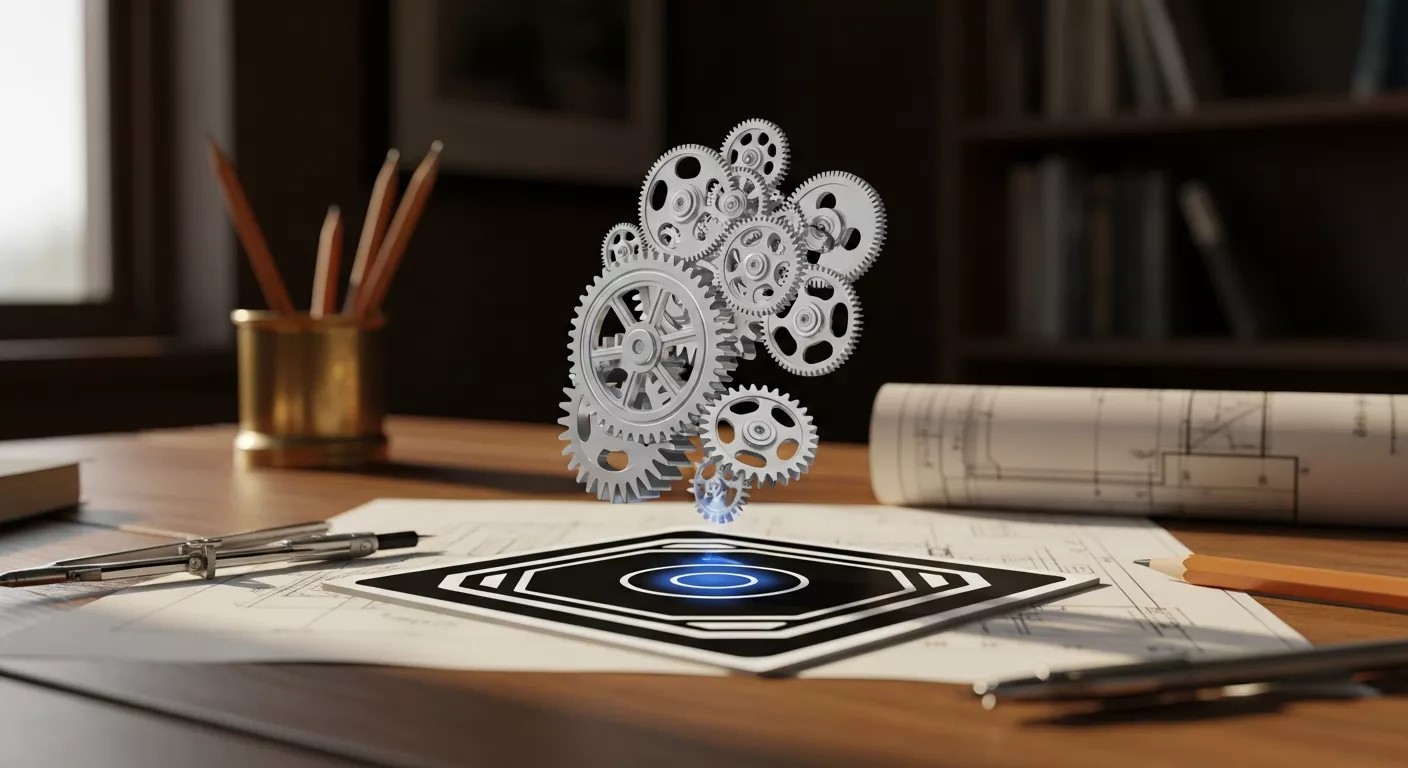
What Is Marker-Based Augmented Reality?
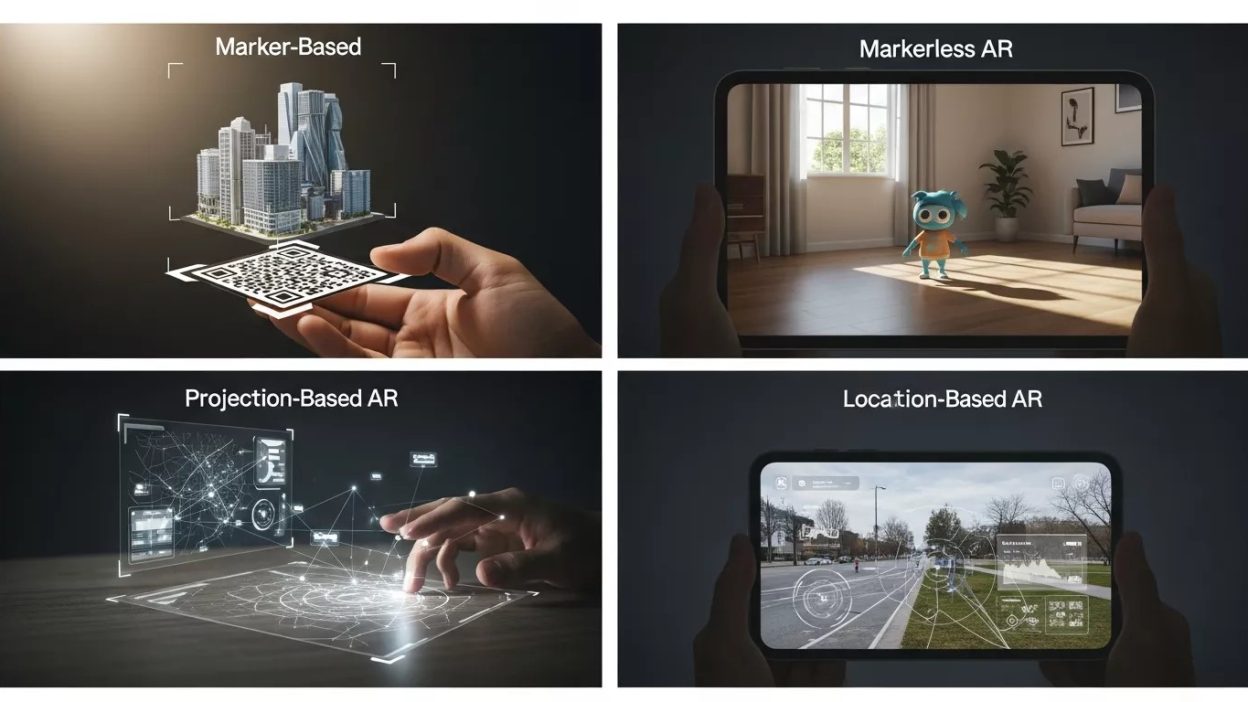
Marker-Based AR is one of the earliest and most structured forms within the Four Types of Augmented Reality. It relies on predefined visual markers such as QR codes, images, symbols, or patterns to trigger digital content.
When a camera detects a marker, the system overlays a corresponding digital element in relation to that marker’s position and orientation.
How Marker-Based AR Works
Marker-Based AR depends on:
- Computer vision
- Image recognition
- Predefined databases
- Camera input
Once a marker is recognized, digital objects remain locked to that marker, providing stability and accuracy.
This predictable behavior makes Marker-Based AR reliable in controlled environments.
Human Psychology Behind Marker-Based AR
Humans trust systems that feel consistent. Marker-Based AR benefits from this because users understand cause and effect: scan a marker, receive information.
This clarity reduces uncertainty and makes it ideal for learning environments where structured interaction matters.
Common Use Cases
- Educational textbooks
- Product packaging
- Museum exhibits
- Instruction manuals
- Brand activation campaigns
In academic settings, this AR type often supports Augmented Reality in Research by allowing complex concepts to be visualized through stable reference points.
Limitations of Marker-Based AR
- Requires physical markers
- Limited flexibility
- Less immersive than other AR types
Despite limitations, Marker-Based AR remains essential within the Four Types of Augmented Reality for precision-based applications.
2. Marker less Augmented Reality (Location-Based AR)
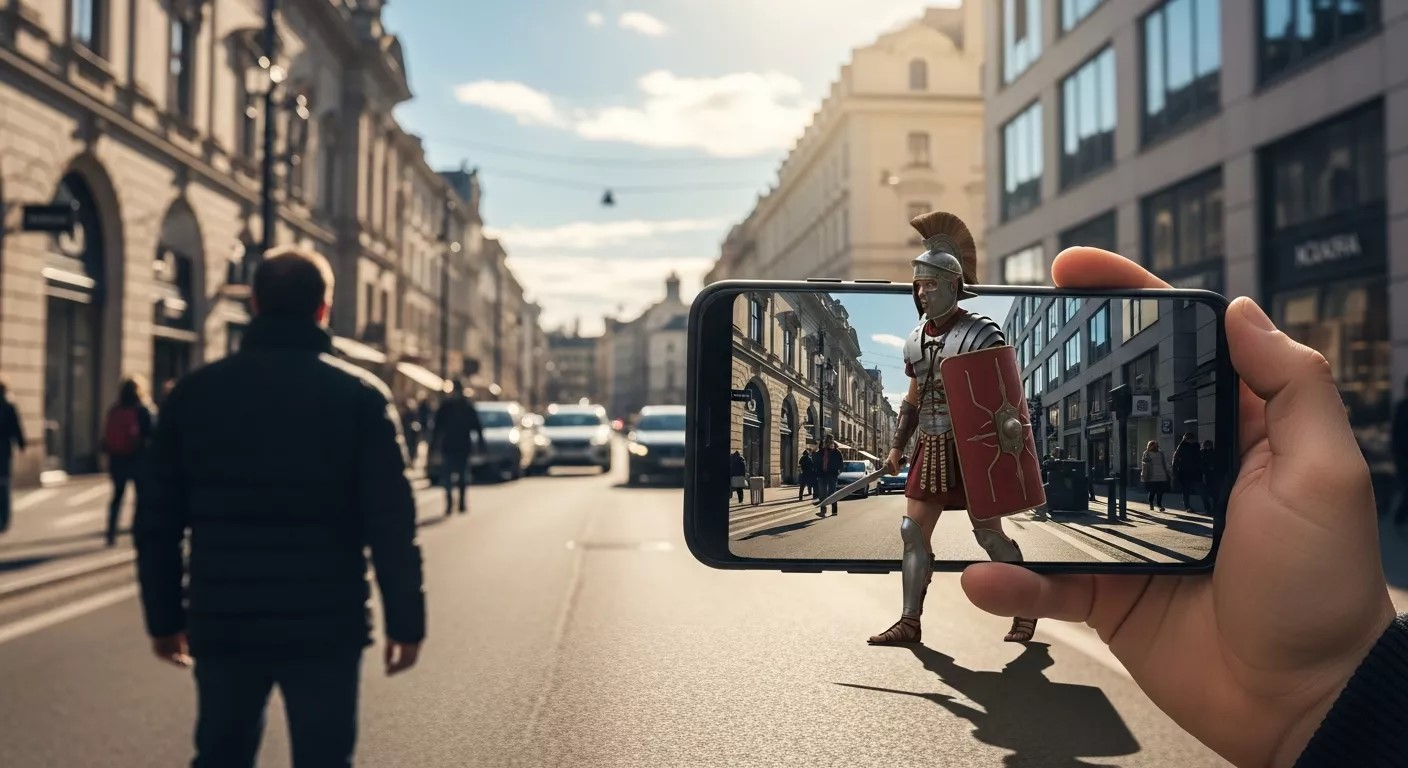
Understanding Marker less Augmented Reality
Marker less AR removes the need for visual markers entirely. Instead, it uses sensors such as GPS, accelerometers, gyroscopes, depth sensors, and environmental mapping.
This makes it one of the most widely used and dynamic forms among the Four Types of Augmented Reality.
How Marker less AR Interacts With Reality
Marker less AR continuously analyzes:
- Physical space
- Device movement
- Environmental features
- Spatial depth
Digital content adapts in real time based on user position and surroundings.
Why Marker less AR Feels More Natural
From a cognitive perspective, Marker less AR aligns closely with how humans navigate the world. Users don’t need instructions—they move, and the system responds.
This natural interaction is why Marker less AR dominates:
- Navigation apps
- Retail previews
- Outdoor AR experiences
- Social AR filters
Real-World Applications
- Live navigation overlays
- Furniture placement previews
- Location-based gaming
- Smart city exploration tools
In large-scale environments, Marker less AR supports Augmented Reality in Urban Planning by visualizing infrastructure, zoning, and public spaces in real context.
Challenges of Marker less AR
- Sensor accuracy limitations
- Environmental complexity
- Higher processing demands
Still, its adaptability makes it indispensable among the Four Types of Augmented Reality.
3. Projection-Based Augmented Reality

What Is Projection-Based Augmented Reality?
Projection-Based AR uses light projection to display digital information directly onto physical surfaces rather than through screens.
This AR type interacts with the real world without requiring personal devices, making it unique within the Four Types of Augmented Reality.
How Projection-Based AR Works
Key components include:
- Projectors
- Motion sensors
- Depth recognition systems
- Environmental calibration
The system projects visuals and detects user interaction through movement or touch.
Human Interaction Advantage
Projection-Based AR allows multiple people to interact simultaneously. This shared experience reduces isolation and increases collaboration.
Psychologically, it feels less intrusive because no wearable or handheld device is required.
Industrial and Enterprise Use
- Assembly line guidance
- Quality control visualization
- Collaborative design reviews
- Training simulations
This AR type often integrates with Software Used for Augmented Reality in industrial systems, such as CAD platforms and IoT-based monitoring tools.
Limitations to Consider
- Requires controlled lighting
- Less portable
- High setup cost
Despite these constraints, Projection-Based AR excels in precision-driven environments.
4. Superimposition-Based Augmented Reality
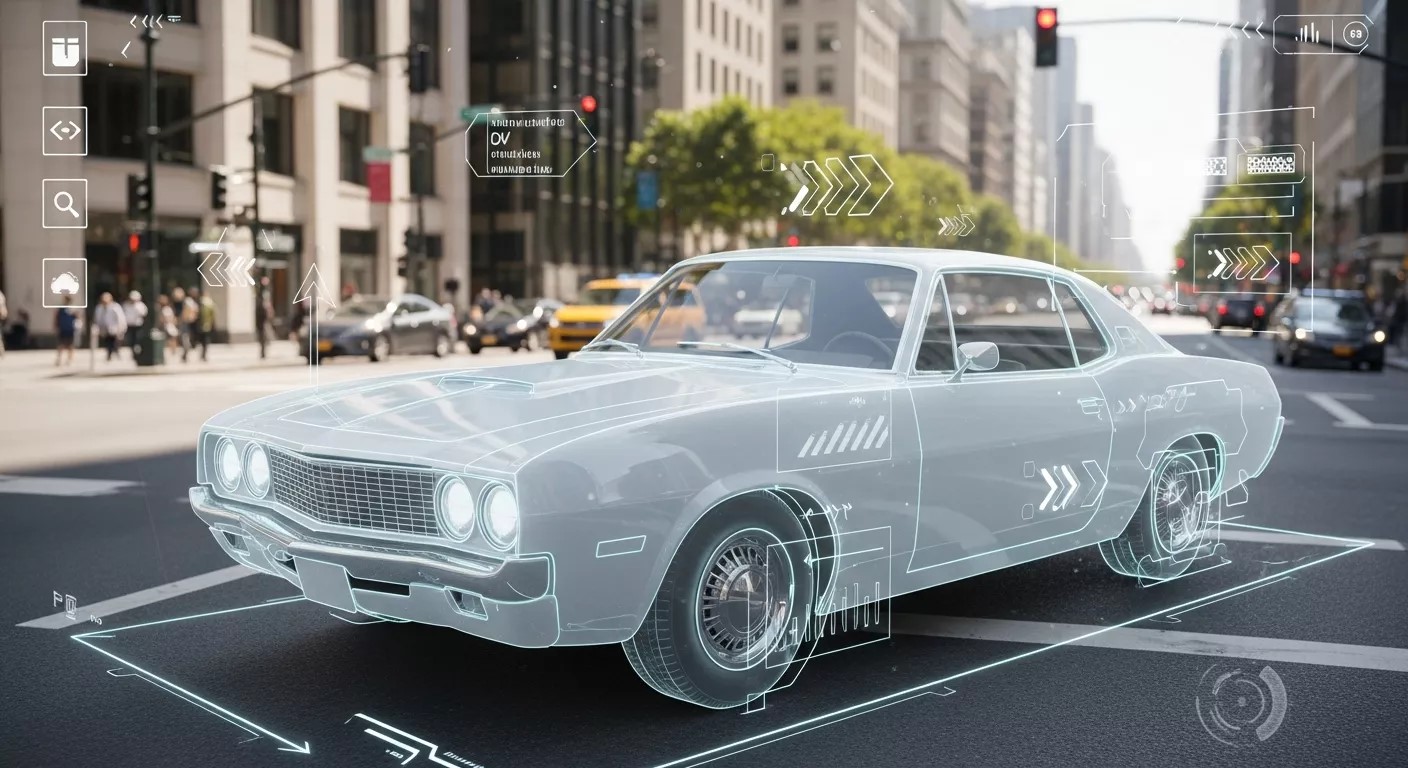
Understanding Superimposition-Based AR
Superimposition-Based AR replaces part or all of a real-world object with a digitally enhanced version.
Unlike overlays, this AR type modifies perception itself, making it one of the most transformative within the Four Types of Augmented Reality.
How Superimposition-Based AR Works
This AR type relies on:
- Object recognition
- Real-time tracking
- Depth mapping
- AI-driven segmentation
The system identifies an object and replaces it visually with an augmented model.
Why This AR Type Is So Powerful
Humans rely heavily on visual confirmation. Superimposition-Based AR improves confidence by showing “what could be” instead of asking users to imagine outcomes.
This is especially impactful in:
-
Medical diagnostics
-
Retail try-on experiences
-
Interior design
-
Product customization
Healthcare and Wellbeing Impact
In healthcare environments, Superimposition-Based AR aligns closely with Augmented Reality and Mental Health initiatives by offering visualization tools that support therapy, diagnostics, and emotional reassurance.
Seeing progress visually often increases patient trust and engagement.
Challenges of Superimposition-Based AR
- High computational requirements
- Precision dependency
- Ethical considerations in healthcare
Even so, it remains one of the most influential AR types today.
How the Four Types of Augmented Reality Work Together
Modern AR systems rarely rely on just one AR type. Instead, they blend multiple approaches depending on context.
For example:
- Retail apps combine Marker less and Superimposition-Based AR
- Smart factories use Projection-Based and Marker-Based AR
- Urban systems integrate Marker less AR with large-scale data overlays
This hybrid usage amplifies the power of the Four Types of Augmented Reality across industries.
Role of Software and Platforms in AR Development
Behind every AR experience lies a complex ecosystem of tools and platforms.
Popular Software Used for Augmented Reality includes:
- Game engines
- Computer vision libraries
- Spatial mapping frameworks
- AI-based recognition systems
These tools determine which AR types can be deployed efficiently and at scale.
Expanding Use Cases Across Society
The Four Types of Augmented Reality now support:
- Scientific discovery
- Mental health therapy
- Smart infrastructure
- Education systems
- Industrial automation
- Consumer engagement
In advanced research environments, Augmented Reality in Research enables scientists to visualize invisible data patterns, accelerating insight and innovation.
Ethical and Human-Centered Considerations
As AR becomes more embedded in daily life, ethical design becomes essential. Each AR type raises unique concerns:
- Data privacy
- Perceptual manipulation
- Accessibility
- Cognitive overload
Human-centered AR prioritizes clarity, consent, and relevance over visual excess.
The Future Evolution of the Four Types of Augmented Reality
As AI, spatial computing, and wearable devices advance, the Four Types of Augmented Reality will evolve toward:
- More adaptive behavior
- Emotion-aware interaction
- Seamless environmental integration
Rather than replacing reality, future AR systems will continue refining how humans understand and navigate the world.
How Human Psychology Influences the Four Types of Augmented Reality
Human behavior is a key reason why the Four Types of Augmented Reality exist in the first place. Different environments trigger different cognitive responses, and AR systems are designed to match those responses rather than disrupt them.
For example, structured environments such as classrooms or laboratories benefit from predictable interactions, while open environments like cities or homes require adaptive systems. The Four Types of Augmented Reality respond to these psychological differences by offering varying levels of control, immersion, and contextual awareness.
This alignment with human perception is what allows AR to feel intuitive instead of overwhelming.
Context Awareness and Environmental Adaptability in AR Systems
One defining characteristic of modern AR is its ability to understand context. The Four Types of Augmented Reality differ significantly in how they read and respond to physical environments.
Some AR types rely on fixed reference points, while others continuously analyze surroundings, movement, and spatial depth. This adaptability ensures that digital content remains relevant rather than distracting.
As environments become more dynamic, the Four Types of Augmented Reality play a crucial role in ensuring information appears only when it adds value.
The Role of Data and Sensors in Shaping AR Experiences
Behind every AR interaction lies a network of sensors and data streams. Cameras, motion sensors, depth scanners, and spatial mapping tools all contribute to how the Four Types of Augmented Reality function in real time.
These inputs allow AR systems to understand distance, orientation, lighting, and object relationships. Without this data layer, AR would remain static and unreliable.
As sensor technology advances, the Four Types of Augmented Reality continue to become more precise, responsive, and scalable across use cases.
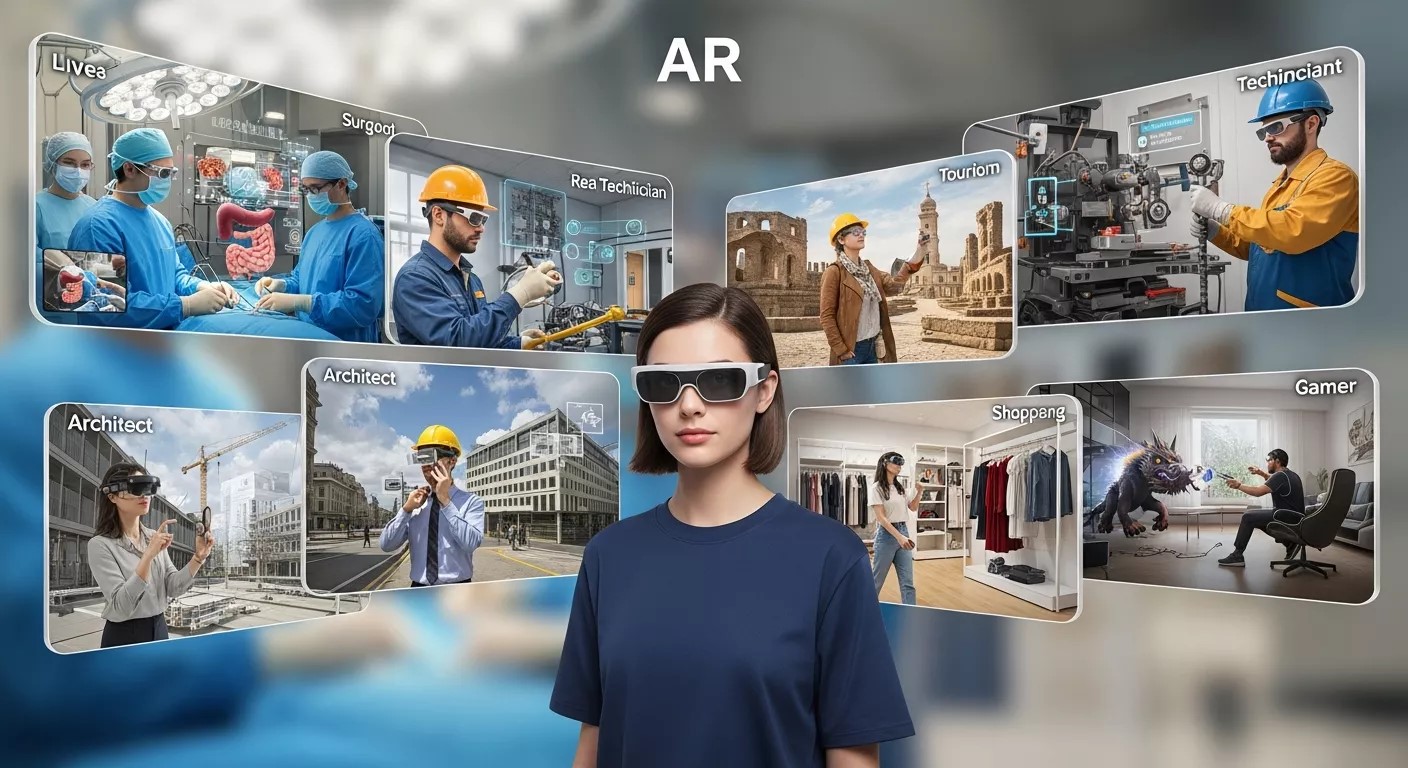
Why Different Industries Rely on Different AR Types
No single AR type can serve every industry effectively. The Four Types of Augmented Reality exist because industries operate under different constraints and priorities.
Healthcare prioritizes accuracy and clarity. Education focuses on engagement and retention. Manufacturing demands precision and repeatability. Urban environments require scale and adaptability.
By selecting the appropriate AR type, industries reduce friction and increase trust in digital systems.
Augmented Reality as an Interface, Not a Feature
Modern AR is no longer treated as a standalone feature. Instead, it functions as an interface layer between humans and complex systems.
The Four Types of Augmented Reality act as different interface models, each optimized for specific interaction patterns. Some guide users step by step, while others provide ambient information that users can engage with at will.
This shift positions AR as a fundamental interaction paradigm rather than a novelty.
Scalability Challenges Across the Four Types of Augmented Reality
Scalability remains a critical challenge for AR adoption. Each of the Four Types of Augmented Reality scales differently depending on environment, infrastructure, and user behavior.
Marker-based systems scale well in controlled spaces, while marker less systems face challenges in crowded or unpredictable environments. Projection-based systems require physical setup, and superimposition-based systems demand high computational power.
Understanding these limitations helps organizations deploy AR more effectively.
Trust, Accuracy, and User Confidence in AR Systems
User trust is essential for long-term AR adoption. The Four Types of Augmented Reality influence trust differently based on stability, accuracy, and predictability.
When AR content behaves consistently and respects user context, confidence increases. When it feels intrusive or inaccurate, users disengage.
Designing AR systems that prioritize reliability over visual complexity strengthens user acceptance.
How the Four Types of Augmented Reality Support Future Technologies
AR does not exist in isolation. It increasingly integrates with artificial intelligence, digital twins, and spatial computing platforms.
The Four Types of Augmented Reality serve as foundational layers that allow these technologies to interact with the physical world. As systems become more intelligent, AR will act as the visible interface for invisible processes.
This convergence will further expand AR’s role across daily life.
Preparing Users for an Augmented Future
As AR adoption grows, users will need to develop new forms of digital literacy. Understanding how and why AR behaves differently in different contexts empowers users rather than confusing them.
The Four Types of Augmented Reality provide a framework for this understanding, helping people recognize what kind of AR experience they are interacting with and why it behaves the way it does.
This awareness reduces friction and increases meaningful engagement.
Conclusion
Understanding the Four Types of Augmented Reality reveals how AR systems are designed to align with human behavior, environmental context, and practical needs. As AR continues to evolve, these foundational types will remain central to building intuitive, scalable, and responsible digital experiences.
Frequently Asked Questions (FAQ)
What are the four types of augmented reality?
The four types of augmented reality include marker-based AR, marker less AR, projection-based AR, and superimposition-based AR. Each type functions differently depending on how digital content interacts with the physical environment.
How do the four types of augmented reality differ from each other?
They differ mainly in how they detect surroundings, anchor digital elements, and allow user interaction. Some rely on visual markers, while others use sensors, projections, or object replacement techniques.
Which type of augmented reality is most commonly used today?
Marker less augmented reality is the most widely used today because it works without physical markers and adapts easily to real-world environments such as homes, streets, and public spaces.
Are the four types of augmented reality used together?
Yes, many modern AR applications combine multiple AR types to deliver more accurate, flexible, and immersive experiences across different contexts and user needs.
Why is understanding the four types of augmented reality important?
Understanding the four types of augmented reality helps users, developers, and businesses choose the right AR approach for specific use cases, improving usability, trust, and overall experience quality.
Will the four types of augmented reality evolve in the future?
While the core types will remain, they will continue to evolve with advances in artificial intelligence, spatial computing, and sensor technology, making AR more adaptive and human-centered.