This comprehensive guide explores the mechanics, benefits, and future of augmented reality advertising. You will learn actionable strategies to launch successful campaigns, discover real-world examples from top brands, and avoid costly pitfalls while maximizing your overall return on investment.
Are you looking to captivate your audience? Augmented reality advertising offers interactive, immersive experiences that command attention, build deep emotional connections, and drive measurable revenue.
Understanding Augmented Reality Advertising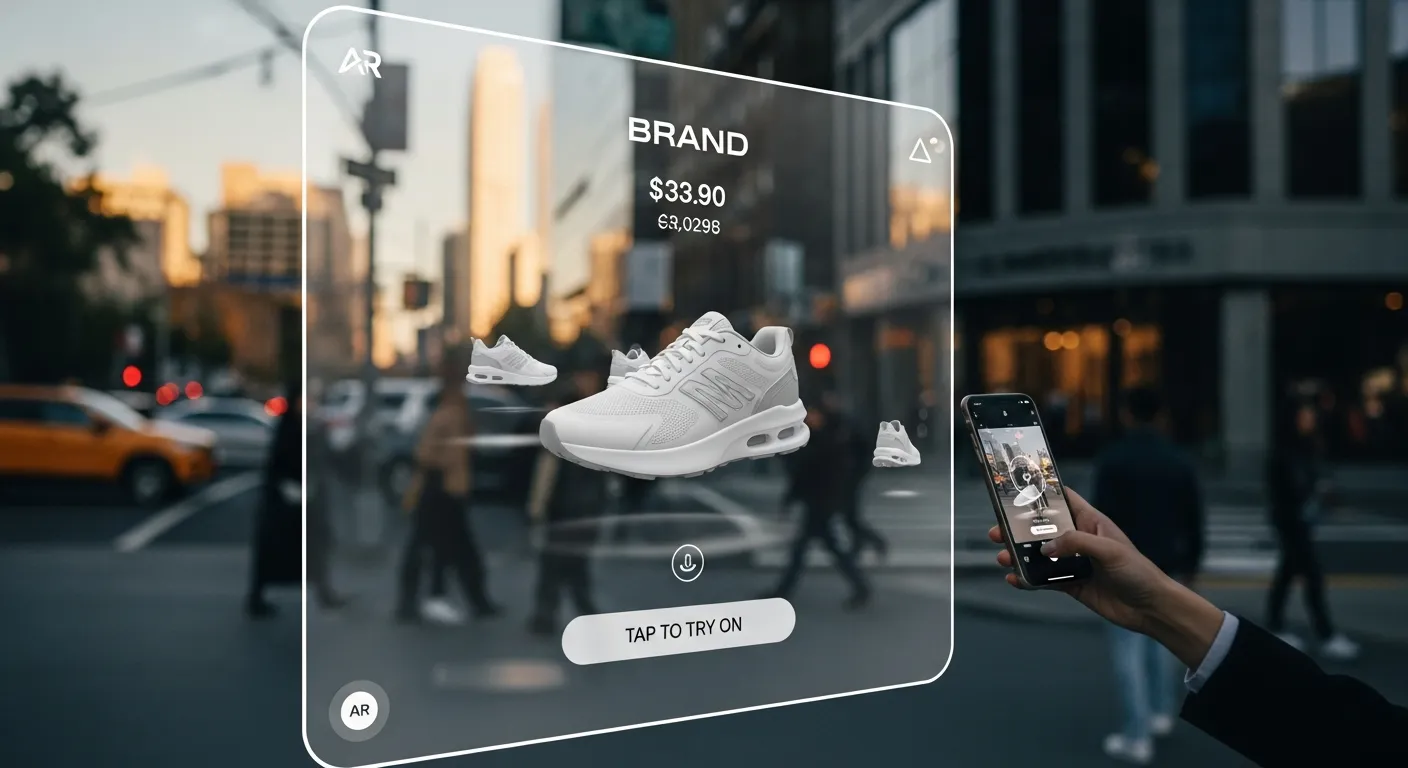
Augmented reality advertising overlays digital elements onto the physical world, creating highly interactive marketing campaigns. Instead of passively consuming media, users actively engage with digital content through their smartphones or specialized headsets. This technology merges imagination with reality, enabling brands to showcase products, tell compelling stories, and offer virtual try-on experiences directly from a user’s device.
The shift toward immersive media represents a massive evolution in how consumers interact with brands. Traditional banners and video commercials interrupt the user experience. Conversely, augmented reality advertising invites the consumer to play, explore, and personalize their environment. This interactive paradigm increases dwell time, improves brand recall, and bridges the gap between digital convenience and physical retail.
Brands across various sectors utilize this technology to solve consumer pain points. Whether a cosmetics company offers virtual makeup sampling or a furniture retailer allows customers to visualize a sofa in their living room, the core objective remains the same: adding tangible value to the buyer’s journey. By integrating 3D models, gamification, and contextual data, marketers create memorable touchpoints that elevate brand perception and accelerate purchasing decisions.
The Mechanics Behind Immersive Campaigns
To launch an effective campaign, you must understand the underlying technology. Augmented reality advertising relies on specific triggers and platforms to deliver digital content seamlessly.
Marker-Based vs. Markerless Technology
Marker-based experiences require a physical trigger, such as a QR code, product packaging, or a printed billboard. When the user scans this marker with their camera, the digital content comes to life. This approach works exceptionally well for retail packaging and out-of-home campaigns.
Markerless technology utilizes environmental mapping and depth sensors to place digital objects in the user’s surroundings without a specific visual trigger. This method powers applications like virtual furniture placement and location-based gaming, offering greater flexibility and a more seamless user experience.
App-Based vs. WebAR
Historically, brands required users to download a dedicated application to experience immersive campaigns. While custom apps offer high fidelity and complex functionalities, they introduce a barrier to entry. Users often hesitate to download an app for a single marketing interaction.
WebAR solves this friction by delivering experiences directly through the mobile web browser. Users simply scan a code or click a link, and the browser handles the camera access and 3D rendering. This frictionless approach drastically increases participation rates and lowers the cost of user acquisition for your campaigns.
Key Benefits of Augmented Reality Advertising
Investing in interactive technology yields substantial dividends across the entire marketing funnel. Here is why forward-thinking brands prioritize this medium.
Skyrocketing Engagement Rates
Standard digital ads struggle to capture attention for more than a few seconds. Augmented reality advertising routinely achieves dwell times of over a minute. When users interact with a 3D model or play a branded game, they actively focus on your messaging, leading to deeper cognitive processing and brand affinity.
Enhanced Buyer Confidence
One of the largest hurdles in e-commerce is the inability to touch, feel, or visualize a product before purchasing. Virtual try-on solutions and 3D product visualizations remove this uncertainty. When customers can see exactly how a pair of shoes looks on their feet or how a new paint color transforms their bedroom, their confidence spikes. This clarity directly translates to higher conversion rates and significantly fewer product returns.
Powerful Social Sharing
Immersive campaigns are inherently shareable. When users transform their faces with branded lenses or uncover a hidden digital world in their living room, they naturally want to show their friends. This user-generated content acts as organic word-of-mouth marketing, amplifying your campaign’s reach far beyond your initial paid media budget.
Actionable Data and Analytics
Interactive media provides richer data than traditional formats. You can track how long users interact with specific digital elements, which virtual products they try on the most, and whether they share the experience. This granular behavioral data empowers you to refine your product offerings and optimize future marketing investments.
Top Strategies for Augmented Reality Advertising Success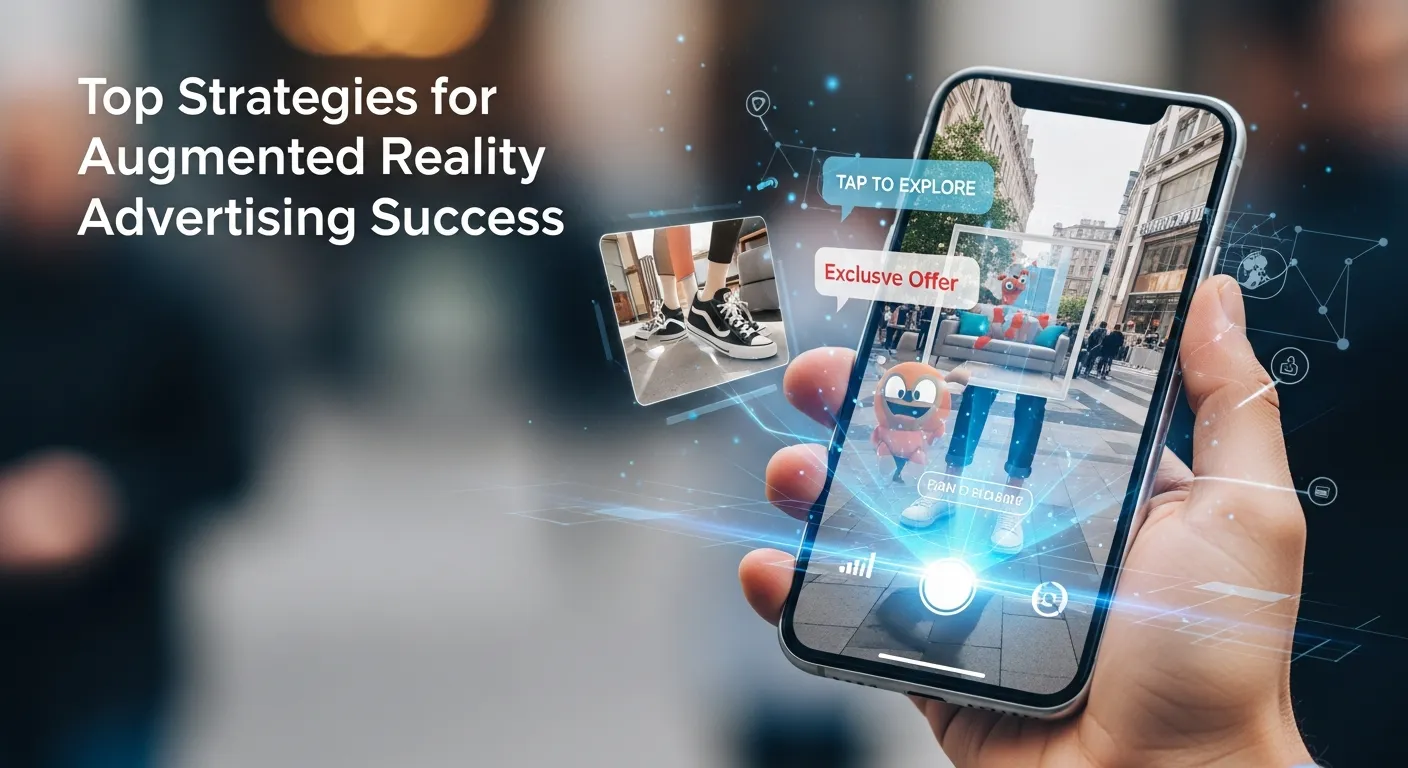
Building an immersive campaign requires strategic alignment between your technological capabilities and your core marketing objectives.
Define Clear Objectives
Before developing 3D assets, identify what you want to achieve. Are you aiming to drive foot traffic to a retail store? Do you want to increase e-commerce sales for a specific product line? Are you focused on brand awareness and social media impressions? Your objective dictates the platform, the user flow, and the required call-to-action.
Prioritize User Experience
Friction kills interactive campaigns. Ensure your experience loads quickly, works smoothly across various mobile devices, and requires minimal technical knowledge. Use intuitive onboarding instructions so users know exactly how to interact with the digital elements. Choose WebAR whenever possible to eliminate the app download barrier.
Offer Genuine Value
Consumers will not engage with your campaign just because it uses new technology. The experience must entertain, educate, or solve a problem. Gamify the interaction by offering rewards, unlockable content, or exclusive discounts. Alternatively, use the technology to provide utility, such as precise sizing visualizations or interactive product manuals.
Integrate with Multi-Channel Campaigns
Do not treat your interactive experience as an isolated tactic. Embed it within a broader marketing ecosystem. Promote your AR lenses through influencer partnerships, integrate QR codes into your television commercials, and feature the experience prominently in your email marketing sequences.
Common Mistakes to Avoid in Augmented Reality Advertising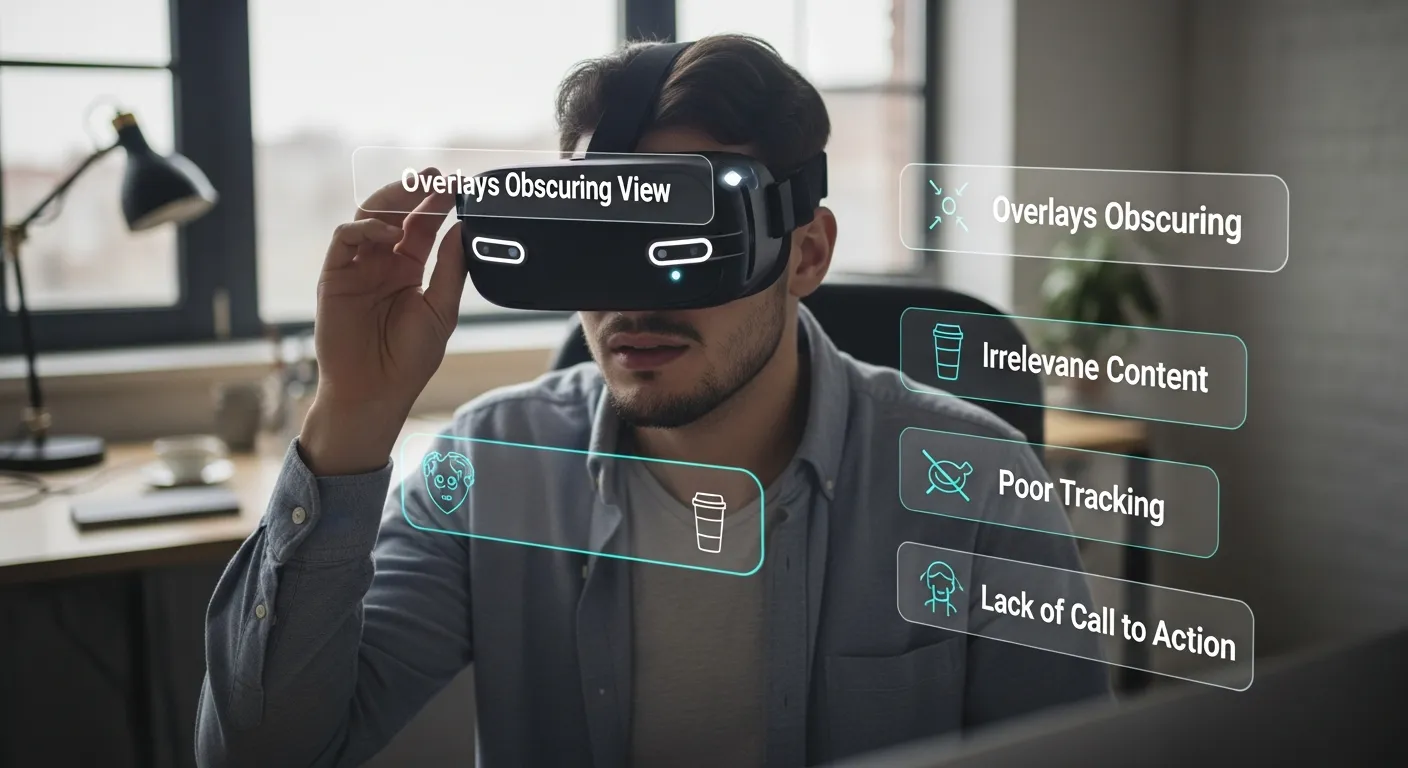
Even the most innovative campaigns fail if marketers overlook fundamental execution details. Avoid these critical errors.
Overcomplicating the Interaction
If users must spend three minutes figuring out how to activate your camera filter, they will abandon the experience. Keep the interface clean and the interactions intuitive. Complex gestures and overly heavy 3D files that drain battery life frustrate users and damage brand perception.
Ignoring the Call to Action
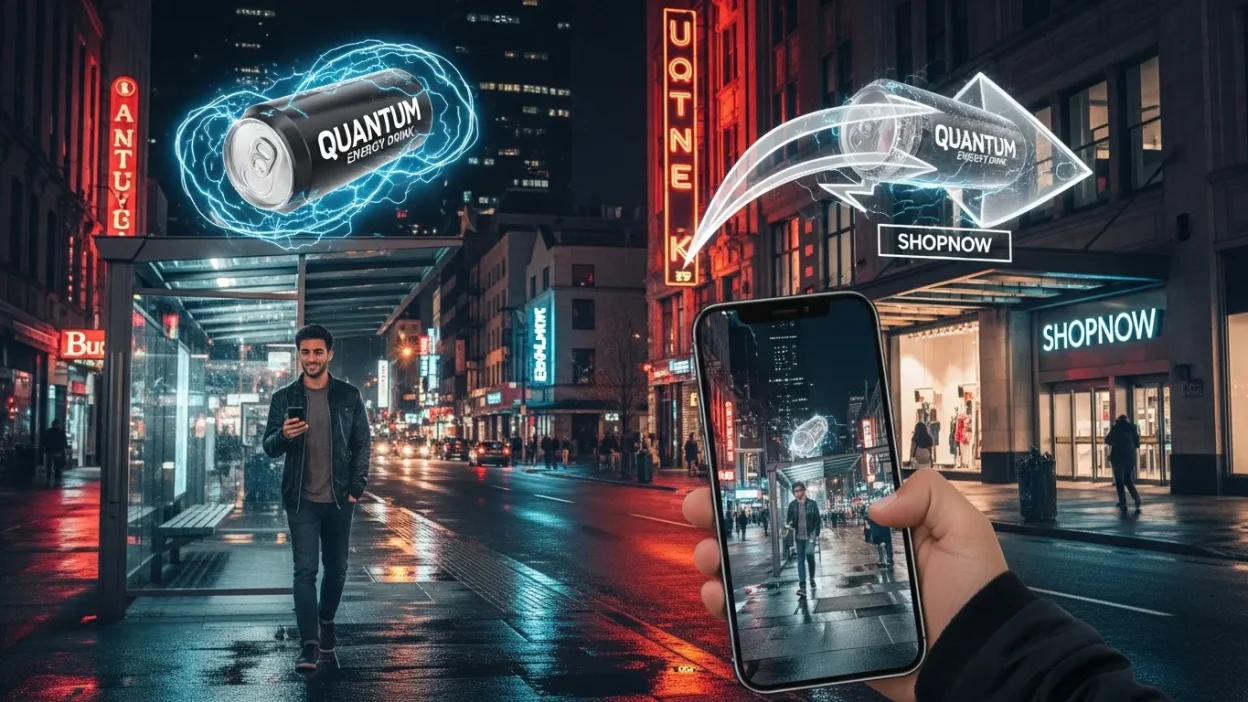
Many brands build visually stunning experiences but forget to tell the user what to do next. If the goal is sales, include a prominent “Shop Now” button seamlessly within the camera interface. Do not force users to leave the experience entirely to complete a transaction.
Failing to Promote the Experience
Building the asset is only half the battle. If you hide a QR code in the corner of a print ad without context, nobody will scan it. You must explicitly tell users what they will gain by participating. Use clear directives like “Scan to play and win” or “See this in your room.”
Furthermore, marketers must apply rigorous testing across all channels. Just as you might audit common sms marketing mistakes like poor timing or lack of personalization to refine a text campaign, you must rigorously audit your interactive campaigns for technical glitches, lighting requirements, and tracking stability before public launch.
Comparison: Traditional Ads vs. Augmented Reality Advertising
Understanding the shift in marketing paradigms requires comparing legacy formats with interactive alternatives.
Format | User Role | Average Dwell Time | Conversion Impact | Primary Metric
Traditional Display Ads | Passive viewer | 2 to 3 seconds | Low to moderate | Click-through rate
Video Commercials | Passive viewer | 15 to 30 seconds | Moderate | View completion rate
Augmented Reality Advertising | Active participant | 60 to 120 seconds | High | Interaction time
Pro Tips and Expert Insights for Campaign Success
To truly excel, marketers must look beyond the basics and adopt advanced tactics.
Design for context. Consider where the user will be when they engage with your campaign. If it is an out-of-home billboard in a busy subway station, the experience must be quick and highly visual. If it is an at-home furniture visualization, you have more time to guide the user through complex features.
Leverage spatial audio. Sound significantly enhances immersion. Add satisfying auditory feedback when a user taps a digital button, or incorporate a voiceover that guides them through the brand story. Audio cues make the digital elements feel much more grounded in the physical space.
Partner with established platforms. Rather than building everything from scratch, utilize existing ecosystems like Snapchat, Instagram, or TikTok. These platforms already boast billions of users conditioned to interact with camera-based media. Utilizing their native tools drastically reduces your development timeline and media distribution costs.
Industry Use Cases for Augmented Reality Advertising
Various sectors adapt this technology to fit their unique audience demands and product lifecycles.
Retail and E-commerce
Retailers dominate this space by offering virtual try-ons. Footwear brands allow users to point their cameras at their feet to see different sneaker models. Beauty brands use facial mapping so customers can test lipstick shades without stepping into a store. This utility directly combats cart abandonment and return rates.
Entertainment and Media
Movie studios and television networks create immersive lenses that turn users into characters from upcoming films. These campaigns generate massive social media buzz and allow fans to interact with intellectual property in a highly personal manner, driving ticket sales and viewership.
Automotive
Car manufacturers use interactive technology to bring the showroom to the consumer’s driveway. Users can place a 3D model of a new vehicle on their street, walk around it to inspect the exterior, and virtually sit inside to explore the dashboard features. This high-fidelity visualization accelerates the research phase of the car-buying journey.
Food and Beverage
Beverage companies transform their packaging into media channels. By scanning a soda can or a wine label, consumers unlock animated stories, games, or sweepstakes. This strategy revitalizes physical packaging and builds direct relationships with consumers at the point of consumption.
Measuring the ROI of Augmented Reality Advertising
Securing budget for innovative technology requires proving measurable returns. You must look beyond vanity metrics and connect interactive engagement to tangible business outcomes.
Track user acquisition costs alongside engagement metrics. Measure how many people open the experience, the average session duration, and the specific features they interact with most frequently. High dwell times indicate strong creative execution.
Connect the experience to sales data. If you offer a virtual try-on, compare the conversion rate of users who utilized the feature against those who did not. Monitor return rates for products purchased through the interactive interface. Calculate the earned media value generated by users sharing screenshots and videos of your campaign on their social profiles.
By consistently analyzing this data, you can refine your 3D assets, improve your calls-to-action, and continuously elevate the financial performance of your campaigns.
The Future of Augmented Reality Advertising
The landscape of interactive marketing evolves rapidly. Several technological advancements will soon redefine how brands connect with consumers.
Hardware accessibility continues to improve. While smartphones currently dominate the space, the impending proliferation of lightweight smart glasses will shift experiences from handheld screens to natural fields of view. This transition will make interactive overlays a constant, ambient part of daily life.
Artificial intelligence integration will personalize experiences in real time. Machine learning algorithms will analyze a user’s environment and instantly generate contextually relevant digital content. If an AI detects a user looking at a specific brand of coffee in a grocery store, it could instantly trigger an interactive recipe or a localized discount.
Visual positioning systems will enable hyper-accurate, persistent digital content anchored to specific real-world locations. Brands will create digital storefronts or interactive treasure hunts mapped precisely to city streets, merging digital commerce with physical exploration at an unprecedented scale.
Augmented reality advertising reshapes the relationship between consumers and brands by turning passive observation into active participation. By prioritizing seamless user experiences, offering genuine value, and rigorously tracking performance metrics, you can leverage this technology to boost engagement and drive revenue. Start experimenting with interactive campaigns today to secure your competitive advantage in the future of digital marketing.
FAQs
FAQ 1: What is augmented reality advertising?
It is a marketing strategy that superimposes digital elements like 3D models, animations, or information over the user’s view of the physical world, typically through a smartphone camera. This creates an interactive experience that allows consumers to engage with products and brand narratives actively.
FAQ 2: How does WebAR differ from app-based experiences?
WebAR allows users to access interactive 3D content directly through their mobile web browser without downloading a dedicated application. App-based experiences require a software download but can offer slightly higher graphics fidelity and more complex tracking capabilities. WebAR is generally preferred for marketing due to its frictionless accessibility.
FAQ 3: What industries benefit most from immersive ad campaigns?
While all industries can benefit, retail, beauty, automotive, and entertainment see the highest immediate returns. These sectors rely heavily on visual presentation, and allowing customers to virtually try on makeup, visualize furniture, or explore a car interior directly drives purchase confidence and sales.
FAQ 4: How do I measure the success of an interactive campaign?
Key performance indicators include the number of activations, average dwell time (how long users spend in the experience), click-through rates on integrated calls-to-action, social share volume, and the impact on conversion rates and product return reductions.
FAQ 5: What is a marker-based experience?
A marker-based experience requires a specific visual trigger in the real world, such as a QR code, a logo, or product packaging. When the user’s camera recognizes this image, it anchors the digital content to that specific physical location on the screen.
FAQ 6: Is building 3D assets for campaigns expensive?
The cost has decreased significantly in recent years. Many platforms now offer drag-and-drop tools and templates that require no coding. While custom, high-fidelity 3D modeling for complex products can require an investment, basic interactive filters and WebAR experiences are highly accessible to mid-sized businesses.
FAQ 7: Do consumers actually use virtual try-on features?
Yes, consumer adoption is incredibly high. Shoppers actively seek out virtual try-on tools for cosmetics, eyewear, and apparel because it eliminates the guesswork of online shopping. Data shows that users who engage with virtual try-ons convert at significantly higher rates than those who view static images.
FAQ 8: How do I promote an interactive marketing campaign?
Promote it across your existing multi-channel network. Place QR codes on physical packaging, direct mail, and in-store displays. Run social media ads with deep links that open the camera experience, and partner with influencers to demonstrate how the experience works to their followers.
FAQ 9: Will smart glasses change how we view immersive ads?
Yes. Currently, users must hold up a smartphone to view digital overlays. Smart glasses will eventually allow these digital elements to appear naturally in the user’s field of vision, making interactive marketing a hands-free, ambient experience fully integrated into daily life.
FAQ 10: How can I ensure high engagement with my interactive ad?
Keep the user interface incredibly simple, ensure the experience loads within a few seconds, provide clear on-screen instructions, and offer a tangible reward. Whether the reward is entertainment, an exclusive discount code, or helpful product visualization, the user must feel their time was well spent.