
AR Facial Tracking combines deep learning, predictive analytics, and computer vision to create immersive, responsive, and personalized AR experiences across industries. Edge computing, ethical AI, and conversational interfaces ensure usability, engagement, and inclusive design.
Introduction to AR Facial Tracking
Augmented reality (AR) has transformed the way users interact with digital content, enabling experiences that blend the physical and virtual worlds. Among the most impactful innovations in this space is AR Facial Tracking, a technology that allows systems to detect, recognize, and track facial features in real time. This capability has far-reaching applications, from enhancing user engagement in gaming to improving personalization in retail and marketing. By combining AR Facial Tracking with deep learning algorithms, developers can create immersive and adaptive experiences that respond intelligently to user expressions, gestures, and attention.
Unlike traditional AR applications, AR Facial Tracking goes beyond overlaying static graphics. It interprets subtle facial cues, allowing systems to react dynamically to users’ emotional states or engagement levels. This capability is particularly valuable in social media filters, virtual try-on systems, and interactive entertainment, where real-time responsiveness is critical. Designers leveraging AR Facial Tracking can anticipate user behavior, refine interfaces, and improve overall satisfaction.
The Role of Deep Learning in AR Facial Tracking

Deep learning, a subset of artificial intelligence, powers the precision and adaptability of modern AR Facial Tracking systems. Convolutional neural networks (CNNs) and other deep learning models analyze facial landmarks, identify expressions, and track movements with high accuracy. By learning from vast datasets of facial images and interactions, these systems improve over time, becoming increasingly robust in diverse lighting, angles, and environments.
Integrating deep learning into AR Facial Tracking ensures that experiences are fluid and reliable. Whether users are interacting with virtual characters, engaging in live video filters, or trying on products, the system can predict motion, anticipate gestures, and maintain alignment of virtual elements. This level of intelligence elevates AR Facial Tracking beyond basic recognition, making it a cornerstone of sophisticated AR User Experience Design.
Enabling Technologies Behind AR Facial Tracking
Several technologies underpin successful AR Facial Tracking implementations. Computer Vision in AR allows systems to interpret visual information from cameras and sensors, distinguishing facial features from background elements. Coupled with deep learning, computer vision enables high-precision tracking that adapts to different faces, movements, and environments.
Edge Computing in AR further enhances the responsiveness of these systems. By processing facial data locally rather than sending it to the cloud, edge computing minimizes latency, ensuring smooth and real-time interaction. This is critical for applications requiring immediate feedback, such as interactive gaming, live-stream filters, or virtual meetings.
Transfer learning also plays a crucial role in AR Facial Tracking development. By leveraging pre-trained models from related domains, developers can accelerate training, improve accuracy, and reduce computational costs. This approach allows AR systems to generalize better across diverse user populations, ensuring inclusive and reliable experiences.
Practical Applications of AR Facial Tracking
The versatility of AR Facial Tracking has led to widespread adoption across multiple industries. In entertainment, facial tracking powers interactive gaming experiences and social media filters that adapt to real-time expressions. Players can control avatars or trigger in-game events using facial gestures, enhancing immersion and engagement. In marketing, AR Facial Tracking enables virtual try-on experiences, allowing customers to see how products like eyewear, cosmetics, or accessories fit their unique facial features. Predictive analytics can track user interactions during these experiences, helping brands optimize layouts and content placement for higher engagement.
Healthcare is another sector where AR Facial Tracking has significant potential. Medical professionals can leverage facial tracking to monitor patient responses during consultations, detect early signs of conditions, or assist in rehabilitation exercises. Deep learning models enhance accuracy, ensuring that even subtle facial movements are detected and interpreted correctly.
AI-Driven Personalization in AR Experiences
Integrating artificial intelligence with AR Facial Tracking allows for highly personalized interactions. By analyzing user expressions, gaze direction, and engagement patterns, AI systems can adapt content dynamically to meet individual preferences. This personalization extends beyond visual elements; voice, haptic feedback, and interactive prompts can all be tailored for each user. Technologies like AI Conversational Commerce leverage predictive models to anticipate user queries, offering product recommendations or guidance before the user even asks.
Similarly, conversational AR experiences are becoming more seamless and intuitive. Virtual assistants can interact naturally with users, interpreting voice commands or facial cues to provide assistance. In enterprise settings, Chatbots in B2B Marketing can be combined with AR facial tracking to create immersive demos, guide clients through product features, or deliver contextual insights, making business interactions more engaging and efficient.
Enhancing AR UX Through Facial Tracking
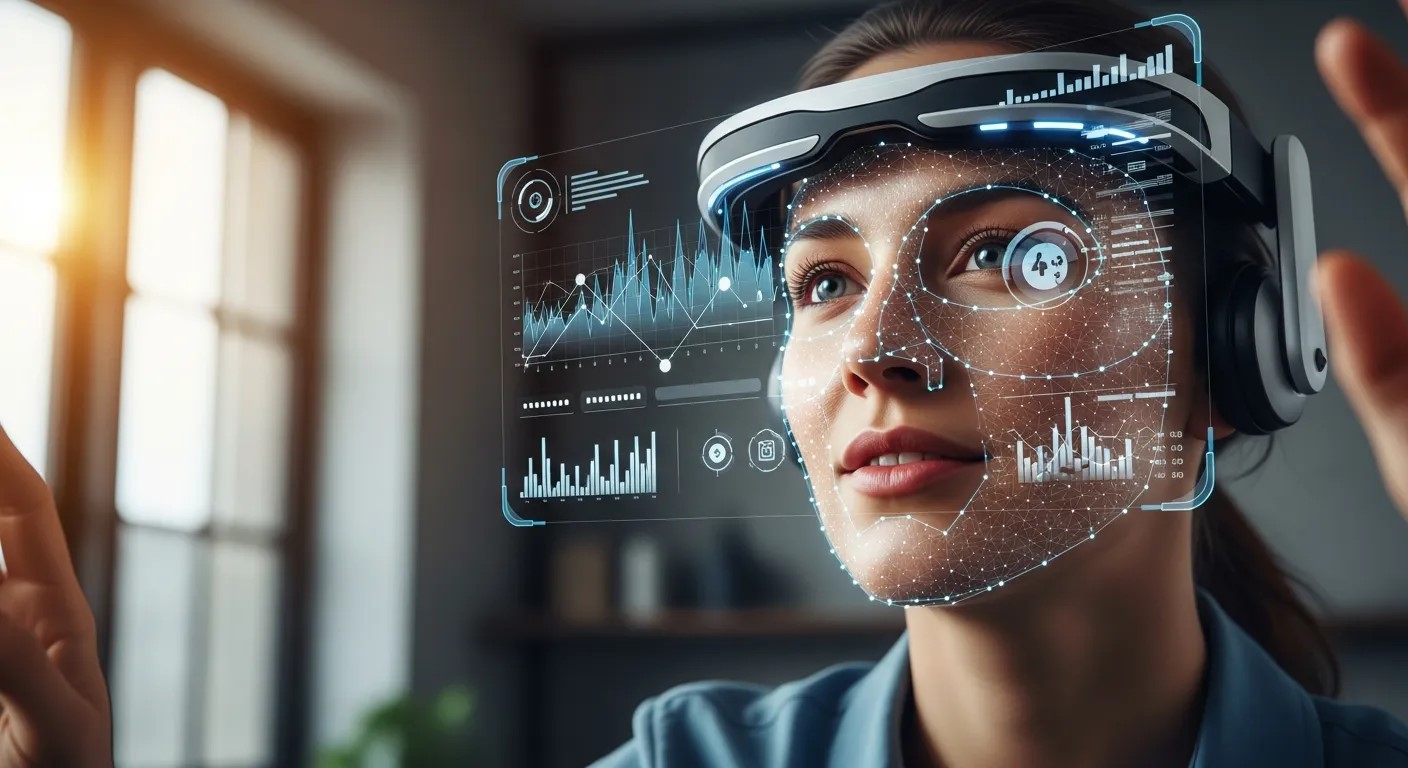
At the heart of these applications is AR User Experience Design. Facial tracking allows designers to create interfaces that respond to human expressions and attention patterns. By understanding how users react in real time, developers can optimize layouts, interaction timing, and visual feedback. This approach reduces cognitive load, increases engagement, and ensures that AR experiences feel natural rather than forced. Predictive analytics further enhances this process by anticipating user behavior and refining the interface for maximum intuitiveness.
Advanced Deep Learning Techniques in AR Facial Tracking
Modern AR Facial Tracking relies heavily on advanced deep learning techniques to achieve high accuracy, adaptability, and robustness. Convolutional Neural Networks (CNNs) are commonly used to detect and map facial landmarks, capturing details such as eye movements, lip positions, and subtle expressions. Recurrent Neural Networks (RNNs) and attention mechanisms can model temporal changes in expressions, enabling AR systems to anticipate user gestures in real time. By combining these architectures with large-scale datasets, developers ensure that AR Facial Tracking works reliably across different lighting conditions, facial features, and user behaviors.
Transfer learning also plays a critical role in optimizing deep learning models. By leveraging pre-trained models from domains like facial recognition or emotion detection, developers can fine-tune systems for AR applications, reducing training time and computational costs. This approach ensures that AR Facial Tracking performs well for diverse user populations, maintaining inclusivity and accuracy.
Cross-Industry Case Studies
The applications of AR Facial Tracking span multiple industries, demonstrating its versatility. In retail, customers can virtually try on products such as sunglasses or makeup, while predictive analytics identifies which products are most likely to appeal to individual users. In entertainment, AR facial tracking powers interactive gaming, live streaming filters, and virtual reality experiences that respond to real-time expressions, enhancing engagement and immersion.
Healthcare professionals also benefit from AR Facial Tracking, using it to monitor patient responses during therapy, track rehabilitation progress, or detect early signs of conditions like stroke or neurological disorders. Meanwhile, enterprises are exploring AI Conversational Commerce and Chatbots in B2B Marketing integrated with AR facial tracking to deliver immersive product demos and interactive client presentations.
Ethical Considerations in AR Facial Tracking
As AR Facial Tracking collects and analyzes sensitive facial data, ethical considerations are paramount. Designers must ensure privacy, secure data storage, and responsible AI usage. Implementing Ethical AI in AR principles is essential to prevent misuse, bias, or intrusive profiling. Predictive analytics should enhance personalization without compromising trust, ensuring that AR experiences remain both engaging and ethical.
By incorporating ethical guidelines, deep learning advancements, and cross-industry insights, AR Facial Tracking is set to redefine user interactions, providing immersive, responsive, and responsible augmented reality experiences.
Future Trends in AR Facial Tracking
The evolution of AR Facial Tracking is closely tied to advancements in predictive analytics, AI personalization, and real-time processing technologies. One emerging trend is the use of Edge Computing in AR, which processes facial data locally rather than relying solely on cloud servers. This reduces latency, enhances responsiveness, and ensures seamless interactions even in high-density AR applications like gaming, live streaming, and enterprise simulations. By combining edge computing with deep learning models, developers can maintain accurate tracking without sacrificing performance.
Another trend is increasingly sophisticated AI-driven personalization. By analyzing facial expressions, gaze patterns, and engagement metrics, AR systems can dynamically adapt content to match individual preferences. Retailers can use this to present tailored product recommendations, while educational platforms can modify visual cues or instructions in real time. Integrating predictive models ensures these experiences anticipate user needs, creating immersive and human-centric interactions.
Practical Design Frameworks for AR Facial Tracking
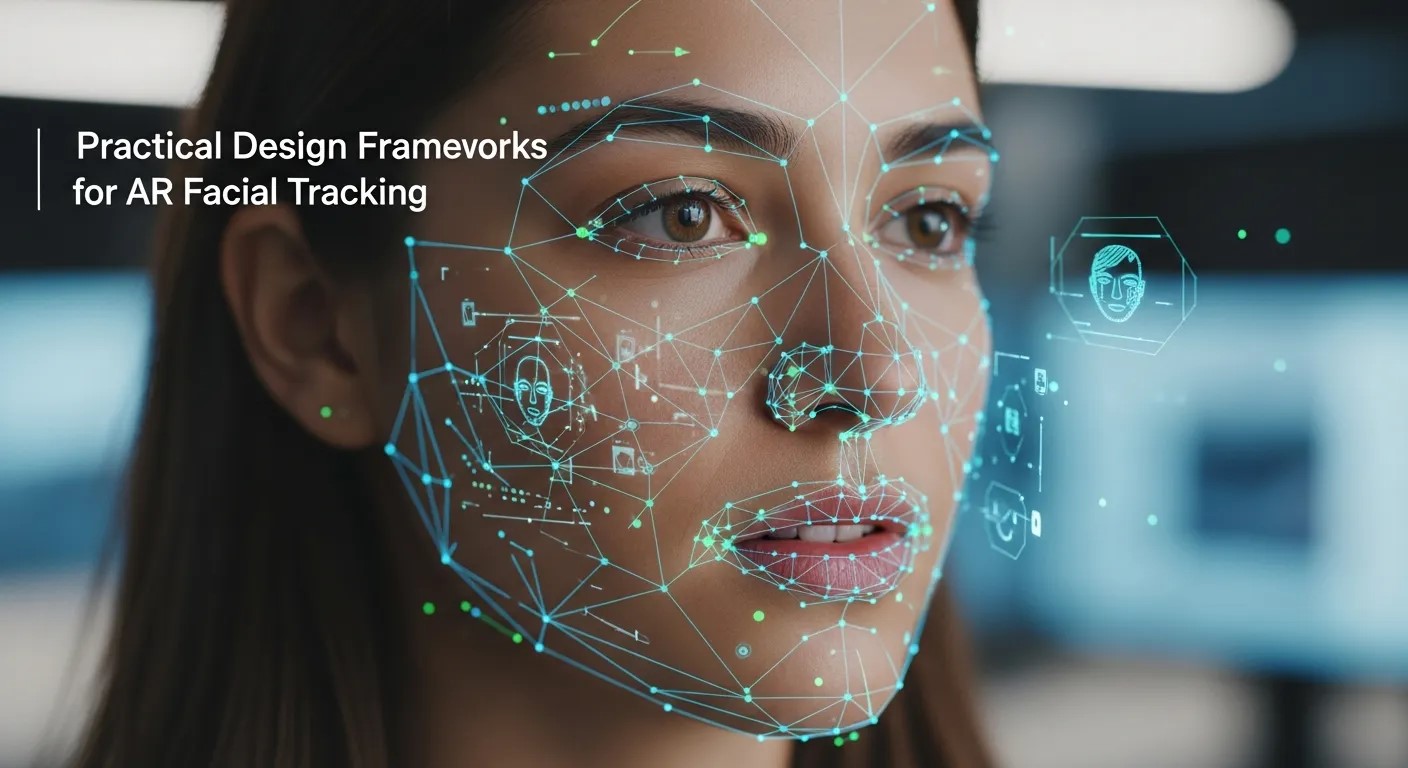
Creating effective AR Facial Tracking experiences requires structured design frameworks. User-centered design (UCD) remains essential, focusing on user needs, cognitive load, and emotional engagement. Predictive analytics informs each stage, allowing designers to foresee potential interaction challenges and refine interface layouts. Task-based AR design is also critical for enterprise applications, ensuring that users can complete objectives efficiently while maintaining an intuitive flow.
By leveraging technologies like Computer Vision in AR, designers can map facial landmarks accurately and provide meaningful feedback in real time. Integrating AR User Experience Design principles ensures that interactions remain natural, inclusive, and engaging. For conversational AR interfaces, Chatbots in B2B Marketing and AI Conversational Commerce can guide users through complex tasks, anticipating questions and providing dynamic responses.
UX Testing Methodologies for AR Facial Tracking
Effective AR Facial Tracking experiences require rigorous UX testing to ensure accuracy, responsiveness, and user satisfaction. Unlike traditional interfaces, AR combines real-world and virtual elements, which makes evaluation more complex. Designers often employ a combination of heuristic evaluation, A/B testing, and field studies to assess usability. Predictive analytics can identify interaction patterns, highlight friction points, and forecast the impact of interface adjustments, allowing developers to refine experiences before widespread deployment.
For conversational AR interfaces, integrating NLP for AR and AI-driven insights ensures voice commands and facial cues are interpreted accurately. Systems powered by AI Conversational Commerce or Chatbots in B2B Marketing benefit from predictive models that anticipate user questions, resulting in smoother, more intuitive interactions. Continuous testing ensures that AR Facial Tracking remains adaptive, inclusive, and user-friendly.
Measuring Success: KPIs for AR Facial Tracking
Establishing measurable KPIs is crucial for evaluating AR Facial Tracking effectiveness. Metrics often include facial recognition accuracy, response time, engagement rates, completion of tasks, and user retention. Predictive analytics can quantify how changes in interface design or feedback mechanisms impact these KPIs. In commercial applications, additional KPIs may focus on sales conversions, customer satisfaction, or efficiency improvements.
Cross-industry adoption demonstrates the versatility of AR Facial Tracking. In retail, virtual try-ons boost purchase confidence, while in healthcare, tracking facial responses aids diagnostics and therapy. Entertainment leverages AR for immersive gaming and live streaming, and enterprise applications use facial tracking for training, demos, and interactive presentations. By combining robust UX testing, measurable KPIs, and predictive insights, designers can ensure AR Facial Tracking delivers consistent value across sectors.
Challenges in AR Facial Tracking
Despite its transformative potential, AR Facial Tracking presents unique challenges. Achieving accurate facial detection across diverse lighting conditions, skin tones, and facial structures requires sophisticated deep learning models and robust computer vision algorithms. Edge cases, such as rapid head movements or occlusions, can cause tracking errors, which may disrupt the user experience. Designers must balance technical accuracy with usability, ensuring that interactions feel smooth and intuitive.
Privacy and security are also major considerations. Collecting and processing facial data raises ethical concerns, making Ethical AI in AR principles essential. Systems must anonymize sensitive information, prevent bias in predictive models, and maintain transparency with users about data usage. Integrating these safeguards is critical for maintaining trust while leveraging AR Facial Tracking for personalization and engagement.
Accessibility Considerations
Creating inclusive AR Facial Tracking experiences requires attention to accessibility. Users with limited mobility, facial differences, or other impairments should be able to interact effectively with AR interfaces. Technologies like NLP for AR and Computer Vision in AR can provide alternative input methods, such as voice commands, gaze tracking, or gesture-based controls. Incorporating these features ensures that AR experiences are usable by a wider audience, enhancing engagement and adoption.
Future-Proofing AR Facial Tracking
As AR technology continues to evolve, future-proofing AR Facial Tracking experiences is essential. Leveraging Edge Computing in AR ensures real-time performance and scalability, even as datasets grow larger and interactions become more complex. Transfer learning techniques allow models to adapt quickly to new environments or demographics without retraining from scratch. Integrating predictive analytics and AR User Experience Design best practices enables interfaces to remain adaptive, responsive, and human-centered over time.
By addressing challenges, prioritizing accessibility, and planning for future developments, designers can create AR Facial Tracking experiences that are immersive, ethical, and sustainable across industries.
Practical Implementation and Real-World Applications of AR Facial Tracking
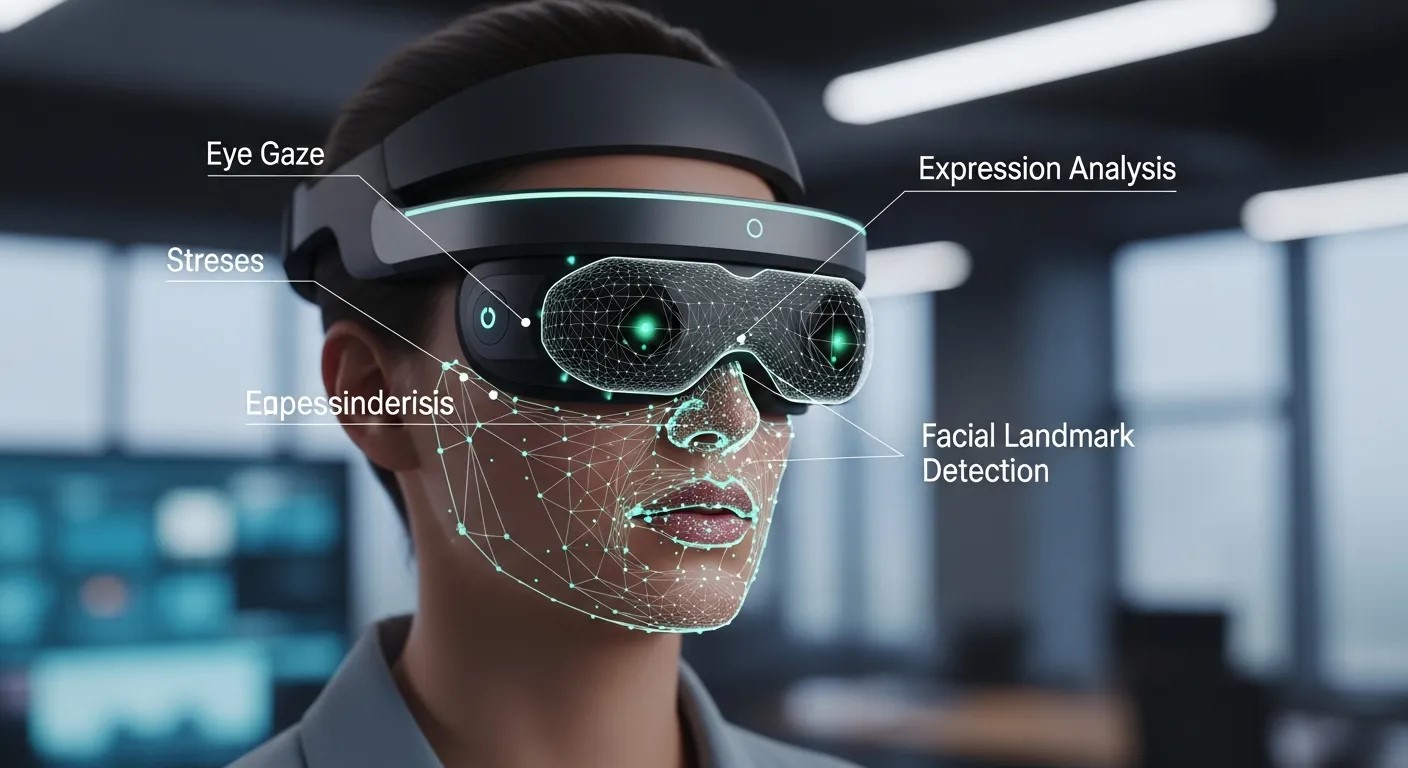
Successful AR Facial Tracking requires precise deep learning models combined with Computer Vision in AR to accurately map facial landmarks in real time. Leveraging Transfer Learning in AR accelerates development, improves accuracy, and ensures adaptability across diverse users. Edge Computing in AR further enhances responsiveness, minimizing latency for applications like live filters, gaming, or enterprise simulations. Predictive analytics helps anticipate user behavior and optimize interface design, improving overall usability.
In retail, virtual try-on experiences allow customers to visualize eyewear, makeup, or accessories, while predictive insights guide personalized recommendations. Entertainment platforms use AR Facial Tracking for immersive avatars and live filters that respond to user expressions, creating highly engaging experiences. Similarly, AI Conversational Commerce and Chatbots in B2B Marketing integrate AR facial tracking to offer interactive demos and personalized client engagement.
Healthcare applications showcase adaptive therapies, monitoring facial expressions during rehabilitation or detecting early signs of neurological conditions. Across industries, effective AR Facial Tracking emphasizes AR User Experience Design, ensuring interactions are intuitive, inclusive, and responsive. Ethical practices, including Ethical AI in AR, protect user privacy while maintaining personalized experiences.
By combining these strategies, businesses and developers can deploy AR Facial Tracking systems that are technically robust, user-friendly, and scalable, preparing for future innovations in augmented reality.
Enhancing User Engagement with AR Facial Tracking
AR Facial Tracking empowers designers to create deeply engaging experiences by analyzing real-time facial expressions and gestures. Integrating Computer Vision in AR and Transfer Learning in AR ensures precise detection across diverse users, while Edge Computing in AR minimizes latency for smooth interactions. Personalized interfaces driven by predictive analytics and AI Conversational Commerce enhance satisfaction in gaming, retail, and enterprise applications. Ethical considerations, guided by Ethical AI in AR, maintain privacy and trust. By combining these technologies with thoughtful AR User Experience Design, developers can deliver intuitive, immersive, and adaptive augmented reality experiences.
Conclusion
AR Facial Tracking is revolutionizing user interactions by combining deep learning, computer vision, and predictive analytics to deliver immersive, personalized experiences. Applications span gaming, retail, healthcare, and enterprise, where real-time tracking enhances engagement, accuracy, and usability. Leveraging Edge Computing in AR, Transfer Learning in AR, and AR User Experience Design ensures responsive and adaptive interfaces. Integrating ethical principles such as Ethical AI in AR protects privacy while enabling AI-driven personalization. Conversational technologies like AI Conversational Commerce and Chatbots in B2B Marketing further enrich AR interactions, making facial tracking a cornerstone of next-generation augmented reality experiences.
Frequently Asked Questions
What is AR Facial Tracking?
It enables systems to detect and track facial features in real time, creating adaptive AR experiences.
How does deep learning enhance AR Facial Tracking?
Deep learning models analyze facial landmarks and predict gestures, improving accuracy and responsiveness.
Which technologies support AR Facial Tracking?
Technologies include Computer Vision in AR, Transfer Learning in AR, Edge Computing in AR, and AI-powered personalization.
Why is Ethical AI important in AR Facial Tracking?
It ensures privacy, prevents bias, and maintains user trust while delivering personalized experiences.