AR Employee Training delivers measurable performance improvements through immersive, contextual learning experiences that reduce errors, accelerate skill acquisition, and enhance workplace safety while providing strong return on investment.
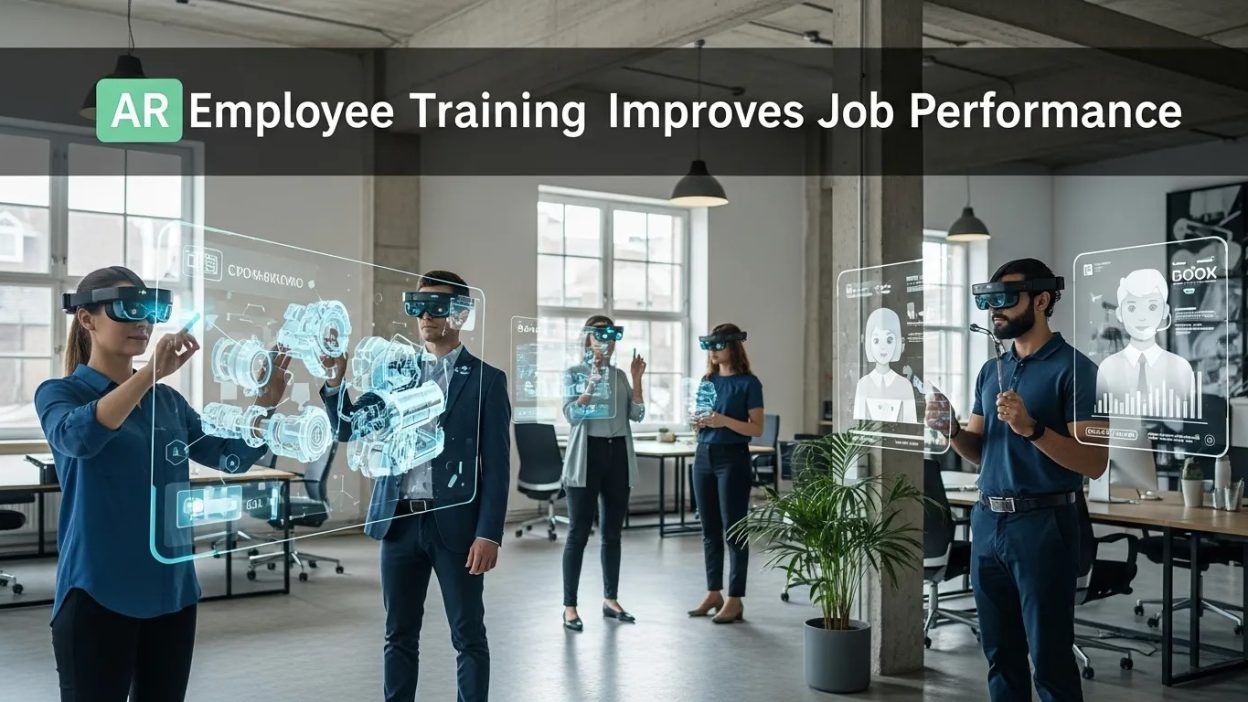
AR Employee Training Improves Job Performance
Companies lose billions annually due to inadequate employee training. Workers struggle with outdated methods that fail to engage them, leading to higher error rates, lower productivity, and increased workplace accidents. Traditional training sessions often feel disconnected from real-world tasks, leaving employees unprepared when they face actual challenges on the job.
Augmented reality is changing this landscape entirely. AR Employee Training creates immersive learning experiences that mirror real workplace scenarios without the associated risks or costs. Instead of watching videos or reading manuals, employees interact with digital overlays superimposed on their physical environment, practicing skills in context and receiving immediate feedback.
This technology has moved beyond experimental phases. Major corporations across manufacturing, healthcare, logistics, and retail sectors now rely on AR Employee Training to onboard new hires, upskill current workers, and maintain safety standards. The results speak for themselves: higher retention rates, faster skill acquisition, reduced errors, and measurable improvements in job performance.
This article examines how AR Employee Training transforms workforce development, explores its impact on performance metrics, and provides evidence-based insights into why organizations are making this strategic shift.
Understanding AR Employee Training Technology
Augmented reality layers digital information onto the physical world through devices like smart glasses, tablets, or smartphones. Unlike virtual reality, which creates entirely artificial environments, AR enhances what employees already see around them.
AR Employee Training applications guide workers through complex procedures with step-by-step visual instructions that appear directly in their field of vision. A maintenance technician, for example, might see highlighted components and animated arrows showing exactly where to place their hands and which tools to use. This contextual guidance reduces cognitive load and accelerates learning.
The technology adapts to individual learning speeds. If someone struggles with a particular step, the system can provide additional support, slow down instructions, or offer alternative explanations. Advanced platforms incorporate AI-Powered AR Vision to recognize objects, track hand movements, and assess whether tasks are being performed correctly.
Modern AR systems also leverage AR Facial Tracking to monitor attention levels and emotional responses during training sessions. This data helps organizations identify which training modules need improvement and which employees might benefit from additional support.
Performance Improvements Through Immersive Learning
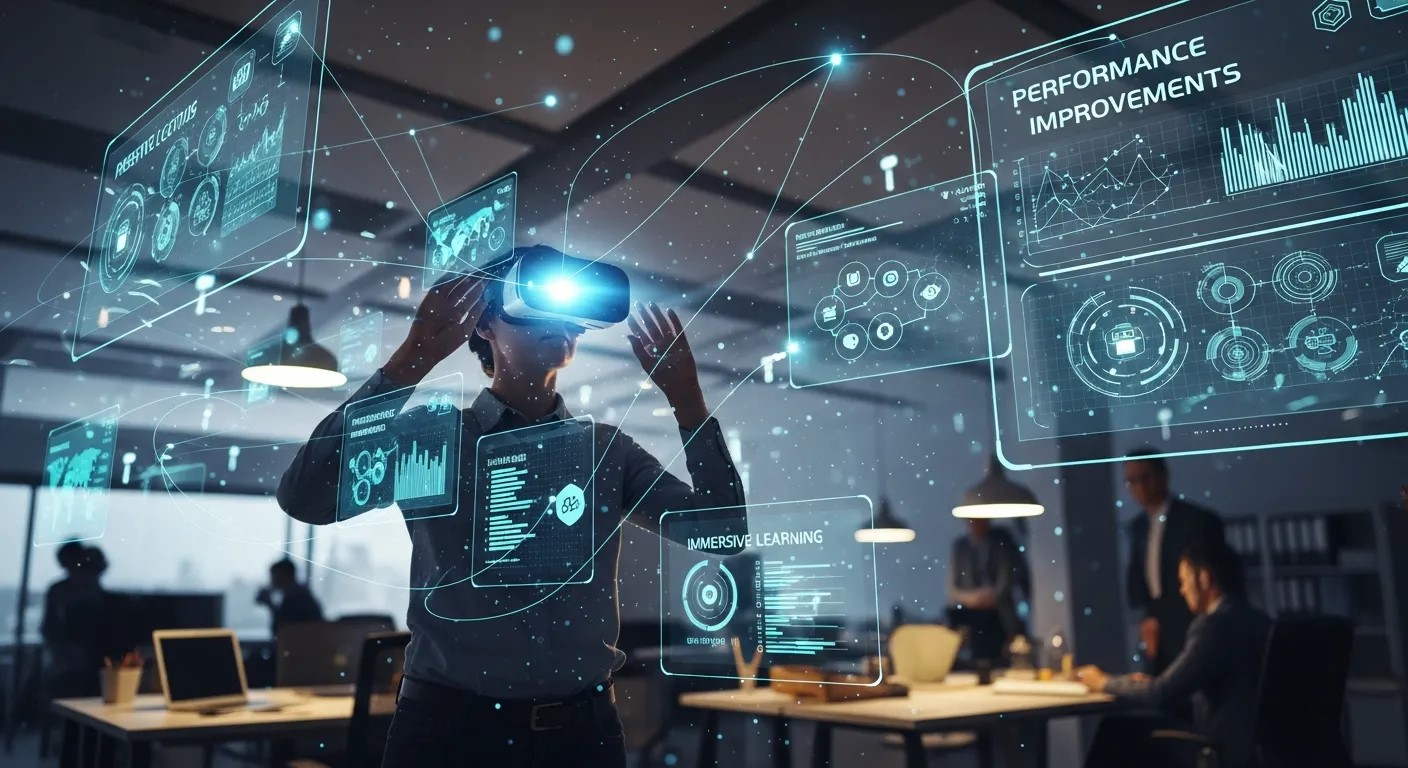
AR Employee Training produces measurable performance gains across multiple dimensions. Organizations implementing these systems report substantial improvements in how quickly employees master new skills and how accurately they perform their jobs.
Accelerated Skill Acquisition
Traditional training methods require workers to mentally translate abstract instructions into physical actions. AR eliminates this translation step by showing employees exactly what to do in their actual work environment. This direct approach cuts learning time significantly.
Manufacturing companies using AR Employee Training have reduced onboarding periods by 40-60%. New assembly line workers reach full productivity within weeks instead of months. They make fewer mistakes during the learning phase because they receive real-time guidance that prevents errors before they occur.
The technology proves particularly valuable for complex, multi-step procedures. Surgical teams using AR training platforms master intricate techniques faster than those trained through conventional methods. The spatial nature of AR helps build muscle memory and procedural understanding simultaneously.
Enhanced Knowledge Retention
Learning retention drops dramatically when training feels disconnected from actual work. Studies show that people forget approximately 70% of what they learn within 24 hours if the information isn’t reinforced or applied immediately. AR Employee Training addresses this problem by embedding learning directly into the work context.
Workers trained through AR systems demonstrate 75% better retention rates compared to classroom-based instruction. They remember procedures more accurately because they practiced them in realistic settings that engage multiple senses. The hands-on nature of AR training creates stronger neural pathways associated with the learned skills.
Repetition becomes more effective with AR. Employees can revisit training modules as needed without instructor availability constraints. They practice until they feel confident, which builds competence and reduces anxiety about performing tasks independently.
Reduced Error Rates
Mistakes cost organizations money, damage reputations, and sometimes endanger lives. AR Employee Training significantly reduces workplace errors by providing continuous guidance during both training and actual job performance.
Warehouse operations implementing AR picking systems report accuracy improvements exceeding 90%. Workers wearing AR-enabled smart glasses see highlighted locations and receive visual confirmation when they select correct items. This eliminates the cognitive burden of memorizing complex warehouse layouts or interpreting paper pick lists.
Quality control processes benefit enormously from AR assistance. Inspectors guided by AR overlays identify defects they might otherwise miss. The technology standardizes inspection procedures across different employees, ensuring consistent quality regardless of individual experience levels.
Workplace Safety Enhancement
Safety training represents one of the most critical applications of AR Employee Training. Traditional safety courses rely heavily on theoretical knowledge that employees must apply when emergencies occur. AR creates realistic practice scenarios without exposing workers to actual danger.
Realistic Emergency Preparation
AR Emergency Response training allows employees to experience crisis situations in controlled settings. Firefighters navigate smoke-filled buildings through AR simulations that overlay hazard indicators and evacuation routes onto real spaces. They develop critical decision-making skills without risking injury.
Chemical plant workers practice handling spills using AR Employee Training that replicates dangerous scenarios. They see virtual chemicals, follow proper containment procedures, and make mistakes that would be catastrophic in reality but serve as valuable learning opportunities in simulation.
Aviation maintenance crews train on virtual aircraft systems overlaid onto actual planes. They practice troubleshooting electrical faults, hydraulic failures, and other critical issues. When real emergencies occur, their responses are automatic because they’ve rehearsed extensively through AR.
Hazard Recognition Development
Many workplace accidents result from failure to recognize dangerous situations before they escalate. AR Employee Training builds hazard awareness by highlighting potential dangers in real work environments.
Construction workers wearing AR devices receive warnings when they approach unsafe areas. The system identifies fall hazards, moving equipment, and other risks, teaching workers to automatically scan for these dangers even when not wearing the technology.
This constant reinforcement develops safety-conscious behavior patterns. Workers trained through AR demonstrate higher hazard recognition rates and make safer choices compared to those trained through traditional methods alone.
Cost-Effectiveness and Return on Investment
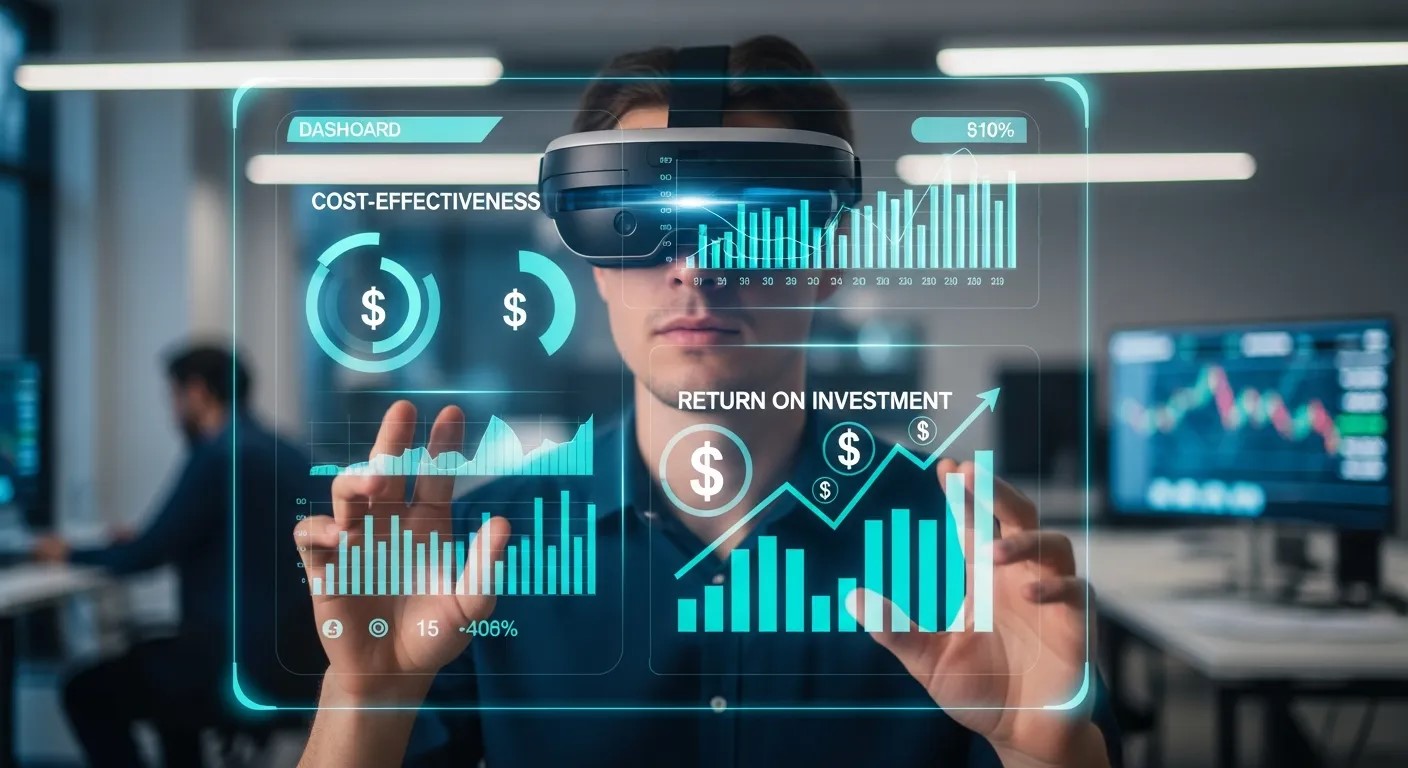
Implementing AR Employee Training requires upfront investment in hardware, software, and content development. However, the return on this investment typically manifests quickly through multiple cost-saving mechanisms.
Training Delivery Cost Reduction
Traditional training demands significant resources: dedicated facilities, instructor salaries, travel expenses for centralized training, and productivity losses while employees are off the job. AR Employee Training eliminates or drastically reduces these costs.
Employees train at their actual workstations using AR systems, minimizing productivity disruption. They don’t travel to training centers or wait for instructor availability. Organizations save on facility maintenance, training material printing, and the logistical coordination required for group training sessions.
Instructor needs decrease because AR provides consistent, standardized guidance. Subject matter experts create training content once, which then scales across the entire workforce. This democratizes access to high-quality training regardless of location or shift schedule.
Error and Accident Cost Avoidance
The financial impact of workplace errors extends beyond the immediate mistake. Defective products must be scrapped or reworked. Accidents result in workers’ compensation claims, regulatory fines, legal liabilities, and reputational damage. Equipment damaged through operator error requires expensive repairs.
AR Employee Training prevents these costly incidents. Organizations report 30-50% reductions in error-related expenses after implementing AR training systems. The technology pays for itself through accident prevention alone, with other benefits representing pure value addition.
Insurance companies recognize these risk reductions. Some offer premium discounts for organizations demonstrating comprehensive AR Employee Training programs, creating additional financial incentives.
Traditional Training vs AR Employee Training
|
Aspect |
Traditional Training |
AR Employee Training |
|---|---|---|
|
Engagement Level |
Low to moderate; passive learning through lectures and videos |
High; immersive, interactive experiences with immediate feedback |
|
Skill Retention |
20-30% after 6 months; limited practical application during training |
75-80% after 6 months; contextual learning with hands-on practice |
|
Safety Impact |
Theoretical knowledge; cannot safely simulate high-risk scenarios |
Practical experience with dangerous situations in risk-free environments |
|
Cost Efficiency |
High ongoing costs for facilities, instructors, materials, and travel |
Lower long-term costs; scalable content with minimal delivery expenses |
|
Error Reduction |
Moderate; knowledge translation gaps between training and application |
Significant; real-time guidance prevents mistakes during performance |
Industry-Specific Applications
AR Employee Training adapts to diverse industry needs, creating specialized solutions that address unique sector challenges.
Manufacturing and Assembly
Assembly line workers use AR Employee Training to learn complex product builds without halting production. Visual overlays show component placement, torque specifications, and quality checkpoints. New product introductions happen faster because workers quickly adapt to modified procedures.
Maintenance technicians access AR-guided repair instructions while working on machinery. They see exploded views of equipment, identify components requiring attention, and follow step-by-step procedures without consulting paper manuals. This reduces downtime and improves first-time fix rates.
Healthcare and Medical Procedures
Medical professionals practice surgical techniques through AR Employee Training before performing procedures on patients. They visualize anatomy, practice instrument handling, and develop procedural fluency in risk-free environments.
Nursing staff train on patient care protocols using AR simulations that present realistic clinical scenarios. They make treatment decisions, administer medications virtually, and experience consequences of errors without harming actual patients. This builds clinical judgment alongside technical skills.
Retail and Customer Service
Retail employees learn product knowledge through AR Employee Training that overlays information onto actual merchandise. They scan items to access features, benefits, and common customer questions. This on-demand learning happens during slower periods without requiring dedicated training time.
Customer service scenarios play out through AR simulations where employees practice handling difficult interactions. They receive feedback on communication techniques, problem-solving approaches, and emotional intelligence. This preparation improves customer satisfaction scores and reduces employee stress.
Logistics and Warehousing
Warehouse workers achieve picking accuracy improvements through AR Employee Training that guides them to correct locations and verifies selections. The system optimizes routes, reducing walking distance and increasing fulfillment speed.
Forklift operators practice maneuvering through AR simulations before operating actual equipment. They develop spatial awareness, learn load balancing principles, and experience potential accidents virtually. This training reduces equipment damage and workplace injuries.
Addressing Implementation Challenges
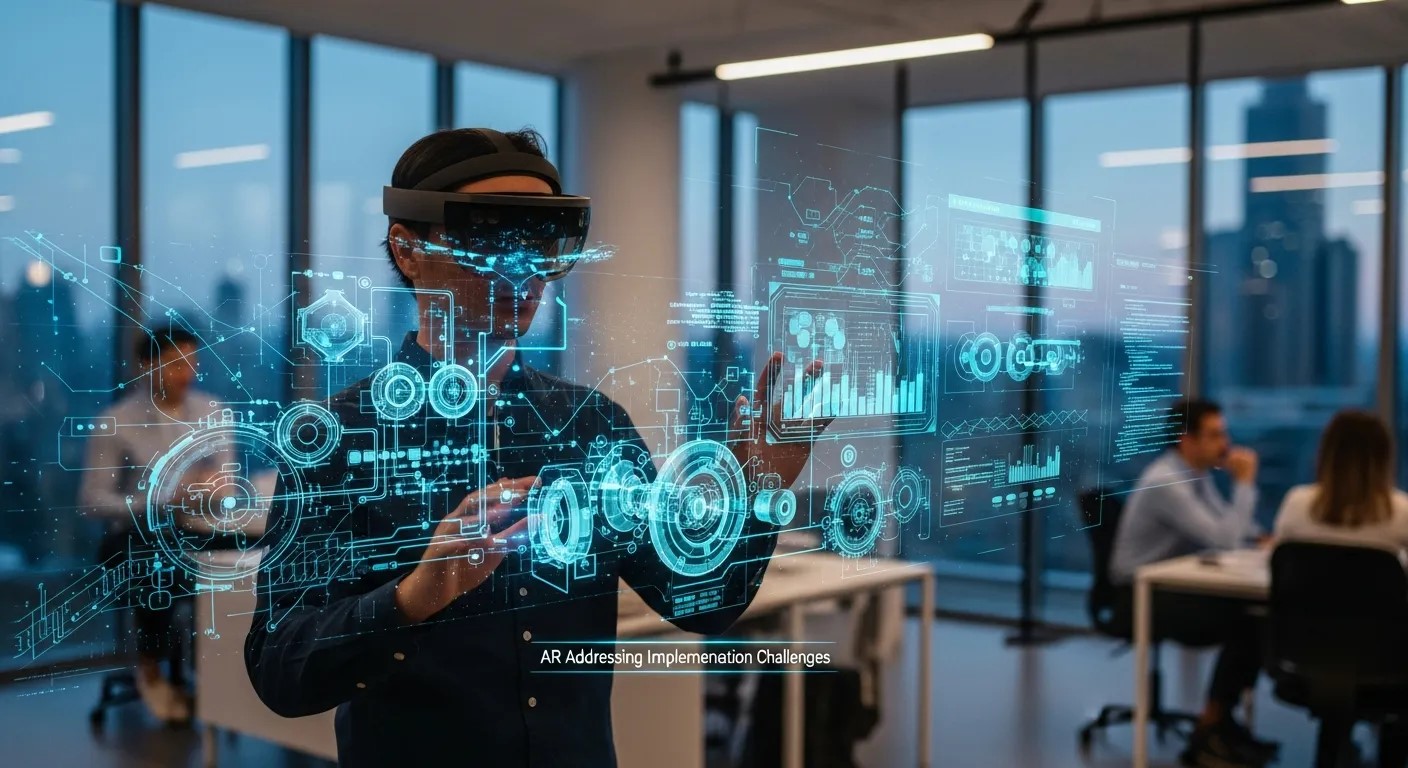
Organizations considering AR Employee Training face legitimate concerns about technology adoption, content creation, and workforce acceptance. Understanding these challenges and planning accordingly increases implementation success rates.
Technology Integration
Existing IT infrastructure must support AR systems. This may require network upgrades, cybersecurity enhancements, and integration with current learning management systems. Working with experienced AR vendors who understand enterprise technology requirements smooths this process.
Device selection impacts user experience and training effectiveness. Smart glasses offer hands-free operation but come with higher costs and potential comfort issues during extended wear. Tablets provide larger displays and better battery life but require workers to hold them. Organizations should pilot different options before committing to large-scale deployments.
Content Development
Creating effective AR Employee Training content requires collaboration between subject matter experts, instructional designers, and AR developers. Organizations must invest time in capturing expert knowledge, translating it into AR experiences, and testing with actual employees.
Starting with high-impact, high-frequency tasks maximizes return on content development investment. Training modules for critical safety procedures or complex assembly steps deliver immediate value. As organizations build AR development capabilities, they can expand content libraries to cover broader training needs.
Workforce Adoption
Some employees resist new technology due to comfort with existing methods or concerns about surveillance. Transparent communication about AR Employee Training benefits, privacy protections, and implementation plans reduces resistance.
Involving employees in pilot programs creates champions who advocate for the technology. Early adopters provide valuable feedback for refinement and help colleagues overcome initial hesitation. Recognizing and rewarding employees who embrace AR training reinforces positive attitudes toward innovation.
Ethical Considerations in AR Training
As AR Employee Training becomes more sophisticated, organizations must address ethical implications around data collection, privacy, and the balance between guidance and autonomy.
Data Privacy and Monitoring
AR systems collect extensive data about employee performance, learning speeds, and even physiological responses. Organizations must establish clear policies about what data is collected, how it’s used, and who has access. Employees deserve transparency about monitoring practices.
Data should serve developmental purposes rather than punitive ones. Using AR Employee Training metrics to identify employees needing additional support builds trust. Using the same data for performance reviews or termination decisions creates justified concerns about surveillance.
Marketing Applications and Boundaries
Some organizations explore using AR for Ethical AR Marketing, training customer-facing employees on persuasion techniques through AR simulations. While improving sales skills benefits both employees and organizations, there’s a fine line between effective training and manipulation coaching.
Training should emphasize customer value creation rather than pressure tactics. AR Employee Training in sales contexts works best when focused on product knowledge, needs assessment, and problem-solving rather than aggressive closing techniques.
Future Developments in AR Training
AR Employee Training technology continues evolving rapidly. Understanding emerging trends helps organizations plan long-term training strategies that remain current as capabilities expand.
Artificial Intelligence Integration
AI-Powered AR Vision already enhances object recognition and real-time guidance. Future developments will enable even more personalized learning experiences that adapt instantly to individual employee needs, learning styles, and performance patterns.
Predictive analytics will identify which employees might struggle with specific tasks before problems occur, allowing proactive support. AI will also optimize training sequences, determining the most effective order for presenting information to each learner.
Collaborative AR Training
Current AR Employee Training focuses primarily on individual learning. Future systems will enable multiple employees to share AR experiences simultaneously, facilitating team-based training, collaborative problem-solving, and peer learning.
Remote experts will guide on-site workers through complex tasks using shared AR views. This democratizes expertise access, allowing employees in remote locations to receive support from specialists anywhere in the world.
Haptic Feedback Integration
Adding tactile sensations to AR Employee Training will increase realism and effectiveness. Workers will feel virtual objects, resistance levels, and environmental conditions, creating even more immersive learning experiences that engage additional senses and strengthen skill development.
Building a Competitive Workforce Through AR
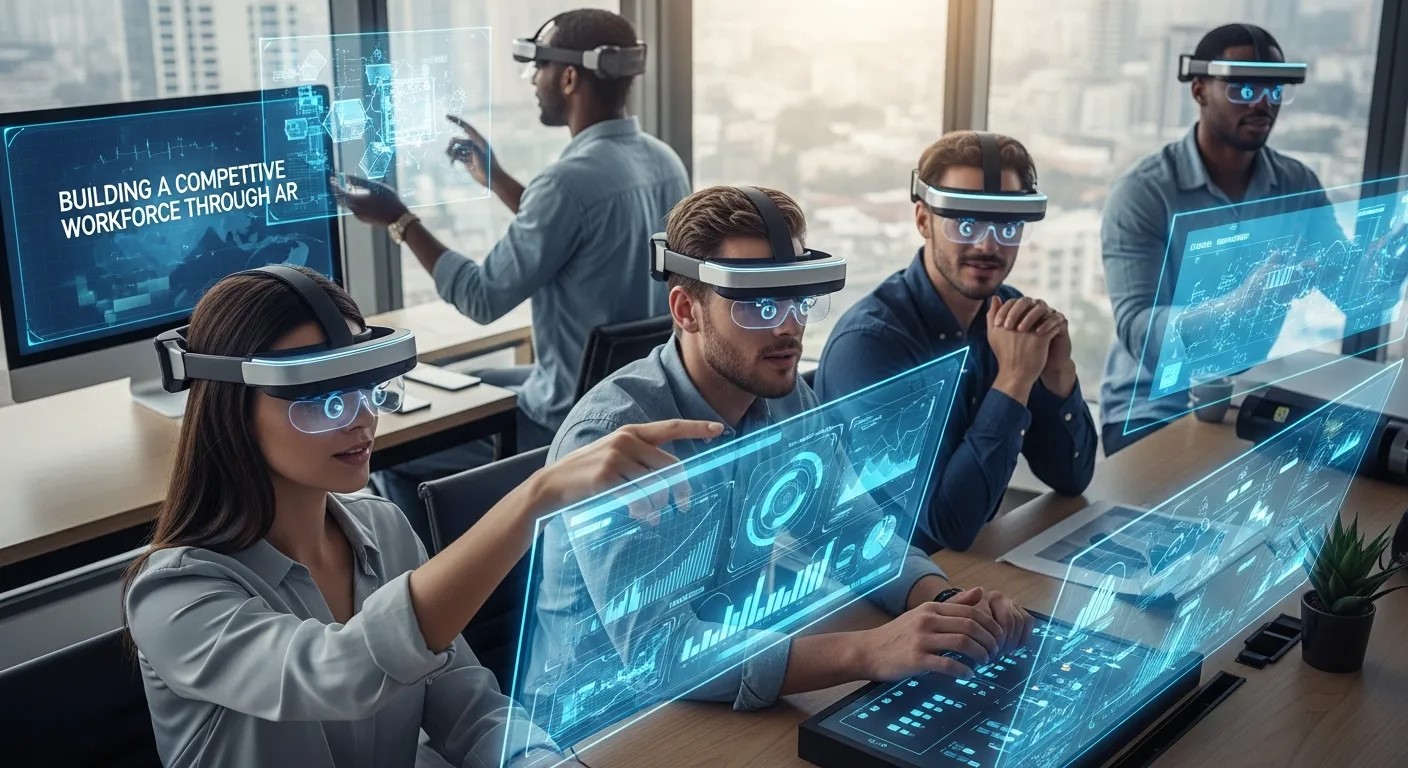
The workforce development landscape has fundamentally shifted. Organizations that continue relying solely on traditional training methods will find themselves at competitive disadvantages as competitors leverage AR Employee Training to build more skilled, safer, and productive workforces.
Implementation doesn’t require replacing all existing training overnight. Start with high-impact applications where AR delivers immediate value. Learn from initial deployments, refine approaches, and gradually expand AR training across additional functions and locations.
Employee development represents one of the most strategic investments organizations make. The quality of training directly impacts product quality, customer satisfaction, innovation capacity, and ultimately, market position. AR Employee Training transforms this investment from a cost center into a competitive advantage that compounds over time as employees continuously improve their performance through superior learning experiences.
The technology has matured beyond experimental phases. Proven platforms exist, implementation best practices are well-documented, and return on investment data validates the business case. Organizations delaying AR Employee Training adoption risk falling behind competitors who are already reaping the benefits of more capable, confident, and productive workforces.
Conclusion
AR Employee Training transforms workforce development by delivering immersive, contextual learning experiences that accelerate skill acquisition, reduce errors, and enhance workplace safety. Organizations adopting AR see measurable improvements in productivity, employee confidence, and retention rates. By integrating AI-powered guidance, AR Facial Tracking, and realistic emergency simulations, companies can efficiently upskill employees while minimizing costs and risks. Return on investment is achieved through reduced accidents, fewer mistakes, and faster onboarding. As technology evolves, AR Employee Training becomes a strategic advantage, empowering businesses to build a highly competent, safety-conscious, and competitive workforce prepared for the demands of modern industry.
Frequently Asked Questions (FAQ)
What is AR Employee Training?
AR Employee Training uses augmented reality technology to overlay digital instructions and information onto the physical work environment, creating immersive learning experiences that improve skill acquisition and job performance.
How does AR improve training effectiveness?
AR provides contextual, hands-on learning that engages multiple senses, reduces cognitive load, and allows practice in realistic scenarios without real-world risks, resulting in better retention and faster skill development.
What industries benefit most from AR training?
Manufacturing, healthcare, logistics, retail, aviation, construction, and energy sectors see significant benefits, though AR Employee Training adapts to virtually any industry requiring technical skills or safety procedures.
How much does AR Employee Training cost?
Costs vary based on hardware choices, content complexity, and scale. Initial investments typically range from $50,000 to $500,000, with ROI often achieved within 12-24 months through error reduction and efficiency gains.
Do employees need technical expertise to use AR training?
No. Modern AR Employee Training systems feature intuitive interfaces designed for workers with varying technical comfort levels. Brief orientation sessions typically provide sufficient preparation for effective use.
Can AR replace traditional training entirely?
AR complements rather than completely replaces traditional methods. Foundational knowledge, soft skills, and company culture elements still benefit from conventional approaches, while AR excels at technical and procedural training.
How long does AR training implementation take?
Timeline depends on scope and complexity. Pilot programs launch in 2-3 months, while organization-wide implementations may require 6-12 months including content development, infrastructure preparation, and phased rollout.
What hardware is required for AR training?
Options include AR-enabled smart glasses, tablets, smartphones, or headsets. Choice depends on hands-free requirements, display size preferences, budget constraints, and specific training application needs.
How is training effectiveness measured?
Organizations track metrics including time-to-competency, error rates, safety incidents, knowledge retention scores, employee confidence levels, and productivity improvements compared to baseline measurements from traditional training.
Does AR training work for remote employees?
Yes. Remote workers access AR Employee Training through personal devices or company-provided equipment. Cloud-based platforms enable consistent training delivery regardless of location, supporting distributed workforces effectively.
What about employees resistant to new technology?
Change management strategies including transparent communication, pilot program involvement, champion development, and emphasizing personal benefits rather than organizational mandates increase acceptance rates significantly among initially hesitant employees.
How often should AR training content be updated?
Review frequency depends on procedure stability and regulatory requirements. Best practice involves quarterly reviews with immediate updates when processes change, ensuring training content remains accurate and relevant to current operations.