This comprehensive guide explores everything you need to know about developing highly effective AR Campaigns. We cover the core benefits, outline actionable steps for implementation, and highlight the most common mistakes to avoid. You will also discover expert tips, review a structured comparison of marketing channels, and read answers to the most frequently asked questions to help you launch a successful immersive strategy.
Imagine giving your customers the ability to try your product without leaving their living rooms. We are witnessing a massive shift in how brands connect with their audiences. Consumers no longer want to just look at static advertisements; they want to experience them. This is exactly where AR Campaigns step in to transform passive observers into active participants. If you want to elevate your marketing strategy, building well-crafted AR Campaigns offers a unique way to merge the digital and physical worlds, driving unprecedented engagement and sales.
The Evolution of Interactive Marketing
Marketing constantly evolves to meet consumer demands for better, more engaging experiences. While traditional channels rely on one-way communication, interactive formats invite users to play a central role. AR Campaigns overlay digital elements onto the user’s real-world environment using their smartphone cameras. This technology creates a memorable interaction that significantly increases brand recall.
When you integrate augmented reality into your marketing mix, you provide immediate value. Whether a customer is testing how a new sofa fits in their living room or seeing how a specific shade of lipstick looks on their face, the experience removes guesswork. This interactive approach dramatically lowers purchase hesitation and increases conversion rates.
Why Your Brand Needs AR Campaigns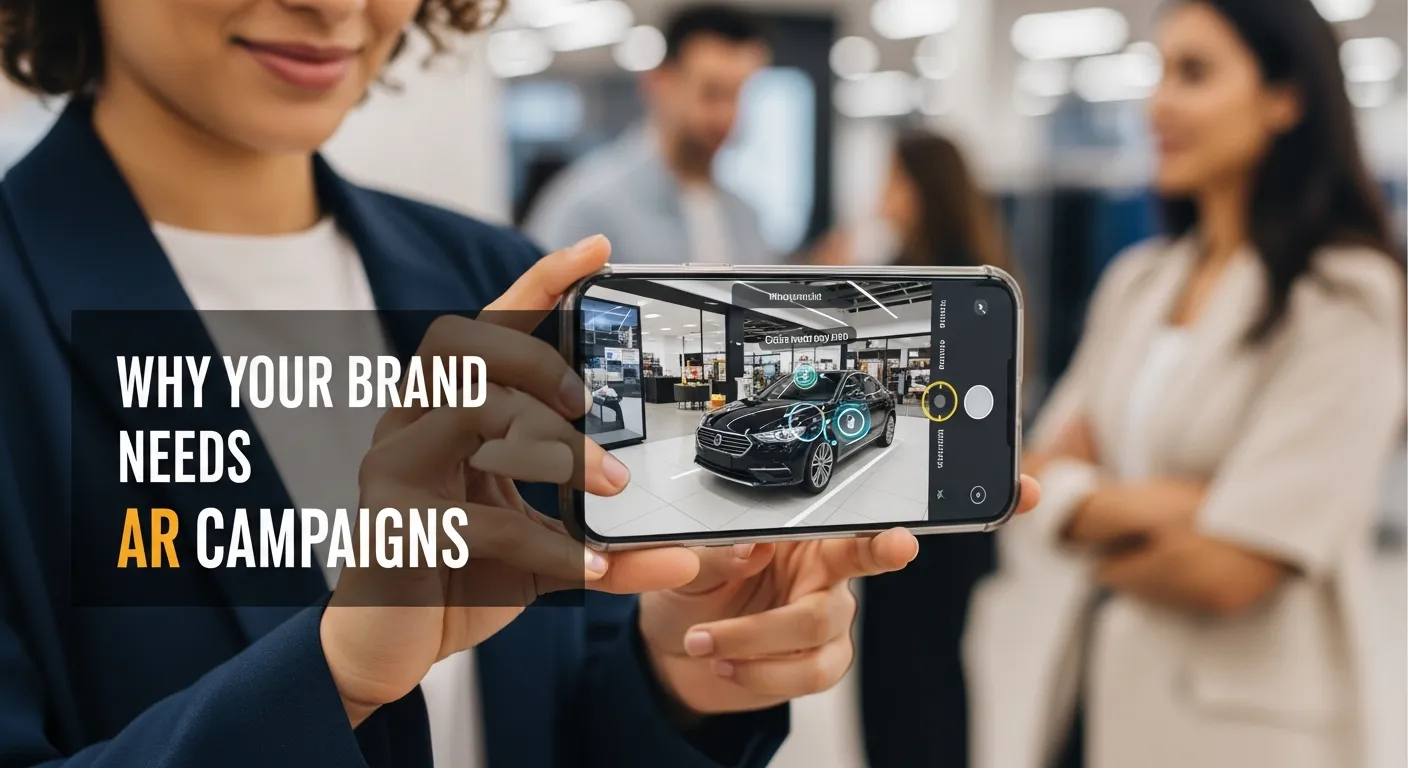
Implementing AR Campaigns offers a competitive edge that traditional media simply cannot match. Here is why you need to consider this technology for your next big product launch or brand awareness push.
Enhanced Customer Engagement
Users spend significantly more time interacting with augmented reality features than they do reading a standard email or watching a basic video ad. The interactive nature of scanning, placing, and manipulating digital objects keeps the user hooked. This extended dwell time builds a stronger emotional connection between the consumer and your brand.
Reduced Return Rates
One of the biggest challenges in ecommerce conversion rates is the high volume of returns. When customers cannot physically touch or try a product, they often buy the wrong size, color, or style. Virtual try-ons allow shoppers to visualize products accurately. By integrating this technology, you give buyers confidence, leading to a drastic reduction in return logistics and costs.
Higher Conversion and Sales
When you remove the friction of uncertainty, customers buy faster. Interactive 3D models allow shoppers to inspect details from every angle. If a user can point their phone at their driveway and see your brand’s newest vehicle sitting there, the fantasy of ownership becomes much more tangible. This visualization directly correlates with higher sales figures.
Types of High-Performing AR Campaigns
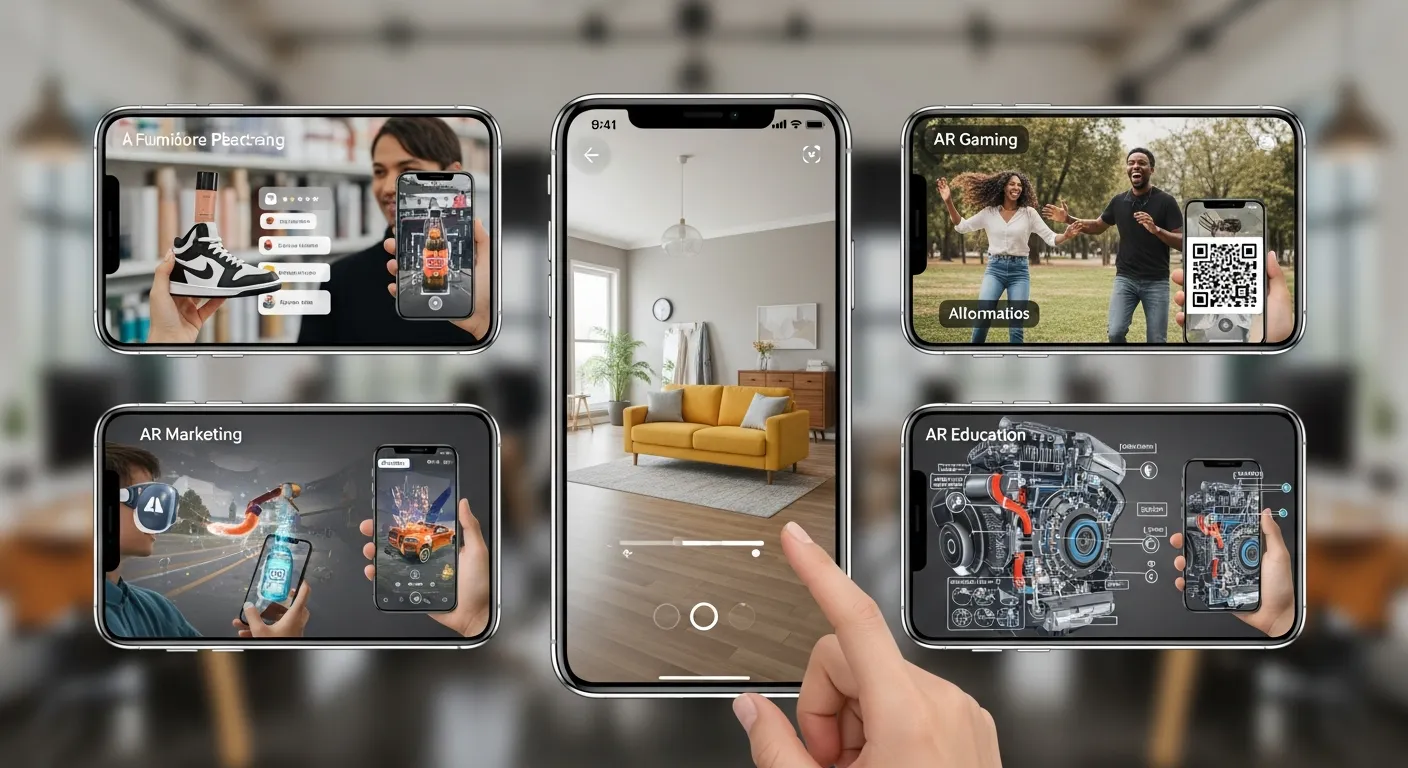
There is no single way to execute an augmented reality strategy. Depending on your industry and goals, you can choose from several proven formats.
Virtual Try-On Experiences
Beauty and fashion brands thrive on virtual try-on features. Using advanced facial mapping and spatial tracking, users can test makeup, sunglasses, hats, and even shoes. The camera tracks movement, allowing the digital item to stay perfectly aligned with the user.
Product Visualization
Furniture and home decor companies use world-tracking technology. A user selects a piece of furniture from an app and points their camera at an empty space in their room. The item appears true to scale. Users can walk around it, check the color against their existing decor, and ensure it fits the physical dimensions of the room.
Interactive Packaging and Print
Consumer packaged goods can turn ordinary labels into interactive storytelling devices. By scanning a beverage can or cereal box, the packaging might animate, launch a mini-game, or reveal a hidden discount code. This turns a standard product into an entertainment channel.
Gamified Brand Experiences
Gamification drives massive user participation. Brands can create location-based games or social media lenses where users catch digital objects, navigate mazes, or transform their faces into brand mascots. These highly shareable experiences generate excellent word-of-mouth marketing.
Comparing Marketing Channels
To understand the unique value of augmented reality, let us look at how it stacks up against other common marketing formats.
|
Feature |
AR Campaigns |
Traditional Video Ads |
Standard Ecommerce |
|---|---|---|---|
|
Interactivity |
High (User controls the experience) |
Low (Passive viewing) |
Medium (Clicking and scrolling) |
|
Personalization |
High (Adapts to user’s environment) |
Low (Same message for all) |
Medium (Product recommendations) |
|
Engagement Time |
60 – 120+ seconds |
15 – 30 seconds |
Variable |
|
Purchase Confidence |
Very High |
Low |
Medium |
|
Development Cost |
Medium to High |
Low to Medium |
Low |
Step-by-Step Guide to Launching AR Campaigns
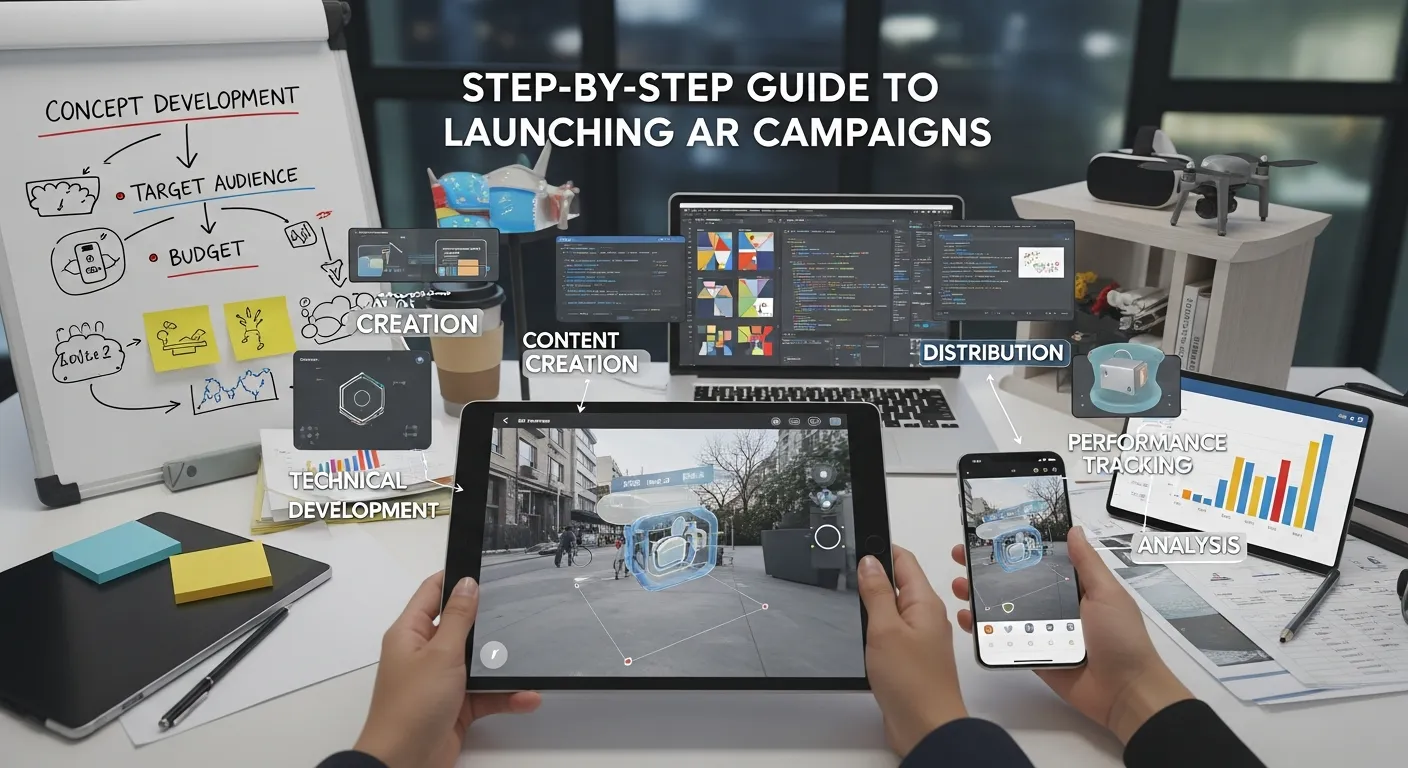
Creating an augmented reality experience requires careful planning. Follow these steps to ensure your project delivers a strong return on investment.
Step 1: Define Your Objective
Before writing a single line of code or designing a 3D model, you must know what you want to achieve. Are you trying to increase brand awareness, reduce product returns, or drive direct sales? Your objective dictates the type of experience you build.
Step 2: Understand Your Audience and Context
Consider where and how your audience will engage with your content. Will they be at home browsing your website, or walking down the street looking at a physical billboard? Ensure the context matches the user’s environment. You want to make it as easy as possible for them to hold up their phone and participate.
Step 3: Choose the Right Platform
You have two main choices for distribution: app-based or WebAR. App-based requires users to download a specific application, which provides high-quality graphics but creates a barrier to entry. WebAR works directly in the mobile browser, offering instant access and generally higher participation rates, though with slightly lower graphical fidelity.
Step 4: Design a Clear Call to Action
Never assume users know what to do. You must provide explicit instructions. Tell them exactly how to scan, what to point their camera at, and what they will get in return. A confusing start will cause users to abandon the experience immediately.
Step 5: Develop and Test
Work with skilled 3D artists and developers to build the assets. Keep file sizes optimized so the experience loads quickly, even on slower cellular networks. Test the application in various lighting conditions, on different devices, and with different users to uncover any tracking or usability issues.
Step 6: Promote the Experience
Your immersive content will not succeed in a vacuum. You need to drive traffic to it through your other marketing channels. Promote your new feature via email newsletters, social media posts, and physical store signage.
Common Mistakes to Avoid
Even the most innovative brands can stumble when deploying new technology. Avoid these frequent pitfalls to protect your investment.
- Ignoring the User Environment: If your experience requires a large, well-lit empty floor space, but your user is sitting on a crowded bus, they cannot participate. Always design for the most likely scanning environment.
- Overcomplicating the Instructions: Users have a short attention span. If they have to read a manual to figure out how to activate your content, you have already lost them. Keep onboarding to three simple steps or less.
- Building Heavy, Slow-Loading Assets: Patience is thin on the mobile web. If your 3D models take 30 seconds to load, users will close the tab. Optimize your assets relentlessly.
- Forgetting the Value Proposition: Just like marketers must avoid common sms marketing mistakes such as sending pointless messages with no clear offer, augmented reality must deliver real value. Do not use the technology just for a gimmick; ensure it helps or entertains the user meaningfully.
- Hiding the Feature: If the virtual try-on button is buried at the bottom of your product page, nobody will use it. Place calls to action prominently above the fold.
Pro Tips for Maximum Impact
Take your immersive marketing from good to great with these expert insights.
- Offer an Incentive: Encourage users to participate by offering a unique discount code that only reveals itself after they complete the interactive experience.
- Encourage Social Sharing: Build screenshot and video recording capabilities directly into the interface. When users can easily capture themselves wearing your digital product and share it on social media, you gain free user-generated content.
- Analyze the Data: Track everything. Monitor how long users stay in the experience, which products they try on the most, and where they drop off. Use this data to continuously refine and optimize the user journey.
- Combine with Influencer Marketing: Partner with social media creators. Have them demonstrate how fun and easy it is to use your interactive features. This provides social proof and drives a massive influx of initial users.
Measuring the Success of Your Immersive Strategy
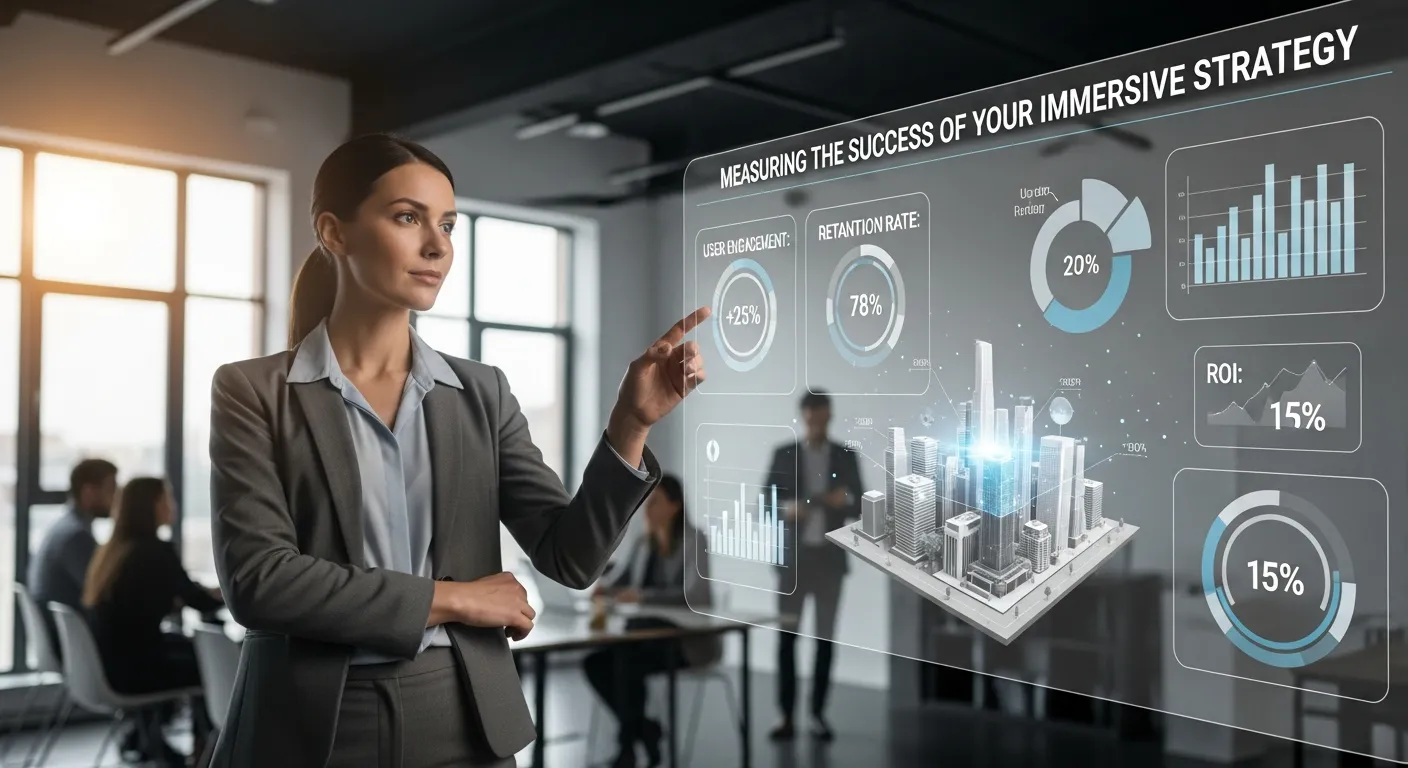
To justify the budget for future projects, you must measure performance accurately. Look beyond simple impressions. Track the activation rate, which tells you how many people actually opened their camera after seeing the prompt.
Measure the average dwell time. If users are spending over a minute interacting with your brand, you are winning their attention. Finally, look at the conversion rate of users who engaged with the 3D content versus those who only looked at 2D photos. You will typically see a massive spike in conversions among the interactive cohort.
Overcoming Technical Challenges
Creating 3D content can seem daunting, but the tools available today make it more accessible than ever. You do not need to build everything from scratch. There are numerous platforms that offer drag-and-drop interfaces for simple augmented reality creation.
For complex projects, partnering with an experienced agency ensures your assets look realistic and track smoothly. Focus on getting the lighting and shadows right on your 3D models; this is the secret to making digital objects feel like they truly exist in the physical space.
The digital landscape is crowded, and capturing consumer attention requires innovation. By building strategic, value-driven AR Campaigns, you invite your audience to experience your brand in a highly personal and memorable way. From reducing ecommerce return rates to boosting overall brand loyalty, the benefits are clear. Keep your user experience frictionless, promote your features aggressively, and watch as your interactive marketing drives tangible, bottom-line results.
Frequently Asked Questions (FAQs)
1. What exactly are AR Campaigns?
They are digital marketing initiatives that use augmented reality technology to overlay interactive 3D content, animations, or information onto the user’s real-world environment, typically viewed through a smartphone camera.
2. Do customers need to download an app to participate?
Not necessarily. While apps offer powerful capabilities, WebAR allows users to access immersive experiences directly through their mobile web browsers simply by tapping a link or scanning a QR code.
3. Are AR Campaigns expensive to produce?
Costs vary widely. A simple social media face filter can be quite affordable, while a massive, custom-built virtual try-on platform with hundreds of 3D product models will require a significant investment.
4. How do these campaigns increase sales?
By allowing customers to visualize products in their own space or on their own bodies, the technology removes purchase hesitation and builds buyer confidence, which directly leads to higher conversion rates.
5. What industries benefit most from this technology?
While any industry can use it, retail, furniture, beauty, automotive, and entertainment see the highest immediate return on investment due to the highly visual nature of their products.
6. How can I measure the ROI of my interactive marketing?
You should track metrics such as activation rates, average dwell time, social shares, and most importantly, the difference in conversion rates and return rates between users who engaged with the feature and those who did not.
7. Can I use augmented reality for B2B marketing?
Yes. B2B companies use this technology for interactive product demonstrations, allowing prospects to view complex machinery or software architectures in 3D during sales pitches or at trade shows.
8. What makes a successful call to action for these experiences?
A successful CTA is clear, instructional, and value-driven. It should tell the user exactly how to scan the trigger and explain what benefit or entertainment they will receive for doing so.
9. How do I ensure my 3D models look realistic?
Work with experienced 3D artists who understand texturing, lighting, and scale. Ensure your models have appropriate shadows and reflections so they blend naturally into the physical environment shown on the camera.
10. Will AR Campaigns replace traditional marketing?
No, they will not replace traditional marketing. Instead, they act as a powerful enhancement. The most successful brands use traditional channels like email and social media to drive awareness and traffic to their interactive experiences.