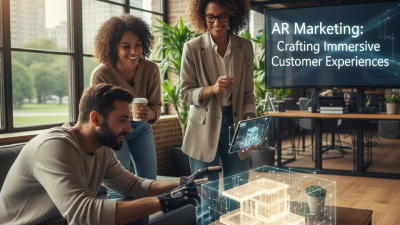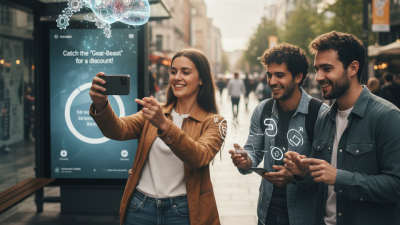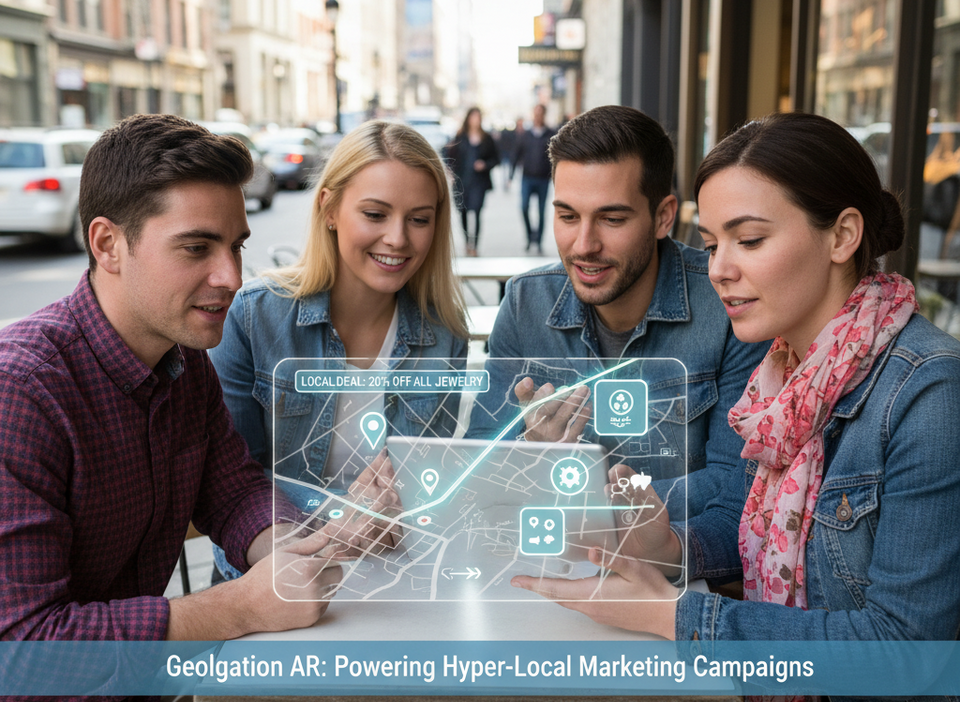
In today’s digital landscape, brands are seeking more intimate ways to connect with customers, and geolocation AR has emerged as a leading solution for this year (2026). By merging location data with immersive overlays, geolocation AR empowers marketers to present tailored experiences that resonate with individuals based on their immediate surroundings. Whether guiding a shopper to a special display or revealing an exclusive discount as they stroll through a city block, this technology transforms passive browsing into interactive engagement.
Geolocation AR blends real-world context with digital content by using a device’s GPS, sensors, and camera feed to anchor virtual elements onto physical environments. This capability allows businesses to deploy campaigns that are not only visually striking but also rich in relevance—delivering the right message at the right moment. For insights into geospatial positioning, marketers can explore the U.S. Geological Survey or research work from the MIT community.
In the sections that follow, we will unpack the technology behind geolocation AR, examine its key benefits, review high-impact use cases, outline a step-by-step implementation guide, and share best practices. By the end, you’ll have a practical roadmap to design and measure hyper-local AR campaigns that drive tangible results for your brand.
The Technology Powering Geolocation AR
At the core of geolocation AR lies a combination of geospatial positioning, real-time environment tracking, and augmented overlays. Modern smartphones and devices tap into GPS signals, Wi-Fi triangulation, and inertial sensors to approximate a user’s location. In crowded cityscapes or enclosed spaces where GPS alone may falter, developers often incorporate Bluetooth beacons or visual markers to enhance positional accuracy. These hybrid approaches ensure that digital assets—ranging from directional arrows to interactive product demos—anchor correctly to physical landmarks, delivering a seamless experience even as users roam.
Simultaneous Localization and Mapping algorithms play a critical role in refining this process. By continuously scanning the environment, SLAM constructs a dynamic 3D map of the surroundings while tracking device movement. This real-time mapping enables virtual objects to maintain their alignment with real-world surfaces, whether it’s a storefront window or a museum exhibit. As a result, geolocation AR interactions feel stable and intuitive rather than jittery or detached, fostering greater immersion and user trust.
Several development kits streamline the integration of geolocation features. Apple’s ARKit and Google’s ARCore provide built-in routines for environmental understanding, occlusion handling, and motion tracking. For web-based deployments, WebAR frameworks offer lightweight, browser-friendly experiences without requiring a native app install. Third-party mapping APIs and geofencing services further augment these toolsets, allowing marketers to define virtual perimeters around physical locations and trigger AR content when users cross those boundaries.
Behind the scenes, a robust content management system coordinates 3D assets, animations, and interactive scripts. These platforms often leverage cloud infrastructure to deliver location-specific experiences dynamically, updating overlays based on factors like time of day or inventory levels. By linking AR content to real-time data feeds—such as stock availability, event schedules, or social media trends—brands can keep experiences fresh and contextually relevant.
Integration with social media channels amplifies the reach of geolocation AR activations. Many brands encourage participants to share AR-enhanced selfies or videos tagged with location hashtags, extending visibility beyond the immediate audience. Partnerships with mapping giants and social networks enable seamless distribution, making it easy for users to discover nearby AR hotspots via familiar platforms. As a result, marketers gain both offline foot traffic and online engagement metrics, offering a comprehensive view of campaign performance.
Security and privacy frameworks are also vital for successful deployment. Developers must adhere to platform-specific guidelines and regional regulations such as CCPA or GDPR when handling location data. Secure token-based authentication and encrypted data transmission protect user information while maintaining compliance. Additionally, SDKs often include permission management modules that guide users through enabling location and camera access. A transparent approach not only safeguards privacy but also promotes higher opt-in rates.
Key Benefits of Hyper-Local Geolocation AR
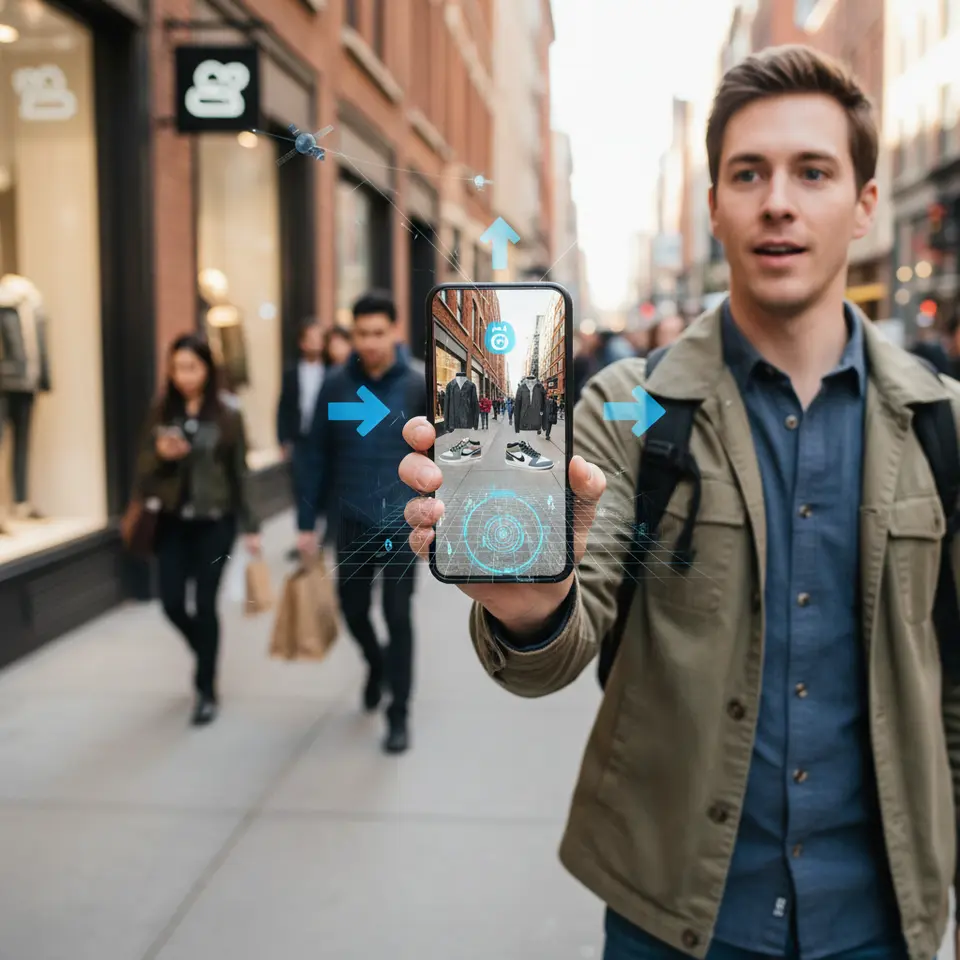
Hyper-local geolocation AR campaigns offer a level of personalization that traditional channels struggle to match. By delivering content based on a user’s exact position—whether they’re browsing a street market or standing in front of a storefront—brands can craft messages that feel timely and relevant. This immediacy often leads to higher engagement rates, longer session durations, and improved brand recall. In today’s digital landscape, standing out requires more than generic promotions; it demands experiences that resonate with individual journeys.
One of the strongest advantages is enhanced engagement through interactive elements. Gamified AR scavenger hunts can guide customers through multiple points of interest, turning mundane tasks into playful explorations. Participants might unlock exclusive coupons or digital collectibles as they navigate a retail space, boosting foot traffic to underperforming zones. This blend of game mechanics and marketing yields memorable moments that encourage users to spend more time in-store and share their experiences socially.
Educational overlays are another benefit of geolocation AR. For retailers, placing product tutorials or assembly instructions next to physical items can simplify complex information. Shoppers can view 3D animations that demonstrate product features or usage tips, empowering informed purchase decisions without needing staff assistance. This added layer of guidance not only enhances customer satisfaction but also reduces the cognitive load typically associated with self-service environments.
Geolocation AR also fosters community-driven engagement by weaving brand narratives into local contexts. Imagine historical overlays that tell the story of a heritage building or pop-up promotions tied to a neighborhood festival. Such activations position brands as active participants in the local story, building emotional connections that extend beyond sales. By tapping into local culture and events, marketers can cultivate loyalty and stimulate organic word-of-mouth promotion.
Data capture is another significant benefit. With built-in analytics, geolocation AR platforms track activation counts, dwell times, and interaction hotspots. By correlating these insights with in-store sensors or Wi-Fi data, marketers gain a holistic view of consumer behavior. This information informs iterative improvements and helps pinpoint which content, locations, or incentives drive the greatest returns, enabling more efficient resource allocation.
Ultimately, the hyper-local focus of geolocation AR translates into measurable returns on investment. Brands frequently observe uplift in foot traffic, average transaction values, and repeat visits. By aligning digital overlays with strategic objectives—such as encouraging upsells near checkout or promoting high-margin items—campaigns can directly influence sales outcomes. This year (2026), organizations that integrate geolocation AR into their marketing mix will find themselves better equipped to meet evolving consumer expectations and outperform competitors.
High-Impact Use Cases for Geolocation AR
Retail Treasure Hunts
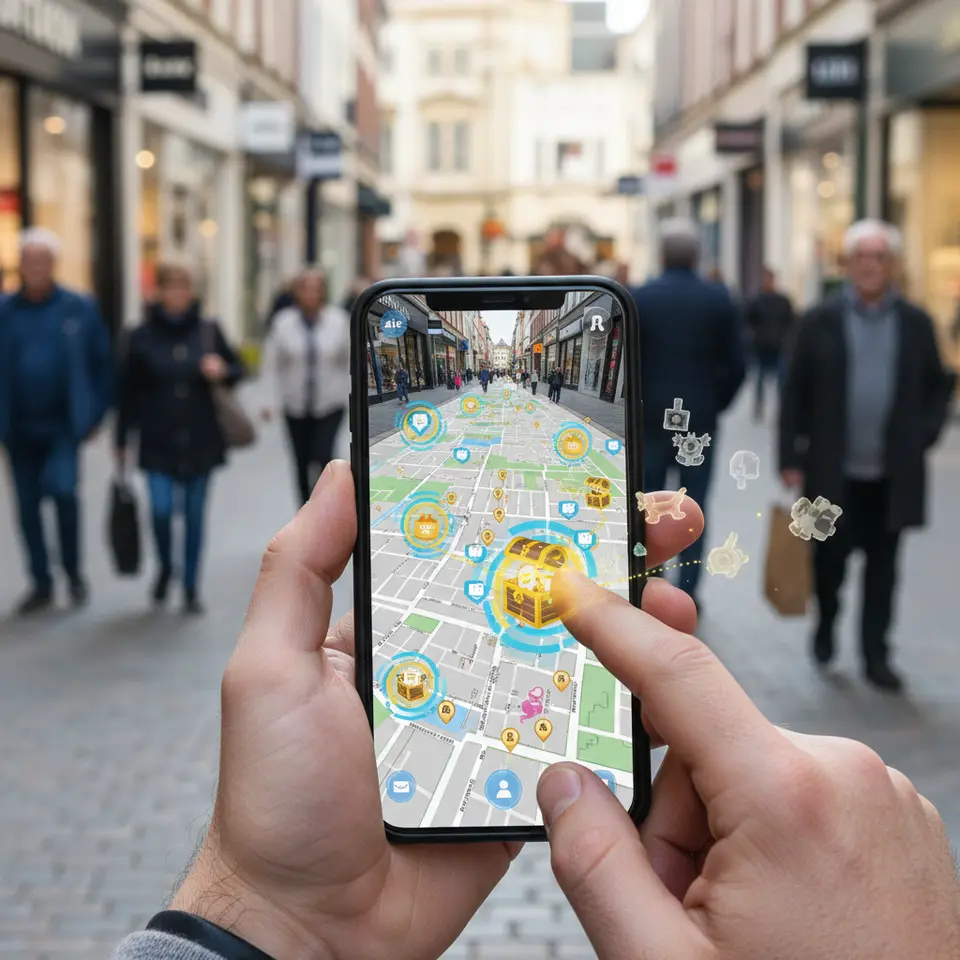
Imagine launching a city-wide AR treasure hunt that leads participants to hidden virtual coupons at various store locations. With geolocation AR, brands can set “hotspots” mapped to GPS coordinates, guiding users through an interactive shopping adventure. Each discovered location unlocks rewards or product previews, driving traffic to underperforming outlets and incentivizing repeat visits. This playful, incentive-driven approach merges entertainment with commerce, increasing both dwell time and average basket size without requiring extensive physical infrastructure.
Cultural Storytelling
Museums and heritage sites leverage geolocation AR to bring history to life. Visitors can point their devices at landmarks to reveal layered narratives—complete with 3D reenactments, archival photographs, and audio guides. By embedding contextual information directly onto real-world objects, these experiences enrich tours and deepen engagement. Institutions such as the Library of Congress have documented significant boosts in visitor satisfaction and extended stay durations when AR overlays supplement traditional exhibits.
Property Previews
In real estate and tourism, geolocation AR transforms property browsing and site tours. Prospective homebuyers can aim their smartphones at a building to reveal virtual floor plans, availability status, and pricing details anchored in space. Similarly, travelers explore attractions and accommodations with contextual overlays highlighting ratings, nearby amenities, or weather forecasts. This self-guided approach reduces friction for sales agents and travel advisors, empowering users with on-the-spot, data-rich insights that inform decisions.
Event Enhancements
At large-scale festivals, concerts, or trade shows, geolocation AR delivers dynamic wayfinding and interactive schedules. Attendees access overlaid maps that highlight stages, restrooms, and vendor booths, accompanied by real-time updates on performance times or queue lengths. Sponsoring brands can create AR photo frames or mini-games at strategic points, capturing attendee attention. The result is a streamlined visitor experience and measurable engagement metrics, such as session duration and branded interaction counts.
Educational Initiatives
Educational campuses and science centers use geolocation AR to foster immersive learning. Students on a campus tour might unlock interactive biology lessons by pointing at botanical specimens, or discover architectural details by scanning historical buildings. These applications support self-paced exploration and deepen comprehension by contextualizing lessons in the real world. Programs at the National Park Service have documented improved retention and student enthusiasm for place-based learning using AR overlays.
Corporate Training
Enterprises deploy geolocation AR for workforce training and facility management. Maintenance crews can access step-by-step repair guides by pointing devices at machinery, while safety personnel receive hazard alerts upon entering specific zones. This on-site, hands-free instruction accelerates training cycles and reduces errors. Organizations that adopt these solutions often report lower onboarding costs and faster skill acquisition, making geolocation AR a valuable tool for internal operations.
A Step-by-Step Guide to Deploying Geolocation AR Campaigns
Before launching any geolocation AR initiative, begin by defining clear objectives and key performance indicators (KPIs). Determine whether the goal is to increase foot traffic, boost average transaction value, or enhance brand awareness in targeted zones. Assign quantitative targets—such as a 15% uplift in store visits or a specific number of coupon redemptions—to facilitate post-campaign evaluation.
Selecting the appropriate technology stack is the next critical step. Evaluate AR development platforms—such as ARKit, ARCore, or WebAR frameworks—for compatibility with your target devices. Integrate geofencing and mapping APIs that support high-precision location services, and choose a content management solution to orchestrate assets across multiple sites. Consider factors like development cost, scalability, and ease of use to balance performance requirements with budget constraints.
Design location-specific AR content that resonates with your audience. Collaborate with graphic designers, 3D artists, and storytellers to produce assets optimized for mobile performance. Use lightweight models and compressed textures to maintain smooth frame rates and extend battery life. Ensure your overlays are contextually relevant—highlighting menu specials near a café counter or featuring virtual try-ons in a retail fitting room. Prototyping early with user testing can uncover usability issues before full deployment.
Conduct a pilot test in a controlled environment before scaling up. Launch your geolocation AR experience in a single venue or neighborhood to collect user feedback and performance data. Track activation rates, session durations, and user drop-off points, then analyze results to identify friction areas. Iteratively refine content placement, interaction design, and permission prompts to improve overall satisfaction.
Once your pilot yields positive results, roll out the campaign across additional locations. Coordinate with local teams to manage on-site signage and promotional materials that invite users to engage. Leverage social media and email marketing to raise awareness, offering incentives for first-time participants. Encourage user-generated content by integrating shareable AR moments—such as branded stickers or short video clips—that amplify reach organically.
After launch, continuously monitor analytics to gauge campaign effectiveness. Correlate AR interaction data with external metrics, such as in-store sales or reservation volumes, to assess real-world impact. Use A/B testing to compare variations in messaging, asset designs, or hotspot locations. Maintain a feedback loop with field teams and end users to uncover opportunities for improvement.
Best Practices for Maximum Impact
Putting user experience at the forefront is essential for geolocation AR success. Design interactions that are intuitive and minimize complexity. Employ clear visual cues, straightforward gestures, and concise on-screen instructions to guide users smoothly through the experience. Focus on a few compelling touchpoints that deliver clear value and encourage continued exploration in a natural way.
Contextual relevance drives engagement in hyper-local campaigns. Tailor AR content to the physical setting and audience demographics. For example, a coffee shop might highlight seasonal flavors at its doorstep, while a sports retailer could feature interactive demos near training equipment. Aligning digital experiences with environmental cues reinforces brand messaging and heightens the perceived usefulness of the activation.
Mobile performance optimization is paramount. Use lightweight 3D models, employ texture compression, and implement adaptive asset loading techniques to reduce load times and conserve battery life. Test the experience across a range of devices and network conditions—particularly in areas with limited connectivity. A smooth, responsive AR activation delights users and lowers abandonment rates.
Embedding social sharing features can exponentially expand campaign visibility. Integrate branded AR photo frames, animated stickers, or shareable video snippets that users can post directly to their social feeds. Encourage hashtag usage and offer rewards or recognition for the best user-generated content. This approach generates authentic testimonials and extends your reach beyond the immediate vicinity.
Respecting user privacy and adhering to regulations is non-negotiable. Provide transparent permission prompts that clearly explain why geolocation and camera access is required. Implement robust data protection measures—such as encryption and anonymization—and comply with regional guidelines like GDPR and CCPA. A transparent approach fosters user trust and increases opt-in rates.
Finally, treat your geolocation AR campaign as an evolving experience. Establish regular review cycles to analyze performance metrics, gather user feedback, and identify content gaps. Use insights from heatmaps, session recordings, and surveys to inform design updates and strategic pivots. By continuously refining your activation, you can keep the experience fresh and stay ahead of competitors in a rapidly advancing AR landscape.
FAQ
What devices support geolocation AR?
Most modern smartphones and tablets with GPS, camera, and motion sensors support geolocation AR. Leading development platforms such as ARKit (iOS) and ARCore (Android) provide native capabilities, while WebAR frameworks enable browser-based experiences on compatible devices.
How can privacy be ensured in geolocation AR campaigns?
Privacy is safeguarded by obtaining explicit user consent, encrypting location data in transit, and anonymizing personal information. Compliance with regulations like GDPR and CCPA, along with transparent permission prompts, helps build user trust and ensures data protection.
Which metrics should be tracked to measure campaign success?
Key metrics include activation counts, dwell times, hotspot interactions, coupon redemptions, and social shares. Correlating AR data with in-store sales or foot traffic sensors provides a holistic view of performance and return on investment.
Conclusion
Geolocation AR represents a significant leap forward for hyper-local marketing, combining the precision of geospatial data with the richness of augmented experiences. By mastering key components—GPS, device sensors, and advanced mapping APIs—marketers can anchor interactive overlays onto real environments. The result is guided, immersive engagements that drive foot traffic and conversions in this year (2026) with measurable ROI.
From retail treasure hunts to cultural tours and event wayfinding, geolocation AR unlocks a broad spectrum of impactful use cases. Success depends on a structured approach: define clear objectives, select suitable AR frameworks, pilot in controlled settings, and analyze performance data. Iterative testing and user feedback also play vital roles in refining experiences to meet audience expectations and operational goals.
In today’s digital landscape, brands that embrace geolocation AR gain a competitive edge by creating meaningful local connections. Prioritizing user experience, contextual relevance, and privacy compliance builds trust and encourages repeat engagement. Armed with the strategies and best practices outlined in this guide, your team can craft hyper-local campaigns that resonate with community audiences and drive sustainable growth. Start deploying geolocation AR today to shape the future of location-based marketing.