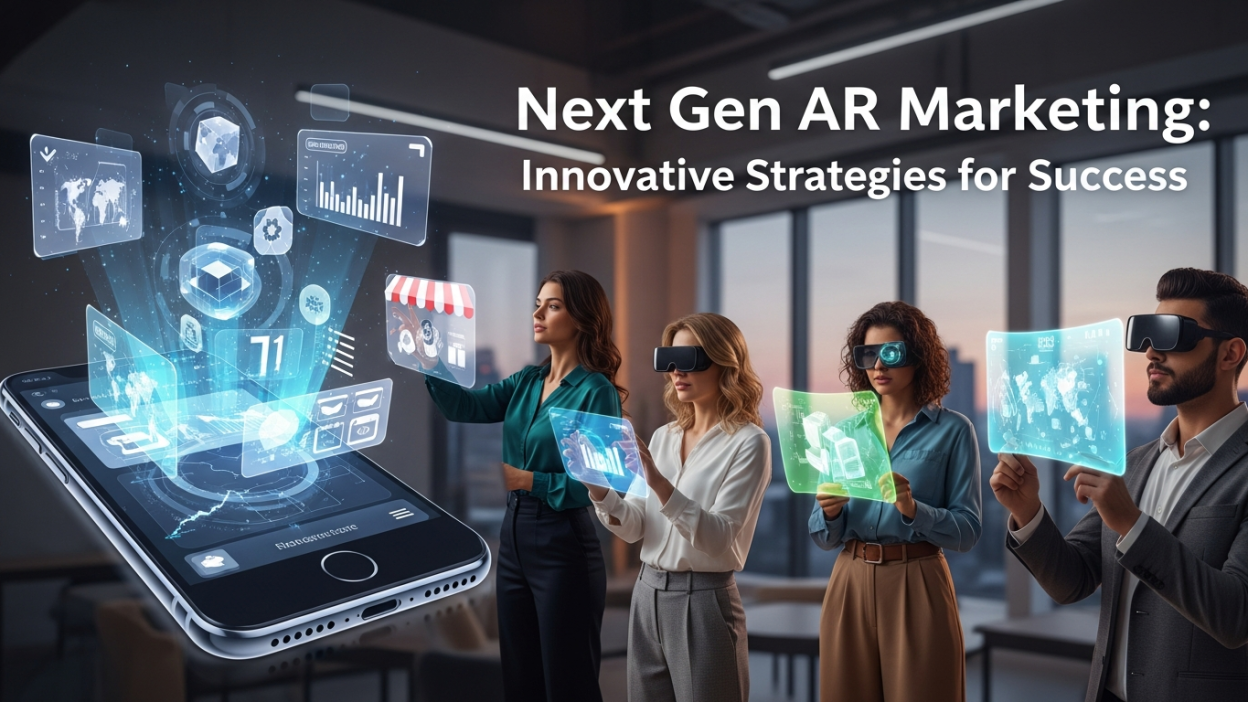
Next Gen AR Marketing: Innovative Strategies for Success
Augmented reality is transforming how brands connect with audiences. Next Gen AR Marketing combines cutting-edge technology with creative storytelling to deliver immersive experiences that capture attention, build loyalty, and drive measurable results across industries.
Marketing has entered an era where static ads and traditional campaigns struggle to capture attention. Consumers scroll past banners, skip video ads, and demand experiences that feel personal and interactive. Next Gen AR Marketing addresses this challenge by blending digital content with the physical world, creating moments that feel magical, memorable, and shareable.
Brands that adopt next gen AR marketing strategies gain a competitive edge. They transform product launches into interactive events, turn retail spaces into experiential playgrounds, and empower customers to visualize products in their own environments before making purchase decisions. This shift from passive viewing to active participation fundamentally changes the relationship between brands and their audiences.
The technology behind next gen AR marketing has matured rapidly. What once required expensive hardware and specialized expertise now runs smoothly on smartphones carried by billions of people worldwide. This accessibility has opened doors for businesses of all sizes to experiment with augmented reality, test creative concepts, and measure engagement in ways that weren’t possible just a few years ago.
This article explores how next gen AR marketing is reshaping brand strategy, examines innovative approaches that deliver results, and provides actionable insights for marketers ready to embrace this powerful medium. Whether you’re planning your first AR campaign or looking to refine existing efforts, understanding these strategies will position your brand for success in an increasingly digital marketplace.
The Evolution of AR in Marketing
Augmented reality marketing has progressed from novelty to necessity. Early experiments featured simple overlays and basic filters that entertained but rarely converted. Today’s next gen AR marketing leverages sophisticated tracking, realistic rendering, and seamless integration with e-commerce platforms to create experiences that directly impact purchasing behavior.
Retail brands pioneered practical applications by letting customers virtually try on clothing, accessories, and makeup. Furniture companies followed by enabling shoppers to place digital versions of products in their homes, dramatically reducing return rates and increasing buyer confidence. These use cases demonstrated that next gen AR marketing could solve real business problems while delighting customers.
Social media platforms accelerated adoption by building AR capabilities directly into their apps. Brands could now reach massive audiences with custom filters and effects that users voluntarily engaged with and shared. This organic distribution model turned customers into brand ambassadors, amplifying campaign reach without additional media spend.
The current wave of next gen AR marketing goes beyond product visualization. Brands create virtual showrooms, interactive packaging experiences, and location-based campaigns that reward exploration. These applications demonstrate how augmented reality can enhance every stage of the customer journey, from awareness to advocacy.
Hyper-Immersive AR Marketing Takes Center Stage
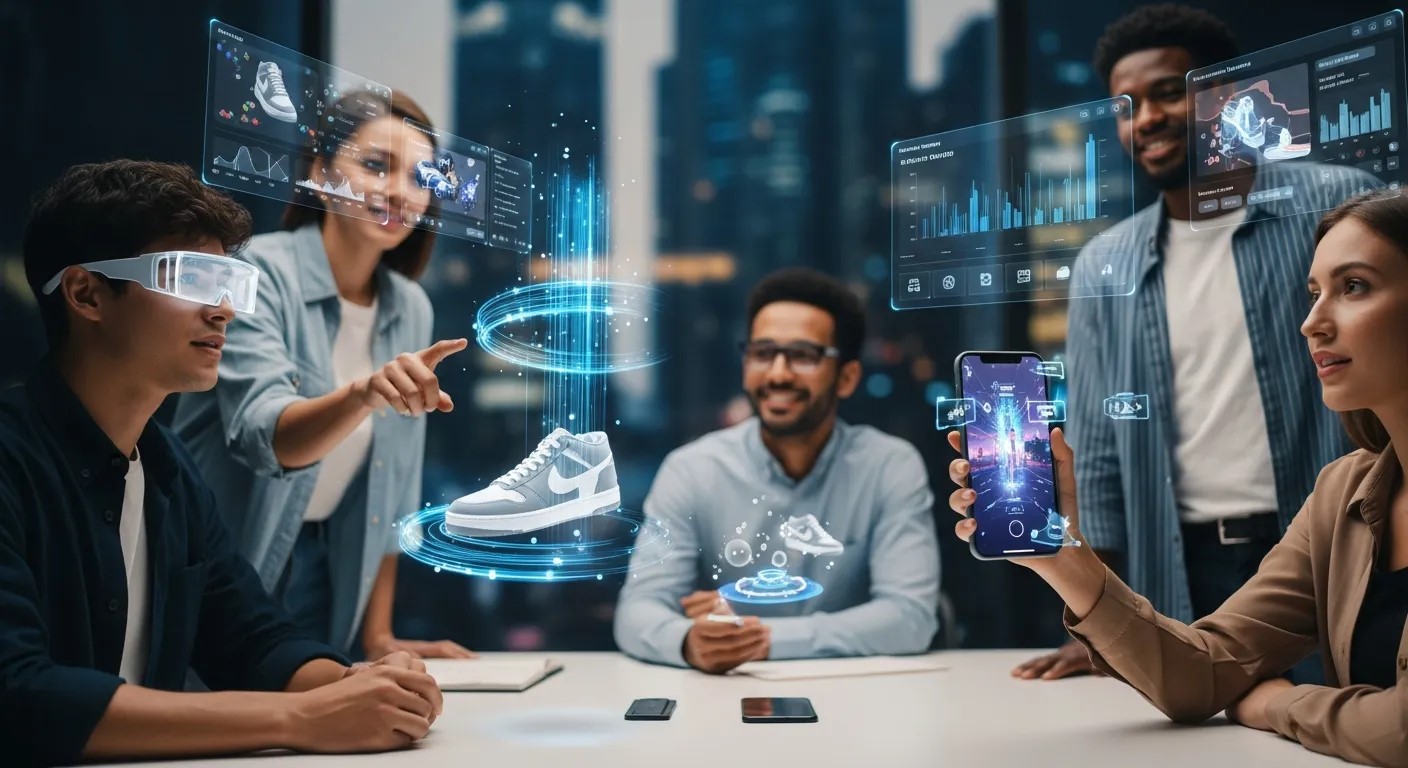
Hyper-Immersive AR Marketing represents the frontier of customer engagement. This approach combines advanced visual fidelity with spatial audio, haptic feedback, and environmental understanding to create experiences that blur the line between physical and digital realities. Brands using these techniques report engagement metrics that far exceed traditional digital campaigns.
The technology powering hyper-immersive experiences has become remarkably sophisticated. Modern AR platforms can detect surfaces, understand depth, recognize objects, and respond to lighting conditions in real time. This environmental awareness allows digital content to interact naturally with physical spaces, making the experience feel less like a gimmick and more like an extension of reality.
Automotive brands have embraced this level of immersion by letting potential buyers explore vehicle interiors, customize configurations, and take virtual test drives all from their living rooms. These experiences provide more information and emotional connection than static photos or even traditional video could achieve, leading to more informed purchase decisions and higher satisfaction rates.
AR Facial Tracking Revolutionizes Beauty and Fashion
AR Facial Tracking has transformed how consumers interact with beauty and fashion brands. This technology maps facial features with precision, enabling virtual try-on experiences that accurately represent how products will look on individual users. The result is a shopping experience that combines the convenience of online browsing with the confidence that comes from in-store testing.
Beauty brands were quick to recognize the potential. Virtual makeup applications let customers experiment with bold colors and new styles without commitment or waste. Users can instantly see how different foundation shades match their skin tone, how lipstick colors complement their features, and how eyeshadow palettes perform under various lighting conditions.
Fashion retailers have extended this concept to eyewear, jewelry, and accessories. Next gen AR marketing platforms now offer experiences where users can see how different frame shapes complement their face structure, how necklace lengths fall against their neckline, and how watch styles suit their wrist size. These personalized previews reduce purchase anxiety and return rates.
The data generated from these interactions provides valuable insights. Brands learn which products generate the most virtual try-ons, how long users engage with different features, and what combinations drive actual purchases. This information informs product development, inventory planning, and marketing strategy with unprecedented precision.
Innovative Campaign Strategies That Deliver Results
Successful next gen AR marketing campaigns share common characteristics. They prioritize user value over technological showmanship, integrate seamlessly with existing customer journeys, and provide clear calls to action that guide users toward desired outcomes. The most effective campaigns feel less like advertisements and more like useful tools or entertaining experiences.
Limited-edition product launches benefit tremendously from AR integration. Brands create anticipation by releasing AR previews that let fans explore new designs before official announcements. These exclusive experiences reward loyal customers, generate social media buzz, and create natural opportunities for user-generated content that extends campaign reach organically.
Location-based AR campaigns transform physical spaces into interactive brand experiences. Museums, retail stores, and event venues use augmented reality to provide contextual information, unlock hidden content, and gamify exploration. These applications increase dwell time, encourage repeat visits, and create memorable associations between brands and positive experiences.
Educational content delivered through next gen AR marketing proves particularly effective. Complex products become easier to understand when users can visualize internal mechanisms, explore component relationships, and interact with features in three dimensions. This approach works exceptionally well for technical products, home improvement items, and anything that benefits from spatial understanding.
Measuring Success in AR Marketing Campaigns
Next gen AR marketing provides rich analytics that go far beyond traditional engagement metrics. Marketers can track how long users interact with AR content, which features they explore, where they abandon experiences, and what actions they take afterward. This granular data enables continuous optimization and demonstrates clear ROI.
Dwell time emerges as a crucial metric. While users might glance at a banner ad for seconds, AR experiences regularly capture attention for minutes at a time. This extended engagement creates opportunities for deeper storytelling, more thorough product education, and stronger emotional connections between brands and consumers.
Conversion tracking has become increasingly sophisticated. Platforms now connect AR interactions directly to purchase behavior, showing which experiences lead to transactions, how virtual try-ons influence basket size, and what content drives repeat purchases. These insights help marketers allocate budget effectively and double down on strategies that deliver measurable business outcomes.
Social sharing metrics reveal how compelling users find AR experiences. Content that prompts voluntary sharing reaches new audiences authentically, often outperforming paid media in terms of engagement and conversion. Brands that create shareable AR moments benefit from exponential reach growth without proportional cost increases.
Ethical AR Marketing Builds Trust and Loyalty
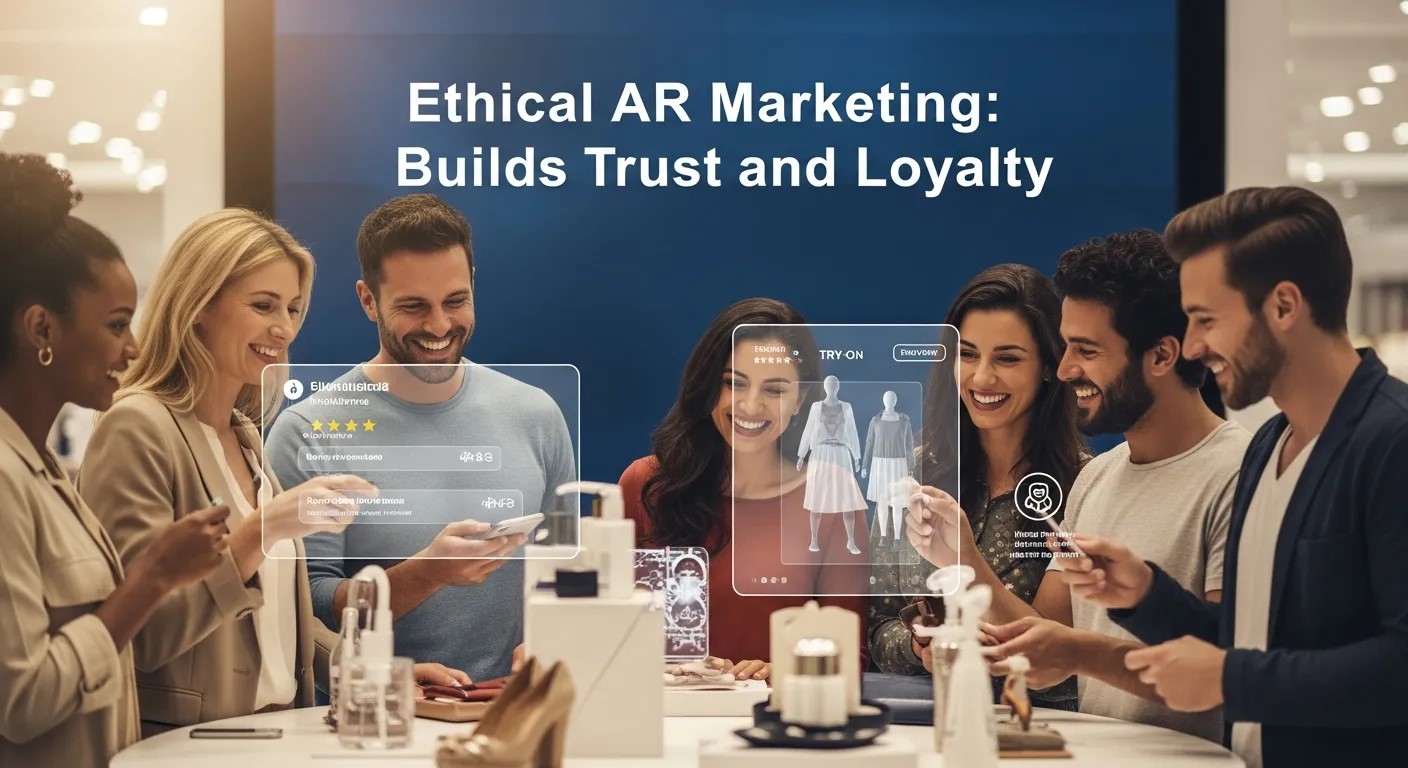
Ethical AR Marketing acknowledges that powerful technology requires responsible implementation. Brands that prioritize user privacy, provide transparent data practices, and design experiences that enhance rather than manipulate earn lasting customer trust. This approach may require short-term restraint but delivers long-term competitive advantage.
Data collection practices deserve careful consideration. While AR experiences can gather detailed information about user preferences and behavior, responsible marketers clearly communicate what data they collect, how they use it, and what benefits users receive in exchange. This transparency differentiates trustworthy brands from those that exploit technology for purely extractive purposes.
Accessibility must guide next gen AR marketing development. Experiences should work across device types, accommodate different network speeds, and provide alternatives for users who cannot or choose not to engage with AR features. Inclusive design expands potential audience size while demonstrating brand values that resonate with socially conscious consumers.
The psychological impact of immersive experiences requires thoughtful design. AR content that creates unrealistic expectations, exploits insecurities, or encourages unhealthy behaviors may generate short-term engagement but damages brand reputation over time. Ethical marketers prioritize experiences that inform, entertain, and empower rather than those that manipulate or mislead.
AR Emergency Response Demonstrates Broader Applications
AR Emergency Response showcases how augmented reality extends beyond commercial marketing into mission-critical applications. First responders use AR overlays to visualize building layouts, locate individuals in distress, and coordinate complex operations with enhanced situational awareness. These use cases demonstrate the versatility of AR technology and inspire innovative thinking in marketing contexts.
Brands can apply lessons from emergency applications to create urgency and value in their campaigns. Flash sales visualized through AR create excitement and drive immediate action. Limited-time AR experiences reward quick engagement and encourage users to check back regularly for new content.
The clarity and efficiency required in emergency contexts also inform effective marketing design. Next gen AR marketing experiences should load quickly, communicate clearly, and guide users toward desired actions without confusion or frustration. Streamlined interactions respect user time and increase completion rates.
Technical Considerations for Implementation
Successful next gen AR marketing requires attention to technical details that impact user experience. Loading times, rendering quality, and device compatibility can make the difference between delightful interactions and frustrating abandonment. Brands should partner with experienced developers who understand both the creative possibilities and technical constraints of AR platforms.
Platform selection significantly impacts campaign reach and effectiveness. Web-based AR experiences offer maximum accessibility since they require no app downloads, but they may sacrifice some advanced features available in native applications. Marketers must balance reach against functionality based on specific campaign goals and target audience behaviors.
Content optimization ensures smooth performance across device types. High-polygon 3D models that look stunning on flagship smartphones may stutter on mid-range devices, excluding significant portions of potential audiences. Thoughtful asset optimization maintains visual quality while ensuring broad compatibility and fast loading times.
Testing protocols should account for real-world conditions. AR experiences that perform flawlessly on office Wi-Fi may struggle on cellular networks or in areas with limited connectivity. Comprehensive testing across networks, devices, and lighting conditions identifies issues before they impact customer experiences.
Future Trends Shaping AR Marketing
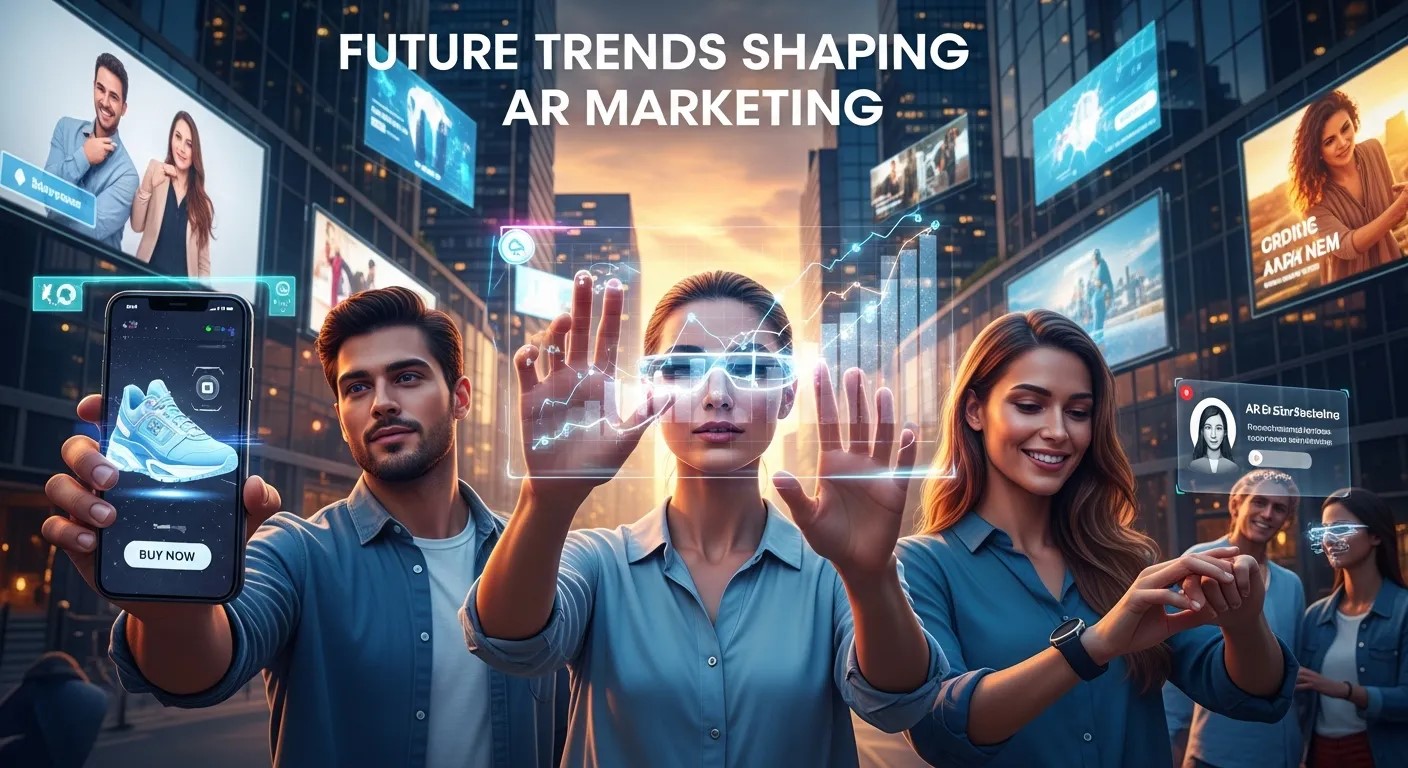
Next gen AR marketing continues evolving as technology advances and consumer expectations shift. Wearable AR devices promise to make augmented experiences more seamless and contextual. As these platforms mature, marketers will need to adapt strategies for always-available AR that integrates more deeply into daily life than smartphone-based experiences allow.
Artificial intelligence integration will make AR experiences increasingly personalized and responsive. Next gen AR marketing platforms will automatically adapt content based on user preferences, past behavior, and real-time context. This dynamic customization will make experiences feel more relevant and valuable to individual users.
Collaborative AR experiences will enable social shopping and shared exploration. Friends will virtually browse together despite physical distance, get real-time opinions on products they’re considering, and create shared memories around brand interactions. These social features will amplify engagement and drive organic growth through network effects.
The convergence of AR with other emerging technologies creates new possibilities. Integration with voice assistants enables hands-free interaction. Combination with IoT devices allows AR experiences that respond to environmental conditions. Next gen AR marketing will increasingly orchestrate multiple technologies into cohesive, magical experiences that feel natural rather than gimmicky.
Industry-Specific Applications and Success Stories
Different industries have discovered unique applications for next gen AR marketing. Real estate agents use AR to show property potential, overlaying renovation possibilities onto existing spaces and helping buyers visualize how homes could meet their needs. This approach shortens sales cycles and increases buyer confidence.
Food and beverage brands create AR experiences that bring packaging to life, sharing origin stories, recipe suggestions, and nutritional information in engaging formats. These applications transform mundane purchasing decisions into educational moments that build brand affinity and justify premium pricing.
Entertainment companies use next gen AR marketing to extend storytelling beyond traditional media. Movie studios create AR experiences that let fans explore fictional worlds, interact with characters, and unlock exclusive content. These immersive promotions generate excitement and encourage multiple interactions throughout campaign windows.
Healthcare organizations employ AR to educate patients about procedures, visualize treatment options, and demonstrate proper medication usage. While not traditional marketing, these applications build trust and position providers as innovative leaders who prioritize patient understanding and comfort.
Building Your AR Marketing Strategy
Developing an effective next gen AR marketing strategy begins with clear objectives. Define what success looks like—whether increased awareness, higher conversion rates, reduced returns, or stronger customer loyalty. These goals guide creative decisions and help evaluate campaign performance against meaningful benchmarks.
Audience research informs experience design. Understanding what problems your AR experience solves, what value it provides, and how it fits into existing customer behaviors ensures adoption rather than abandonment. The most successful campaigns feel like natural extensions of the customer journey rather than distracting detours.
Budget allocation should account for both development and promotion. Creating compelling AR experiences requires investment in design, development, and testing. However, even outstanding experiences deliver limited value if target audiences never discover them. Balance creation costs with distribution spending to maximize impact.
Iteration based on data separates good campaigns from great ones. Next gen AR marketing platforms provide detailed analytics about user behavior within experiences. Use this information to identify friction points, test alternatives, and continuously improve performance throughout campaign lifecycles.
Overcoming Common AR Implementation Challenges
Technical barriers often intimidate brands considering next gen AR marketing. However, the ecosystem has matured significantly, with platforms offering templates, drag-and-drop builders, and managed services that reduce complexity. Starting with simpler experiences allows teams to build expertise before attempting more ambitious projects.
Internal stakeholder alignment requires education about AR capabilities and business impact. Decision-makers unfamiliar with the technology may struggle to envision possibilities or justify investment. Pilot projects with clear success metrics help build internal support and demonstrate value to skeptical executives.
User adoption concerns arise when brands worry audiences won’t engage with AR features. However, data shows that consumers increasingly expect and seek out these experiences, particularly in categories like beauty, fashion, and home goods where visualization drives purchase decisions. Clear value propositions and intuitive interfaces encourage trial and repeat engagement.
Measurement frameworks must evolve beyond traditional metrics. While impressions and clicks remain relevant, next gen AR marketing enables deeper engagement tracking. Develop attribution models that account for extended interaction time, repeat engagement, and the relationship between AR experiences and eventual conversions.
Comparison Table: Traditional Marketing vs Next Gen AR Marketing
|
Aspect |
Traditional Marketing |
Next Gen AR Marketing |
|---|---|---|
|
Engagement Level |
Passive viewing, limited interaction |
Active participation, hands-on exploration |
|
Personalization |
Segment-based targeting |
Individual-level customization in real time |
|
Product Visualization |
Static images and video |
Interactive 3D models in user environment |
|
Sharing Potential |
Requires active forwarding |
Naturally shareable immersive experiences |
|
Data Depth |
Click-through and conversion tracking |
Detailed interaction analytics and behavioral insights |
|
Purchase Confidence |
Relies on imagination and reviews |
Direct product experience before buying |
|
Return Rates |
Higher due to expectation mismatches |
Lower through accurate pre-purchase visualization |
|
Brand Differentiation |
Competitive creative and messaging |
Technology-enabled unique experiences |
|
Cost Efficiency |
Established pricing models |
Improving ROI as adoption increases |
|
Audience Reach |
Broad but shallow engagement |
Narrower but deeper connection |
Conclusion
Next gen AR marketing represents a fundamental shift in how brands connect with audiences. The technology has matured beyond experimental novelty into a proven strategy that drives engagement, reduces friction, and delivers measurable business results across industries.
Successful implementation requires clear strategy, thoughtful design, and commitment to user value. Brands that approach AR marketing with ethical consideration, technical excellence, and creative ambition will build competitive advantages that compound over time.
The barriers to entry continue falling as platforms simplify development and distribution. Whether you’re a global enterprise or a growing startup, next gen AR marketing offers accessible opportunities to create memorable experiences that resonate with modern consumers and drive meaningful business outcomes.
Frequently Asked Questions
What is next gen AR marketing?
Next gen AR marketing uses augmented reality technology to create interactive brand experiences that blend digital content with the physical world, driving engagement and conversions.
How does AR marketing improve conversion rates?
AR marketing increases conversion rates by letting customers visualize products in their environment, try items virtually, and make more informed purchase decisions with greater confidence.
What industries benefit most from AR marketing?
Retail, beauty, fashion, furniture, automotive, real estate, and entertainment industries see particularly strong results from next gen AR marketing implementations.
Do customers need special devices for AR experiences?
Most next gen AR marketing experiences work on standard smartphones, requiring no special equipment beyond devices most consumers already own and use daily.
How much does AR marketing cost?
Costs vary widely based on complexity, but platforms now offer options from simple template-based experiences to fully custom developments fitting different budgets.
Can small businesses use AR marketing effectively?
Yes, simplified platforms and web-based AR tools have made next gen AR marketing accessible to businesses of all sizes without requiring extensive technical expertise.
How do you measure AR marketing success?
Success metrics include engagement duration, interaction depth, conversion rates, return reduction, social sharing, and direct attribution to purchases and revenue.
What makes AR content shareable?
Compelling AR experiences that provide entertainment value, enable self-expression, or solve problems naturally encourage users to share with their networks organically.
Is AR marketing just a temporary trend?
AR marketing represents a fundamental shift toward immersive digital experiences, with adoption accelerating as technology improves and consumer expectations evolve.
How does AR marketing differ from VR?
AR overlays digital content onto the real world through smartphones or glasses, while VR creates completely immersive virtual environments requiring dedicated headsets.
What privacy concerns exist with AR marketing?
Responsible next gen AR marketing addresses privacy through transparent data practices, minimal collection, clear user consent, and compliance with evolving regulations.
How quickly can brands launch AR campaigns?
Launch timelines range from days for template-based experiences to months for custom developments, depending on complexity, resources, and platform choices.