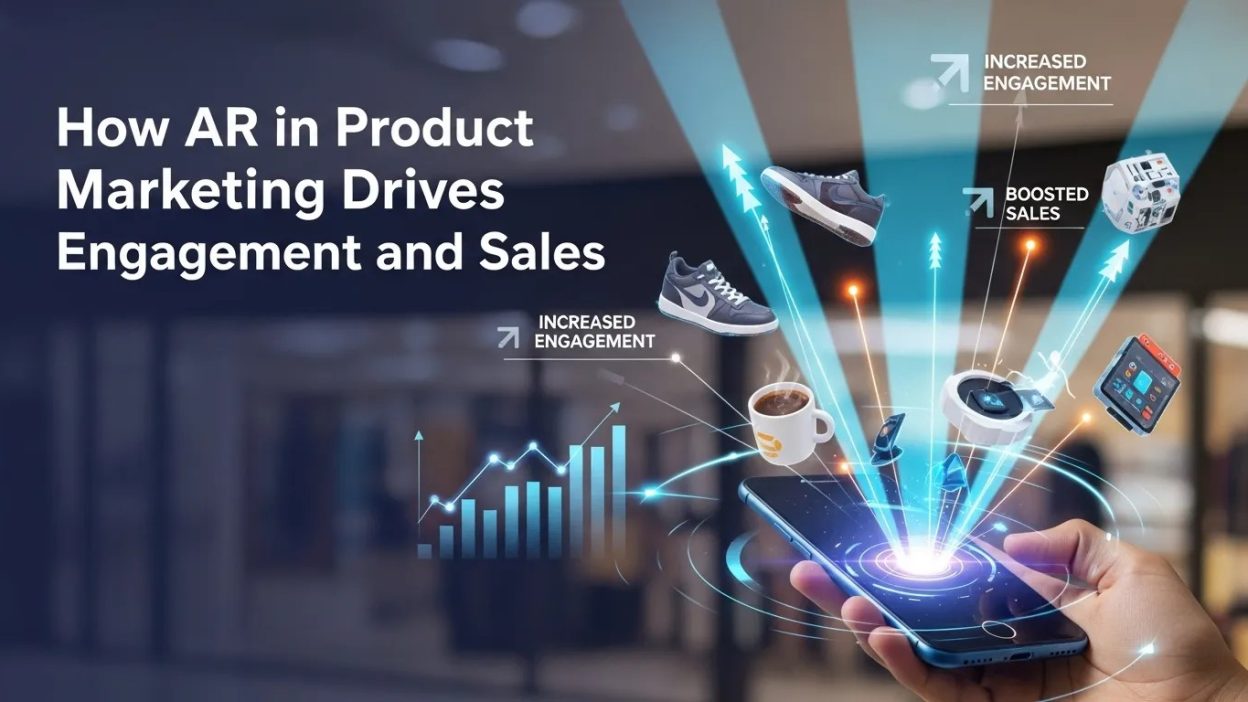
AR in Product Marketing revolutionizes consumer engagement by offering immersive, interactive experiences. From retail to smart homes, AR drives sales, builds brand loyalty, and provides measurable ROI while enhancing the customer journey with personalized, memorable, and shareable product interactions.
How AR in Product Marketing Drives Engagement and Sales
The landscape of marketing has evolved dramatically over the past decade. Traditional strategies like print ads, television commercials, and standard digital banners are no longer enough to capture the attention of a consumer who is constantly bombarded with content. AR in Product Marketing has emerged as a transformative approach, allowing brands to provide immersive experiences that directly engage potential buyers and influence purchase behavior.
Incorporating AR into marketing campaigns taps directly into human psychology. People are naturally drawn to interactive experiences because they activate curiosity, excitement, and a sense of control. Unlike passive forms of advertising, AR in Product Marketing allows users to explore products virtually, which can influence purchase decisions and build brand trust. This aligns with the psychological principle of experiential learning: when consumers interact with a product, even digitally, they are more likely to retain information, form emotional connections, and ultimately take action.
Understanding the Role of AR in Product Marketing
At its core, AR in Product Marketing bridges the gap between physical and digital experiences. Instead of relying on static images or written descriptions, brands can offer dynamic simulations of products in real-world environments. This has multiple benefits:
-
Enhanced Visualization: Consumers can see how a product fits into their lives. For example, furniture brands can let users visualize how a sofa or dining table looks in their living space.
-
Personalized Experiences: AR allows customization in real-time, providing a sense of ownership and satisfaction before purchase.
-
Increased Engagement: Interactive experiences hold attention longer than static content, increasing the likelihood of conversions.
A key factor driving the adoption of AR in Product Marketing is the measurable return on investment. Brands are increasingly allocating budgets to AR campaigns because data shows higher engagement rates and improved conversion metrics. Integrating AR requires strategic planning and a clear understanding of audience behavior, which leads to more effective campaigns compared to traditional methods.
The Psychology Behind AR Engagement
Humans are wired to respond to novelty, movement, and immersive storytelling. AR taps into these psychological triggers by offering:
-
Instant Gratification: Users get immediate visual feedback when interacting with products.
-
Interactive Control: The sense of controlling how the product is experienced increases emotional investment.
-
Memory Retention: Experiences that are interactive are more memorable than passive ones, leading to higher brand recall.
By aligning campaigns with human psychology, AR in Product Marketing ensures experiences feel personal and relevant, rather than intrusive. This increases engagement while building long-term brand loyalty.
Measuring the Impact of AR in Product Marketing

For brands looking to justify AR in Product Marketing investments, measurement is crucial. Unlike traditional marketing, AR provides detailed data on user engagement and behavior. Every interaction—whether it’s trying a virtual product, rotating a 3D model, or exploring customizations—can be tracked. These insights allow marketers to optimize campaigns in real time, ensuring maximum ROI.
Key performance indicators for AR campaigns include:
-
Engagement Rate: Time spent interacting with AR content compared to standard web or app interactions.
-
Conversion Rate: Percentage of users who make a purchase after engaging with AR.
-
Retention and Recall: How well users remember products after interacting with AR experiences.
The ability to quantify engagement makes AR in Product Marketing particularly attractive for industries with high-ticket items. Automotive, real estate, and luxury goods marketers can demonstrate a direct link between immersive experiences and sales, validating their investment decisions.
Augmented Reality Marketing Investment
To fully leverage AR, brands must consider strategic Augmented Reality Marketing Investment. While initial setup costs such as 3D modeling, app development, or AR-enabled product content—can seem high, studies show that immersive experiences drive higher engagement, stronger brand loyalty, and increased sales. By allocating resources thoughtfully, businesses can scale campaigns while minimizing unnecessary expenditure.
Investing in AR is not only about technology it’s about experience design. Well-crafted AR interactions encourage exploration, experimentation, and emotional connection. This investment pays off when users spend more time engaging with products, share their experiences on social media, and ultimately make purchasing decisions.
AR in Retail and E-Commerce Ecosystems
Retailers are among the most active adopters of AR in Product Marketing. By integrating AR into e-commerce platforms, brands allow users to visualize products in their own spaces. A customer looking to buy a sofa can now see how it fits in their living room through a mobile app. Similarly, fashion and accessories brands use AR to provide virtual try-ons, offering personalization that enhances the buying experience.
Interactive AR content also encourages repeat visits. Consumers who have positive AR experiences are more likely to return to the brand’s website or app, making AR a tool for both engagement and customer retention. Additionally, AR reduces friction in the purchasing process by enabling informed decisions, which decreases returns and builds confidence in online shopping.
AR in Affiliate Marketing
An emerging application of AR in Affiliate Marketing is its integration into affiliate programs. Traditional affiliate marketing often relies on static content or text links. With AR, affiliates can offer immersive product demonstrations that showcase value more effectively. A beauty influencer, for example, could integrate AR try-on tools within their recommendations, allowing followers to experiment with products virtually.
This approach not only increases engagement but also improves conversion rates. Users are more likely to trust and act on recommendations when they can interact with products firsthand, even digitally. AR enhances the authenticity of affiliate promotions, creating a win-win for both brands and affiliates.
AR in Automotive and Real Estate
High-investment industries such as automotive and real estate benefit greatly from AR integration. Potential buyers often face uncertainty when making costly decisions. AR solutions allow them to:
-
Explore car interiors or exterior features in detail.
-
Visualize property layouts and design elements.
-
Test multiple configurations, colors, or finishes before purchase.
By providing an interactive, immersive experience, AR in Product Marketing helps overcome hesitation, giving consumers confidence in their choices and increasing the likelihood of a sale.
Augmented Reality in Smart Homes
Another domain where AR in Product Marketing is transforming consumer behavior is smart home technology. Brands offering smart devices can use AR to show how products integrate into a home ecosystem. For instance, an app could demonstrate how smart lighting or thermostats adapt to a user’s living space.
This visual and interactive demonstration enhances understanding, reduces cognitive barriers, and encourages adoption. Smart home enthusiasts are more likely to invest when they can see and interact with devices in a simulated real-world context, making AR a powerful conversion tool.
AR in Email Marketing and Digital Campaigns
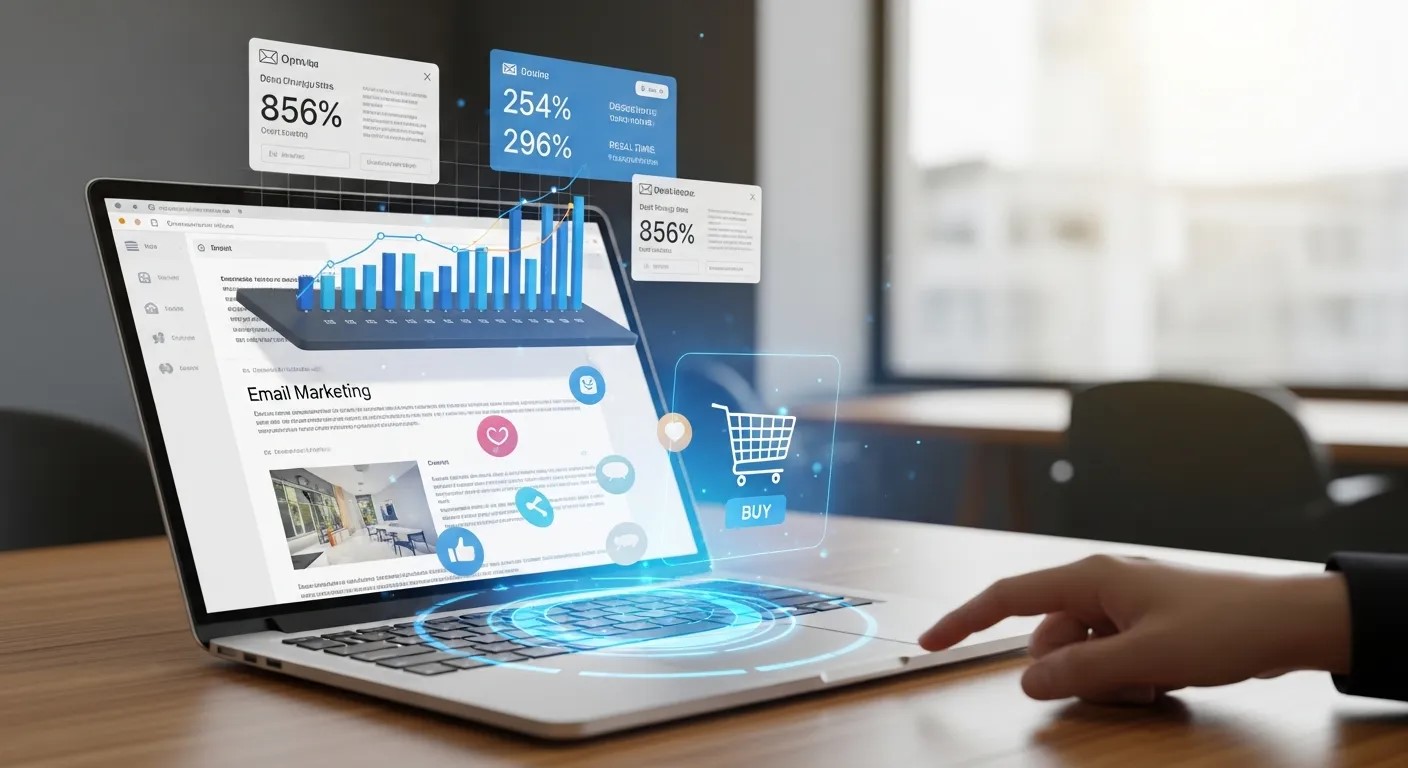
In addition to in-app and in-store experiences, AR in Product Marketing is increasingly being integrated into digital campaigns, particularly through email. Traditional email marketing often suffers from low engagement rates because static visuals and text fail to capture attention. AR-enabled emails, on the other hand, offer interactive elements like 3D product previews, virtual try-ons, and clickable immersive experiences.
For example, a furniture retailer could embed AR functionality that allows subscribers to visualize a table in their own home directly from the email. Similarly, fashion and cosmetics brands can offer virtual try-ons or color previews without the user leaving their inbox. This strategy not only increases click-through rates but also extends the customer journey by providing meaningful interactions before the purchase stage.
The psychological advantage of AR in emails lies in its ability to create curiosity and novelty. Humans are naturally drawn to experiences that feel novel and engaging, which is why AR content stands out in crowded inboxes. By embedding immersive AR content, marketers can increase attention spans, reduce bounce rates, and drive measurable conversions all while enhancing brand perception.
Optimizing Customer Journey with AR
A key benefit of AR in Product Marketing is its ability to enhance the customer journey. By integrating AR touchpoints at various stages from awareness to consideration to purchase brands can provide consistent, interactive, and emotionally engaging experiences.
-
Awareness: AR can generate buzz by allowing users to experience products in unique ways. Social media AR filters, interactive ads, and virtual previews encourage sharing, organically increasing reach.
-
Consideration: Prospects can explore products more deeply, customizing features and visualizing them in real-world contexts. This increases confidence and reduces hesitation.
-
Purchase: AR helps consumers make informed decisions. Interactive demonstrations lower the risk of dissatisfaction, ultimately reducing returns and enhancing satisfaction.
This journey-focused approach is especially effective when paired with analytics. By tracking engagement metrics, dwell time, and interaction depth, marketers can understand which AR touchpoints are most influential and optimize campaigns accordingly.
Case Studies of AR in Product Marketing
Several brands have successfully implemented AR in Product Marketing to drive sales and engagement:
-
Automotive Industry: A leading car manufacturer used AR to allow users to visualize different car models, colors, and interior options. Prospects could explore virtual showrooms without visiting a dealership, resulting in a measurable increase in qualified leads.
-
Furniture Retailers: A global furniture brand enabled customers to place virtual furniture in their homes using AR. The ability to see how items fit reduced return rates and increased average order value.
-
Cosmetics and Fashion: Brands offering virtual try-ons in apps and emails noticed higher engagement, increased time spent on platforms, and improved purchase confidence.
These examples highlight the versatility of AR. By enabling real-time interaction and personalized experiences, AR in Product Marketing creates measurable value for both brands and consumers.
Integration Across Platforms
The success of AR campaigns depends on seamless integration across multiple platforms. Mobile apps, websites, social media, email campaigns, and even physical retail locations can serve as channels for AR engagement. This omnichannel approach ensures that consumers encounter AR experiences wherever they engage with the brand.
Moreover, integration with analytics tools allows marketers to measure performance across these channels. For example, tracking engagement in an AR-enabled email campaign alongside in-app interactions can provide a holistic view of customer behavior. This data-driven approach allows continuous optimization of AR in Product Marketing, maximizing both engagement and revenue.
Future Trends in AR in Product Marketing
As technology evolves, AR in Product Marketing is poised to become even more sophisticated and integral to brand strategies. Emerging trends indicate that immersive experiences will not just complement traditional marketing but reshape the way consumers interact with products.
AI-Enhanced AR Experiences
Artificial intelligence is increasingly being integrated with AR to provide smarter and more personalized experiences. For example, AI can analyze user preferences, behaviors, and purchase history to customize AR product displays in real-time. A consumer browsing furniture could see recommendations based on their style, room layout, and previous purchases.
By combining AI with AR in Product Marketing, brands can create hyper-personalized experiences that feel intuitive and highly relevant, which significantly increases engagement and conversion rates.
AR in Social Media Campaigns
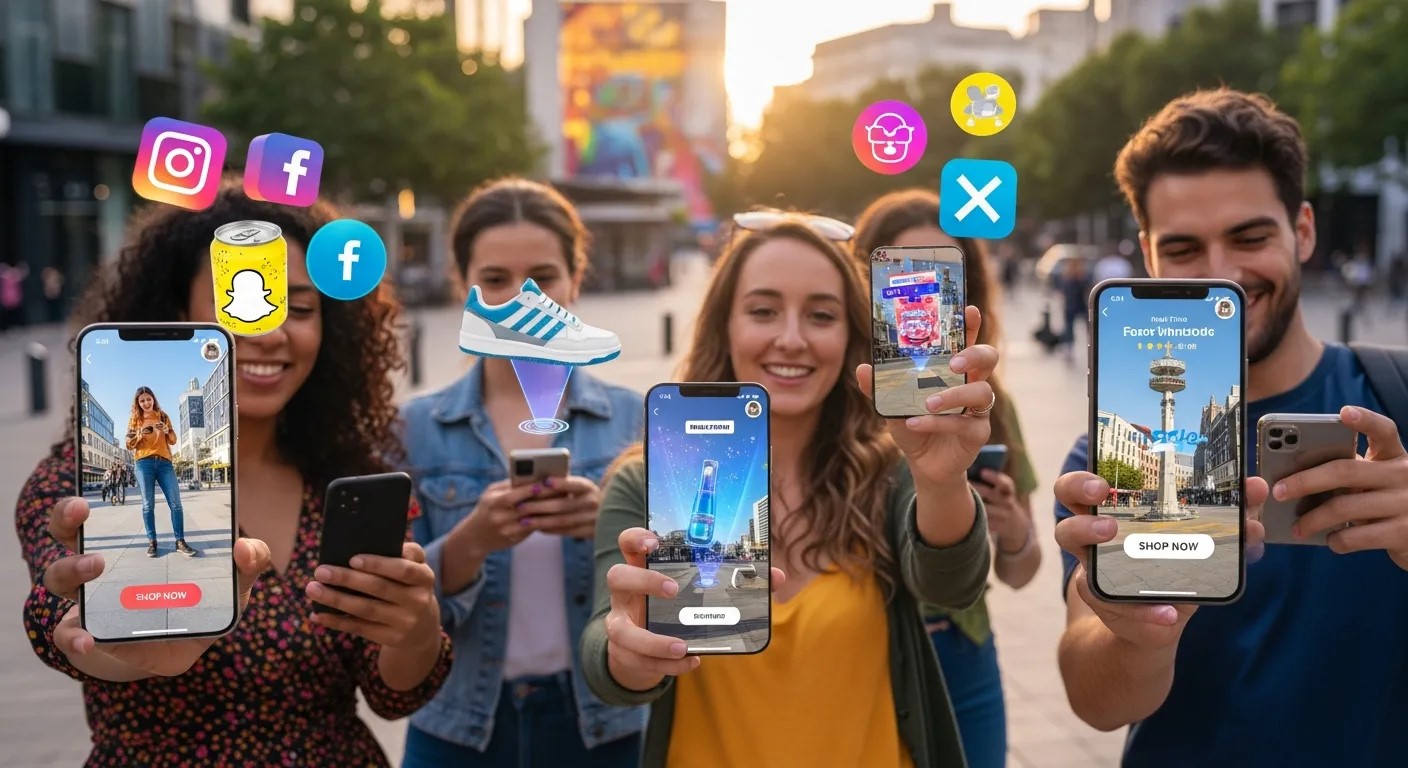
Social media platforms are a natural fit for AR experiences. Filters, virtual try-ons, and interactive product demos allow brands to reach a broader audience while creating shareable content. A key advantage is that users often become advocates by sharing their AR interactions organically, extending the reach of campaigns without additional ad spend.
This trend complements other channels like AR in Email Marketing, creating an ecosystem where immersive experiences reinforce each other across touchpoints, maintaining consistent engagement throughout the customer journey.
Cross-Industry Adoption
While retail, automotive, and real estate were early adopters, AR in Product Marketing is now expanding into sectors like healthcare, travel, and smart home technology. For instance:
-
Healthcare providers use AR to explain complex procedures or simulate product usage for medical devices.
-
Travel companies allow users to explore destinations or hotel rooms through immersive AR tours before booking.
-
Smart home brands leverage Augmented Reality in Smart Homes to demonstrate device compatibility, aesthetics, and functionality in the user’s environment.
This cross-industry adoption shows the versatility of AR and its ability to enhance customer understanding, reduce uncertainty, and drive informed decisions.
AR in Affiliate Marketing Evolution
Affiliate marketing is also evolving with AR. Affiliates can now incorporate AR demos into their content, providing interactive product experiences to potential buyers. For example, a tech influencer could integrate an AR-enabled gadget demo on their blog or social media post. This approach makes recommendations more engaging and credible, improving click-through rates and sales conversions.
ROI Metrics and Investment Analysis
To fully understand the value of AR in Product Marketing, brands need robust metrics. Some key indicators include:
| Metric | Description | Benefits |
|---|---|---|
| Engagement Rate | Time spent interacting with AR content | Measures audience interest and attention |
| Conversion Rate | Percentage of AR users who purchase | Tracks direct impact on sales |
| Return Visits | Frequency of repeat interactions | Indicates long-term brand loyalty |
| Average Order Value | Change in purchase value after AR interaction | Shows revenue uplift per customer |
| Social Shares | Number of organic shares of AR content | Amplifies reach and brand awareness |
Investing in Augmented Reality Marketing Investment with these metrics in mind ensures that campaigns are not only innovative but also results-driven. Data from AR experiences allows continuous optimization, creating a feedback loop where campaigns improve over time.
Conclusion
AR in Product Marketing has transformed how brands engage, educate, and convert consumers. By creating immersive experiences, companies can bridge the gap between digital and physical interactions, allowing customers to visualize, customize, and experiment with products. Across industries from retail and automotive to smart homes and affiliate marketing AR enhances engagement, builds trust, and drives measurable sales growth. Strategic investments, supported by analytics and behavioral insights, ensure campaigns deliver high ROI. As technology evolves, integrating AR seamlessly across mobile, email, social media, and in-store experiences will remain crucial for brands aiming to stay ahead in a competitive, experience-driven marketplace.
Frequently Asked Questions (FAQ)
What is AR in Product Marketing?
It is the use of augmented reality to showcase, demonstrate, and allow interaction with products digitally, creating immersive customer experiences.
How does AR increase customer engagement?
AR provides interactive and visual experiences that capture attention, encourage exploration, and create emotional connections with products.
Do I need special devices for AR experiences?
No, most AR campaigns are optimized for smartphones, tablets, or standard web browsers. Premium AR glasses can enhance immersion but are not required.
Which industries benefit most from AR marketing?
Retail, automotive, real estate, smart home tech, healthcare, travel, and affiliate marketing see significant advantages from AR adoption.
How does AR affect sales and ROI?
AR increases conversions by enabling product visualization, reducing uncertainty, and creating personalized, memorable experiences that drive purchase decisions.
Can AR be used in email marketing?
Yes, interactive AR elements in emails boost click-through rates, engagement, and customer interaction before the purchase stage.
What is Augmented Reality Marketing Investment?
It is the strategic allocation of resources to implement AR campaigns, balancing costs like 3D modeling, development, and content creation with expected ROI.
How does AR integrate with affiliate marketing?
Affiliates can embed AR product demonstrations in blogs, social media, or websites, increasing engagement and improving conversion rates.
What are key performance metrics for AR campaigns?
Metrics include engagement time, conversion rate, average order value, social shares, return visits, and dwell time with AR content.
Is AR suitable for small businesses?
Yes, AR technology has become accessible via mobile apps and web tools, enabling smaller brands to run impactful campaigns.
How does AR impact the customer journey?
AR enhances awareness, consideration, and purchase stages by offering interactive, personalized, and immersive product experiences.
What is the future of AR in marketing?
AR is moving toward AI-enhanced personalization, social media integration, cross-industry adoption, and advanced omnichannel experiences for long-term engagement and sales growth.