Augmented reality (AR) isn’t just about futuristic gadgets or sci-fi movies anymore. Today, it’s redefining the way businesses connect with their audiences. AR marketing is helping brands create immersive, interactive experiences that captivate customers and differentiate themselves in increasingly competitive markets. But what exactly is AR marketing, and how can businesses use it to stand out?
Understanding AR Marketing
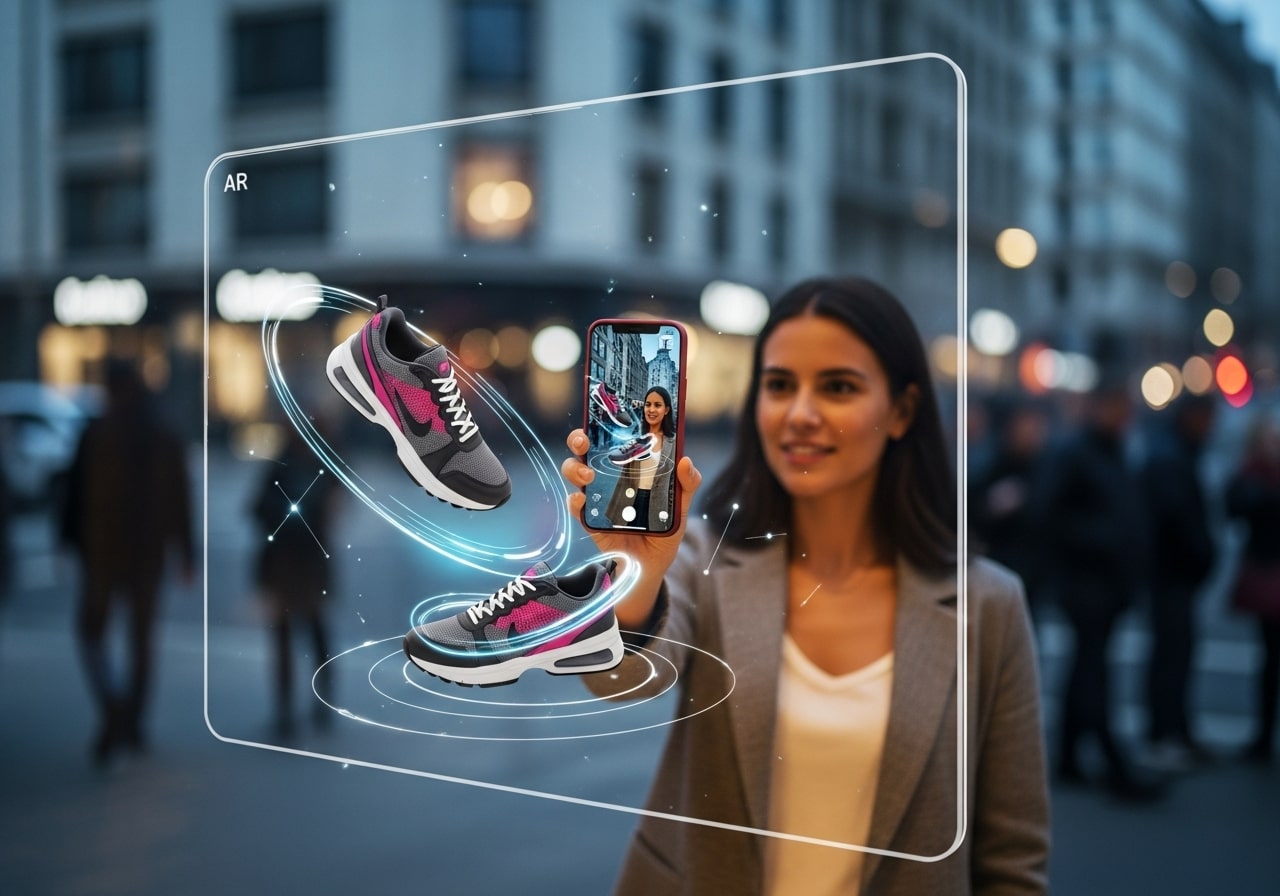
AR marketing involves using augmented reality technology to enhance your customers’ interaction with your brand. AR overlays digital elements, such as images, sounds, or 3D models, onto the real world through a smartphone, tablet, or AR glasses.
Unlike traditional marketing methods, AR draws customers into an interactive experience, allowing them to engage with products or services in a more meaningful and memorable way. It’s about moving beyond static ads by providing customers with value they won’t forget.
Why AR Marketing Matters in 2026 and Beyond
AR marketing isn’t just a passing trend; it’s a game-changer for businesses. Here are a few reasons why it continues to gain momentum among marketers and brands.
1. Customer Engagement
AR increases engagement by offering an interactive experience. According to Threekit, interactive content generates twice as much engagement as static content. Customers are naturally drawn to explore, tap, and try AR experiences.
2. Memorable Brand Experiences
One of AR’s primary strengths is its ability to create memorable interactions. Research shows that AR experiences improve information retention, ensuring your customers remember your brand long after the interaction ends.
3. Increased Purchase Intent
AR allows customers to visualize products in their environments, boosting purchase confidence. For example, customers can use AR apps to see how furniture fits in their living rooms or how a piece of clothing looks on them before making a purchase. According to a Gartner report, AR experiences can increase purchase conversion rates by up to 40%.
4. Differentiation in Crowded Markets
AR marketing helps brands stand out. Whether you’re highlighting product features or launching a campaign, AR ensures your brand is innovative, tech-savvy, and one step ahead of competitors.
How AR Marketing Works
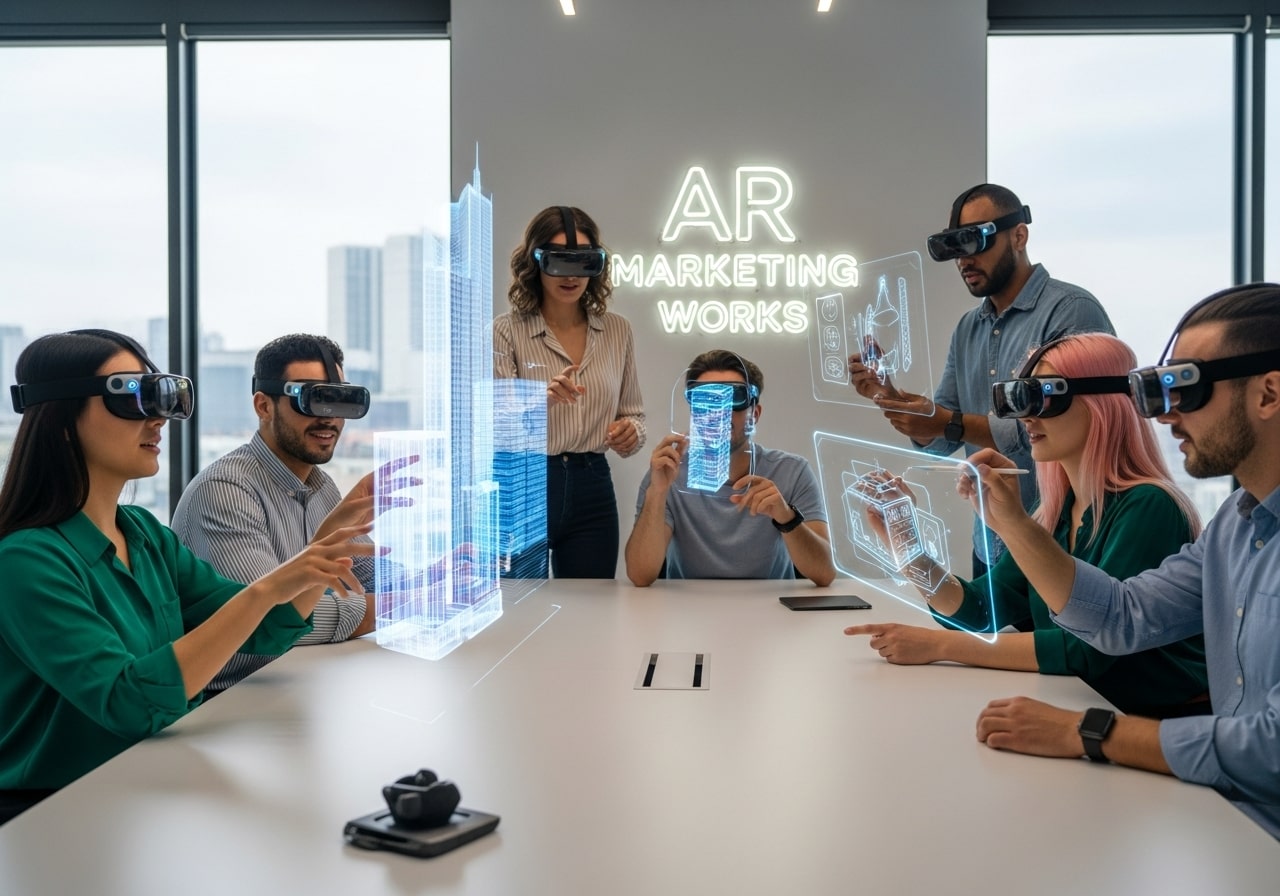
To implement AR marketing, brands use AR technology, which often combines 3D modeling, location-based services, and image recognition. Here are the basic steps involved in an AR marketing experience from a user perspective:
- Accessing the AR Experience
Customers might access AR features through a branded app, a web-based AR link, or a feature on a third-party platform like Instagram, Snapchat, or TikTok.
- Activation
The experience is triggered via a smartphone, tablet, or AR headset. This can involve scanning a QR code, pointing a device’s camera at a specific object, or clicking on an in-app feature.
- Interaction
Users view and interact with overlayed digital objects in real-world settings. For example, they might see a 3D shoe placed in their room or try on a virtual pair of glasses using selfie mode.
Businesses can partner with AR developers or use AR-building platforms, such as Spark AR Studio or 8th Wall, to create experiences that align with their goals.
AR Marketing and Consumer Trust Building
AR marketing plays a significant role in building consumer trust by offering transparency and realism. When customers can visualize a product in their own environment or try it virtually, they feel more confident about their decisions. This reduces uncertainty and hesitation that often occur with online purchases. AR experiences allow brands to demonstrate product features honestly, rather than relying on exaggerated claims. Over time, this transparency strengthens brand credibility and fosters long-term relationships with customers. In an era where trust heavily influences purchasing behavior, AR marketing helps brands establish authenticity and reliability.
The Role of AR in Enhancing Customer Journey
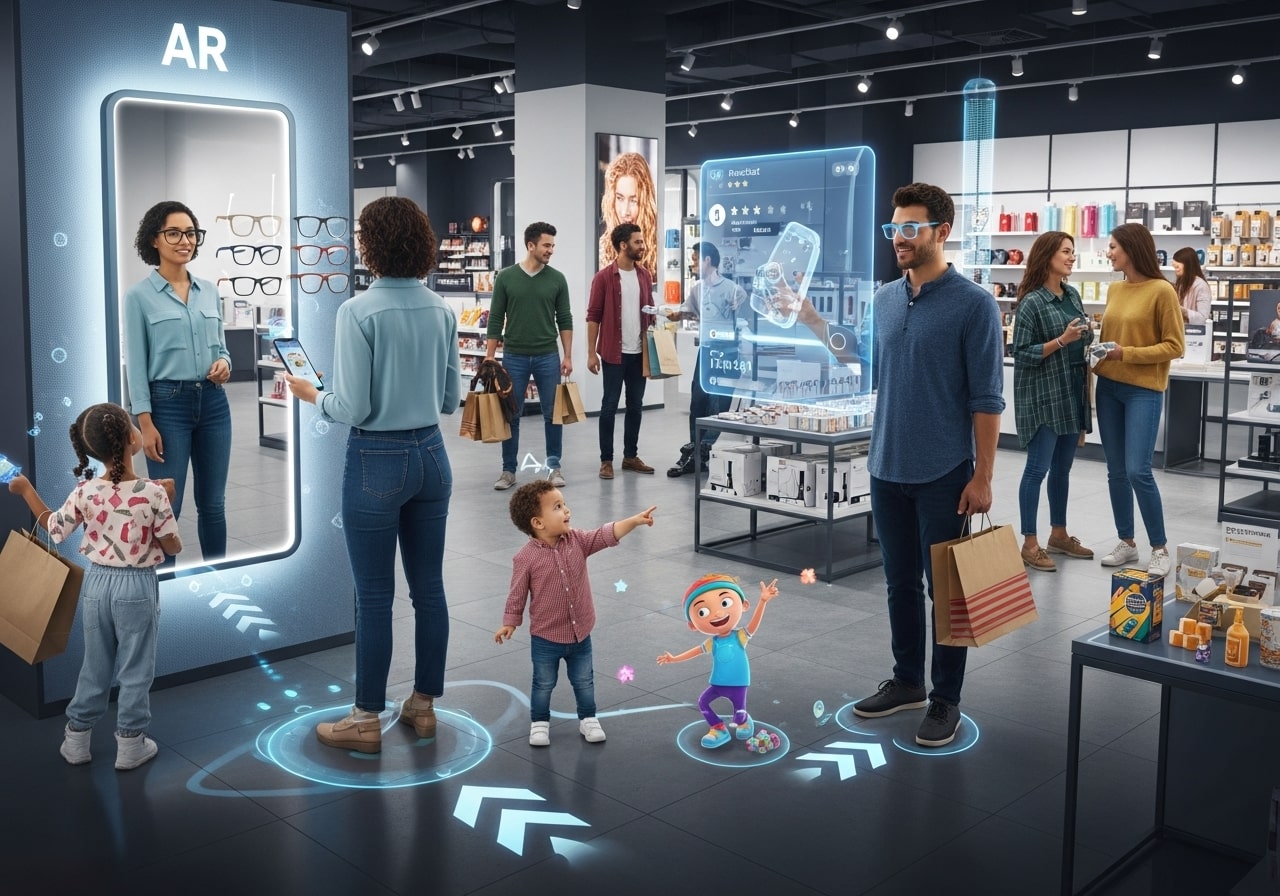
AR marketing enhances the customer journey by making each interaction more engaging and informative. From awareness to consideration and final purchase, AR adds value at every stage. Customers can explore products interactively during the discovery phase, compare options visually during evaluation, and feel confident before purchasing. This seamless experience reduces friction and improves satisfaction. By integrating AR touchpoints across the journey, brands can guide customers more effectively, shorten decision-making cycles, and create a smoother, more enjoyable buying experience that leaves a lasting impression.
AR Marketing for Omnichannel Experiences
AR marketing bridges the gap between online and offline channels, creating a truly omnichannel experience. Customers may discover an AR campaign on social media, interact with it through their smartphone, and later complete their purchase in-store or online. This continuity ensures consistent brand messaging across platforms. Retailers can use AR in physical stores to enhance product displays, while e-commerce brands can replicate in-store experiences digitally. By unifying multiple touchpoints, AR marketing delivers a cohesive experience that aligns with modern consumer behavior.
Data and Insights Generated Through AR Campaigns

Beyond engagement, AR marketing provides valuable data and insights into customer behavior. Brands can track how users interact with AR elements, which products receive the most attention, and how long users engage with experiences. These insights help marketers understand preferences, refine campaigns, and personalize future interactions. Unlike traditional ads, AR offers deeper behavioral data rather than passive impressions. When analyzed effectively, this data supports smarter decision-making, improved targeting, and higher campaign performance, making AR a powerful analytics-driven marketing tool.
Challenges Brands Face When Adopting AR Marketing
Despite its benefits, AR marketing presents certain challenges for businesses. Technical complexity, development costs, and device compatibility can slow adoption. Brands must also ensure AR experiences are intuitive and add real value, rather than feeling gimmicky. Poor execution can frustrate users and damage brand perception. Additionally, educating audiences on how to access AR experiences remains important. Overcoming these challenges requires strategic planning, user testing, and collaboration with experienced AR developers to ensure smooth, impactful implementation
AR Marketing and Emotional Brand Connection
AR marketing helps brands build stronger emotional connections with customers by turning interactions into experiences. Instead of passively viewing ads, users actively participate, which increases emotional involvement. When customers enjoy an AR experience, they associate positive feelings with the brand. This emotional connection improves brand recall and loyalty over time. By telling stories through immersive visuals and interactive elements, brands can communicate values and personality more effectively, making marketing messages feel personal rather than promotional.
Real-World Examples of AR Marketing
To better understand how AR marketing works, here are some impressive examples of how leading brands are using the technology.
1. IKEA’s Place App
IKEA’s AR app, IKEA Place, is a great example of utility-driven AR marketing. The app allows customers to virtually place furniture and home décor in their homes to see how products fit before buying. This feature not only adds value to the shopping experience but also minimizes returns.
2. Sephora Virtual Artist
Sephora’s Virtual Artist app uses AR to help users try on makeup digitally. Customers can see how different lipsticks, eyeshadows, or foundations look on their faces before making a purchase. This innovative approach brings the in-store experience directly to customers’ phones.
3. Burger King Burn That Ad Campaign
Burger King launched a playful AR campaign, encouraging users to “burn” rival fast-food restaurant advertisements. Using the app, customers could set ads from competitors ablaze in AR, revealing free coupons for Whoppers. This campaign boosted engagement and reinforced Burger King’s bold brand personality.
How to Integrate AR Marketing Into Your Strategy
If you’re ready to explore AR marketing for your business, here’s a step-by-step guide to get you started.
1. Understand Your Audience
Like any marketing strategy, AR campaigns should begin with a solid understanding of your audience. Ask yourself these questions:
- Is my target audience tech-savvy?
- What type of experiences will resonate with them?
- Is an AR feature solving a specific pain point or adding significant value?
For example, if your audience values convenience and customization, consider creating an AR app that allows them to visualize your products in their own environment.
2. Define Your Goals
Determine what you want to achieve with AR marketing. Is your goal to drive sales, increase brand awareness, or improve customer engagement? Clear goals will help you design features and measure success effectively.
3. Choose the Right Tools
Decide whether to develop a custom AR app, integrate AR features into your existing app, or use social media platforms like Instagram and Snapchat. Tools like Spark AR or WebAR allow you to quickly create interactive AR marketing experiences.
4. Test the Experience
Before launching, test your AR feature extensively. Make sure it works smoothly across various devices and is intuitive for users to interact with. Remember, a poor experience can harm your brand image.
5. Promote Your AR Feature
Once your AR experience is ready, promote it to your audience. Share it on social media, include it in email campaigns, and use QR codes in your physical marketing materials to drive more traffic.
The Future of AR Marketing
AR marketing isn’t just a trend; it’s the future of customer engagement. As AR technology continues to evolve, businesses of all sizes can expect even more innovative ways to connect with their audiences.
Imagine immersive brand experiences powered by 5G or AR shopping, personalized to a user’s preferences based on AI. By adopting AR marketing today, you’ll not only reap immediate benefits but also future-proof your business in the ever-evolving digital landscape.
Take Action With AR
AR marketing opens doors to interactive, memorable brand experiences that deepen customer engagement and drive business growth. Start small by integrating AR into a single campaign or creating a simple interactive feature. From there, expand your scope as you see results.
If you’re ready to transform your marketing strategy with AR, start exploring reliable AR tools today. Whether you’re creating memorable ad campaigns or enhancing your customers’ buying process, AR is here to elevate your marketing game.
Frequently Asked Questions (FAQ)
1. What is AR marketing?
AR marketing refers to the use of augmented reality technology to create interactive marketing experiences. It overlays digital elements like 3D models, animations, or visuals onto the real world using smartphones or other devices, allowing customers to engage with brands in a more immersive and memorable way.
2. How is AR marketing different from traditional digital marketing?
Traditional digital marketing relies on static or video-based content, while AR marketing allows users to actively interact with products or campaigns. Instead of just watching an ad, users can try products virtually, explore features, and experience the brand in real-world contexts.
3. Do customers need special devices to use AR marketing experiences?
No, most AR marketing experiences work on smartphones and tablets using standard cameras. Many brands also use WebAR or social media platforms like Instagram and Snapchat, which require no additional app downloads or hardware.
4. Is AR marketing suitable for small businesses?
Yes. AR marketing is no longer limited to large brands. With tools like WebAR and social AR platforms, small businesses can create cost-effective AR experiences to boost engagement, improve product visualization, and stand out in competitive markets.
5. How does AR marketing improve sales and conversions?
AR helps customers visualize products in real-life settings, increasing confidence in purchase decisions. When users can “try before they buy,” uncertainty is reduced, which often leads to higher conversion rates and fewer product returns.
6. What industries benefit most from AR marketing?
Retail, e-commerce, real estate, fashion, beauty, food & beverage, and automotive industries benefit greatly from AR marketing. However, any industry focused on customer experience and engagement can use AR creatively.
7. How can a business measure the success of AR marketing campaigns?
Success can be measured through engagement metrics such as interaction time, click-through rates, social shares, conversion rates, and customer feedback. These insights help brands understand how AR impacts user behavior and ROI.
8. Is AR marketing expensive to implement?
The cost depends on complexity. Simple AR filters or WebAR experiences can be budget-friendly, while advanced custom AR apps require more investment. Businesses can start small and scale as they see positive results.
9. What tools are commonly used to build AR marketing experiences?
Popular AR tools include Spark AR Studio, 8th Wall, WebAR platforms, and social media AR tools from Instagram, Snapchat, and TikTok. These tools allow brands to design and deploy AR experiences efficiently.
10. What is the future of AR marketing?
The future of AR marketing includes deeper personalization through AI, faster experiences powered by 5G, and more seamless integration with e-commerce. As technology advances, AR will become a standard part of customer engagement strategies.