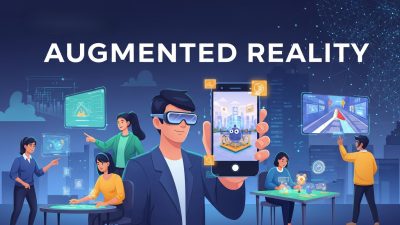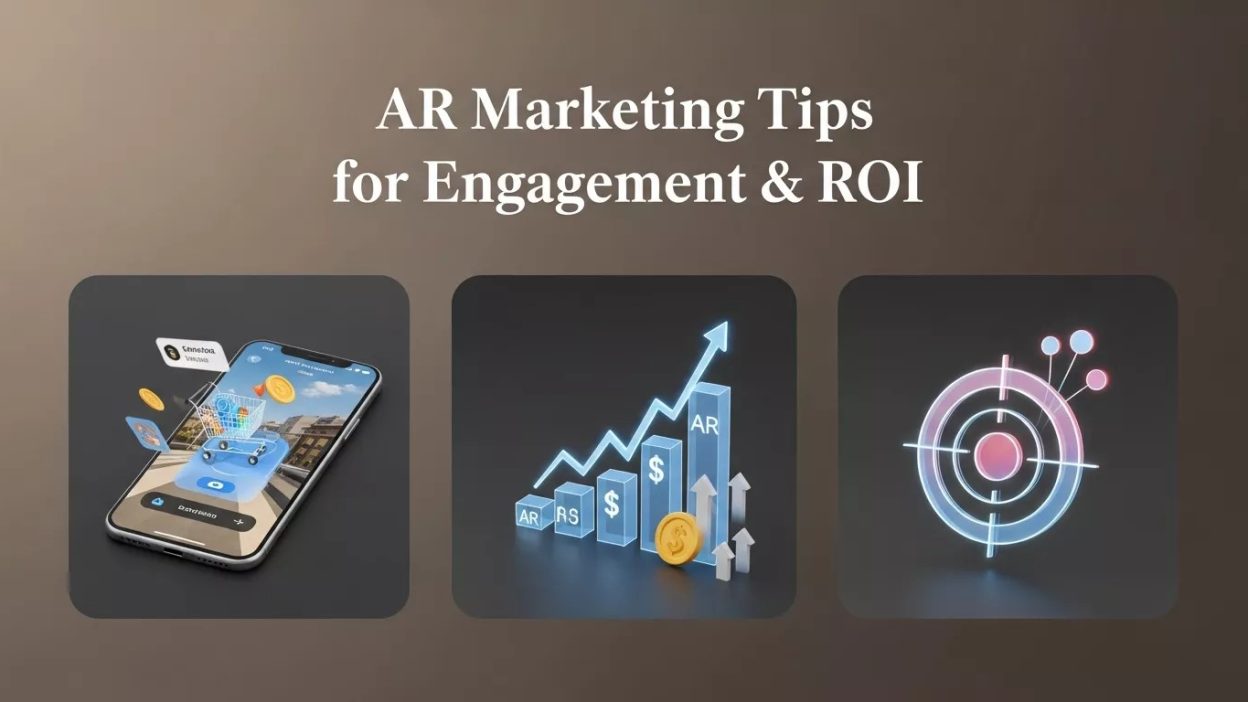
Why AR Marketing Tips Is Reshaping Engagement and ROI
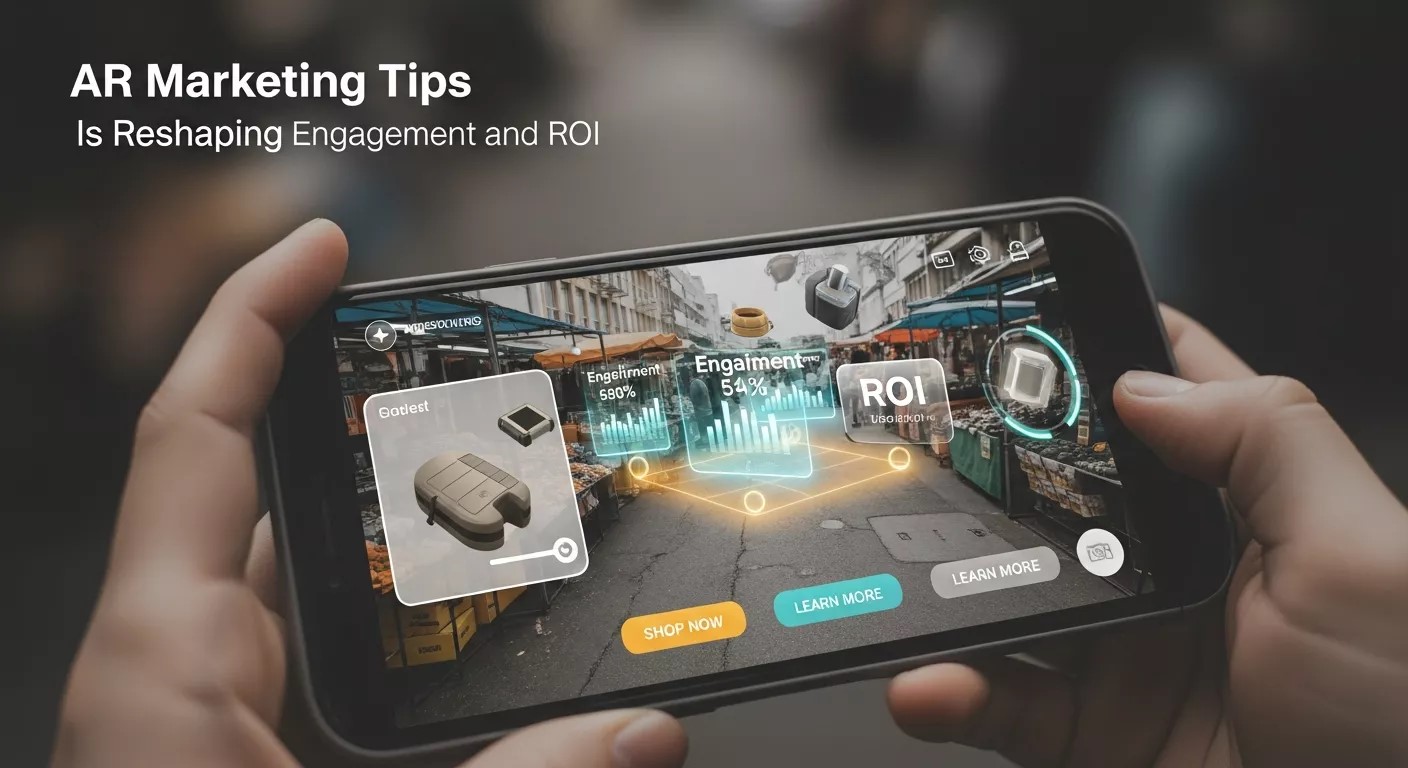
Understanding Why AR Marketing Works on the Modern Human Mind
Before diving into execution, it’s important to understand why AR resonates so strongly with modern audiences.
Human attention spans are shrinking, but curiosity remains powerful. AR activates multiple cognitive triggers at once—visual curiosity, physical interaction, and emotional involvement. Unlike traditional ads, AR experiences feel participatory rather than intrusive, which significantly reduces resistance and increases dwell time.
Well-structured AR Marketing Tips leverage these neurological responses by transforming passive viewers into active participants. This shift alone changes how users perceive value, trust, and relevance.
Tip 1: Start With Experience Design, Not Technology

One of the most common reasons AR initiatives fail is not because of weak technology, but because of misplaced priorities. Many brands become fascinated by tools, platforms, and features before they clearly understand what kind of experience they want to create. In reality, technology should function as an enabler, not the centerpiece. When technology becomes the hero, user experience often suffers.
Modern users do not evaluate AR based on how advanced it looks—they evaluate it based on how it makes them feel and what it helps them achieve. This is why experience-led thinking sits at the foundation of the most successful AR Marketing Tips. Before selecting software, filters, or 3D assets, marketers must define the human outcome they want to influence.
Define the Human Outcome First
Every effective AR experience starts with intent. Without a clearly defined outcome, even the most visually impressive AR execution can feel confusing or unnecessary. Experience design begins by understanding the emotional and behavioral response you want from the user.
Key questions to clarify before building the experience include:
- What emotion should the user feel during and after the interaction?
- What uncertainty or friction does the AR experience remove?
- What action should feel like the natural next step once the experience ends?
When these questions are answered early, AR experiences become intuitive rather than overwhelming. Users instinctively understand what to do, why it matters, and how it benefits them. This clarity is what separates effective AR Marketing Tips from experimental showcases that fail to convert.
Design for Flow, Not Features
A common mistake is overloading AR experiences with too many interactive elements. While flexibility can be valuable, excessive options increase cognitive load and reduce completion rates. Experience-first AR design focuses on flow—guiding users through a smooth, distraction-free journey from entry to exit.
The most effective AR executions:
- Introduce interaction gradually
- Provide subtle visual guidance
- Eliminate unnecessary decision points
- Maintain a clear visual hierarchy
By simplifying the experience, brands allow users to focus on value rather than mechanics. This approach increases dwell time while reducing drop-off.
Experience-First AR Planning Framework
| Element | Focus Area |
|---|---|
| User Intent | Curiosity, utility, entertainment |
| Interaction Time | 15–60 seconds optimal |
| Cognitive Load | Minimal learning curve |
| Call-to-Action | Seamlessly embedded |
This framework helps marketers design AR experiences that feel purposeful and emotionally rewarding. Each element supports user comfort and confidence, which directly impacts engagement quality.
Emotional Payoff Before Visual Complexity
Visual sophistication alone does not guarantee engagement. In fact, overly complex visuals can distract users from the core message. The strongest AR Marketing Tips emphasize emotional payoff—clarity, reassurance, excitement, or empowerment before investing in advanced visual layers.
When users feel that an AR experience respects their time and attention, they are more likely to complete it, share it, and act on it. This emotional alignment is what turns AR from a novelty into a strategic growth tool.
Ultimately, starting with experience design ensures that AR feels like a natural extension of the brand journey rather than a disconnected experiment. Brands that master this principle build AR experiences that are not only engaging but also meaningful, memorable, and measurable.


Conclusion
In today’s experience-driven digital landscape, AR Marketing Tips have become essential for brands that want to capture attention, build trust, and drive measurable ROI. From experience-first design to journey integration, personalization, social amplification, and performance measurement, these AR Marketing Tips highlight how immersive technology can move beyond novelty into real business impact. When AR Marketing Tips are applied strategically, they help brands reduce uncertainty, influence decisions, and create emotional connections that traditional formats fail to deliver. The true power of AR Marketing Tips lies in aligning human psychology, behavioral data, and optimization-focused metrics into one cohesive experience layer. As consumer expectations continue to evolve, brands that consistently refine and apply the right AR Marketing Tips will be better positioned to achieve sustainable engagement, stronger conversions, and long-term marketing efficiency in an increasingly competitive digital ecosystem.
Frequently Asked Questions (FAQ)
What are AR Marketing Tips and why are they important today?
AR Marketing Tips are strategic guidelines that help brands use augmented reality to improve engagement, influence buying decisions, and increase ROI. In today’s experience-first digital environment, AR Marketing Tips are important because they align immersive technology with modern consumer behavior, attention patterns, and trust-building needs.
How do AR Marketing Tips improve customer engagement?
AR Marketing Tips improve customer engagement by transforming passive audiences into active participants. By following the right AR Marketing Tips, brands can create interactive experiences that increase dwell time, emotional involvement, and user curiosity, which leads to deeper engagement compared to traditional marketing formats.
Can AR Marketing Tips directly impact ROI?
Yes, AR Marketing Tips can directly impact ROI when they are designed with performance measurement in mind. Effective AR Marketing Tips focus on reducing uncertainty, shortening decision cycles, and guiding users toward action, all of which contribute to higher conversion rates and better marketing efficiency.
Are AR Marketing Tips suitable for small or mid-sized businesses?
AR Marketing Tips are not limited to large enterprises. With WebAR and mobile-first solutions, AR Marketing Tips can be applied by small and mid-sized businesses to create cost-effective, high-impact experiences that compete with larger brands on engagement and innovation.
How do AR Marketing Tips support the buyer’s journey?
AR Marketing Tips support the buyer’s journey by integrating immersive experiences at awareness, consideration, and decision stages. When AR Marketing Tips are aligned with real decision moments, they help users visualize value, build confidence, and move smoothly toward purchase.
What metrics should be tracked when applying AR Marketing Tips?
When applying AR Marketing Tips, brands should track metrics such as dwell time, interaction rate, completion rate, conversion lift, and return visits. These metrics help evaluate whether AR Marketing Tips are delivering meaningful engagement and measurable business outcomes.
How often should AR Marketing Tips be optimized?
AR Marketing Tips should be optimized continuously. By analyzing behavioral data and performance metrics, brands can refine AR Marketing Tips over time to improve usability, relevance, and ROI as user expectations and technology evolve.