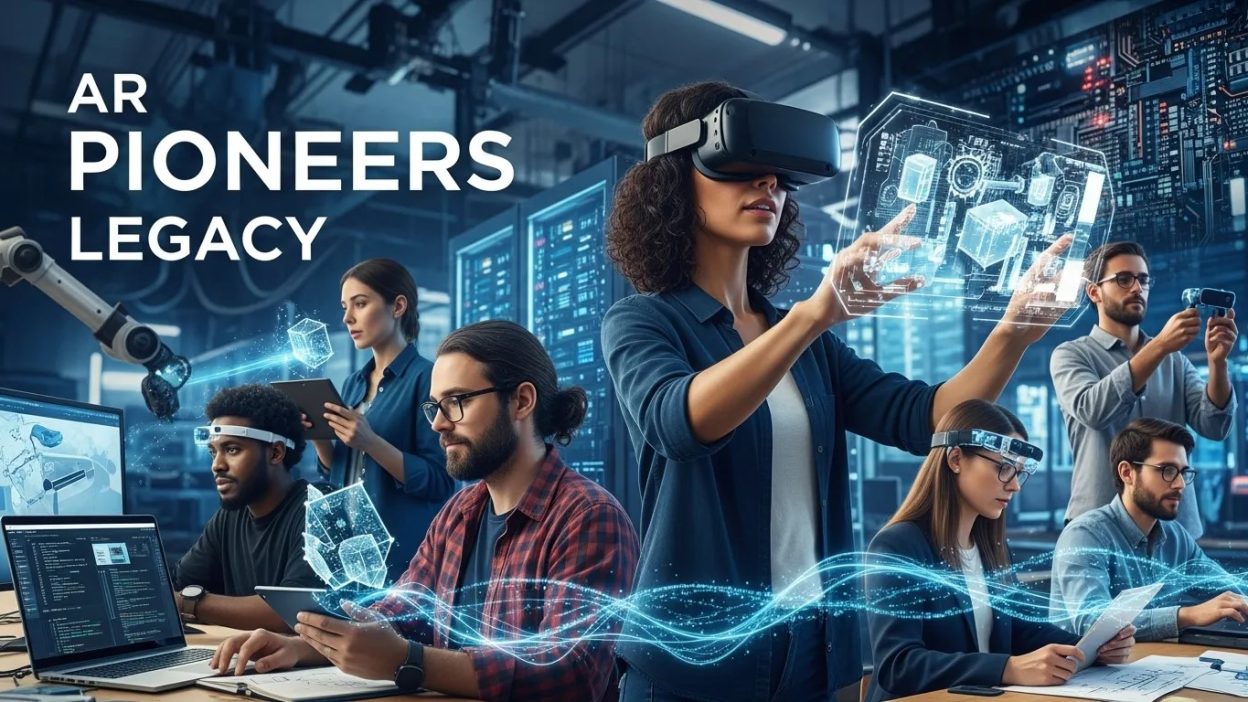
AR Pioneers shaped the evolution of augmented reality, influencing education, business, and entertainment. Their innovations, including AR glasses and holograms, continue to drive immersive experiences and practical applications, bridging the gap between digital technology and the real world.
Introduction The Rise of AR Pioneers
Augmented reality has moved from a futuristic concept to a tangible technology shaping industries worldwide. Behind every immersive AR experience are the AR Pioneers innovators who have driven the evolution of digital overlays, interactive holograms, and spatial computing. Their work has not only expanded the boundaries of what machines can perceive but also how humans interact with digital information in real time.
The journey of these trailblazers is fascinating, filled with experimentation, breakthroughs, and bold visions. Unlike traditional computing, augmented reality requires a seamless blend of software, hardware, and human cognition. Understanding the contributions of AR Pioneers helps us appreciate how current technologies, like mobile AR apps, wearable AR devices, and smart glasses, have become possible.
While AR shares some similarities with virtual reality, it is fundamentally different. Where VR immerses users in a fully digital environment, AR enhances the real world with virtual elements. The debate of AR vs VR has shaped research priorities and influenced the development of tools that empower creativity, productivity, and entertainment. Many early AR Pioneers focused on finding practical applications for AR that could coexist with reality rather than replace it.
The Foundations of Augmented Reality
The origins of augmented reality date back decades, long before the term itself became mainstream. In the 1960s, researchers explored head-mounted displays, spatial mapping, and computer vision. These early experiments laid the groundwork for future AR Pioneers, who sought to refine and commercialize the technology.
One pivotal figure was Ivan Sutherland, whose development of a rudimentary head-mounted display system provided a template for later AR applications. He envisioned a “window into a virtual world” that would eventually inspire AR devices used in education, engineering, and gaming. The work of these early AR Pioneers emphasized the integration of human perception and digital augmentation, a theme that persists in modern AR solutions.
Academic Contributions and Research Labs

Research universities and corporate labs became hotbeds for AR innovation. Institutions like MIT Media Lab and companies such as Boeing invested in developing technologies that could assist in complex tasks, from assembly line operations to navigation aids. Their research emphasized precision, usability, and adaptability, qualities that define the legacy of AR Pioneers today.
At the same time, experiments in the 1980s and 1990s explored the intersection of AR and virtual experiences, setting the stage for the now-common distinction of AR vs VR. These explorations highlighted the unique challenges and opportunities in overlaying digital information onto the real world rather than fully replacing it.
AR Hologram Technology and Spatial Computing
One of the most remarkable advancements driven by AR Pioneers is AR Hologram Technology. By creating three-dimensional projections that integrate seamlessly with physical spaces, holographic AR devices allow users to interact with digital objects naturally. This technology is now central to medical visualization, industrial design, and educational simulations, illustrating the broad impact of early innovators who pushed the boundaries of display systems and spatial mapping.
AR holograms are more than just visual novelties; they represent the culmination of decades of experimentation in optics, computer graphics, and sensor fusion. Each layer of progress can be traced back to the foundational work of AR Pioneers who dared to imagine that the world around us could become an interactive canvas for digital content.
The Role of Wearables in AR Evolution
AR Glasses Benefits have become a practical testament to the vision of AR pioneers. Devices like Microsoft HoloLens and Magic Leap have transformed workflows by providing hands-free access to real-time information. From technical maintenance to immersive storytelling, wearable AR devices demonstrate how early experimental prototypes evolved into commercially viable solutions. The benefits go beyond convenience, enabling productivity, collaboration, and learning in ways previously unimaginable.
Wearable AR technology also bridges the gap between physical and digital workspaces. Through careful engineering and design, innovators ensure that users can remain grounded in reality while accessing powerful digital overlays an approach championed by the original AR Pioneers.
AR in Business Operations
Businesses today leverage AR not just for entertainment but for enhancing operational efficiency. The influence of AR Pioneers is evident in industries where augmented visual guidance, interactive dashboards, and virtual prototyping streamline complex processes. In sectors like logistics, manufacturing, and retail, AR in Business Operations is no longer a novelty it is a strategic advantage.
Companies use AR to train employees, reduce errors, and optimize workflow. By projecting step-by-step instructions or highlighting components in real time, augmented reality transforms abstract data into actionable insights. This capability traces back to the foresight of the AR Pioneers, who recognized that practical applications could accelerate adoption and drive meaningful business results.
AR in Education and Training
One of the most profound impacts of AR Pioneers is visible in education and professional training. Augmented reality enables learners to engage with interactive simulations, virtual dissections, and complex engineering models without leaving the classroom or workshop. By blending theory with real-world visualization, AR enhances comprehension and retention in ways traditional methods cannot match.
Educational platforms increasingly incorporate Voice Enabled Chatbots to guide students through AR modules. These AI-powered assistants provide instant answers, offer personalized recommendations, and help users navigate complex content. Such integration demonstrates how the vision of AR Pioneers extends beyond hardware, influencing software design and human-computer interaction.
Healthcare Innovations
Medical training and patient care have been transformed by augmented reality. Surgeons now use AR overlays to visualize critical anatomical structures during procedures, improving precision and outcomes. The early work of AR Pioneers in creating accurate spatial models paved the way for these life-saving applications.
Moreover, AR devices enhance patient education by allowing individuals to explore interactive models of organs or medical conditions. This immersive approach not only improves understanding but also fosters trust and engagement, a core principle that AR Pioneers emphasized when designing user-focused AR solutions.
Immersive Storytelling
AR Pioneers recognized early on that entertainment would be a powerful driver of adoption. Interactive storytelling, location-based games, and live AR experiences bridge the gap between digital content and the physical world. By embedding narratives directly into environments, AR transforms passive consumption into active participation.
Mobile applications and AR glasses now enable users to experience layers of digital content on top of real-world settings. This blend of reality and imagination owes much to the vision of early AR Pioneers, who sought to expand the boundaries of human creativity through technology.
AR Hologram Technology in Performances

Concerts, theater, and live events increasingly rely on AR Hologram Technology to create captivating visual experiences. Digital performers, interactive stage elements, and holographic effects allow audiences to engage in new ways, merging entertainment with cutting-edge innovation. The foundational experiments conducted by AR Pioneers in holographic displays and motion tracking directly contribute to these immersive experiences.
Voice Enabled Chatbots in AR Applications
The convergence of artificial intelligence and augmented reality is a natural extension of the work of AR Pioneers. Voice Enabled Chatbots within AR environments allow users to interact intuitively without manual input. For example, AR navigation systems, virtual assistants, and educational platforms utilize voice commands to enhance accessibility and efficiency.
These integrations highlight the ongoing relevance of AR Pioneers’ principles: creating systems that are not only technologically advanced but also intuitive and user-centric. By combining spatial computing with conversational AI, these solutions bring augmented reality into everyday life seamlessly.
AI Multilingual Bots Expanding Accessibility
Global adoption of augmented reality is further accelerated through AI Multilingual Bots. These intelligent systems translate instructions, dialogue, and interactive content in real time, enabling users from diverse linguistic backgrounds to engage fully with AR experiences. The seamless communication made possible by AI ensures that the innovations envisioned by AR Pioneers can reach a truly global audience.
AR for Manufacturing and Logistics
Industrial applications have been profoundly shaped by AR Pioneers. AR devices guide workers through assembly lines, maintenance procedures, and complex troubleshooting scenarios. By overlaying real-time instructions onto equipment, organizations reduce errors and increase productivity. This practical application reinforces the idea that augmented reality is not just entertainment—it is a strategic tool in business operations.
Retail and Customer Experience
Retailers now leverage AR to transform shopping experiences. Virtual try-ons, interactive product displays, and immersive marketing campaigns bridge the gap between physical stores and digital engagement. The work of early AR Pioneers in creating intuitive AR interfaces is directly reflected in these consumer-focused innovations.
By integrating augmented reality into customer touchpoints, brands create memorable experiences that drive engagement and loyalty. These applications illustrate the continued relevance of pioneering research, ensuring that AR remains a transformative technology across sectors.
Spatial Computing and Contextual Interaction
AR Pioneers foresaw a world where digital content could interact seamlessly with physical spaces. Today, spatial computing enables devices to understand context, recognize objects, and respond dynamically to users’ actions. This evolution opens opportunities in architecture, urban planning, and interactive entertainment.
AR and AI Collaboration
The integration of AI, including Voice Enabled Chatbots and AI Multilingual Bots, is shaping the next generation of augmented reality. Smart assistants anticipate user needs, provide contextual guidance, and adapt experiences based on behavior and preferences. This collaboration reflects the vision of AR Pioneers: technology that enhances human capability rather than replaces it.
Immersive Travel Experiences
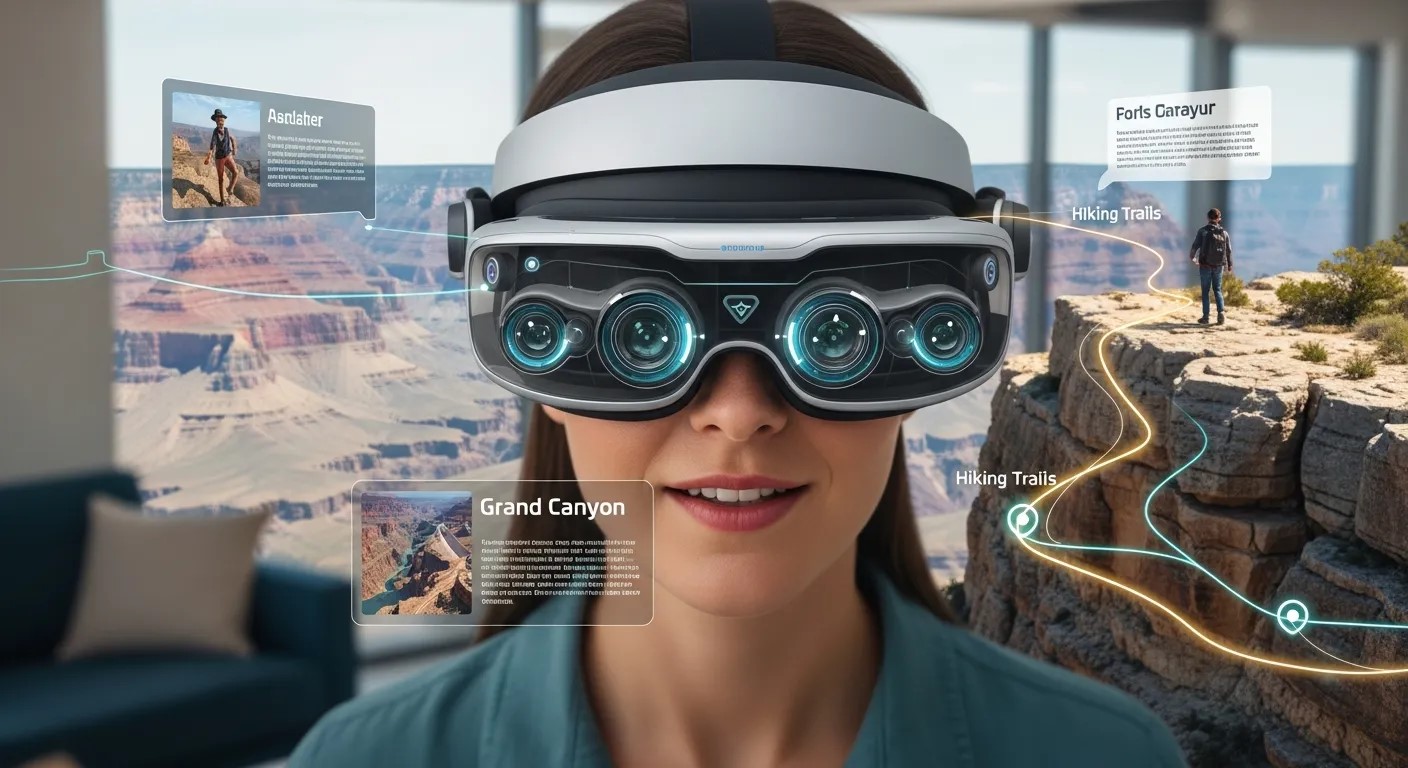
The tourism industry has embraced augmented reality, thanks to the groundwork laid by AR Pioneers. Travelers can now explore historical sites, museums, and landmarks with AR overlays that provide real-time information, historical context, and interactive storytelling. This enhancement turns ordinary visits into deeply engaging, educational experiences.
Applications allow tourists to point their devices at monuments to see reconstructions of how sites appeared centuries ago. Interactive guides provide recommendations, cultural insights, and navigational assistance, making travel not only informative but also intuitive. The vision of AR Pioneers to merge physical and digital experiences is fully realized in modern tourism technology.
Navigation and Wayfinding
Augmented reality has revolutionized navigation in urban spaces. By integrating AR with GPS and location-based services, users can receive real-time directions overlaid on streets, building facades, or indoor environments. This capability makes exploring unfamiliar cities easier and safer.
Modern solutions also incorporate AR vs VR principles by ensuring that the AR interface complements reality without overwhelming it. AR Pioneers emphasized user-centric design, ensuring that digital elements enhance rather than obstruct the physical world—a principle that remains central to navigation and wayfinding technologies today.
AR Glasses and Wearables
Wearable devices are among the most visible outcomes of the efforts of AR Pioneers. AR Glasses Benefits extend far beyond novelty, offering hands-free access to data, immersive communication tools, and context-aware applications. Professionals in logistics, healthcare, and field services rely on these devices to increase efficiency and accuracy.
The development of smart glasses combines hardware innovation with software intelligence, creating devices capable of projecting information, interpreting gestures, and integrating AI assistance. AR Pioneers laid the conceptual foundation for this wearable revolution by exploring human-computer interaction, ergonomics, and spatial computing decades ago.
Wearable Devices in Everyday Life
Beyond professional environments, AR wearables enhance daily life. From interactive shopping experiences to fitness tracking and home automation, these devices demonstrate how AR Pioneers envisioned augmented reality as a seamless extension of human perception.
Integration with mobile apps and voice interfaces ensures that the experience remains natural and accessible. By embedding Voice Enabled Chatbots into wearable AR systems, developers allow users to interact with devices conversationally, further bridging the gap between digital intelligence and real-world actions.
Tech Giants and Startup Trailblazers
The legacy of AR Pioneers is evident in companies that have scaled AR technologies globally. Microsoft, Magic Leap, and Apple have all invested heavily in AR hardware, software, and developer ecosystems. Their devices showcase applications across education, gaming, healthcare, and enterprise solutions.
Meanwhile, startups continue to innovate in niche areas, leveraging AR for immersive retail experiences, interactive media, and advanced visualization tools. These modern innovators build on the principles established by AR Pioneers, emphasizing usability, scalability, and human-centered design.
Impactful AR Applications
-
Enterprise Training: Corporations use AR to provide realistic simulations for training in high-risk environments. Employees learn faster and more safely, reducing costs and increasing operational efficiency.
-
Cultural Engagement: Museums and heritage sites deploy AR to create interactive exhibits, engaging visitors in ways previously impossible.
-
Retail and E-Commerce: AR tools allow consumers to virtually try on clothing, test products, or visualize furniture in their homes. This integration enhances decision-making and boosts customer satisfaction.
AR for Everyday Consumers
AR has moved from niche applications to mainstream consumer adoption. Smartphones, tablets, and wearables enable casual users to interact with AR in gaming, shopping, social media, and education. These experiences reflect the vision of AR Pioneers, who aimed to democratize access to immersive technology.
Bridging Industries and AI Integration

Modern AR applications increasingly integrate artificial intelligence to provide adaptive, personalized experiences. From virtual shopping assistants to AI-driven navigation systems, the synergy of AR and AI enhances engagement and usability. AI Multilingual Bots ensure these experiences are accessible across languages and regions, expanding global reach and user adoption.
AR Pioneers Driving Innovation Across Industries
The influence of AR Pioneers extends far beyond entertainment, shaping industries from healthcare to manufacturing. Augmented reality enhances operational efficiency, reduces errors, and provides immersive learning experiences. Businesses leverage AR for virtual prototyping, real-time guidance, and interactive customer engagement. In healthcare, AR aids surgical planning and patient education, while in retail, it transforms shopping experiences with virtual try-ons and interactive displays. The visionary work of AR Pioneers ensures that these technologies are not only functional but intuitive, creating seamless interactions that merge digital innovation with real-world applications, driving global adoption and growth.
Conclusion
The legacy of AR Pioneers has redefined how we perceive and interact with the digital world. From early experiments in head-mounted displays to modern AR glasses and hologram technology, their vision has transformed education, healthcare, entertainment, and business operations. By blending innovation with human-centered design, these pioneers laid the foundation for accessible, immersive experiences that enhance daily life and professional efficiency. As augmented reality continues to evolve, the principles established by these innovators guide the next generation of applications, ensuring that AR remains a practical, transformative, and universally engaging technology across industries worldwide.
Frequently Asked Questions (FAQs)
Who are considered the main AR Pioneers?
Early innovators include Ivan Sutherland, Tom Caudell, and researchers from MIT Media Lab who developed foundational AR hardware, software, and interaction models.
How is AR different from VR?
AR overlays digital elements on the real world, enhancing reality, while VR creates a fully immersive, artificial environment.
What are practical applications of AR today?
Applications include AR glasses benefits in professional settings, AR in business operations, medical visualization, immersive education, retail try-ons, and interactive tourism.
How do AI and chatbots integrate with AR?
Voice enabled chatbots and AI multilingual bots enhance user interaction, providing guidance, instructions, and accessibility in AR experiences.
What is the future of AR technology?
The future includes deeper AI integration, holographic interfaces, wearable devices, and global adoption across industries, continuing the work of AR pioneers.