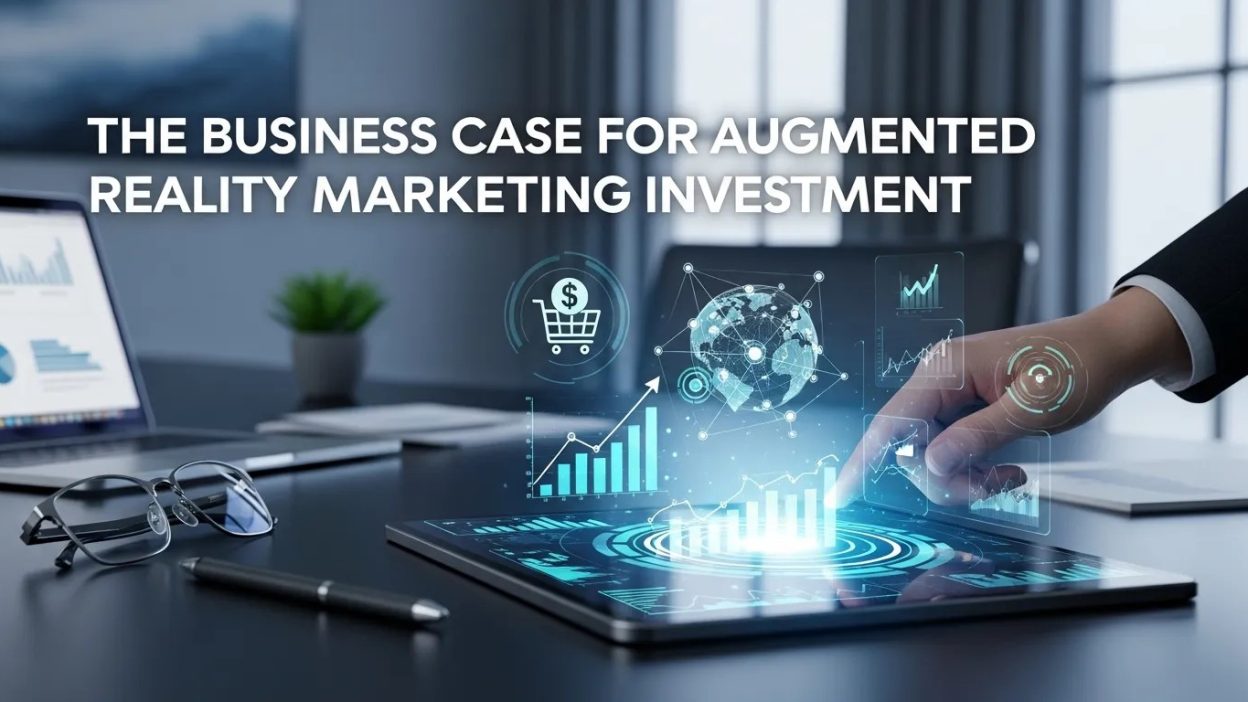
Augmented Reality Marketing transforms customer engagement by blending digital experiences with physical environments, delivering measurable ROI through enhanced interaction rates, stronger brand recall, and data-driven personalization that traditional marketing channels cannot match.
Why Augmented Reality Marketing Is a Must-Have for Modern Brands
Brands are facing a critical challenge: capturing attention in an oversaturated digital landscape. Traditional marketing tactics banner ads, email blasts, standard social media posts—are losing effectiveness as consumers develop banner blindness and scroll fatigue. Meanwhile, businesses that have embraced Augmented Reality Marketing are seeing engagement rates climb by 200% or more, conversion rates double, and customer retention strengthen significantly.
This shift isn’t speculative. Major retailers, automotive manufacturers, beauty brands, and real estate companies have already integrated AR experiences into their marketing strategies, and the results speak for themselves. IKEA’s AR app has driven millions of product visualizations. Sephora’s virtual try-on feature has reduced return rates while boosting online sales. L’Oréal reported that users who engaged with their AR experiences were 80% more likely to make a purchase.
The question is no longer whether Augmented Reality Marketing works, but whether your organization can afford to ignore it while competitors gain ground. This article builds a comprehensive business case for AR marketing investment, examining the financial impact, operational advantages, customer experience improvements, and strategic positioning benefits that make AR one of the most compelling marketing technologies available today.
Understanding the Financial Impact of Augmented Reality Marketing
When evaluating any marketing technology, ROI sits at the center of the decision. Augmented Reality Marketing delivers measurable financial returns across multiple dimensions that justify initial investment costs.
Direct Revenue Impact
AR experiences drive purchase behavior more effectively than traditional product presentations. When customers can visualize products in their own environment—whether that’s furniture in their living room, makeup on their face, or a car in their driveway—the psychological barriers to purchase decrease dramatically. This visualization capability transforms browsing into buying.
Conversion rate improvements typically range from 40% to 200% when AR features are implemented effectively. These aren’t marginal gains that require statistical analysis to detect; they’re substantial shifts in customer behavior that flow directly to the bottom line. A furniture retailer investing $50,000 in Augmented Reality Marketing capabilities might see an additional $500,000 in annual revenue if AR experiences increase conversion rates by just 1% on a high-traffic e-commerce platform.
Cost Reduction Through Enhanced Efficiency
Beyond revenue generation, Augmented Reality Marketing reduces costs in several operational areas. Product returns decrease when customers have accurate expectations set through AR visualization. Marketing production costs drop when digital AR experiences replace expensive photo shoots for every product variant and color option. Customer service inquiries decline when AR tools answer sizing, fit, and compatibility questions before purchase.
Physical retail footprints can shrink while maintaining product variety through AR catalogs, reducing real estate and inventory holding costs. Trade show expenses decrease when AR demonstrations replace large physical product displays that require shipping and setup.
Extended Customer Lifetime Value
Augmented Reality Marketing creates memorable brand experiences that strengthen customer relationships beyond single transactions. When customers download your AR app or engage with AR features on your website, you’ve established a direct channel for ongoing communication and remarketing opportunities.
These engaged customers demonstrate higher lifetime values through repeat purchases, larger average order values, and increased likelihood to recommend your brand. The interactive nature of AR experiences creates emotional connections that transactional marketing cannot replicate, translating into loyalty that withstands competitive pricing pressures.
Competitive Positioning and Market Differentiation

Markets in virtually every industry have matured to the point where product features and pricing alone rarely provide sustainable competitive advantages. Augmented Reality Marketing offers a differentiation strategy that simultaneously improves customer experience while creating barriers to competitive imitation.
First-Mover Advantages in Your Category
While AR technology has matured significantly, most industries still have relatively few brands leveraging it effectively. Organizations that implement Augmented Reality Marketing now gain first-mover advantages in their specific categories, establishing themselves as innovation leaders before the approach becomes table stakes.
This positioning carries substantial brand value. Customers perceive AR-enabled brands as forward-thinking, customer-focused, and technologically sophisticated. These associations extend beyond the AR experience itself, creating halo effects that improve brand perception across all touchpoints.
Creating Technical Barriers to Competition
Developing effective AR experiences requires technical expertise, content creation capabilities, and user experience design skills that take time to build. Organizations that invest in Augmented Reality Marketing today develop institutional knowledge and technical infrastructure that competitors will need months or years to replicate.
This creates a sustainable competitive moat. Even when competitors eventually implement AR features, your organization will have accumulated user data, refined user experiences, and established customer habits that provide ongoing advantages.
Customer Experience Enhancement Through Augmented Reality Marketing
Modern marketing success depends on delivering value to customers, not just messages. Augmented Reality Marketing fundamentally improves the customer experience by solving real problems that customers face during their purchase journey.
Reducing Purchase Uncertainty
One of the primary barriers to online purchasing is uncertainty about whether a product will meet expectations. Will this couch fit in my living room? Will this shade of lipstick complement my skin tone? Will these cabinets match my kitchen aesthetic? Augmented Reality Marketing answers these questions definitively before purchase, removing friction from the decision-making process.
This uncertainty reduction benefits both customers and businesses. Customers feel confident in their purchases, leading to higher satisfaction and fewer returns. Businesses convert browsers into buyers at higher rates while reducing the operational burden of processing returns.
Enabling Informed Decision-Making
Beyond reducing uncertainty, AR experiences educate customers about products in ways that static images and text descriptions cannot. Customers can examine products from every angle, see how features function, and understand size relationships in context. This informed decision-making process leads to better product-customer matches and higher satisfaction levels.
Educational AR experiences also position your brand as a helpful resource rather than a pushy salesperson. When customers feel empowered to make their own informed decisions through tools you’ve provided, they develop positive associations with your brand that extend beyond individual transactions.
Creating Shareable Experiences
Augmented Reality Marketing experiences tend to be inherently shareable. When customers use AR to visualize products in interesting ways, they naturally want to share these moments on social media. This organic sharing extends your marketing reach without additional media spend while providing social proof that influences purchasing decisions among the sharer’s network.
The viral potential of compelling AR experiences can amplify your marketing investment far beyond the initial deployment costs, creating awareness and engagement that would require substantial paid media budgets to achieve through traditional channels.
Integration with Existing Marketing Channels
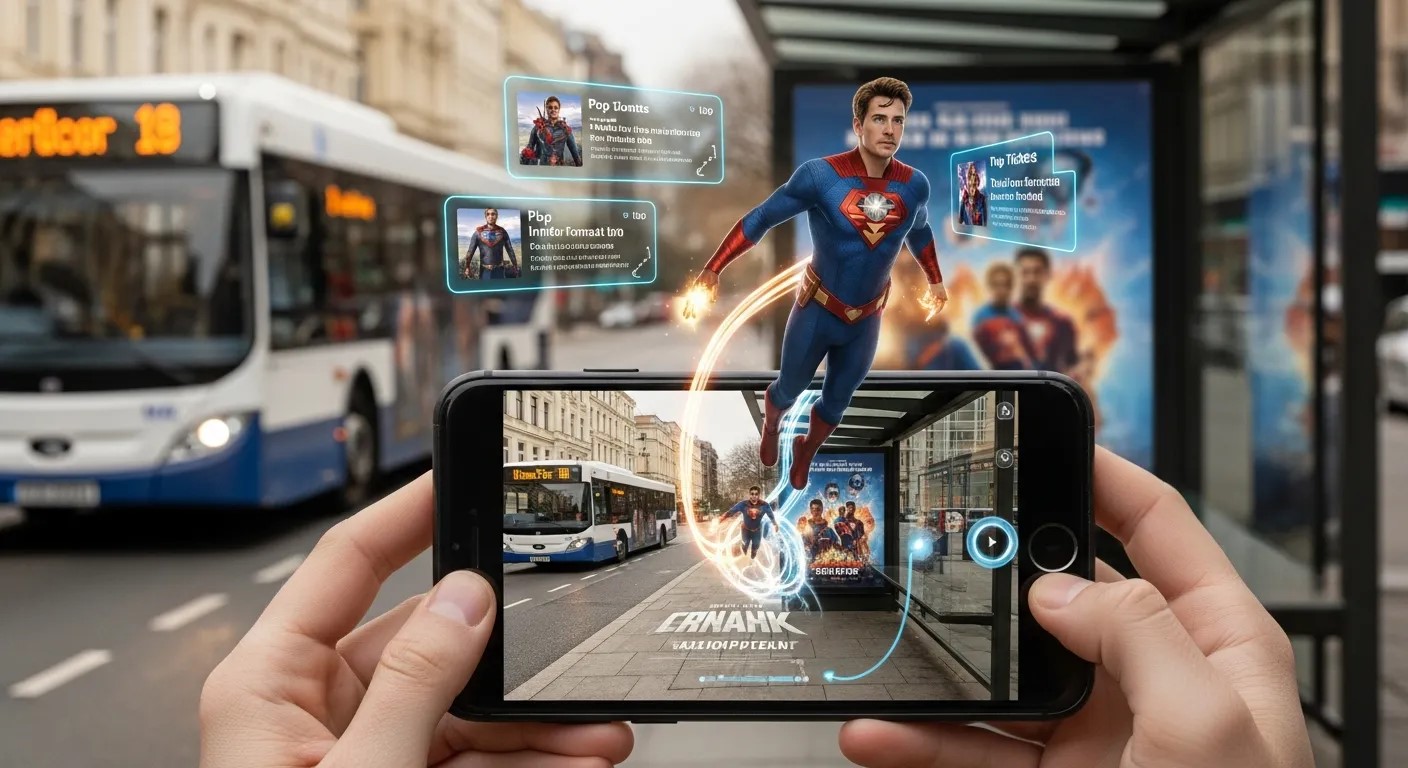
Augmented Reality Marketing doesn’t require abandoning your existing marketing infrastructure. Instead, it enhances and amplifies the effectiveness of channels you’re already using.
Enhancing Email Campaign Performance
AR in Email Marketing represents one of the most innovative integrations of augmented reality with traditional digital marketing. By embedding AR experiences directly into email campaigns, brands can transform static promotional messages into interactive experiences that drive engagement rates far beyond industry averages.
When recipients can preview products in their own space or interact with 3D models directly from an email, the campaign becomes an experience rather than an interruption. This approach works particularly well for product launches, seasonal promotions, and personalized recommendations based on previous purchase behavior.
Strengthening Affiliate and Partner Marketing
AR In Affiliate Marketing creates new opportunities for partners to promote your products effectively. When you provide AR tools to affiliates, influencers, and partners, you equip them with compelling content that drives higher conversion rates on their platforms.
This technology-enabled partnership approach benefits all parties: affiliates see higher commissions from improved conversion rates, customers receive better product information that supports informed decisions, and your brand gains expanded reach through partner channels. The interactive nature of AR experiences also provides richer data about how different audiences engage with your products across various partner platforms.
Amplifying Social Media Impact
Social media platforms have increasingly embraced AR features, with Instagram, Snapchat, Facebook, and TikTok all providing AR filters and effects. Augmented Reality Marketing leverages these built-in platform capabilities to create branded experiences that live where your customers already spend time.
Branded AR filters and lenses turn customers into brand ambassadors as they share these experiences with their networks. The combination of platform reach, user-generated content, and interactive engagement creates marketing impact that compounds over time as more users discover and share your AR experiences.
Technical Infrastructure and Implementation Considerations
Understanding the business case for Augmented Reality Marketing requires realistic assessment of implementation requirements and timelines. While AR technology has become significantly more accessible, successful deployment still requires strategic planning.
Platform and Technology Choices
Organizations implementing Augmented Reality Marketing face choices between web-based AR (WebAR), native mobile apps, or platform-specific filters. Each approach offers different trade-offs between reach, functionality, and development complexity.
WebAR provides the broadest reach since users can access experiences through mobile browsers without downloading apps. This removes a significant barrier to engagement but may limit the sophistication of AR features compared to native apps. Native apps offer the richest feature sets and best performance but require users to download and install software, reducing potential audience size.
Platform-specific filters leverage existing user bases on social media platforms but limit where and how customers can engage with your AR experiences. The optimal choice depends on your specific marketing objectives, target audience behaviors, and technical resources.
Content Creation and Maintenance
Augmented Reality Marketing requires 3D assets, interactive experiences, and ongoing content updates to remain relevant. Organizations need to build or acquire capabilities in 3D modeling, AR development, and experience design. These capabilities can be developed internally, contracted with specialized agencies, or managed through hybrid approaches.
The content creation pipeline for Augmented Reality Marketing differs significantly from traditional marketing asset production. Planning should account for longer development timelines, technical testing requirements, and platform-specific optimization needs. However, once this infrastructure is established, creating new AR experiences becomes progressively more efficient as your team develops expertise and reusable assets.
Measuring Success and Optimizing Performance
Augmented Reality Marketing provides rich data about customer engagement that enables continuous optimization and clear ROI measurement.
Key Performance Indicators
Successful AR marketing programs track metrics that span awareness, engagement, and conversion. Awareness metrics include AR experience views, social shares, and reach. Engagement metrics track interaction duration, feature usage, and repeat visits. Conversion metrics measure how AR engagement influences purchase behavior, average order value, and customer lifetime value.
The interactive nature of AR experiences provides granular data about which features customers use, how long they engage with different product categories, and where they encounter friction in the experience. This behavioral data informs both AR experience optimization and broader product and marketing strategy decisions.
A/B Testing and Continuous Improvement
Augmented Reality Marketing platforms enable sophisticated testing of different experience designs, feature sets, and user flows. Organizations can test whether customers respond better to realistic product rendering versus stylized presentations, whether additional interactive features increase engagement or create confusion, and how different AR experience entry points affect adoption rates.
This data-driven optimization approach ensures that AR marketing investments deliver increasing returns over time as experiences are refined based on actual customer behavior rather than assumptions about what might work.
Industry-Specific Applications and Case Studies
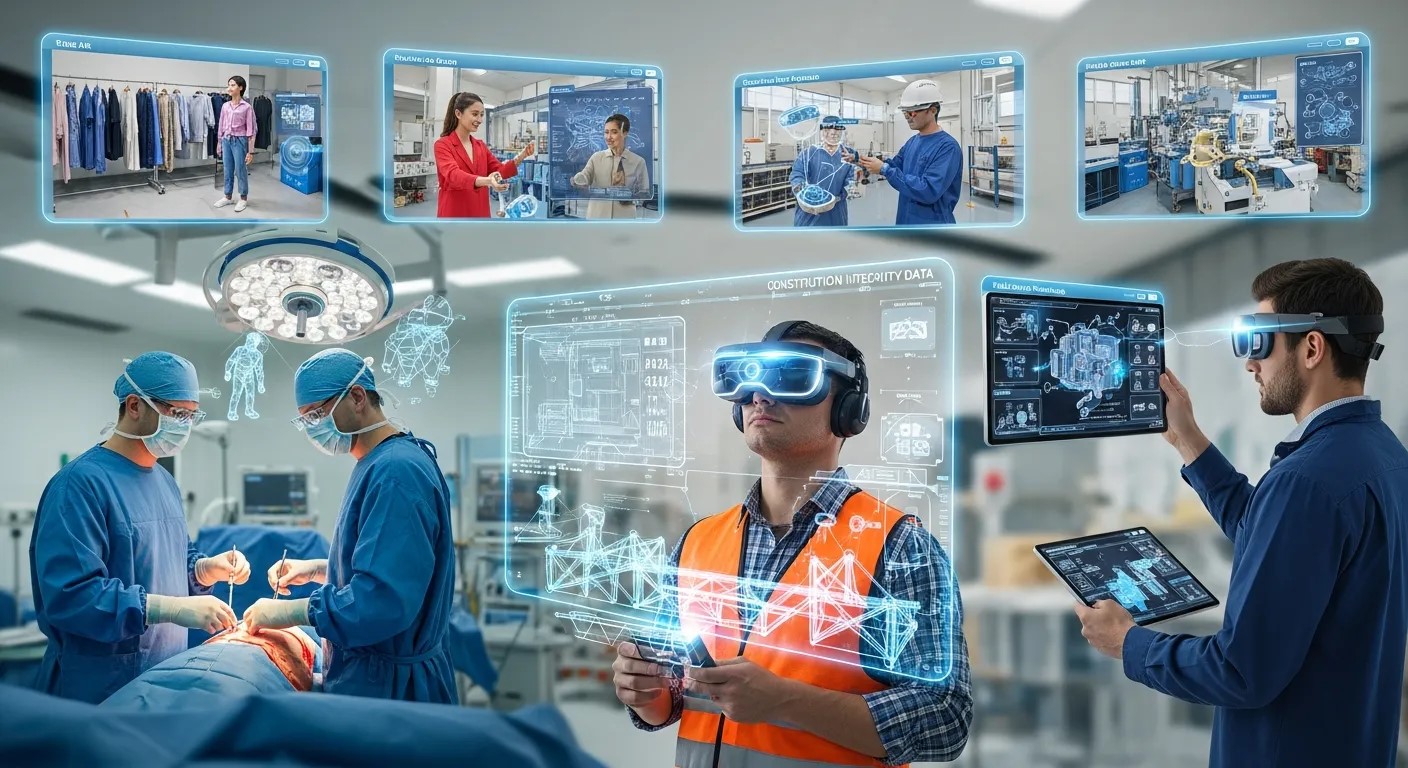
While Augmented Reality Marketing principles apply broadly, implementation details vary by industry. Examining how different sectors leverage AR provides insights into potential applications for your organization.
Retail and E-Commerce
Retail brands use Augmented Reality Marketing to recreate in-store shopping experiences online. Virtual try-on features let customers test products ranging from clothing and accessories to makeup and eyewear. Room visualization tools help customers see how furniture, appliances, and home decor items will look in their actual spaces.
These applications directly address the primary weakness of online shopping—the inability to physically interact with products before purchase. By closing this gap, retailers convert customers who prefer online shopping convenience but hesitate due to uncertainty about product fit or appearance.
Automotive Industry
Automotive brands deploy Augmented Reality Marketing to let potential buyers explore vehicle features, customize options, and visualize cars in their own driveways. These experiences serve customers throughout the purchase journey, from initial awareness through configuration and final purchase decision.
The high-consideration nature of automotive purchases makes them particularly well-suited to AR experiences that help customers understand complex features, compare options, and feel confident in decisions involving significant financial commitments.
Real Estate and Property Development
Real estate professionals use Augmented Reality Marketing to showcase properties that haven’t been built yet, furnish empty spaces virtually, and help buyers visualize renovation possibilities. These applications compress sales cycles by helping buyers make decisions faster with greater confidence.
Property developers can begin marketing buildings years before completion, generating pre-sales that improve project financing and reduce market risk. Buyers can tour properties from anywhere, expanding the potential buyer pool beyond local markets.
Beauty and Personal Care
Beauty brands pioneered consumer-facing AR with virtual makeup try-on features that have become industry standard. These tools reduce the need for physical testers, enable online purchasing of color cosmetics, and provide personalized product recommendations based on customer preferences and features.
The success of Augmented Reality Marketing in beauty has expanded to adjacent categories including hair color, skincare visualization, and even nail polish selection. These experiences drive both online sales and in-store traffic as customers discover products virtually then visit stores to purchase.
Comparison: Traditional Training vs AR Employee Training
|
Factor |
Traditional Training |
AR Employee Training |
|---|---|---|
|
Engagement Level |
Moderate; passive learning through lectures and videos |
High; immersive, hands-on simulation in real-world contexts |
|
Skill Retention |
20–30% retained after one week |
75–90% retained due to experiential learning |
|
Safety Impact |
Limited practice in controlled environments |
Risk-free practice of dangerous scenarios |
|
Cost Efficiency |
High costs for materials, travel, and instructors |
Lower long-term costs; scalable and reusable |
|
Error Reduction |
Errors discovered only during live work |
Mistakes corrected in simulation before real application |
While AR Employee Training focuses on workforce development, its principles mirror Augmented Reality Marketing in driving engagement and retention. Organizations applying AR thinking across both external marketing and internal training create consistent innovation cultures that maximize technology investments.
Addressing Common Concerns and Objections
Organizations considering Augmented Reality Marketing investments often raise similar concerns that deserve thoughtful responses.
Our customers aren’t tech-savvy enough for AR
This objection underestimates both customer capabilities and AR accessibility. Modern AR experiences require no special technical knowledge—users simply point their smartphone camera at their environment. Platforms like Snapchat and Instagram have trained hundreds of millions of users in AR interaction through filters and effects.
Additionally, the customers who do engage with AR experiences tend to be your most valuable segments: younger demographics with higher lifetime values and greater willingness to try new products. Even if AR adoption starts with a subset of your customer base, these tend to be exactly the customers you most want to engage.
AR is too expensive for our marketing budget
While enterprise-level Augmented Reality Marketing implementations can require substantial investments, entry-level options have become increasingly accessible. Web-based AR platforms, DIY AR creation tools, and platform-specific filters can be deployed at costs comparable to traditional digital marketing campaigns.
More importantly, ROI should be evaluated against outcomes rather than absolute costs. If an AR experience costing $25,000 increases conversions by 50% on a product category generating $1 million in annual revenue, the investment pays for itself many times over.
Our products aren’t visual enough for AR
While visually-oriented industries like furniture and beauty have led Augmented Reality Marketing adoption, applications extend far beyond pure visualization. AR can demonstrate product features, show assembly instructions, provide size comparisons, display customer reviews in context, and gamify shopping experiences.
Even service businesses can leverage AR for location-based experiences, virtual tours, or educational content that helps customers understand complex offerings. Creativity in application design matters more than inherent product characteristics.
Strategic Expansion Into Adjacent Technologies
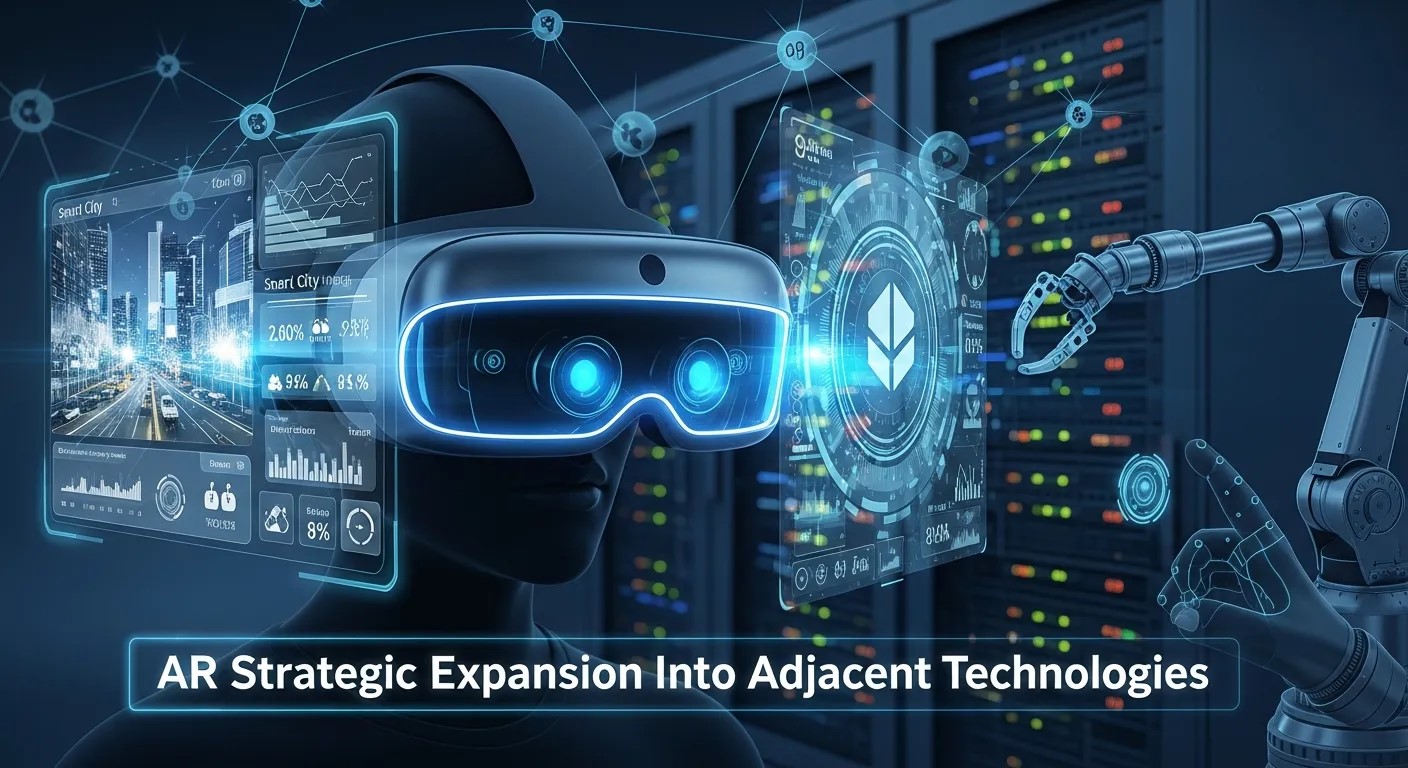
Augmented Reality Marketing positions organizations to adopt emerging technologies that will shape marketing’s future.
Integration with Smart Home Ecosystems
Augmented Reality in Smart Homes represents the convergence of AR visualization with IoT connectivity. Customers can use AR to design smart home configurations, visualize how connected devices will integrate into their spaces, and understand automation possibilities before making technology investments.
This application area will expand significantly as smart home adoption increases and consumers need tools to manage increasingly complex technology ecosystems. Brands that establish AR capabilities now will be positioned to extend these experiences as smart home technology matures.
Preparation for Metaverse Marketing
As virtual worlds and metaverse platforms develop, the 3D assets, spatial design expertise, and interactive experience capabilities developed for Augmented Reality Marketing translate directly into metaverse marketing applications. Organizations building AR competencies today are simultaneously preparing for tomorrow’s virtual marketing environments.
This forward-looking perspective positions AR investments as foundational capabilities that will remain relevant across multiple technology evolution cycles rather than isolated tactical implementations.
Crisis Communication and Support
AR Emergency Response applications demonstrate how AR thinking extends beyond traditional marketing into customer support and crisis management. When customers face urgent problems with products or services, AR-guided troubleshooting can provide immediate assistance that resolves issues faster than phone support or written instructions.
This support capability strengthens customer relationships while reducing support costs, creating value that compounds the marketing benefits of AR investments.
Building Internal Capabilities and Organizational Readiness
Successful Augmented Reality Marketing implementation requires more than technology deployment—it demands organizational change management and capability development.
Cross-Functional Collaboration
AR experiences sit at the intersection of marketing, technology, design, and product teams. Effective implementation requires breaking down silos and establishing collaborative workflows that may differ significantly from traditional marketing campaign development processes.
Organizations should invest in cross-functional team development, shared goals that align different departments around AR objectives, and communication systems that facilitate the rapid iteration required for successful AR experience development.
Skill Development and Training
Marketing teams accustomed to text, images, and video will need to develop new competencies around 3D content, spatial design, and interactive user experiences. This learning curve shouldn’t prevent AR adoption, but it does require realistic planning for skill development.
Training programs, external expertise partnerships, and gradual capability building enable marketing teams to become proficient in AR experience creation over time. Early projects may rely more heavily on external vendors, with internal capabilities growing as teams learn from each implementation.
Long-Term Strategic Value
Beyond immediate marketing performance improvements, Augmented Reality Marketing investments create long-term strategic assets that appreciate over time.
Data Assets and Customer Insights
Every AR interaction generates data about customer preferences, behaviors, and decision-making processes. This data becomes increasingly valuable as volume grows, enabling increasingly sophisticated personalization, product development insights, and market understanding.
Organizations that begin collecting AR interaction data today will have years of behavioral insights that competitors lack, creating information asymmetries that translate into strategic advantages across product development, marketing, and customer experience functions.
Platform Relationships and Priority Access
Major technology platforms prioritize brands that adopt new features early and push capabilities forward. Organizations investing in Augmented Reality Marketing build relationships with platform providers that can yield benefits including beta access to new features, case study partnerships that provide free publicity, and technical support that accelerates implementation.
These platform relationships create ongoing advantages as new AR capabilities emerge and marketing technology continues evolving.
Conclusion
Augmented Reality Marketing represents a fundamental shift in how brands engage customers, moving from passive content consumption to interactive experiences that solve real problems and create memorable moments. The business case for investment rests on multiple value drivers: direct revenue impact through improved conversion rates, cost reductions across operations and marketing, competitive differentiation that creates sustainable advantages, and enhanced customer experiences that build loyalty and lifetime value. Organizations implementing AR marketing today gain first-mover advantages, develop technical capabilities that become harder for competitors to replicate over time, and position themselves for emerging technologies that will define marketing’s future. The question isn’t whether AR will become standard in marketing early adopter results have already answered that definitively. The strategic question is whether your organization will lead or follow, invest proactively or react defensively, and capture the outsized returns available to early movers or accept the commodity returns of late adoption.
Frequently Asked Questions
What is Augmented Reality Marketing?
Augmented Reality Marketing uses digital overlays on real-world environments to create interactive brand experiences that enhance customer engagement and drive purchase decisions.
How much does Augmented Reality Marketing cost?
Costs range from $5,000 for basic WebAR experiences to $100,000+ for sophisticated native apps, with most mid-market implementations falling between $15,000–$50,000.
What ROI can I expect from Augmented Reality Marketing?
Typical ROI includes 40-200% conversion rate increases, 20-40% reduction in returns, and 25-35% improvement in customer engagement metrics within the first year.
Do customers actually use AR features?
Yes—over 100 million consumers regularly use AR shopping features, with adoption growing 30-40% annually as awareness and smartphone capabilities improve.
How long does it take to implement Augmented Reality Marketing?
Basic WebAR experiences can launch in 4-8 weeks, while comprehensive native apps with custom features typically require 3-6 months from concept to deployment.
What industries benefit most from Augmented Reality Marketing?
Retail, furniture, automotive, beauty, real estate, and home improvement lead adoption, but virtually any industry selling physical products or location-based services can benefit.
Can small businesses afford Augmented Reality Marketing?
Yes—entry-level WebAR platforms and DIY tools enable small businesses to create basic AR experiences for $5,000-$15,000, with clear ROI paths justifying investment.
What technical skills does my team need?
Marketing teams need basic 3D content understanding, but platforms increasingly offer no-code tools. Technical implementation typically involves AR developers partnering with existing marketing staff.
How do I measure Augmented Reality Marketing success?
Track engagement metrics (session duration, interaction rates), conversion metrics (AR-assisted purchases, average order value), and brand metrics (awareness, consideration, preference shifts).
What’s the difference between AR and VR marketing?
Augmented Reality Marketing overlays digital content on the real world through smartphones, while VR creates fully immersive virtual environments requiring headsets—AR offers broader accessibility.
Will AR work on all smartphones?
Modern AR experiences work on 85%+ of smartphones manufactured since 2018, including all recent iPhones and most Android devices, covering the vast majority of potential customers.
How often should AR experiences be updated?
Update AR content quarterly to maintain freshness, with major redesigns annually. Product catalog additions should integrate into AR experiences within 2-4 weeks of launch.