AR employee training reshapes workforce development by merging immersive technology with practical skill-building, enabling companies to deliver safer, faster, and more engaging learning experiences that traditional methods simply cannot match.
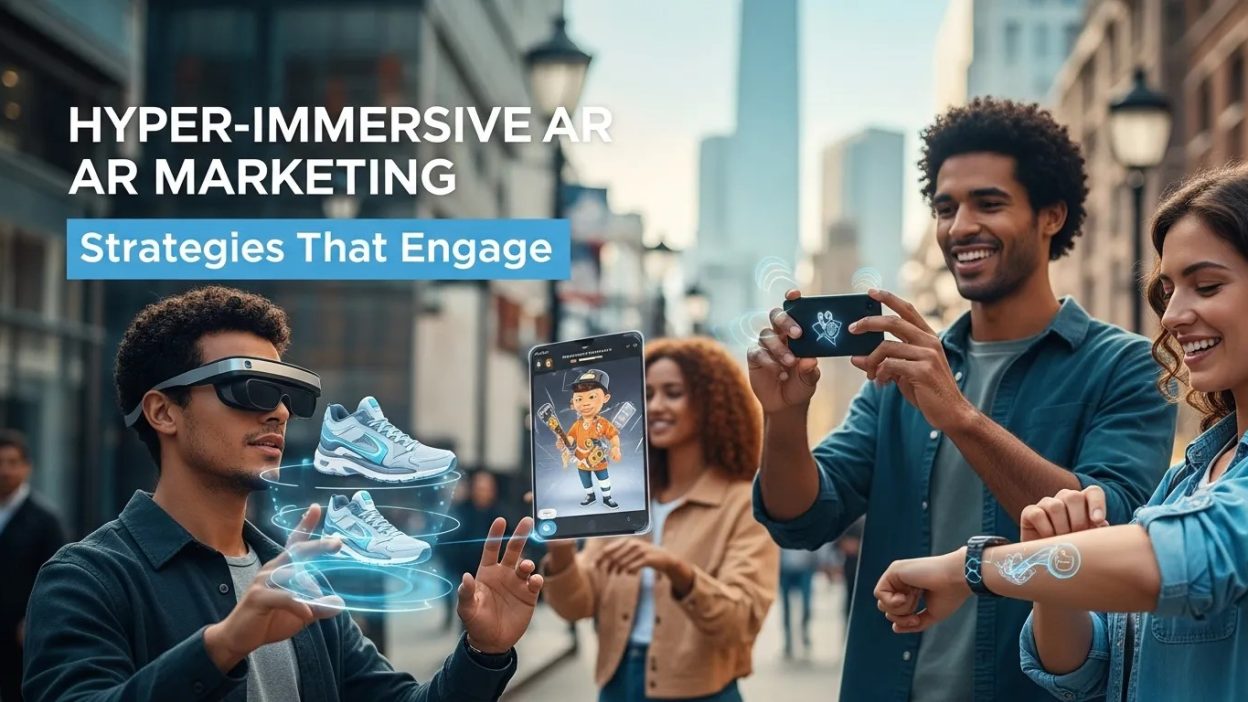
Hyper-Immersive AR Marketing Strategies That Engage
Businesses are rethinking how they connect with audiences. Traditional advertising struggles to hold attention in an era where consumers scroll past hundreds of messages daily. AR marketing strategies offer a solution by transforming passive viewers into active participants. These strategies don’t just tell a story—they invite people to step inside it.
Augmented reality has evolved from a novelty to a practical tool that brands use to create memorable interactions. By overlaying digital elements onto the physical world, companies can demonstrate products, gamify experiences, and build emotional connections that last. This technology isn’t reserved for tech giants anymore. Small and medium-sized businesses are discovering affordable ways to implement AR marketing strategies that drive measurable results.
The shift toward immersive marketing reflects a broader change in consumer behavior. People want experiences, not just advertisements. They want to try before they buy, explore products in context, and engage with brands on their own terms. AR marketing strategies meet these expectations by delivering interactive content that feels personal and immediate.
Understanding how to leverage this technology requires more than just adopting the latest tools. It demands a strategic approach that aligns AR experiences with business goals, audience preferences, and brand identity. The following sections explore proven tactics that companies use to maximize engagement through augmented reality.
Why AR Marketing Strategies Outperform Traditional Campaigns
Standard advertising relies on interruption. Commercials break into shows, banners cover content, and pop-ups demand attention. AR marketing strategies take a different path. They create value by enhancing the customer journey rather than disrupting it.
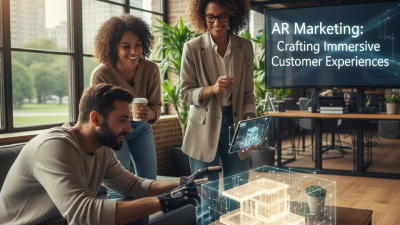
Consider how furniture retailers use AR to let shoppers visualize products in their homes. Instead of guessing whether a sofa fits a living room, customers see it placed accurately through their smartphone screens. This removes friction from the buying process and reduces return rates. The technology serves a practical purpose while building brand affinity.
AR marketing strategies also generate data that traditional campaigns can’t match. Brands track how users interact with AR experiences—which products they view, how long they engage, and which features they explore. These insights inform product development, refine targeting, and improve future campaigns.
The emotional impact of AR experiences creates stronger brand recall. When someone interacts with a product through augmented reality, they form a memory tied to action rather than passive observation. This active participation increases the likelihood of conversion and builds loyalty over time.
Creating Personalized Experiences Through AR Marketing Strategies
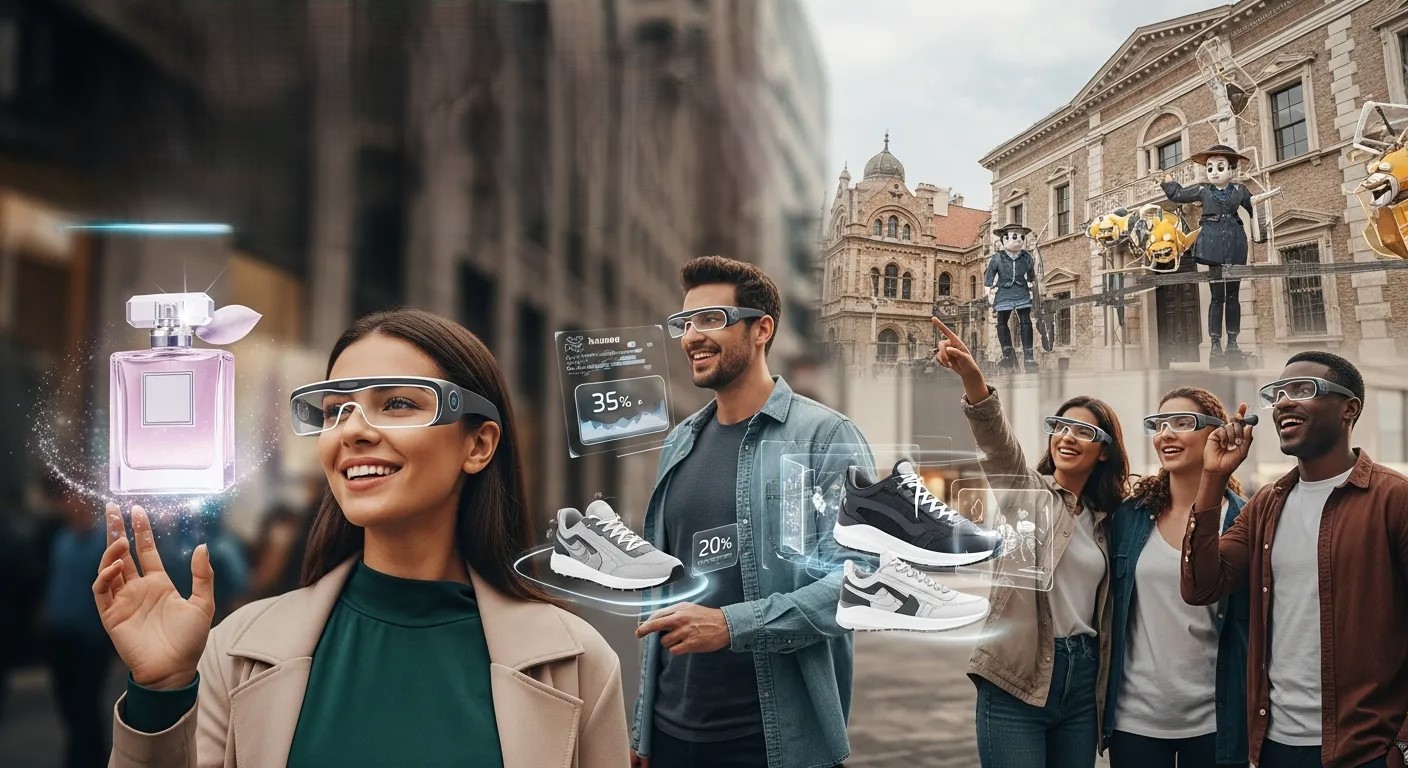
Personalization has become a baseline expectation. Consumers want brands to recognize their preferences and deliver relevant content. AR marketing strategies enable this personalization at scale by adapting experiences to individual users.
Beauty brands pioneered this approach with virtual try-on features. Customers test lipstick shades, eyeshadow palettes, and foundation tones without visiting a store. The AR technology uses AR facial tracking to map products onto a user’s face in real time, accounting for skin tone, lighting, and facial structure. This creates a customized experience that feels tailored to each person.
Fashion retailers expanded on this concept with full-body AR try-ons. Shoppers see how clothing fits and moves without entering a dressing room. The technology adjusts for body type and provides recommendations based on style preferences. This level of personalization reduces purchase hesitation and increases customer satisfaction.
AR marketing strategies can also adapt content based on location, time of day, or user behavior. A coffee brand might create an AR experience that changes based on whether someone engages in the morning or evening. A travel company could overlay destination information onto a user’s current environment, making the experience feel immediate and relevant.
Gamification and Interactive Storytelling in AR Marketing Strategies
Games capture attention because they offer challenge, reward, and progression. AR marketing strategies borrow these principles to create engaging brand experiences that keep users coming back.
Fast-food chains have used AR scavenger hunts to drive foot traffic to locations. Customers unlock rewards by finding virtual items placed around physical stores. This combines the thrill of exploration with tangible incentives, turning a marketing campaign into an adventure.
Product launches benefit from gamified AR experiences that build anticipation. A sneaker brand might hide virtual items across a city, requiring fans to explore specific neighborhoods to unlock exclusive access to new designs. This approach transforms marketing into a participatory event that generates organic social sharing.
Interactive storytelling through AR marketing strategies allows brands to convey complex narratives in digestible formats. A beverage company could create an AR experience that shows the journey of ingredients from farm to bottle. Users explore each stage by scanning products, learning about sustainability practices while building a connection to the brand’s values.
The key to successful gamification lies in balancing entertainment with purpose. AR experiences should feel rewarding without becoming gimmicks. When done correctly, they create positive associations that extend beyond the initial interaction.
Leveraging AR Employee Training to Strengthen Internal Marketing
Marketing doesn’t stop at customer-facing campaigns. Internal alignment ensures that employees understand brand messaging and can communicate it effectively. AR employee training provides an innovative way to educate teams about products, services, and company values.
Retail staff benefit from AR employee training modules that simulate customer interactions. Instead of reading scripts, employees practice scenarios in immersive environments. They learn to handle objections, demonstrate products, and close sales through hands-on experience that builds confidence.
AR employee training also supports onboarding for complex products. Technical teams can explore equipment through augmented overlays that highlight features and troubleshooting steps. This accelerates learning and reduces the need for repetitive explanations.
Sales teams use AR employee training to stay current on inventory and promotions. Before meeting clients, representatives review AR demos that showcase new offerings. This preparation ensures consistent messaging and empowers teams to answer questions with authority.
Companies that invest in AR employee training create a workforce that understands brand positioning at a deeper level. These employees become ambassadors who can articulate value propositions clearly, strengthening the overall marketing ecosystem.
Integrating AR Emergency Response Preparedness Into Brand Experiences
Safety and preparedness resonate with audiences. Brands that demonstrate commitment to well-being build trust and credibility. AR marketing strategies can incorporate AR emergency response elements that show customers how products or services contribute to safety.
Automotive brands use AR to demonstrate vehicle safety features. Customers explore collision detection systems, airbag deployment, and structural integrity through interactive overlays. This transparency builds confidence in the product while educating buyers about protective technologies.
Home security companies create AR experiences that simulate emergency scenarios. Users see how monitoring systems respond to intrusions or fire alerts, providing peace of mind through realistic demonstrations. This approach turns abstract concepts into tangible benefits.
Healthcare providers use AR to guide patients through emergency procedures. An app might overlay instructions for performing CPR or using an AED, making critical information accessible during high-stress situations. While not purely marketing, these tools position brands as community partners invested in public welfare.
AR emergency response applications within marketing strategies show audiences that a brand values their safety beyond the transaction. This builds goodwill and differentiates companies from competitors focused solely on sales.
Ethical AR Marketing: Building Trust Through Transparency
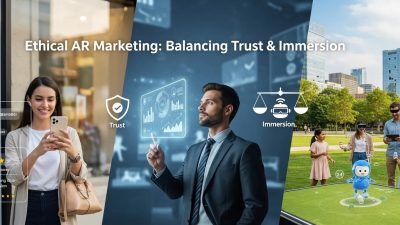
As AR marketing strategies become more sophisticated, ethical considerations grow in importance. Consumers are increasingly aware of data privacy, manipulation tactics, and deceptive practices. Brands that prioritize ethical AR marketing gain competitive advantages through transparency and respect for user autonomy.
Clear communication about data collection builds trust. AR experiences should inform users about what information is gathered and how it will be used. Opt-in permissions for facial recognition, location tracking, and behavioral data demonstrate respect for privacy.
Ethical AR marketing avoids manipulation tactics that exploit psychological vulnerabilities. Brands should design experiences that empower users rather than coerce them. This means avoiding dark patterns, hidden costs, or pressure tactics disguised as gamification.
Accessibility considerations ensure AR marketing strategies reach diverse audiences. Experiences should accommodate users with visual, auditory, or motor impairments. Providing alternative ways to access content demonstrates inclusivity and expands reach.
Companies that embrace ethical AR marketing position themselves as trustworthy partners. This approach may require short-term sacrifices in aggressive targeting, but it builds long-term loyalty and protects brand reputation.
Measuring Success: Metrics That Matter for AR Marketing Strategies

Deploying AR experiences without tracking performance wastes resources. Effective AR marketing strategies rely on data-driven insights to refine campaigns and demonstrate ROI.
Engagement metrics reveal how users interact with AR content. Track session duration, completion rates, and repeat interactions to gauge interest levels. High engagement indicates that the experience resonates with audiences.
Conversion tracking connects AR experiences to business outcomes. Monitor how many users who engage with AR proceed to make purchases, sign up for services, or take other desired actions. This data proves the financial impact of AR marketing strategies.
Social sharing metrics measure organic reach. When users share AR experiences with friends, they amplify brand messages without additional advertising spend. Track shares, tags, and user-generated content to understand viral potential.
Customer feedback provides qualitative insights that numbers alone can’t capture. Surveys, reviews, and direct comments reveal what users appreciate and what needs improvement. This information guides iterative development of AR marketing strategies.
Attribution modeling helps allocate credit appropriately. AR experiences often touch multiple points in the customer journey. Understanding how they contribute to conversions allows for accurate budget allocation and strategy optimization.
Comparison Table: Traditional Marketing vs AR Marketing Strategies
|
Criteria |
Traditional Marketing |
AR Marketing Strategies |
|---|---|---|
|
Engagement Level |
Passive viewing |
Active participation |
|
Personalization |
Limited segmentation |
Individual customization |
|
Data Collection |
Basic demographics and clicks |
Behavioral interactions and preferences |
|
Cost Efficiency |
High for broad reach |
Scalable with targeted impact |
|
Brand Recall |
Moderate through repetition |
High through experiential memory |
|
Measurement |
Impressions and click-through rates |
Session depth and conversion tracking |
Industry Applications Showing AR Marketing Strategies in Action
Different sectors approach AR marketing strategies with unique objectives. Understanding industry-specific applications provides ideas for adaptation across markets.
Automotive companies use AR showrooms that let customers explore vehicles without visiting dealerships. Users examine interiors, customize colors, and compare models side by side. This convenience attracts busy professionals who value efficiency.
Real estate firms create AR property tours that overlay furnishing options onto empty spaces. Buyers visualize potential while standing in actual rooms, making emotional connections that photos can’t achieve. This accelerates decision-making and reduces time on market.
Education technology companies develop AR learning modules that bring abstract concepts to life. Students explore anatomy through 3D overlays or visit historical sites through immersive reconstructions. These tools enhance comprehension while positioning brands as educational innovators.
Tourism boards use AR marketing strategies to preview destinations. Travelers explore landmarks, restaurants, and hotels through their phones before booking trips. This reduces uncertainty and builds excitement that translates into reservations.
Each industry adapts AR marketing strategies to solve specific challenges. The common thread is creating value for audiences while advancing business goals.
Overcoming Barriers to Implementing AR Marketing Strategies
Despite clear benefits, some companies hesitate to adopt AR marketing strategies. Addressing common concerns helps organizations move forward with confidence.
Cost worries often top the list. While enterprise-level AR development requires investment, accessible platforms now offer affordable entry points. Small businesses can start with simple AR filters or try-on features that deliver results without massive budgets.
Technical complexity intimidates teams unfamiliar with emerging technologies. Partnering with specialized agencies or using no-code AR platforms reduces the learning curve. Many solutions require minimal technical knowledge, allowing marketing teams to launch campaigns independently.
Device compatibility concerns arise when audiences use varied smartphones. Focusing on widely supported technologies ensures broad reach. WebAR solutions run through browsers without requiring app downloads, removing friction from user experience.
Measuring ROI can seem unclear with new technologies. Establishing baseline metrics before launch and tracking them consistently provides clarity. Start with simple goals like engagement duration, then expand measurement as campaigns mature.
Organizations that address these barriers systematically find that AR marketing strategies become manageable and rewarding investments.
Future Trends Shaping AR Marketing Strategies

Technology evolves rapidly, and AR marketing strategies will advance alongside it. Staying informed about emerging trends positions brands to maintain competitive edges.
Wearable AR devices will expand beyond smartphones. As glasses and contact lenses with AR capabilities become mainstream, marketing experiences will integrate seamlessly into daily life. Brands that prepare for this shift will lead the next wave of immersive engagement.
Artificial intelligence will enhance personalization within AR marketing strategies. Machine learning algorithms will predict user preferences and adapt experiences in real time, creating hyper-relevant interactions that feel intuitive.
Social commerce integration will blur lines between discovery and purchase. Users will move from AR product exploration to checkout without leaving their AR environment, reducing friction and increasing conversion rates.
Sustainability storytelling through AR will help brands communicate environmental commitments. Consumers will trace product origins, see carbon footprints, and understand ethical practices through transparent AR overlays.
Brands that monitor these trends and experiment early will shape industry standards. The companies that succeed won’t just adopt AR marketing strategies—they’ll help define what’s possible.
Conclusion
AR marketing strategies represent more than technological novelty. They offer practical solutions to engagement challenges that traditional advertising can’t solve. By creating immersive, personalized experiences, brands build meaningful connections with audiences who demand value and authenticity. Success requires strategic planning, ethical implementation, and continuous measurement. Organizations that commit to these principles will find AR marketing strategies deliver measurable returns while strengthening brand positioning for years to come.
Frequently Asked Questions
What are AR marketing strategies?
AR marketing strategies use augmented reality technology to create interactive brand experiences that engage customers through smartphones, tablets, or wearable devices.
How do AR marketing strategies improve engagement?
They transform passive viewers into active participants by letting users interact with products and content in personalized, immersive ways.
Are AR marketing strategies expensive to implement?
Costs vary widely. Entry-level options like AR filters are affordable, while custom enterprise solutions require larger investments.
What industries benefit most from AR marketing strategies?
Retail, automotive, real estate, beauty, fashion, education, and tourism see strong results, though any industry can adapt AR effectively.
How do brands measure AR marketing strategies success?
Track engagement duration, completion rates, conversion rates, social shares, and customer feedback to assess performance and ROI.
Do AR marketing strategies work on all devices?
WebAR solutions run on most modern smartphones without apps. Native apps offer advanced features but require downloads.
How does AR employee training support marketing?
AR employee training ensures teams understand products deeply, enabling them to communicate value propositions effectively and consistently.
What role does AR facial tracking play in marketing?
AR facial tracking enables virtual try-on experiences for beauty and eyewear products, creating personalized shopping experiences.
Can small businesses use AR marketing strategies?
Yes. Affordable platforms and template-based solutions make AR accessible to businesses of all sizes.
What makes AR emergency response relevant to marketing?
Demonstrating safety features through AR emergency response simulations builds trust and positions brands as responsible community partners.
Why is ethical AR marketing important?
Ethical AR marketing protects user privacy, avoids manipulation, and builds long-term trust that sustains brand reputation.
How will AR marketing strategies evolve?
Expect advances in wearable devices, AI personalization, social commerce integration, and sustainability storytelling through AR.