
AR in affiliate marketing revolutionizes how brands connect with audiences through interactive experiences, driving higher engagement, conversion rates, and authentic product demonstrations that traditional methods cannot match.
Transforming Digital Commerce Through Immersive Technology : AR In Affiliate Marketing
Affiliate marketing has undergone significant transformation over the past decade. From simple banner ads to sophisticated influencer partnerships, the industry continuously seeks innovative ways to bridge the gap between recommendation and purchase. Augmented reality represents the next frontier in this evolution, offering affiliates and brands unprecedented opportunities to create meaningful, interactive experiences that drive conversions.
Modern consumers demand more than product descriptions and static images before making purchase decisions. They want to visualize products in their environment, test features virtually, and understand exactly what they’re buying. AR in affiliate marketing addresses these needs by creating immersive experiences that reduce purchase hesitation and build confidence in buying decisions.
The integration of augmented reality into affiliate strategies isn’t just about adopting new technology—it’s about fundamentally rethinking how products are presented, experienced, and ultimately purchased through affiliate channels. This transformation affects everything from content creation to commission structures, making it essential for modern marketers to understand both the opportunities and challenges this technology presents.
Understanding AR Technology in Marketing Contexts
Augmented reality overlays digital information onto the physical world through smartphones, tablets, or specialized devices. Unlike virtual reality, which creates entirely new environments, AR enhances existing surroundings with interactive digital elements. This distinction makes AR particularly valuable for affiliate marketing, where the goal is helping consumers visualize products in their actual living spaces or on their own bodies.
The technology powering AR in affiliate marketing has become increasingly accessible. WebAR solutions allow users to access augmented reality experiences directly through web browsers without downloading specialized apps. This reduction in friction significantly increases engagement rates, as consumers can instantly interact with products through affiliate links without additional steps.
AR in affiliate marketing works through several technical approaches. Marker-based AR uses visual triggers like QR codes or images to activate digital overlays. Markerless AR relies on device sensors to understand spatial environments and place virtual objects accordingly. Location-based AR ties experiences to specific geographic coordinates. Each approach offers distinct advantages depending on the product category and marketing objectives.
Transforming Product Demonstrations Through AR
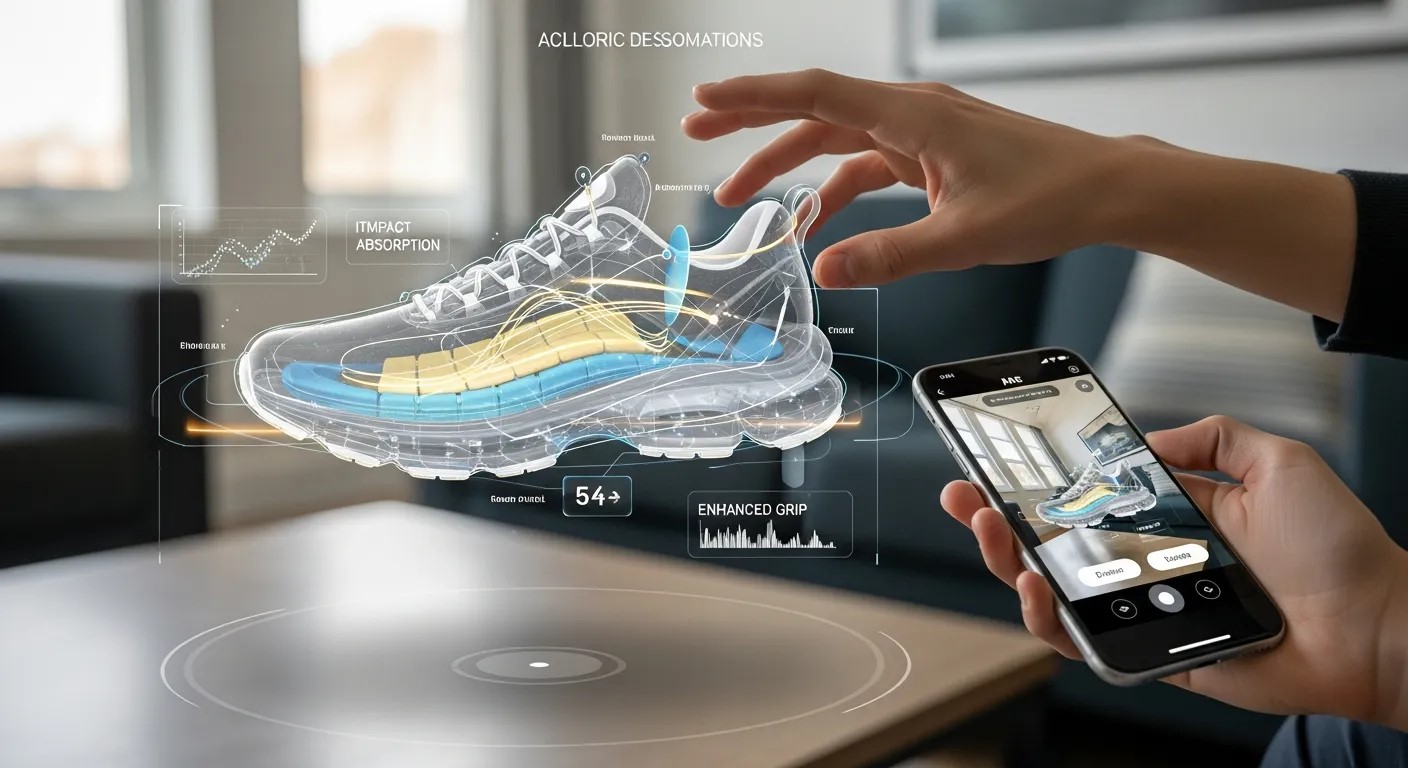
Traditional affiliate marketing relies heavily on written descriptions, photographs, and occasionally video content. AR in affiliate marketing adds a dimension that transforms passive viewing into active experimentation. Furniture affiliates can let consumers place sofas in their living rooms. Fashion affiliates can enable virtual try-ons of clothing and accessories. Cosmetics affiliates can show how makeup looks on individual skin tones using AR facial tracking technology.
These interactive demonstrations address one of e-commerce’s biggest challenges: the inability to physically interact with products before purchase. When affiliates incorporate AR experiences, they provide value that goes beyond simple product recommendation. They become facilitators of informed decision-making, which strengthens trust and increases conversion likelihood.
The data generated from AR interactions provides valuable insights into consumer preferences and behavior. Affiliates can track which products users virtually try, how long they engage with AR features, and which configurations they save or share. This information helps refine marketing strategies and product recommendations, creating a feedback loop that improves performance over time.
Implementation Strategies for Affiliate Marketers
Implementing AR in affiliate marketing requires careful planning and the right technological partnerships. Affiliates should start by identifying which products in their portfolio benefit most from immersive visualization. High-consideration purchases like furniture, home decor, and fashion accessories typically see the greatest impact from AR integration.
Many e-commerce platforms now offer built-in AR capabilities or integrate with third-party AR solutions. Affiliates can leverage these existing tools rather than building custom solutions from scratch. Platforms like Shopify, WooCommerce, and BigCommerce support AR product displays, making it easier for affiliates to incorporate this technology into their marketing efforts.
Content creation for AR in affiliate marketing differs from traditional approaches. Affiliates need access to 3D product models, which brands increasingly provide alongside standard marketing materials. When 3D assets aren’t available, affiliates can work with services that convert 2D images into 3D models, though the quality may vary.
Creating compelling AR experiences requires understanding user interface design principles specific to augmented reality. The best AR in affiliate marketing implementations feel intuitive and require minimal instruction. Clear visual cues guide users through interactions, while simple controls prevent frustration that could derail the purchase journey.
Building Trust Through Transparent AR Experiences
Trust forms the foundation of successful affiliate marketing. AR in affiliate marketing can either strengthen or undermine this trust depending on how it’s implemented. Transparent experiences that accurately represent product dimensions, colors, and features build confidence. Misleading AR representations damage credibility and increase return rates.
Ethical AR marketing practices require setting realistic expectations. Virtual representations should match actual product specifications as closely as possible. Lighting conditions in AR previews should reflect typical home or outdoor environments rather than idealized scenarios that products can’t match in reality.
Affiliates should clearly disclose the limitations of AR technology. For example, AR furniture placement might not account for exact room lighting or the texture differences between virtual and physical materials. Acknowledging these limitations upfront prevents disappointment and demonstrates commitment to honest recommendation.
Privacy considerations also factor into ethical AR marketing. AR facial tracking and other personalization features collect user data that must be handled responsibly. Affiliates should understand what data AR platforms collect, how it’s used, and ensure compliance with privacy regulations like GDPR and CCPA.
Performance Metrics and ROI Analysis
Measuring the impact of AR in affiliate marketing requires tracking metrics beyond traditional click-through and conversion rates. Engagement time with AR features indicates interest level and product consideration depth. Users who spend several minutes interacting with AR product views demonstrate higher purchase intent than those who briefly glance at static images.
AR interaction completion rates reveal how intuitive and valuable the experience is. High abandonment rates suggest the AR feature is too complex, technically problematic, or not adding sufficient value to justify the time investment. Optimizing the user experience based on these metrics improves overall performance.
Conversion lift attributed to AR capabilities provides the clearest ROI picture. A/B testing that compares standard product pages against AR-enhanced versions shows whether the technology investment translates into increased sales. Many early implementations report conversion increases of 40-70% for AR-enabled products compared to traditional presentations.
Return rates offer another important metric. If AR in affiliate marketing accurately represents products, return rates should decrease as customers receive what they expected based on their virtual preview. Conversely, increasing return rates might indicate discrepancies between AR representations and actual products that need addressing.
|
Comparison Factor |
Traditional Affiliate Marketing |
AR In Affiliate Marketing |
|---|---|---|
|
Engagement Level |
Passive viewing of images/videos |
Active interaction with 3D product models |
|
Purchase Confidence |
Relies on descriptions and reviews |
Direct visualization in personal environment |
|
Conversion Rate |
Industry average 2-3% |
Reported increases of 40-70% with AR |
|
Return Rate |
Higher due to expectation mismatches |
Lower when AR accurately represents products |
|
Content Creation |
Standard photography and copywriting |
Requires 3D modeling and AR development |
Industry-Specific Applications

Different product categories benefit from AR in affiliate marketing in distinct ways. Home furnishing affiliates see particularly strong results because consumers can visualize how furniture fits their spaces before purchasing. This eliminates the guesswork involved in matching dimensions and styles to existing decor, directly addressing a major purchase barrier.
Fashion and accessories affiliates leverage AR for virtual try-ons that show how products look on individual body types. This personalization increases confidence in fit and style choices, particularly important for online purchases where traditional fitting rooms don’t exist. Jewelry affiliates use AR to demonstrate how pieces appear when worn, helping customers assess size and proportions.
Automotive affiliates implement AR to let potential buyers configure vehicles with different colors, wheel options, and features, then view the customized vehicle in their driveway. This visualization makes abstract configuration choices concrete and helps justify premium features by showing their actual appearance.
Beauty and cosmetics represent another strong AR in affiliate marketing category. Virtual makeup application using AR facial tracking lets users see how products look on their specific skin tone and facial features. This personalization drives higher conversion rates and reduces returns caused by color mismatches.
Overcoming Technical Challenges
Implementing AR in affiliate marketing presents several technical challenges that marketers must navigate. Device compatibility varies significantly, with older smartphones lacking the processing power or sensors needed for sophisticated AR experiences. Affiliates must ensure their AR implementations work across a broad range of devices or clearly communicate minimum requirements.
Loading times impact user experience and engagement rates. 3D models and AR environments require more data than standard images, potentially causing slow load times on cellular connections. Optimizing file sizes and implementing progressive loading techniques helps maintain acceptable performance across connection speeds.
Lighting and environmental factors affect AR accuracy. Virtual objects should respond to ambient lighting conditions to appear realistic in different settings. Advanced AR in affiliate marketing implementations use the device camera to assess lighting and adjust virtual objects accordingly, creating more convincing integrations.
Browser and platform differences create additional complexity. AR experiences may function differently across iOS and Android devices, or between various web browsers. Thorough testing across platforms ensures consistent functionality and prevents losing potential customers due to technical incompatibilities.
Training and Skill Development for AR Marketing
As AR in affiliate marketing becomes mainstream, marketers need new skills to leverage the technology effectively. Understanding 3D modeling basics helps affiliates communicate effectively with designers and assess the quality of AR assets. Marketers don’t need to become 3D artists themselves, but familiarity with the process improves collaboration.
User experience design principles specific to AR differ from traditional web design. Spatial interfaces require different thinking about navigation, interaction patterns, and information hierarchy. AR employee training programs increasingly cover these specialized design considerations to prepare marketing teams for immersive technology implementation.
Analytics interpretation for AR campaigns requires understanding new metrics and their implications. Traditional marketing analytics training focuses on web traffic patterns and conversion funnels. AR in affiliate marketing adds dimensional data about how users interact with 3D objects, requiring new analytical frameworks to extract meaningful insights.
Staying current with AR technology developments is essential as the field evolves rapidly. New devices, platforms, and capabilities emerge regularly, creating opportunities for early adopters. Continuous learning through industry publications, conferences, and experimentation keeps affiliate marketers competitive in this dynamic landscape.
Future Trends Shaping AR Affiliate Marketing
Wearable AR devices like smart glasses will transform AR in affiliate marketing as they become mainstream. Unlike smartphone-based AR that requires holding a device, glasses provide hands-free experiences that feel more natural and integrated into daily life. This shift will enable new types of affiliate experiences, such as receiving product recommendations based on real-world contexts.
Artificial intelligence integration will make AR in affiliate marketing more personalized and predictive. AI algorithms will analyze user behavior to suggest products that fit individual preferences and needs, then present them through AR visualizations customized to each user’s environment and aesthetic preferences.
Social commerce integration will bring AR in affiliate marketing directly into social media platforms. Users will be able to try products virtually without leaving their favorite apps, reducing friction in the purchase journey. This seamless integration will blur the lines between content consumption, product discovery, and purchasing.
Voice integration will add another dimension to AR experiences. Users will be able to ask questions about products they’re viewing in AR and receive instant answers, creating more interactive and informative experiences. This combination of visual and verbal interaction makes product exploration more comprehensive.
Legal and Regulatory Considerations
AR in affiliate marketing operates in an evolving legal landscape. Disclosure requirements for affiliate relationships remain critical even as technology changes. The Federal Trade Commission requires clear disclosure of material connections between affiliates and brands, regardless of presentation format. AR experiences must incorporate disclosure in ways that remain visible and understandable.
Intellectual property concerns arise when creating or using 3D models for AR applications. Affiliates must ensure they have proper rights to use product representations in their marketing. Some brands provide approved AR assets, while others require affiliates to create their own, necessitating clear licensing agreements.
Accessibility standards apply to AR experiences just as they do to traditional web content. AR in affiliate marketing should accommodate users with disabilities whenever possible. This might include alternative text descriptions of AR content, audio guidance for visual elements, or non-AR alternatives that provide equivalent information.
Data privacy regulations affect how AR platforms collect and use personal information. When AR experiences involve AR facial tracking or other biometric data collection, strict privacy standards apply. Affiliates must understand what data their AR solutions collect and ensure compliance with relevant regulations across jurisdictions where they operate.
Crisis Management and AR Emergency Response

While primarily a marketing technology, AR capabilities extend to operational contexts including AR emergency response applications. Understanding these broader applications helps affiliate marketers appreciate AR’s versatility and potential for brand storytelling beyond direct sales. Companies that demonstrate social responsibility through technology innovation, including emergency preparedness, build stronger brand affinity.
Some forward-thinking brands incorporate safety features into their AR experiences. Furniture companies might include AR visualizations showing proper assembly or safety precautions. Electronics brands could use AR to demonstrate safe usage practices. These value-added features differentiate affiliate offerings while serving genuine consumer needs.
Conclusion
AR in affiliate marketing represents a fundamental shift in how products are discovered, evaluated, and purchased through affiliate channels. The technology transforms passive product viewing into active, immersive experiences that build purchase confidence and reduce friction in the buying journey. As augmented reality becomes more accessible through browser-based solutions and widespread smartphone adoption, affiliates who embrace this technology gain competitive advantages in conversion rates, customer satisfaction, and commission earnings. Success requires balancing technological innovation with ethical practices, transparent product representation, and continuous learning as the field evolves. The future of affiliate marketing increasingly depends on creating experiences that help consumers make informed decisions through technologies that bridge digital and physical realities.
Frequently Asked Questions
What is AR in affiliate marketing?
AR in affiliate marketing uses augmented reality technology to create interactive product experiences that help consumers visualize items before purchasing through affiliate links.
How does AR increase affiliate conversion rates?
AR increases conversions by letting consumers virtually try or place products in their environment, reducing purchase uncertainty and building confidence in buying decisions.
Do affiliates need technical skills to use AR?
Basic AR implementation through existing platforms requires minimal technical skills. Advanced customization needs 3D modeling knowledge or partnerships with technical specialists.
What products work best with AR affiliate marketing?
Furniture, home decor, fashion, accessories, cosmetics, and automotive products benefit most from AR visualization, though any physical product can potentially leverage the technology.
Is AR affiliate marketing expensive to implement?
Costs vary widely. Many platforms offer built-in AR capabilities at no additional cost, while custom solutions require investment in 3D modeling and development.
How do consumers access AR affiliate experiences?
Most AR experiences work through smartphone cameras and web browsers without requiring app downloads, reducing friction and increasing participation rates.
Does AR work on all devices?
AR functionality varies by device capability. Modern smartphones support most AR features, while older devices may have limitations requiring fallback options.
How do you measure AR marketing effectiveness?
Track engagement time, interaction completion rates, conversion lift compared to non-AR experiences, and return rates to assess AR implementation success.
What are common AR implementation mistakes?
Common mistakes include unrealistic product representations, complex interfaces, slow loading times, and failing to test across different devices and platforms.
How does AR affect affiliate commission structures?
Commission structures typically remain unchanged, though some brands offer higher rates for affiliates driving conversions through enhanced AR experiences.
Can small affiliates compete using AR technology?
Yes, platform-provided AR tools level the playing field, allowing small affiliates to offer immersive experiences without significant technology investments.
What privacy concerns exist with AR marketing?
AR implementations may collect facial data, environmental information, or usage patterns, requiring clear privacy policies and compliance with data protection regulations.