Unlocking the Power of Augmented Reality in 2024: A Comprehensive Guide
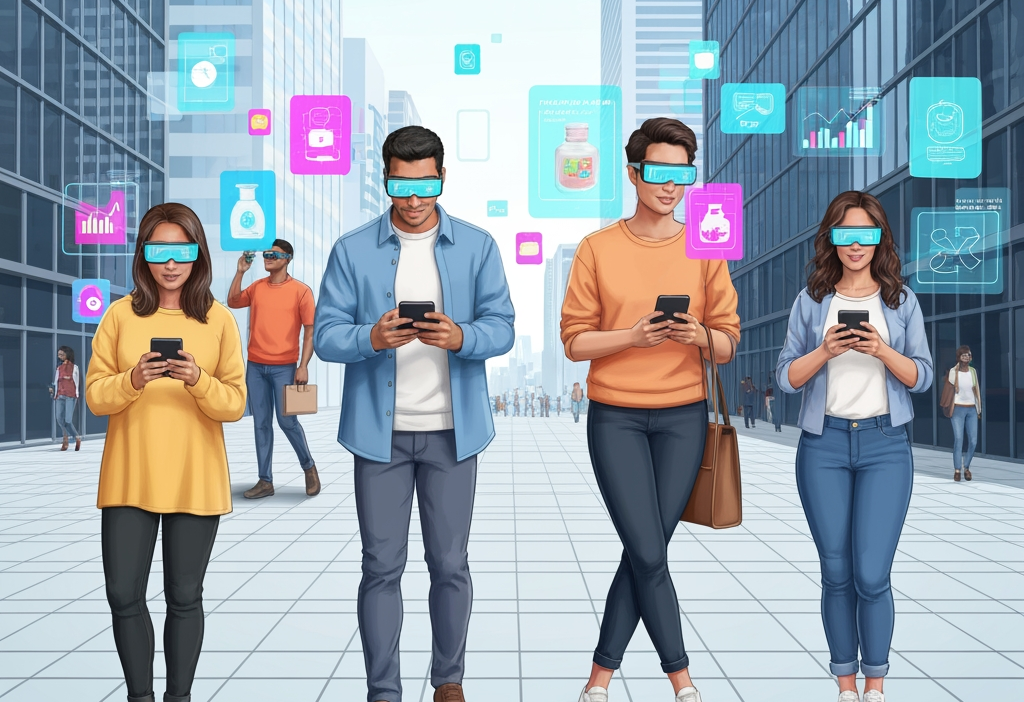
Augmented Reality (AR) has moved beyond novelty or niche gaming to become a pivotal tool for modern marketers pursuing immersive customer experiences. When executed correctly, AR campaigns marry digital content with the physical environment, delivering context-aware interactions that resonate on an emotional level and drive measurable business outcomes. As 5G networks expand and device capabilities accelerate, the bar for AR-driven marketing is rising. In this extensive guide, we’ll dissect advanced strategies—ranging from hyper-personalization at scale to AI-powered object recognition—to help you architect high-impact AR initiatives that strengthen brand loyalty, lift conversion rates, and deliver transparent ROI.
1. Hyper-Personalization: The Next Frontier
Consumers no longer settle for static ads or one-size-fits-all content. They expect real-time experiences tailored to their preferences, location, and behavior. AR amplifies personalization by overlaying bespoke visuals, offers, or narratives directly onto the user’s environment.
1.1 Real-Time Data-Driven Overlays
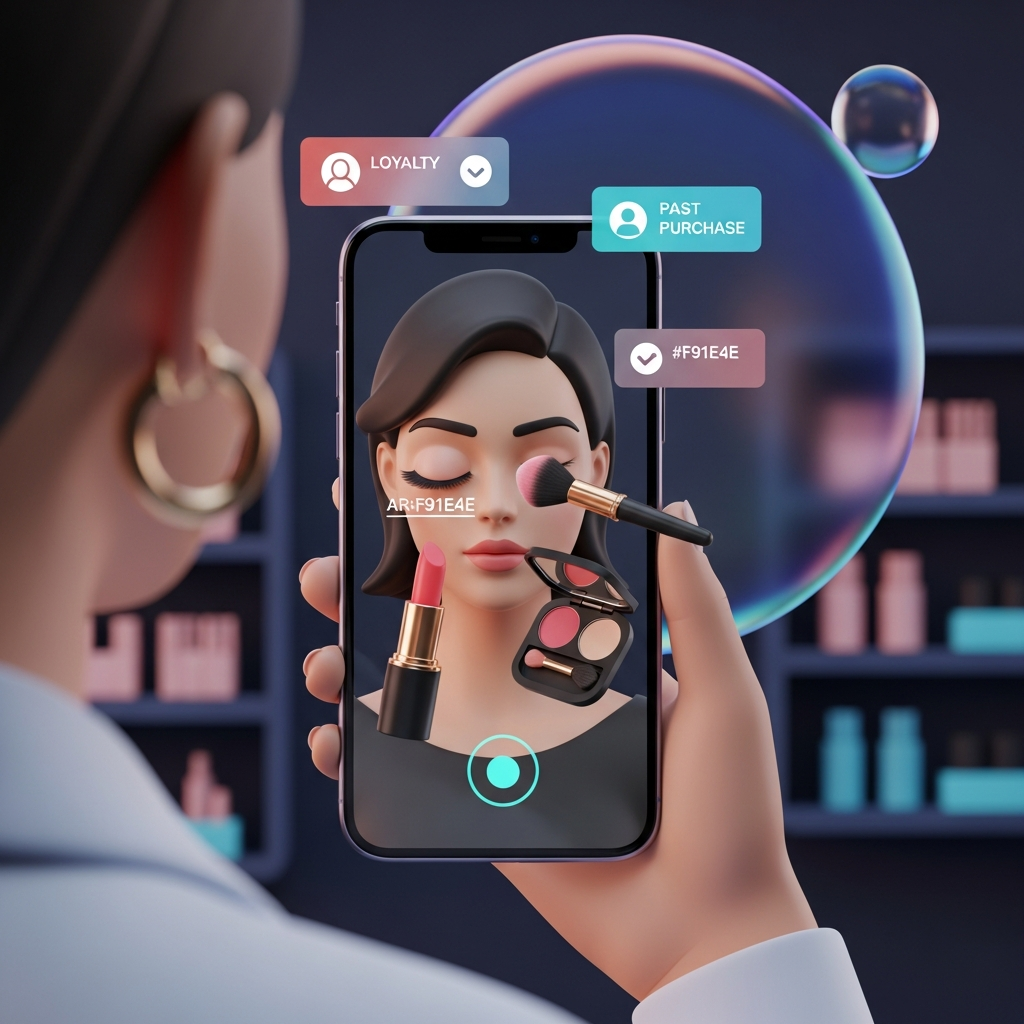
Imagine a beauty brand that taps into a shopper’s loyalty status and purchase history to auto-generate a personalized AR makeup tutorial. By integrating your AR platform with a Customer Data Platform (CDP) or CRM, you can pull in demographic segmentation, past engagement, or even browsing patterns to dynamically adjust 3D product renderings.
Reference: For best practices on CDP integration, see the Gartner Customer Data Platform research.
1.2 Geo-Fenced AR Experiences
Geolocation triggers allow you to tie AR activations to physical coordinates. Retailers can establish Bluetooth beacons or Wi-Fi triangulation within stores to launch hidden “digital easter eggs,” such as exclusive coupons or interactive pop-ups, when customers enter defined zones. These tactics not only spark curiosity but also increase dwell time by up to 25% according to a Deloitte report.
1.3 Social-Connected Personalization
Allow users to opt in via social logins—Facebook, Google, or LinkedIn—to enrich AR filters with age, interests, or friend networks. For instance, an outdoor apparel brand could overlay user-specific trail maps or recommend gear based on a user’s checked-in locations on social platforms.
2. Omnichannel AR Integration
True omnichannel doesn’t stop at transposing digital experiences offline; it seamlessly stitches together online, in-store, mobile, and social touchpoints into one coherent journey.
2.1 E-Commerce: Virtual Try-Before-You-Buy
Embedding WebAR viewers on product pages empowers customers to visualize furniture in their homes or preview eyewear styles on their faces—without downloading an app. Advanced analytics scripts can capture metrics like rotation angles, zoom interactions, and session duration to pinpoint which configurations boost add-to-cart rates.
Referral: Shopify merchants report an average 40% increase in conversion when offering virtual product trials: Shopify AR Case Studies.
2.2 In-Store Interactive Displays
High-traffic storefronts can leverage large-format AR screens or kiosks equipped with camera tracking. Shoppers wave or gesture to call up 3D animations, complementary products, or live social feeds. Data from these interactions should feed back into your BI dashboard in real time, allowing store managers to observe trending products and adjust inventory placement instantly.
2.3 Social Media and Messaging Apps
Platforms like Instagram, Snapchat, and TikTok have matured their AR lens creation tools, offering brands direct pathways to viral engagement. Integrate AR within chatbots on WhatsApp Business or Messenger to deliver mini-games or branded stickers during customer service chats, subtly reinforcing brand messaging while collecting qualitative feedback.
3. AI Supercharges AR
Artificial Intelligence is the engine accelerating AR from scripted overlays to adaptive, context-aware experiences.
3.1 Object Recognition & Contextual Triggers
Leveraging computer vision, AI models can recognize products, logos, or even environmental textures (e.g., carpet vs. hardwood). This unlocks highly situational content—point a camera at a running shoe, and the system instantly displays performance metrics, user reviews, and virtual color swaps. Leading-edge brands partner with AI specialists or use SDKs like Google’s ML Kit (developers.google.com/ml-kit) for seamless integration.
3.2 Predictive Personalization and A/B Testing
By feeding historical interaction data into machine learning pipelines, you can forecast which AR layouts or narratives will resonate with specific segments. Run multivariate A/B tests on headline animations, call-to-action placements, or color schemes. An automated system then promotes the top-performing variant to similar audience cohorts, boosting engagement lift by as much as 22%, according to internal benchmarks at leading retailers.
3.3 Voice-Enabled AR Interfaces
Integrate Natural Language Processing (NLP) engines—such as Amazon Lex or Google Dialogflow—to allow hands-free AR commands. A user might say, “Show me red dining chairs at scale,” triggering a live rendering that adapts to voice inflection and recognized sentiment. This modality enhances accessibility and convenience, especially in hands-on shopping scenarios.
4. Measuring AR Impact: Advanced Analytics
Rigorous measurement is non-negotiable for validating AR investments and scaling successful campaigns.
4.1 Micro-Engagement Metrics
Beyond traditional KPIs (clicks, views), track granular touchpoints: object rotations, timestamped heatmaps, dwell time per overlay, and percentage of augmented elements actually manipulated. These micro-interactions provide predictive insights into which features drive downstream conversions.
4.2 Multi-Touch Attribution Models
Implement attribution frameworks that account for each AR interaction—initial discovery, repeated engagement, and final conversion. By connecting AR events to your CRM and ad platforms, you can quantify the incremental lift to website visits, in-store foot traffic, and average order value.
Resource: Learn more about advanced attribution at the Federal Trade Commission’s guide: FTC Advertising and Marketing Guidance.
4.3 Real-Time Sentiment and Feedback
Embed quick emoji reactions or one-click polls within the AR experience to gauge user sentiment on the spot. Complement this with social listening tools to parse unstructured mentions of your AR activations across Twitter, Reddit, and niche forums, then feed insights back to your creative and product teams.
5. Overcoming Implementation Hurdles
Even the most visionary AR idea can falter without robust technical planning and governance.
5.1 Cross-Platform Consistency
Fragmentation across iOS, Android, and WebAR can slow deployment. Adopt cross-platform frameworks like Unity AR Foundation or open standards like WebXR to streamline development and minimize overhead.
5.2 Scalable Asset Production
High-fidelity 3D models and animations demand specialized skill sets. Build an efficient pipeline using cloud-based asset repositories (e.g., AWS S3 with AWS Lambda for automated LOD optimizations) and version control (Git LFS or Perforce). This approach reduces time-to-market and ensures consistent quality across device capabilities.
5.3 Privacy, Security & Compliance
Collect only essential PII for AR personalization, secure data in transit and at rest, and maintain clear consent banners. Align with GDPR guidelines (see gdpr.eu) and California’s CCPA requirements (oag.ca.gov/privacy/ccpa). When feasible, process sensitive AR data—like environment scans—locally on the device to minimize privacy risk.
6. Case Studies: Brands at the Forefront
- IKEA Place: Pioneered realistic furniture placement in home environments using Apple’s ARKit, cutting return rates by 30% and accelerating purchase confidence.
- Nike Fit: Leveraged 3D foot scanning and machine learning to deliver personalized size recommendations, driving an 18% uplift in conversions and slashing returns related to sizing.
- Sephora Virtual Artist: Employed real-time facial mapping for AR makeup try-ons, sparking a 150% surge in online engagement and a 20% boost in average order values.
7. Best Practices & Strategic Roadmap
To roll out scalable, high-impact AR campaigns, adopt a staged approach:
- Pilot Phase: Build a minimal viable AR feature for a niche audience segment. Collect quantitative metrics and qualitative feedback via embedded surveys.
- Optimize & Expand: Iteratively refine content assets, integrate additional data sources, and expand AR activations across digital and physical channels based on pilot learnings.
- Automate & Innovate: Integrate AI-driven personalization engines, streamline asset pipelines, and explore emerging formats—wearable AR glasses or AR-enabled IoT appliances.
8. Looking Ahead: The Future of AR Marketing
The AR ecosystem will continue to evolve rapidly, fueled by breakthroughs in 5G networking, edge computing, and decentralized asset management. Expect to see:
- Glasses-First Experiences: Lightweight AR spectacles offering persistent, hands-free overlays for shopping, navigation, and social sharing.
- 5G-Enabled Cloud Rendering: Ultra-low-latency streaming of complex 3D scenes directly to mobile devices, eliminating the need for on-device asset storage.
- Blockchain for Secure Asset Sharing: Decentralized registries enabling IP protection and transparent royalty distribution for 3D content creators.
Brands that invest early in these technologies will foster deeper customer loyalty and discover new monetization avenues beyond conventional channels.
Conclusion
Augmented Reality has matured from a marketing stunt into a strategic imperative. By weaving hyper-personalization, omnichannel cohesion, AI-driven interactivity, and comprehensive analytics into your AR initiatives, you can craft immersive experiences that delight customers and deliver measurable business value. As the ecosystem matures, staying ahead will demand continual experimentation, cross-disciplinary partnerships, and a data-first mindset. The immersive era of marketing is here—embrace AR now to secure your competitive edge in 2024 and beyond.