Augmented reality (AR) is revolutionising archaeology and cultural heritage preservation by bridging physical sites with digital reconstructions. In fieldwork, AR helps archaeologists visualise subsurface structures, map sites accurately, document findings in real time, and collaborate remotely. Museums use AR to animate artifacts, rebuild ancient architecture, and create immersive, interactive visitor experiences.
Archaeology and cultural heritage preservation have long relied on painstaking manual methods to document, analyze, and interpret the remnants of ancient civilisations. Today, augmented reality (AR) offers a transformative toolkit that bridges the gap between physical sites and digital reconstructions. By overlaying computer-generated visuals onto real-world environments, AR empowers archaeologists, curators, educators, and the public to interact with the past in ways never before possible. In this article, we explore the diverse applications, technical foundations, real-world case studies, challenges, and future horizons of AR in archaeology and heritage preservation.
The Role of AR in Archaeological Fieldwork
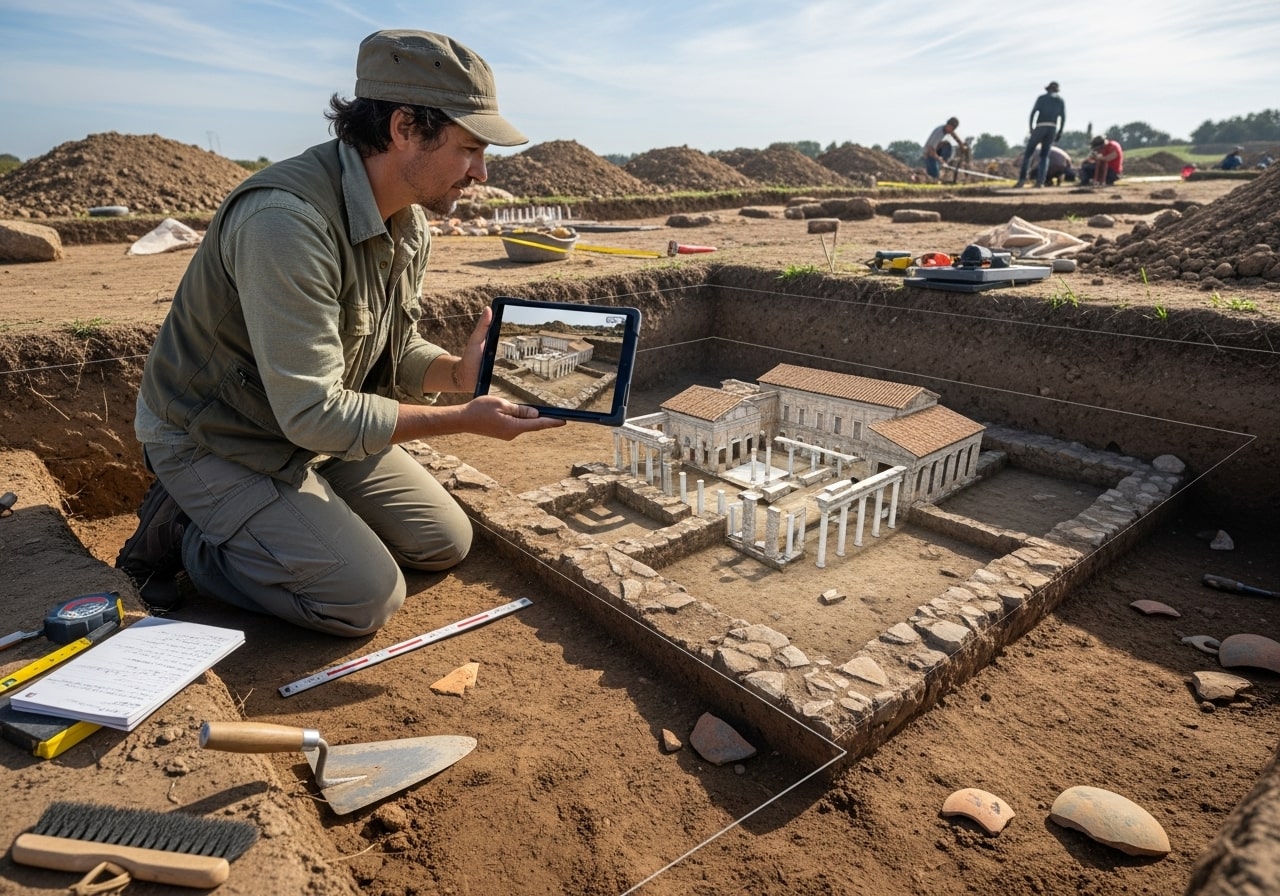
On excavation sites around the globe, AR is redefining fieldwork by providing archaeologists with real-time contextual information. Handheld tablets or AR glasses enable researchers to visualise subsurface structures, guiding their digs with unprecedented precision. Instead of relying solely on 2D site maps, teams can see virtual layers that represent soil strata, buried walls, or artifact clusters.
- Site Mapping and Visualisation: By integrating photogrammetry and 3D scanning, AR overlays digital reconstructions directly on the terrain, revealing hidden features without invasive trenching.
- Digital Documentation: Field notes, 3D scans, and GIS data sync to AR devices, allowing archaeologists to tag finds and log contextual metadata on the fly.
- Collaborative Excavation: Remote experts can join live AR sessions, annotate site features, and advise local teams, reducing travel costs and enhancing cross-disciplinary cooperation.
Bringing Artifacts to Life: Interactive Museum Experiences
Museums and heritage sites worldwide are adopting AR to create immersive exhibitions that engage visitors of all ages. Rather than displaying static objects under glass, curators can harness AR to animate artifacts, reconstruct ruined architecture, and tell richer stories.
- Virtual Reconstructions: Visitors point an AR-powered device at an ancient ruin or display case and watch as a faded statue or collapsed structure reassembles before their eyes.
- Contextual Narration: Embedded audio, text, and 3D animations provide layered insights—showing how an object was crafted, used, or traded across centuries.
- Interactive Quests: AR scavenger hunts encourage exploration, where users collect virtual tokens, decode historical puzzles, and earn digital badges.
Education and Public Engagement
Educational institutions are leveraging AR to bring history lessons out of textbooks and into the field. From primary schools to university research labs, AR applications foster deeper engagement and experiential learning.
- Remote Field Trips: Students unable to travel can virtually explore Egyptian tombs, Roman amphitheatres, or Mesoamerican pyramids in immersive AR environments.
- Hands-On Workshops: Learners manipulate 3D artifacts with gesture controls, examining tool marks, wear patterns, and construction techniques up close.
- Citizen Science: Public participants contribute to crowd-sourced AR projects by identifying patterns in digital site reconstructions or tagging environmental changes around heritage landmarks.
Technical Underpinnings
Delivering seamless AR experiences in archaeology requires a robust technical stack that combines hardware, software, and data-management systems.
- Computer Vision and SLAM: Simultaneous Localization and Mapping algorithms track device movement and map environments in real time, anchoring virtual content accurately to physical sites.
- 3D Modeling and Photogrammetry: High-resolution scans of artifacts and landscapes generate detailed meshes and textures, which AR platforms render as interactive overlays.
- Cloud Computing and Data Storage: Heavy 3D assets and geospatial data reside on remote servers, streaming to devices on demand to minimize local processing loads.
- User Interfaces: Intuitive gesture controls, voice commands, and natural-feature tracking make AR tools accessible to archaeologists with varying technical backgrounds.
Advanced AR Analytics and Data Insights

Augmented reality is not only a tool for visualization but also a powerful platform for collecting and analyzing archaeological data. By tracking how users interact with virtual reconstructions, AR can provide valuable insights into engagement patterns, areas of interest, and learning outcomes. For archaeologists, this means understanding which artifacts or sites draw attention, how visitors interpret historical narratives, and which areas require further explanation or contextualization. Advanced analytics can also support research by combining field observations with AR-collected data, allowing teams to visualize excavation trends over time and identify previously unnoticed patterns. Institutions can use these insights to refine museum layouts, educational programs, and even preservation strategies, making AR a dual-purpose tool for engagement and data-driven decision-making.
AR-Enabled Preservation and Restoration Guidance
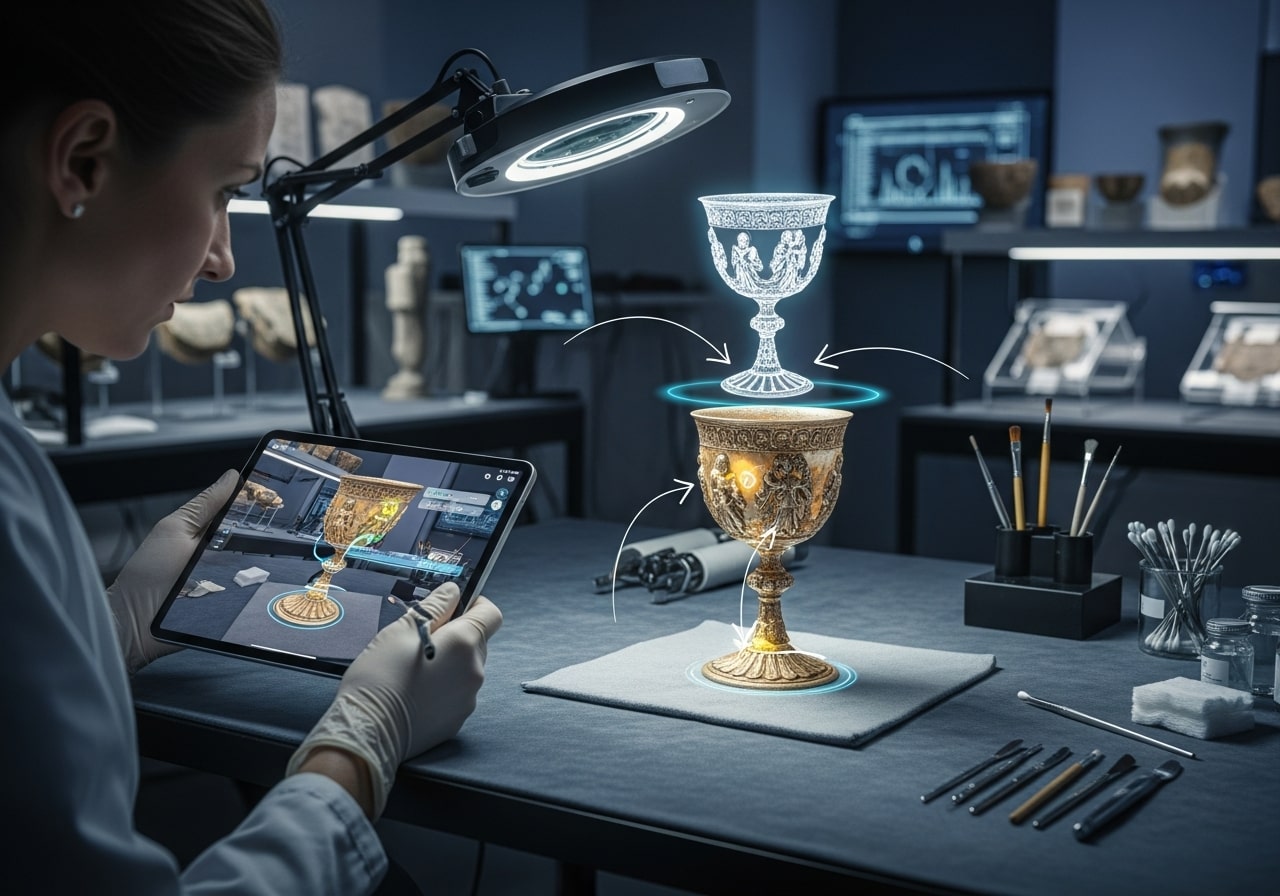
Another transformative application of AR is in preservation and restoration. AR allows conservators to overlay virtual reconstructions onto damaged or eroded artifacts, offering precise guidance for repairs without risking further harm. For example, fragile frescoes or crumbling statues can be digitally reconstructed in situ, allowing experts to experiment with restoration approaches virtually before applying them physically. Beyond individual objects, AR can model environmental conditions, such as sunlight, humidity, or visitor traffic, and simulate their impact on heritage sites over time. This predictive approach supports proactive conservation, helping institutions plan maintenance, prioritize interventions, and extend the lifespan of invaluable cultural assets while maintaining historical authenticity.
Community Engagement and Participatory Archaeology
AR also empowers communities to actively participate in heritage preservation and archaeological projects. By gamifying exploration or providing interactive storytelling, AR encourages local residents and tourists alike to engage with cultural sites in meaningful ways. Citizens can contribute to digital archives, annotate site reconstructions, or help track environmental changes and site conditions over time. Participatory AR initiatives foster a sense of shared ownership over cultural heritage, bridging the gap between professional archaeologists and the public. Moreover, these programs can highlight underrepresented histories and local narratives, ensuring that diverse voices are included in the preservation process. By combining immersive technology with participatory engagement, AR transforms heritage sites into living, interactive spaces that educate, inspire, and empower communities.
AR in Cultural Heritage Tourism and Economic Impact
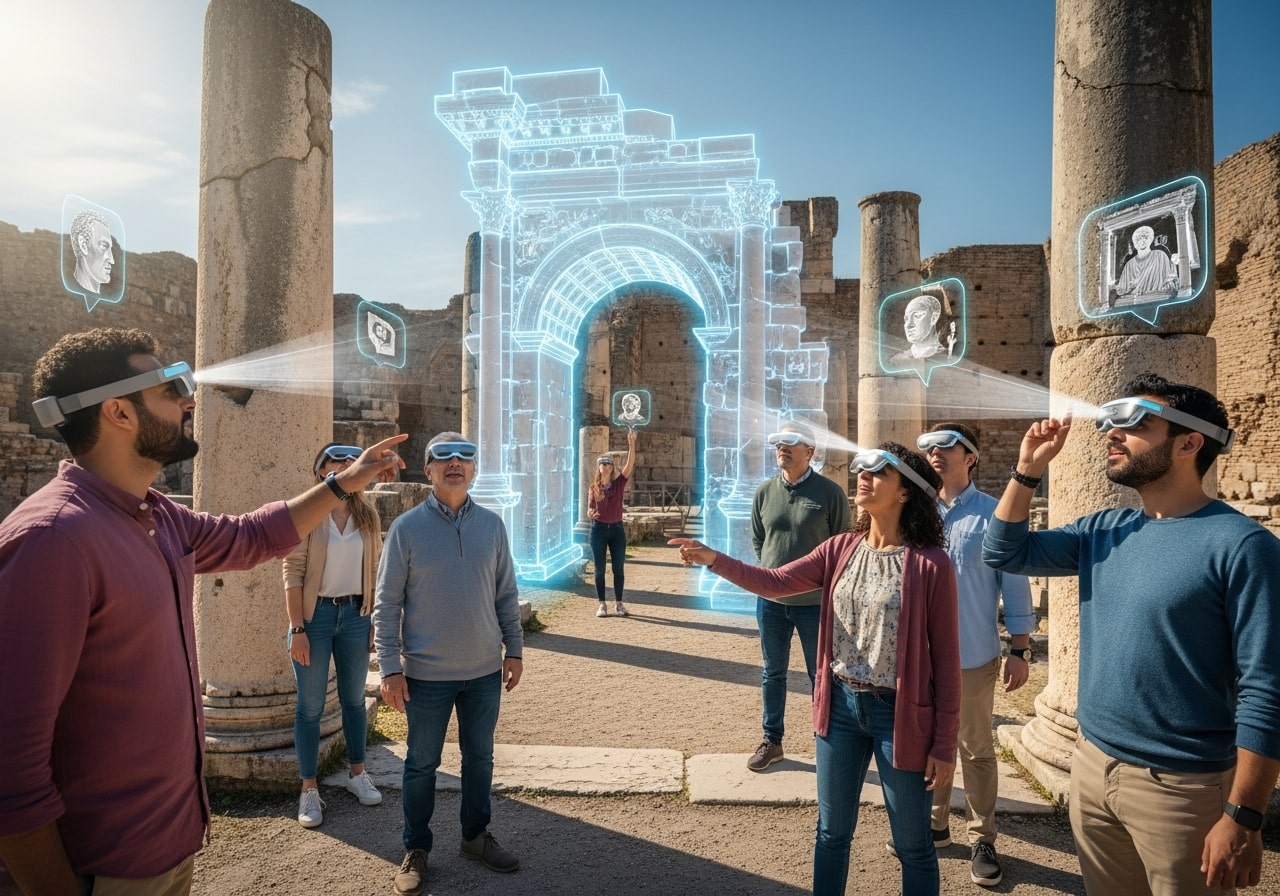
Beyond research, preservation, and education, augmented reality is transforming cultural heritage tourism by creating more engaging visitor experiences while supporting local economies. AR-driven tourism combines immersive storytelling with interactive exploration, encouraging longer visits, repeat tourism, and deeper cultural appreciation.
Case Studies
Several pioneering projects illustrate the profound impact of AR on archaeology and heritage preservation:
1. Petra AR Tour
In Jordan, the Petra AR initiative equips visitors with tablets that superimpose the ancient Nabatean city’s original facades, water channels, and caravan routes onto the eroded sandstone cliffs. Interactive hotspots reveal historical anecdotes, making Petra’s history accessible even in remote canyon areas.
2. Pompeii Virtual Excavation
At Italy’s Pompeii archaeological park, researchers use AR headsets to visualize underground structures and layer them onto the current landscape. Tourists can see the vibrant frescoes and bustling marketplaces of 79 AD without risking damage to fragile ruins.
3. Local Museum Revitalisation
A regional history museum in the United States launched an AR mobile app that breathes life into its permanent collection of colonial artifacts. Families scan everyday objects—buttons, utensils, maps—and trigger animated stories narrated by historical figures.
Challenges and Considerations
Despite its promise, integrating AR into archaeology and heritage fields involves practical and ethical challenges:
- Data Accuracy: Misalignments between virtual models and physical sites can mislead researchers or visitors, underscoring the need for rigorous calibration.
- Cost and Accessibility: High-end AR hardware and custom software development remain expensive, potentially limiting adoption to well-funded institutions.
- Conservation Ethics: Balancing digital enhancements with preservation principles requires careful guidelines to avoid over-commercialization or sensationalism.
- Training and Support: Field teams need comprehensive training in AR workflows, data management, and device maintenance to ensure sustainable deployments.
The Future of AR in Heritage Preservation
Looking ahead, several emerging trends promise to deepen AR’s impact on archaeology and culture:
- AI-Enhanced Reconstructions: Machine learning models will fill gaps in incomplete scans, generating plausible reconstructions of missing structures or artifacts.
- Real-Time Collaboration: Multi-user AR sessions will allow field teams, remote specialists, and the public to explore and annotate sites simultaneously.
- Haptic and Sensory Feedback: Emerging wearable technologies may enable users to feel textures of virtual artifacts, heightening immersion and educational value.
- Digital Twins of Heritage Sites: Comprehensive, updatable AR models of entire cultural landscapes will support long-term monitoring, conservation planning, and disaster response.
Conclusion
Augmented reality stands at the forefront of a new era in archaeology and cultural heritage preservation. By merging cutting-edge digital tools with traditional research methods, AR enables deeper insights, richer storytelling, and broader public engagement. As technology continues to evolve—and as institutions overcome cost and training barriers—AR will play an indispensable role in ensuring that the stories of our past endure for generations to come.
Frequently Asked Questions (FAQ) – Augmented Reality in Archaeology and Heritage Preservation
1. What is augmented reality (AR) in archaeology?
Augmented reality in archaeology involves overlaying computer-generated visuals onto real-world environments to enhance the study, interpretation, and presentation of archaeological sites and artifacts. It allows researchers, curators, and the public to visualise reconstructions, understand historical context, and interact with historical data in real time.
2. How does AR improve archaeological fieldwork?
AR improves archaeological fieldwork by providing real-time visualisations of subsurface structures, soil layers, and artifact locations. This enables more precise excavation planning, interactive site mapping, and collaboration with remote experts, which reduces errors and enhances the accuracy of data collection.
3. Can AR be used in museums?
Yes, museums use AR to create immersive exhibitions that allow visitors to see virtual reconstructions, animated artifacts, and contextual storytelling. AR transforms static displays into interactive experiences, helping visitors gain a deeper understanding of the historical significance of objects and structures.
4. How does AR benefit education and public engagement?
AR benefits education by enabling students and the public to virtually explore archaeological sites, manipulate 3D artifacts, and participate in interactive workshops or citizen science projects. These experiences foster hands-on learning, deeper engagement, and broader accessibility to historical knowledge.
5. What technologies enable AR in archaeology?
AR in archaeology relies on technologies such as computer vision and SLAM, which track device movement and anchor virtual content accurately, 3D modeling and photogrammetry to create detailed digital replicas, cloud computing to stream large 3D assets, and intuitive user interfaces with gesture controls or voice commands that make AR accessible to researchers and the public alike.
6. Are there real-world examples of AR in heritage preservation?
Yes, several projects illustrate the use of AR in heritage preservation. The Petra AR Tour in Jordan allows visitors to view reconstructed Nabatean structures on-site. At Italy’s Pompeii, AR headsets enable tourists to see ancient frescoes and city layouts without damaging fragile ruins. A regional history museum in the United States has used a mobile AR app to animate colonial artifacts and tell interactive stories.
7. What challenges exist in using AR for archaeology?
Challenges include ensuring data accuracy because misalignments between virtual models and physical sites can mislead users. High-quality AR hardware and custom software development can be expensive, which may limit access for some institutions. There are ethical considerations regarding conservation, as digital enhancements must respect historical authenticity. Additionally, field teams need proper training to manage AR devices and workflows effectively.
8. How is AR shaping the future of heritage preservation?
AR is shaping the future of heritage preservation through AI-enhanced reconstructions that fill gaps in incomplete scans, real-time multi-user collaboration allowing experts and the public to explore sites together, haptic and sensory feedback that lets users feel virtual artifacts, and digital twins of heritage sites that support monitoring, conservation planning, and disaster preparedness.
9. Is AR accessible to the general public?
AR is increasingly accessible to the general public. Many museums and heritage sites provide mobile AR apps or tablets for visitors to interact with exhibits. While high-end AR hardware may remain costly, smartphone-based AR applications are making immersive experiences more widely available.
10. Why is AR important for archaeology and cultural heritage?
AR is important because it bridges the gap between physical artifacts and their historical context. It enhances research accuracy, public understanding, and educational outreach while preserving knowledge digitally. By providing interactive and immersive experiences, AR ensures that history remains engaging and accessible for future generations.