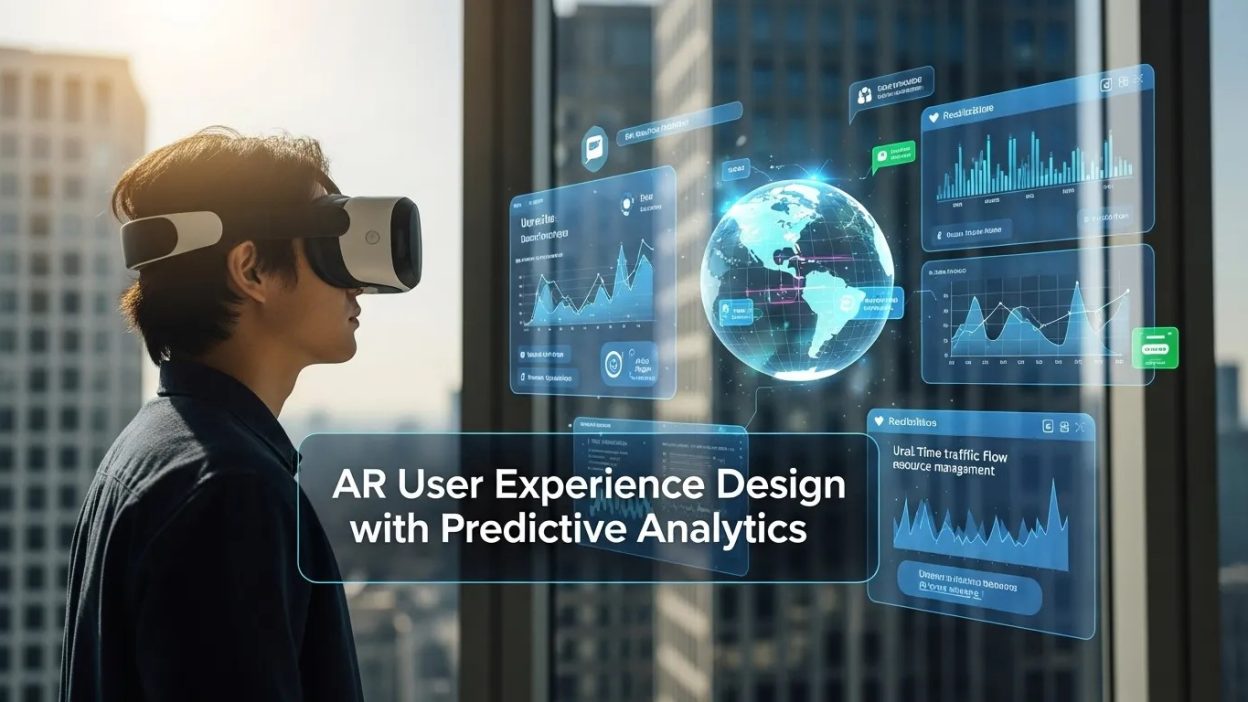
AR User Experience Design leverages predictive analytics, computer vision, and NLP to create immersive, adaptive, and ethical AR experiences. Edge computing and AI-driven personalization ensure intuitive, responsive interactions across industries, enhancing engagement and satisfaction.
Introduction to AR User Experience Design
The rapid evolution of technology has transformed the way humans interact with digital environments. Among these innovations, AR User Experience Design has emerged as a critical factor in creating immersive and engaging experiences. Augmented reality (AR) is no longer just a novelty; it is increasingly being applied across industries—from retail and healthcare to entertainment and education. As AR applications expand, understanding how users perceive, interact, and engage with these environments becomes essential for designers and developers.
AR User Experience Design is not merely about visual aesthetics or functional interfaces. It encompasses a holistic approach that considers human behavior, cognitive load, and emotional response. Designers must anticipate how users will navigate AR spaces, interact with virtual objects, and respond to sensory cues. Predictive analytics now plays a pivotal role in this process, enabling creators to foresee user needs and tailor experiences that feel intuitive and personalized.
The Role of Predictive Analytics in AR
Predictive analytics leverages historical data, user behavior patterns, and artificial intelligence algorithms to forecast potential actions and preferences. In the context of AR, predictive analytics allows designers to optimize user interactions by anticipating where attention might drift, which features will be most engaging, and how users may react to complex visual or interactive elements. By integrating predictive insights into AR User Experience Design, developers can reduce friction, enhance satisfaction, and increase long-term engagement.
Moreover, predictive analytics is instrumental in balancing immersion with usability. In AR environments, overwhelming the user with too much information or interactive elements can lead to cognitive overload. Analytics-driven insights help in identifying optimal content placement, interaction timing, and adaptive responses that resonate with individual users. This is particularly relevant in AR training modules, e-commerce experiences, and interactive marketing campaigns, where engagement directly impacts outcomes.
Integrating Advanced Technologies in AR UX
The sophistication of AR experiences depends heavily on the technologies underlying their design. For instance, Computer Vision in AR enables systems to recognize and interpret real-world objects, allowing for seamless interaction between virtual and physical elements. By understanding the spatial context and user gestures, computer vision enhances the fluidity of navigation, making AR User Experience Design more natural and immersive.
Similarly, NLP for AR (Natural Language Processing) introduces conversational capabilities that allow users to interact with virtual assistants or contextual content using spoken commands. Integrating NLP into AR experiences makes interactions more intuitive, reducing reliance on traditional input devices and enabling hands-free engagement. Designers leveraging predictive analytics can anticipate user queries and streamline conversational flows, improving responsiveness and satisfaction.
Enhancing AR User Experience Design with Edge Computing

As AR User Experience Design becomes more complex, the need for real-time processing and low-latency interactions has never been greater. This is where Edge Computing in AR comes into play. By processing data closer to the user rather than relying solely on cloud servers, edge computing reduces lag, improves responsiveness, and ensures seamless integration of virtual elements into the physical world. For AR applications that require instantaneous feedback—such as interactive training simulations, live navigation aids, or multiplayer AR games—edge computing ensures that user interactions remain fluid and immersive.
Designers of AR experiences must account for how edge computing affects usability. Real-time analytics powered by edge devices can monitor user behavior and adjust visual or interactive elements dynamically. For example, if predictive models detect that a user is hesitating before interacting with a particular virtual object, the system can subtly guide attention using visual cues or haptic feedback. This approach not only enhances engagement but also reduces cognitive friction, a key principle in AR User Experience Design.
AI-Driven Personalization in AR Experiences
Personalization has become a hallmark of modern AR experiences. Leveraging artificial intelligence, developers can tailor content, interactions, and interfaces to the preferences and behavior of individual users. Predictive analytics is central to this personalization, enabling systems to anticipate user needs and present the most relevant content at the right moment. In practice, this might mean dynamically adjusting the complexity of AR instructions, highlighting products most likely to interest a shopper, or even changing the environmental aesthetics based on user mood and past behavior.
Technologies like Ethical AI in AR ensure that these personalization strategies respect user privacy and maintain transparency. As AR experiences collect and analyze increasing amounts of user data, designers must balance innovation with responsibility. Predictive models should be implemented ethically, avoiding intrusive profiling or manipulative interfaces while still delivering meaningful enhancements to AR User Experience Design.
Conversational Interfaces and AR Interaction
The integration of conversational technologies further elevates the user experience. Chatbots in B2B Marketing and AI Conversational Commerce are increasingly being adapted for AR environments, allowing users to interact naturally with virtual agents. For instance, in an AR retail setting, a virtual assistant can guide a user through product features, answer questions in real time, and provide personalized recommendations. Predictive analytics can enhance these interactions by anticipating likely questions or user intents, making conversations smoother and more satisfying.
By combining AR, predictive analytics, and conversational AI, designers create experiences that feel intuitive, responsive, and highly personalized. Users no longer need to adapt to the technology; instead, the system adapts to them. This user-centric approach is at the heart of effective AR User Experience Design, ensuring that AR remains accessible, engaging, and impactful across diverse applications.
Cross-Industry Applications of AR User Experience Design
The impact of AR User Experience Design extends far beyond gaming and entertainment. Across industries, businesses are leveraging augmented reality to enhance engagement, improve efficiency, and create memorable experiences. In retail, AR enables customers to visualize products in their own space before purchase, reducing uncertainty and increasing satisfaction. Predictive analytics can track interactions with virtual products, helping designers optimize layouts and features for maximum conversion.
In healthcare, AR assists surgeons during complex procedures by overlaying critical information on real-world views. By analyzing historical data and user behavior, predictive models anticipate surgeons’ needs, delivering relevant information at precise moments. Similarly, AR-powered training programs for employees in manufacturing or logistics use real-time guidance combined with predictive insights to enhance learning outcomes and reduce errors.
Education is another area experiencing transformative growth. AR User Experience Design enables interactive learning modules where students engage with content through immersive simulations. Predictive analytics monitors learning patterns, helping instructors tailor experiences for individual learners. By creating adaptive AR environments, educators can ensure engagement remains high while fostering better retention of information.
Computer Vision: The Backbone of Immersive AR Experiences
At the core of many AR applications is Computer Vision in AR, which allows devices to recognize, track, and interact with physical objects in real time. Computer vision makes AR interactions more natural, enabling gesture-based navigation, object recognition, and environmental mapping. In retail, this technology allows users to “try on” virtual clothing or visualize furniture in their living room. In industrial settings, computer vision can detect errors or deviations in machinery, guiding technicians with precise overlay instructions.
Integrating computer vision with predictive analytics elevates AR User Experience Design further. For instance, the system can anticipate which objects a user is most likely to interact with and pre-load relevant AR content, minimizing lag and frustration. Designers can also use aggregated behavioral data to refine object placement, interaction sequences, and visual cues, ensuring the interface aligns with natural human tendencies and attention patterns.
Enhancing AR Interaction with Natural Language Processing
Another powerful tool in AR UX is NLP for AR. By understanding and processing human language, AR systems can respond to voice commands, interpret questions, and engage in natural dialogue with users. In customer service, AR-powered virtual assistants can provide step-by-step guidance, answer complex queries, or facilitate product selection—all through conversational interactions. Predictive analytics can anticipate user questions or common challenges, allowing the system to proactively present relevant solutions and information.
The combination of NLP, predictive analytics, and AR ensures that user interactions remain smooth and intuitive. Users can navigate complex environments without relying on traditional menus or controllers, making experiences more immersive and reducing cognitive load. This integration exemplifies how advanced technology can be seamlessly woven into AR User Experience Design, prioritizing human-centered usability.
Future Trends in AR User Experience Design
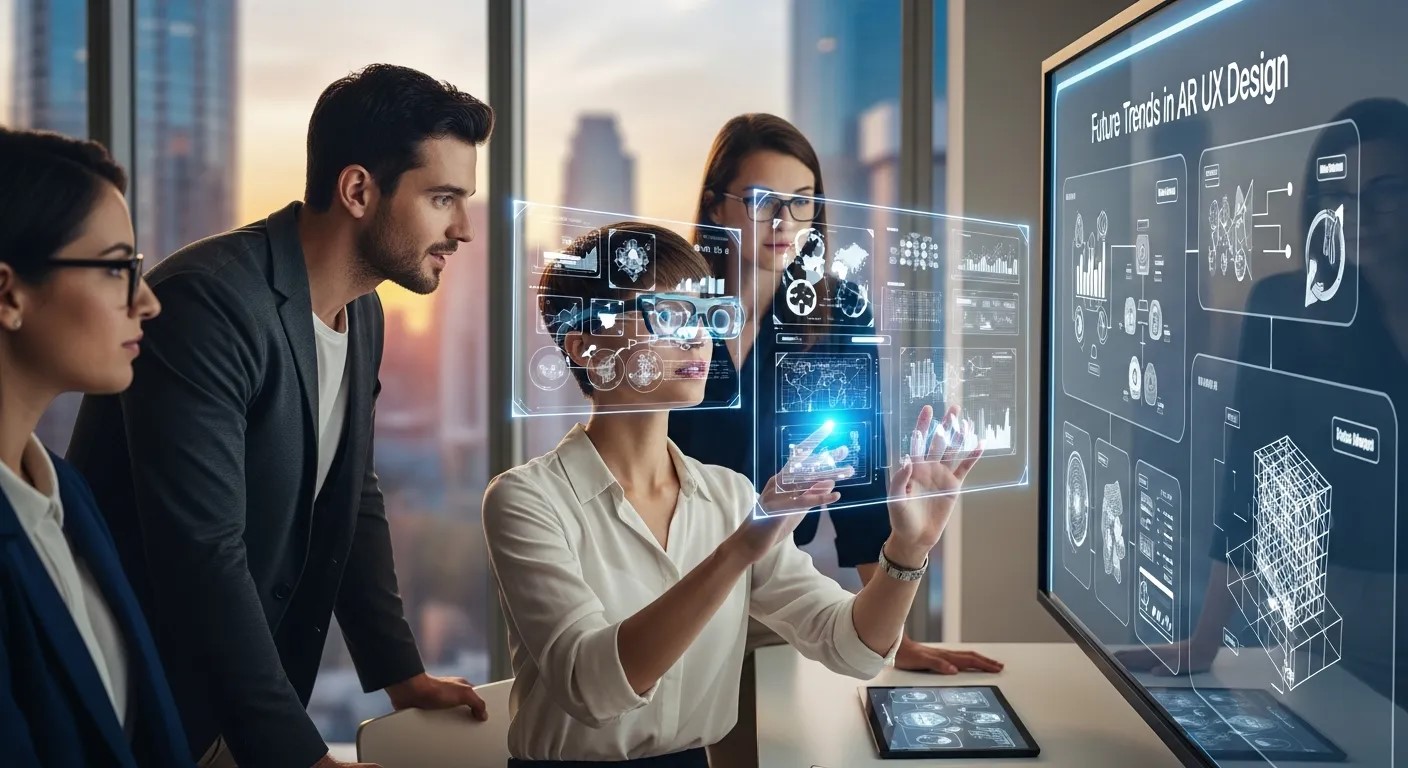
The evolution of AR User Experience Design is closely tied to advancements in predictive analytics and emerging technologies. As AR becomes more widespread, designers are exploring innovative ways to create immersive, adaptive, and personalized experiences that anticipate user needs. One major trend is predictive personalization, where systems learn from individual behavior and preferences to customize interactions in real time. For example, an AR shopping app can recommend products based on past behavior, predicted mood, or even contextual factors like weather or location. Predictive insights allow designers to fine-tune user interfaces, ensuring interactions feel intuitive and tailored.
Another significant trend is the integration of Edge Computing in AR to improve real-time responsiveness. By processing data at the network edge, AR systems can deliver smoother experiences with minimal latency, even in highly interactive or graphically intensive applications. This capability is especially critical in enterprise environments, where AR is used for training, remote assistance, or complex visualizations of machinery and infrastructure. AR User Experience Design in these contexts must balance information richness with cognitive load, ensuring that users can absorb critical insights without feeling overwhelmed.
Enterprise Applications of AR UX
Businesses across industries are increasingly adopting AR to streamline operations and enhance engagement. In manufacturing, AR overlays help technicians perform maintenance tasks with guided visual instructions. Predictive analytics identifies which steps are most error-prone, enabling designers to adjust interfaces to prevent mistakes. In logistics, AR-powered navigation aids optimize warehouse operations by directing employees efficiently, while predictive systems anticipate workflow bottlenecks.
In the corporate world, AR is being integrated into AI Conversational Commerce platforms and internal training modules. Virtual assistants can interact with employees using natural language, guiding them through complex workflows or assisting with product demos. Predictive analytics further enhances these systems by anticipating user queries and proactively presenting solutions, reducing the need for manual intervention and improving overall efficiency. By combining analytics-driven insights with AR User Experience Design, enterprises can achieve measurable improvements in productivity, engagement, and satisfaction.
Ethical Considerations in Predictive AR UX
As AR technologies collect and analyze increasing amounts of user data, ethical considerations become paramount. Designers must ensure that predictive analytics and personalization respect privacy, avoid bias, and maintain transparency. Ethical AI in AR is critical for building trust, especially in enterprise or consumer-facing applications where sensitive data may be involved. Integrating ethical principles into AR User Experience Design ensures that experiences are both effective and responsible, balancing innovation with user rights and expectations.
By staying ahead of these trends, AR designers can craft experiences that are immersive, adaptive, and human-centered. Predictive analytics, edge computing, and AI-driven personalization are no longer optional—they are essential components of next-generation AR experiences.
Practical Frameworks for AR User Experience Design
Creating successful AR User Experience Design requires structured frameworks that balance creativity with data-driven decision-making. One widely adopted approach is the user-centered design (UCD) framework, which emphasizes understanding user needs, behaviors, and preferences throughout the design process. By incorporating predictive analytics at every stage, designers can anticipate challenges, optimize interface layouts, and ensure interactions feel intuitive. UCD encourages iterative testing, allowing developers to refine AR experiences based on real-time feedback and behavioral data.
Another essential framework is task-based AR design, which focuses on enabling users to complete specific objectives efficiently. Whether it’s navigating an AR-enhanced store, assembling machinery, or learning a complex process, predictive analytics can forecast potential friction points and guide the placement of visual cues, interactive elements, or tutorials. Integrating technologies like Computer Vision in AR ensures the system accurately interprets user actions and environmental context, making the experience more seamless.
UX Testing Methodologies for AR
Testing is a critical component of effective AR User Experience Design. Unlike traditional digital interfaces, AR combines real-world and virtual elements, making usability evaluation more complex. Designers often employ a combination of heuristic evaluation, A/B testing, and field testing to assess the effectiveness of AR interactions. Predictive analytics can enhance testing by identifying patterns in user behavior, highlighting areas where users struggle, or predicting the impact of design changes before deployment.
For conversational AR interfaces, integrating NLP for AR during testing ensures that voice commands and interactions are interpreted accurately. Virtual assistants or chatbots in AR settings, including Chatbots in B2B Marketing, benefit from predictive insights that anticipate user questions and streamline communication. Continuous testing and refinement create AR experiences that feel natural, responsive, and human-centered.
Measuring Success: KPIs for AR UX
Establishing measurable KPIs is essential for evaluating the impact of AR User Experience Design. Common metrics include user engagement, completion rates, interaction time, and retention. Predictive analytics can help quantify how changes in interface design or content placement affect these metrics. For enterprise applications, additional KPIs might include task efficiency, error reduction, or employee satisfaction when using AR training modules.
In commercial contexts, KPIs can be tied to business outcomes, such as increased sales in AR-enhanced retail apps or improved customer satisfaction in service-oriented AR experiences. Integrating AI Conversational Commerce metrics allows designers to measure the effectiveness of voice-driven interactions and personalization, ensuring AR interfaces deliver tangible value to both users and organizations.
Challenges and Future-Proofing AR User Experience Design
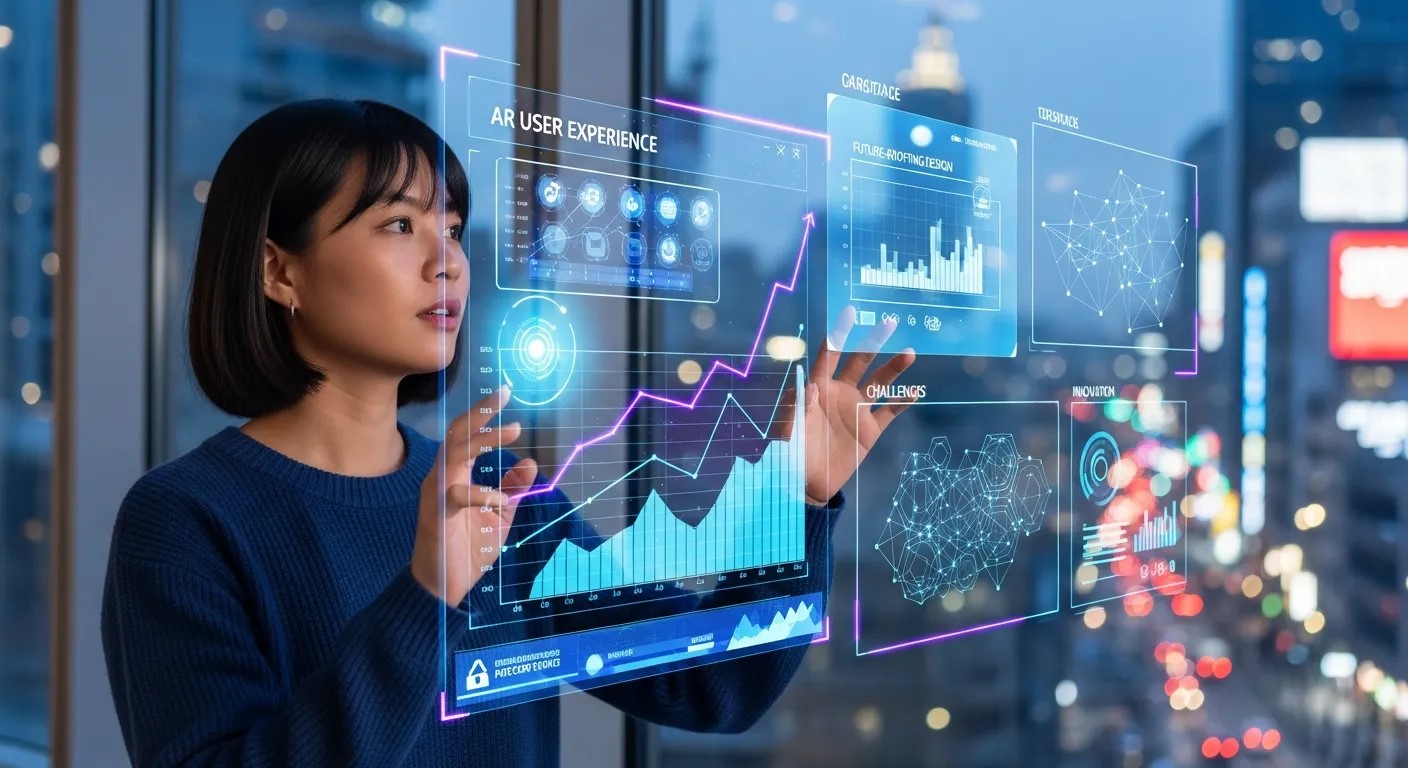
Designing effective AR User Experience Design comes with unique challenges. Balancing immersive visuals with usability is critical, as overly complex interfaces can overwhelm users. Predictive analytics helps anticipate these pain points, allowing designers to optimize content placement, interaction sequences, and real-time guidance. Similarly, integrating Edge Computing in AR ensures smooth performance, even when processing rich data or complex simulations.
Accessibility is another key consideration. AR experiences must accommodate diverse user needs, including those with physical or cognitive limitations. By leveraging Computer Vision in AR and NLP for AR, systems can respond intuitively to gestures, voice commands, or alternative input methods, creating inclusive experiences that anyone can navigate effectively.
Looking ahead, future AR User Experience Design will increasingly rely on ethical, data-driven approaches. Implementing Ethical AI in AR ensures personalization respects privacy while predictive insights enhance engagement. Additionally, conversational interfaces like AI Conversational Commerce and Chatbots in B2B Marketing will become more integrated, delivering responsive, adaptive experiences across industries.
By addressing these challenges and embracing advanced technologies, designers can create AR experiences that are immersive, inclusive, and future-ready, ensuring that augmented reality continues to transform how users interact with digital and physical worlds alike.
Conclusion
AR User Experience Design is transforming how users interact with digital environments by combining immersive visuals, predictive analytics, and advanced technologies. By integrating Computer Vision in AR, NLP for AR, and Edge Computing in AR, designers can create intuitive, responsive, and personalized experiences. Ethical considerations, including Ethical AI in AR, ensure user trust and responsible data usage. Conversational interfaces such as AI Conversational Commerce and Chatbots in B2B Marketing further enhance engagement. As industries adopt AR across retail, education, healthcare, and enterprise solutions, data-driven, human-centered design will continue to define the future of augmented reality.
Frequently Asked Questions
What is AR User Experience Design?
It focuses on creating intuitive, immersive AR interfaces that anticipate user behavior and enhance interaction.
How does predictive analytics improve AR UX?
Predictive analytics forecasts user needs, optimizes content placement, and personalizes interactions in real time.
Which technologies support AR UX?
Technologies include Computer Vision in AR, NLP for AR, Edge Computing in AR, and AI-driven personalization.
Why is Ethical AI important in AR?
Ethical AI ensures data privacy, prevents bias, and maintains trust while delivering personalized experiences.