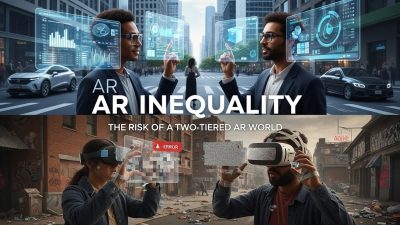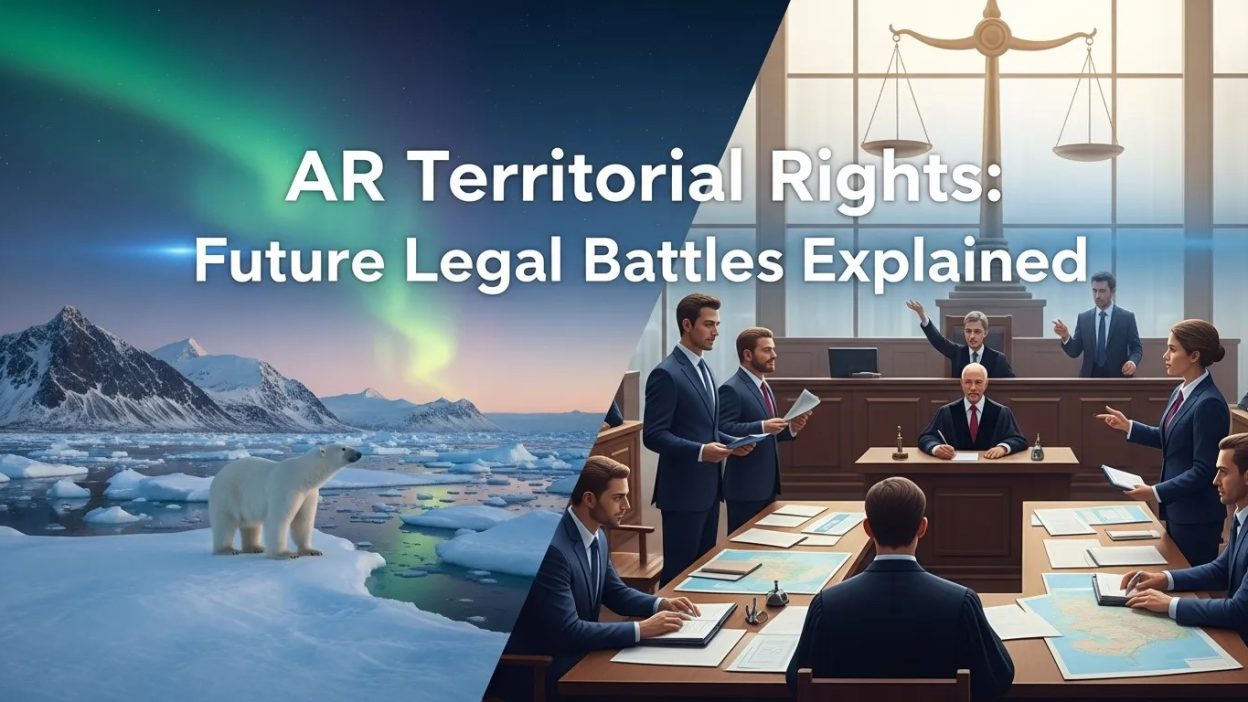
AR Territorial Rights define ownership and control in augmented reality, shaping legal, commercial, and social interactions. As technologies like Augmented Intimacy, AI-Personalized VR Narratives, and Real-time Emotional & Physiological Overlay expand, clear frameworks are essential to prevent disputes.
Navigating AR Territorial Rights: Ownership and Legal Challenges in Augmented Reality
The rise of augmented reality (AR) technologies has transformed the way humans interact with digital environments. As AR devices become increasingly integrated into daily life, questions about ownership, access, and control over virtual spaces are no longer hypothetical. AR Territorial Rights are emerging as a critical area of legal debate, shaping the rules for digital property, user interactions, and commercial opportunities. Governments, corporations, and individual users are beginning to explore the boundaries of these rights, setting the stage for the legal battles that lie ahead.
Unlike traditional property law, which governs tangible assets, AR introduces complex scenarios where multiple users may occupy overlapping virtual spaces simultaneously. This raises fundamental questions about who controls the rights to augmented experiences, how conflicts are resolved, and what enforcement mechanisms are effective in digital realms. The concept of AR Territorial Rights is not merely theoretical it is already influencing the design of AR platforms, software licensing agreements, and content moderation policies.
The Importance of AR Territorial Rights
With the integration of AR into everyday experiences, such as retail, education, and entertainment, understanding AR Territorial Rights is crucial for both developers and end-users. Platforms that fail to establish clear ownership rules risk disputes that could escalate into costly litigation. Companies leveraging augmented reality in marketing or commerce must navigate a complex landscape where overlapping claims may occur.
In practical terms, AR Territorial Rights determine who can modify, monetize, or restrict access to digital overlays in real-world locations. For example, a virtual art installation displayed in a public square may raise conflicts between multiple creators or between private entities and municipal authorities. The legal frameworks that evolve around these disputes will influence the future of urban planning, digital advertising, and even social interactions in AR-enabled spaces.
Emerging Scenarios and Legal Challenges

Several scenarios highlight why AR Territorial Rights are becoming a pressing legal concern:
-
Urban Augmentation: Cityscapes overlaid with digital advertisements, art, or information layers could lead to disputes over the right to control visual and interactive elements.
-
Commercial Zones: Businesses using AR to attract customers in shared locations may encounter conflicts with competitors leveraging the same physical space.
-
User-Generated Content: Platforms allowing individual creators to overlay experiences in shared AR spaces must address ownership and liability issues.
These emerging situations illustrate the need for coherent legal frameworks that balance innovation, public access, and commercial interests. Courts, lawmakers, and technology providers are gradually recognizing that AR, unlike traditional media, presents unique challenges in territorial rights enforcement.
Integration with Related AR Trends
The discussion of AR Territorial Rights is closely linked with broader AR developments. Concepts like Augmented Reality Mundane Life show how everyday environments are increasingly infused with digital layers, emphasizing the importance of who controls these overlays. Similarly, Augmented Intimacy demonstrates how AR can mediate personal experiences, which may introduce privacy concerns connected to territorial claims. Platforms employing AI-Personalized VR Narratives are also navigating ownership questions when creating personalized content in shared virtual zones. Furthermore, Real-time Emotional & Physiological Overlay technologies can intersect with AR spaces, raising additional considerations about user consent and property rights.
Understanding the Legal Landscape
As augmented reality technology evolves, the legal frameworks surrounding AR Territorial Rights are still in their infancy. Traditional property laws were never designed to address the complexities of virtual overlays and shared digital environments. In many jurisdictions, courts have begun exploring how intellectual property, trespass, and zoning laws might extend into augmented spaces. However, these early interpretations vary widely, leaving developers, businesses, and users in a state of uncertainty.
Legal scholars argue that AR Territorial Rights require a hybrid approach that blends real-world property rights with digital ownership principles. For example, developers creating AR experiences on public land may need permissions similar to physical construction permits, while also navigating copyright protections for digital content. These dual obligations illustrate the challenges regulators face in reconciling existing laws with emerging AR realities.
Early Case Studies
Several notable cases have highlighted the practical implications of AR Territorial Rights:
-
Urban Gaming Conflicts – Popular AR games that overlay virtual objects in public spaces have sparked disputes between players and city authorities. These cases often revolve around access restrictions, safety concerns, and the commercial use of public areas.
-
Commercial Overlay Disputes – Retailers using AR for virtual signage and promotions in shared locations have faced legal challenges when competitors argue over territorial infringement. Courts are beginning to assess whether digital overlays constitute a form of territorial occupation under property law.
-
User-Generated Content – Platforms hosting AR experiences allow users to create personal installations. Early lawsuits suggest that ownership of user-generated overlays can be contested, especially when multiple users claim rights to the same virtual space.
These examples underscore the urgency of clarifying AR Territorial Rights to prevent protracted legal battles and foster fair access to augmented spaces.
Regulatory Approaches
Lawmakers and technology regulators are experimenting with different strategies to manage AR Territorial Rights:
-
Digital Zoning: Similar to physical zoning, this approach assigns rights to specific digital layers or coordinates, defining who can create content in each virtual zone.
-
Licensing Models: Platforms may implement licensing systems that allow developers or users to reserve AR space, with rules to mediate conflicts.
-
Hybrid Enforcement: Combining traditional property law with digital contracts and platform governance ensures that violations can be addressed both legally and technologically.
These regulatory experiments demonstrate the intersection of law, technology, and commerce. They also highlight the importance of proactive frameworks that reduce litigation risks and encourage innovation in augmented reality ecosystems.
AR in Broader Technological Context
The discussion of AR Territorial Rights also intersects with advancements in marketing and data-driven technologies. For instance, companies using Smart SEM Budget Allocation and Machine Learning in SEM to optimize advertising campaigns may increasingly rely on AR platforms to deliver targeted experiences in specific virtual zones. The legality of these digital campaigns often hinges on territorial claims in augmented spaces, linking marketing strategy directly to emerging legal doctrines.
Furthermore, Augmented Reality Mundane Life demonstrates how ordinary environments—such as streets, parks, and shopping areas—are becoming saturated with digital content. As these overlays grow, understanding and enforcing AR Territorial Rights becomes essential for both personal and commercial interactions. The rise of Augmented Intimacy and AI-Personalized VR Narratives further complicates the landscape, introducing questions about privacy, consent, and territorial claims in shared AR experiences. Finally, technologies such as Real-time Emotional & Physiological Overlay add another layer of legal and ethical consideration, particularly when digital experiences capture and respond to human data.
Anticipating Legal Conflicts
As augmented reality continues to embed itself into urban environments, commercial ventures, and personal experiences, the scope of AR Territorial Rights will likely expand. Future disputes may involve multiple stakeholders, including municipal authorities, private enterprises, platform providers, and individual users. Each party may claim overlapping rights to the same virtual space, creating complex legal scenarios that traditional property laws are ill-equipped to handle.
The unpredictability of these conflicts underscores the importance of proactive strategies. Stakeholders must not only understand current legislation but also anticipate emerging trends in AR development. Platforms that fail to define clear usage policies for shared AR spaces risk being at the center of costly disputes. Similarly, individuals engaging in AR content creation should be aware of territorial limitations, licensing agreements, and potential liabilities.
Technological Innovations Shaping Rights

Technological advancements are reshaping the nature of AR Territorial Rights in ways that challenge conventional thinking. For example, Augmented Reality Mundane Life shows how daily environments—such as sidewalks, parks, and public plazas—are increasingly layered with interactive digital elements. The integration of personalized experiences means that what one person sees or interacts with may differ entirely from another’s experience, complicating notions of territorial ownership.
Another emerging trend involves Augmented Intimacy, where AR facilitates shared experiences in personal and social contexts. These overlays can extend into public or semi-private spaces, raising questions about who controls access and how rights are enforced. Similarly, AI-Personalized VR Narratives blur the boundaries between user-generated and platform-controlled content, making enforcement of territorial rights more challenging. Developers and policymakers must navigate this intersection carefully, ensuring innovation does not outpace legal protections.
Data, Privacy, and Ethical Considerations
The intersection of AR and human behavioral data introduces additional complexities for AR Territorial Rights. Platforms utilizing Real-time Emotional & Physiological Overlay technology can tailor experiences based on user reactions, creating a hybrid of personal and territorial claims. Questions arise about consent, data ownership, and the boundaries of control over spaces that exist in both the physical and digital realms.
Ethical considerations extend beyond personal data. For instance, commercial AR installations in public spaces may inadvertently prioritize certain brands or demographics, raising concerns about fairness and equitable access. Defining AR Territorial Rights in ways that account for these ethical dimensions will be critical to sustainable adoption.
Cross-Industry Implications
The evolution of AR Territorial Rights also has implications across industries:
-
Marketing & Advertising: Businesses employing Smart SEM Budget Allocation strategies increasingly rely on AR to target consumers in precise virtual zones. Understanding territorial rights ensures campaigns remain legally compliant.
-
Education & Training: AR classrooms or training environments require clear ownership and access rules to prevent conflicts between institutions or trainers.
-
Entertainment & Social Platforms: Shared AR experiences, such as multiplayer games or live AR concerts, necessitate governance structures that define user rights and responsibilities.
-
Urban Planning & Public Policy: Cities must consider how public spaces can be augmented without infringing on citizens’ rights or creating monopolized digital zones.
By recognizing these cross-industry challenges, stakeholders can design AR platforms that balance innovation, legality, and inclusivity.
Predictions for the Next Decade
Experts predict that disputes over AR Territorial Rights will increase as AR hardware becomes more widespread and digital overlays more integrated into physical spaces. Some potential developments include:
-
Standardized Licensing Systems: Platforms may implement automated licensing protocols to manage rights in shared AR spaces efficiently.
-
Blockchain & Smart Contracts: These technologies could provide immutable records of ownership and access rights, reducing conflicts.
-
International Regulations: As AR platforms transcend borders, global agreements may emerge to harmonize territorial rights across jurisdictions.
-
Dynamic Territorial Boundaries: AI-driven overlays may adapt in real-time to user behavior, requiring legal frameworks to account for constantly shifting virtual territories.
These predictions indicate that AR Territorial Rights will remain a dynamic and evolving legal area, with technology, law, and society interacting in unprecedented ways.
Establishing Clear Ownership
For businesses and developers operating in augmented reality, understanding AR Territorial Rights is essential to avoid disputes and legal challenges. Establishing clear ownership of virtual spaces from the outset can prevent costly conflicts. Companies should document permissions, licensing agreements, and content ownership rules before deploying AR experiences in shared environments.
Digital contracts and user agreements can define who has rights to create, modify, or monetize content within a specific AR zone. Platforms that integrate these agreements directly into their terms of service help ensure compliance and provide legal backing if conflicts arise. Early attention to ownership rights fosters trust between developers, users, and commercial partners.
Implementing Licensing Models
Licensing is a practical approach to managing AR Territorial Rights. Businesses can adopt tiered models that assign rights for different types of AR interactions. For example, exclusive rights may be granted to premium partners for advertising campaigns, while public access may remain open for user-generated content.
Licensing systems can also help regulate disputes between competitors in commercial zones. By clearly delineating who can display content and when, platforms reduce ambiguity and minimize the risk of overlapping claims.
Leveraging Technology for Compliance
Technological tools can assist in enforcing AR Territorial Rights efficiently:
-
Geofencing and Spatial Mapping: These technologies define the boundaries of virtual spaces, ensuring content stays within authorized zones.
-
Blockchain and Smart Contracts: Immutable ledgers provide verifiable ownership records, enabling automated enforcement of territorial rights.
-
AI Monitoring Systems: Artificial intelligence can detect unauthorized overlays or conflicts in real-time, supporting compliance and reducing human oversight.
Integrating these tools helps businesses scale AR experiences while maintaining legal clarity.
Balancing Innovation and Responsibility
Businesses must also consider the ethical implications of their AR deployments. Overcrowding public spaces with digital overlays can create confusion or limit equitable access, potentially triggering disputes over AR Territorial Rights. Developers should balance immersive experiences with public safety, privacy, and social fairness.
Emerging trends such as Augmented Reality Mundane Life and Augmented Intimacy highlight the importance of ethical design. Digital overlays in daily environments and personal interactions should enhance experiences without compromising privacy or creating monopolized spaces. Similarly, platforms using AI-Personalized VR Narratives must consider the implications of content that adapts to individual behaviors within shared AR zones.
Marketing and Commercial Applications

For marketers, understanding AR Territorial Rights is critical to delivering effective campaigns. Tools like Smart SEM Budget Allocation allow businesses to optimize AR advertising spend, but legal clarity ensures that campaigns do not infringe on other entities’ digital territories.
Businesses employing machine learning for ad targeting, such as Machine Learning in SEM, must align strategy with territorial rights. For example, virtual billboards in crowded AR spaces may require careful planning to avoid overlapping content with competitors. By respecting ownership boundaries, companies can leverage AR for maximum engagement without facing legal challenges.
Preparing for Regulatory Evolution
The regulatory environment for AR Territorial Rights is likely to evolve rapidly. Businesses should stay informed about emerging legal precedents, licensing frameworks, and international guidelines. Proactive engagement with policymakers and industry groups can influence the development of fair, adaptable regulations.
By anticipating changes, companies can design AR platforms and experiences that remain compliant while maximizing creative potential. Integrating legal and technological strategies ensures that augmented reality deployments are both innovative and defensible.
Conclusion
The rise of AR Territorial Rights underscores the need for clear ownership, legal frameworks, and ethical guidelines in augmented reality. As AR technologies like Augmented Reality Mundane Life, Augmented Intimacy, and AI-Personalized VR Narratives become ubiquitous, businesses, developers, and regulators must collaborate to prevent disputes, protect users, and ensure sustainable innovation. Proactive strategies, licensing models, and technological enforcement tools will be crucial in shaping fair and secure AR ecosystems for the future.
Frequently Asked Questions (FAQ)
What are AR Territorial Rights?
AR Territorial Rights define ownership, control, and access to virtual spaces in augmented reality. They determine who can create, modify, or monetize digital overlays in shared or public AR environments.
Why are AR Territorial Rights important?
These rights help prevent disputes between users, businesses, and developers. Clear guidelines ensure fair access, protect digital property, and support ethical and legal compliance in both commercial and personal AR experiences.
How do AR Territorial Rights affect businesses?
Businesses leveraging AR for marketing, advertising, or immersive experiences must respect territorial boundaries. Tools like Smart SEM Budget Allocation and Machine Learning in SEM rely on defined rights to avoid conflicts and optimize campaigns.
Can AR Territorial Rights apply to public spaces?
Yes. Public spaces overlaid with AR content such as virtual advertisements or interactive installations—may require permissions or licensing. Augmented Reality Mundane Life examples show how everyday environments can become digitally contested zones.
How are disputes over AR Territorial Rights resolved?
Disputes are addressed through licensing agreements, platform policies, and, increasingly, legal frameworks. Courts and regulators are beginning to adapt property, copyright, and digital rights law to AR contexts.
What role do emerging technologies play in AR Territorial Rights?
Technologies like AI-Personalized VR Narratives and Real-time Emotional & Physiological Overlay add complexity by personalizing AR experiences. They highlight the need for ethical design, consent, and clearly defined ownership in shared virtual spaces.