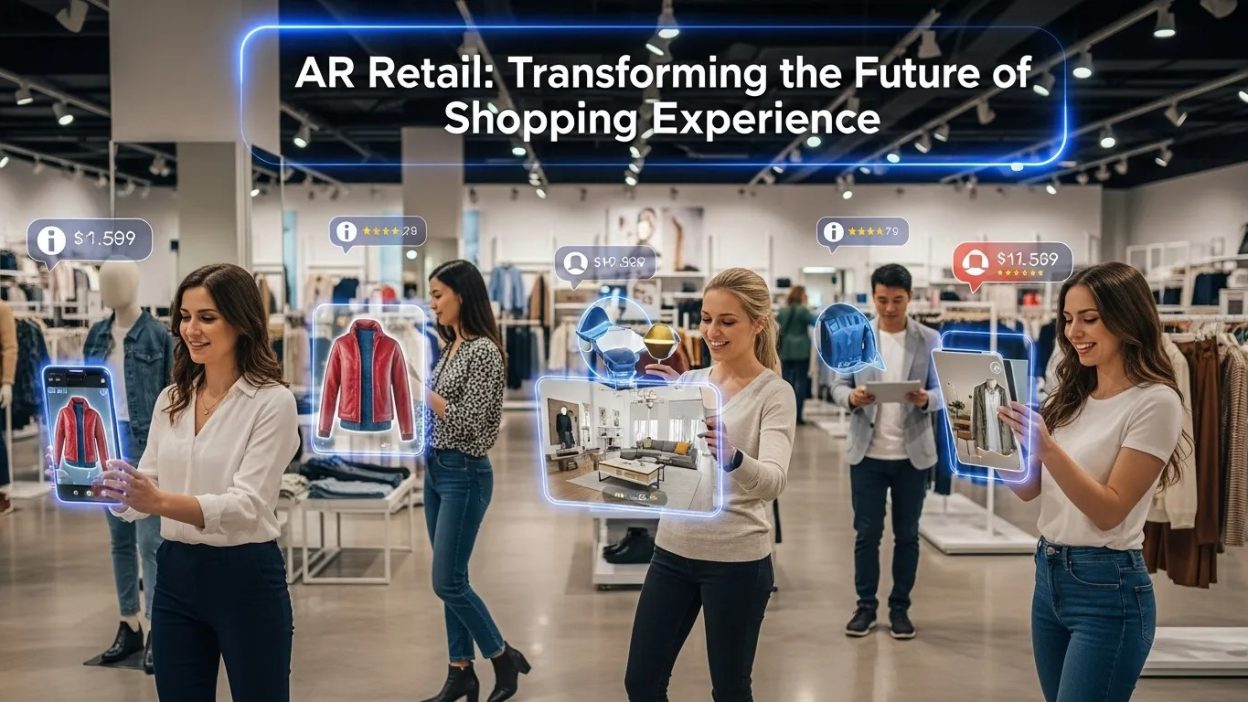
AR Retail is revolutionizing shopping by blending digital and physical experiences. From personalized try-ons to immersive brand storytelling, AR enhances engagement, boosts sales, and ensures ethical, AI-driven interactions, creating a seamless, future-ready retail experience for consumers worldwide.
Introduction AR Retail The Future of Shopping
Augmented Reality (AR) has moved beyond being a novelty or marketing gimmick. Today, AR Retail is fundamentally transforming how consumers interact with products and brands. By overlaying digital information onto physical spaces, retailers are offering immersive experiences that increase engagement, reduce purchase hesitation, and boost customer satisfaction. From virtual try-ons in fashion to interactive product demos in electronics, AR is turning conventional shopping into an interactive, multi-sensory experience.
Modern consumers expect more than just a transaction; they seek convenience, personalization, and entertainment. AR Retail answers this demand by creating an environment where technology enhances decision-making rather than complicating it. By blending real-world interactions with virtual enhancements, stores can captivate shoppers in ways previously only imagined.
The Technology Behind AR Retail
AR Hardware and Software
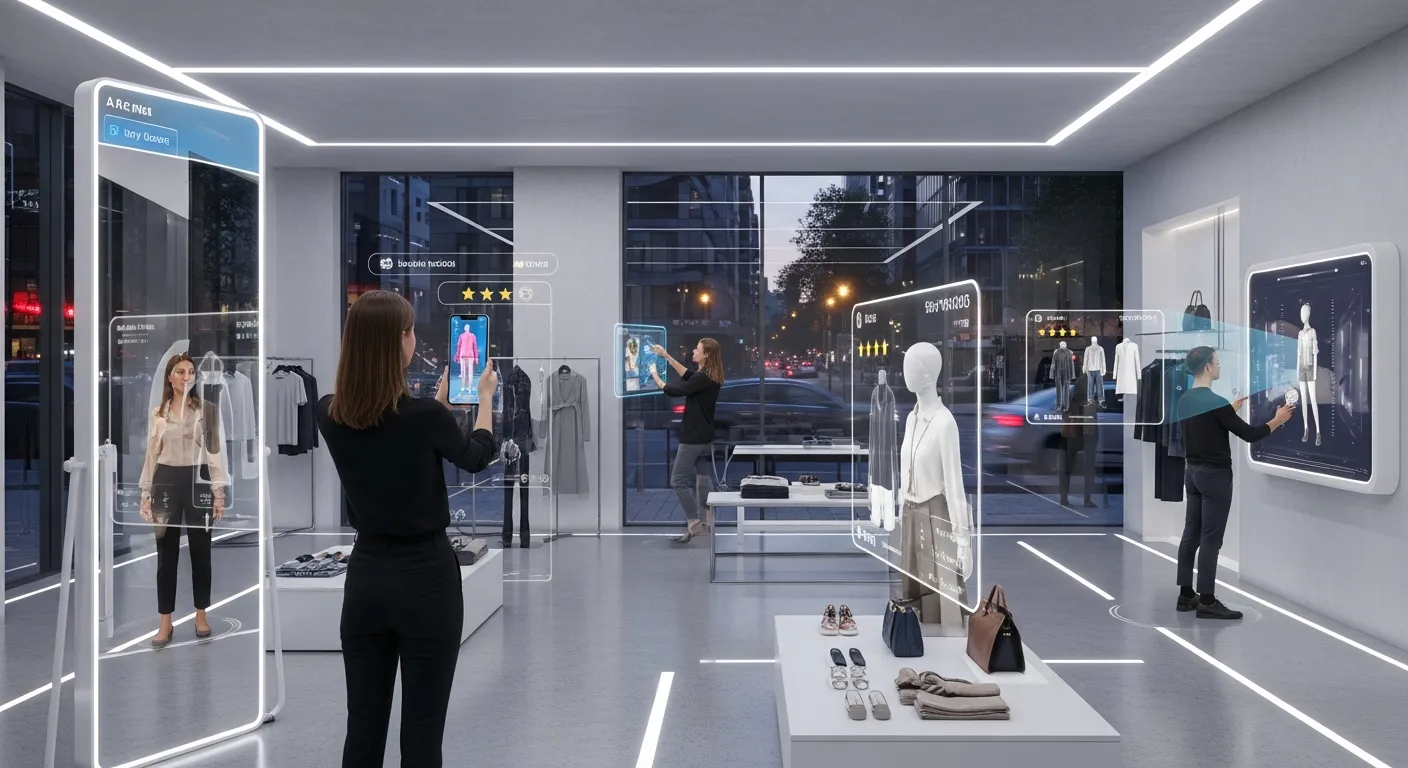
The success of AR Retail hinges on both hardware and software. Smartphones and tablets remain the most widely used devices, offering AR capabilities through advanced cameras and processors. However, the adoption of AR glasses and headsets is slowly increasing, especially in high-end retail spaces where hands-free interaction improves the shopping journey.
On the software side, powerful AR platforms leverage computer vision, AI, and machine learning to detect surfaces, recognize products, and render realistic overlays. Concepts such as Federated Learning in AR are starting to play a pivotal role, allowing retailers to train machine learning models on user data without compromising privacy. This decentralized learning approach ensures that customer behavior insights improve AR experiences without storing sensitive data centrally.
Personalization Through AI
Personalized experiences are no longer optional they are expected. AI Adaptive AR UX frameworks allow retail AR applications to adjust interfaces based on user behavior in real-time. For example, if a customer frequently engages with virtual fitting rooms, the AR system can highlight similar experiences or recommend new products tailored to that preference. Integrating Transfer Learning in AR enables models to learn from one store or product context and apply insights to another, dramatically reducing the time and resources required to scale personalized AR experiences across multiple locations.
Applications of AR in Retail
Fashion and Apparel
The fashion industry has been among the earliest adopters of AR Retail technology. Virtual try-on tools allow shoppers to see how clothing, shoes, or accessories look on them without stepping into a fitting room. This not only saves time but also encourages experimentation, increasing the likelihood of additional purchases. Retailers can analyze virtual fitting data to understand preferences and optimize inventory decisions.
Furniture and Home Decor
Buying furniture and home decor items often involves uncertainty regarding size, color, and fit. AR applications allow consumers to visualize how a sofa fits in their living room or how a lamp complements a specific corner. With precise spatial mapping and realistic rendering, AR Retail reduces return rates and builds confidence in high-value purchases.
Grocery and Consumer Goods
Supermarkets and consumer goods stores are experimenting with AR overlays to enhance product discovery. Shoppers can point their phones at a product to view nutritional information, promotional offers, or suggested pairings. By integrating Ethical AI in AR, companies ensure that personalized recommendations respect privacy and do not manipulate vulnerable shoppers, maintaining trust and credibility.
The Role of Chatbots in Retail AR
Customer engagement in AR Retail extends beyond visualization. Conversational agents such as Chatbots in Brand Marketing can guide customers through AR experiences, answering questions, offering suggestions, and even providing styling advice. In B2B contexts, Chatbots in B2B Marketing can assist business clients navigating AR-enabled showrooms, helping them understand product specifications and deployment options. Integrating chatbots with AR interfaces creates a seamless blend of automation and human-like interaction, improving satisfaction and efficiency.
AR Retail Analytics
Data-Driven Insights
One of the key advantages of AR Retail is the wealth of data generated from interactions. Every gesture, selection, and engagement point provides insights into consumer behavior. By analyzing this data, retailers can fine-tune product placements, optimize store layouts, and design targeted promotions.
Ethical Considerations
While the collection of AR interaction data is valuable, ethical considerations are crucial. Implementing Ethical AI in AR ensures that personal data is anonymized, consent is obtained, and algorithms do not exploit consumer vulnerabilities. This approach fosters long-term trust, essential for customer loyalty in the increasingly competitive retail landscape.
Advanced Applications of AR Retail
Omnichannel Integration
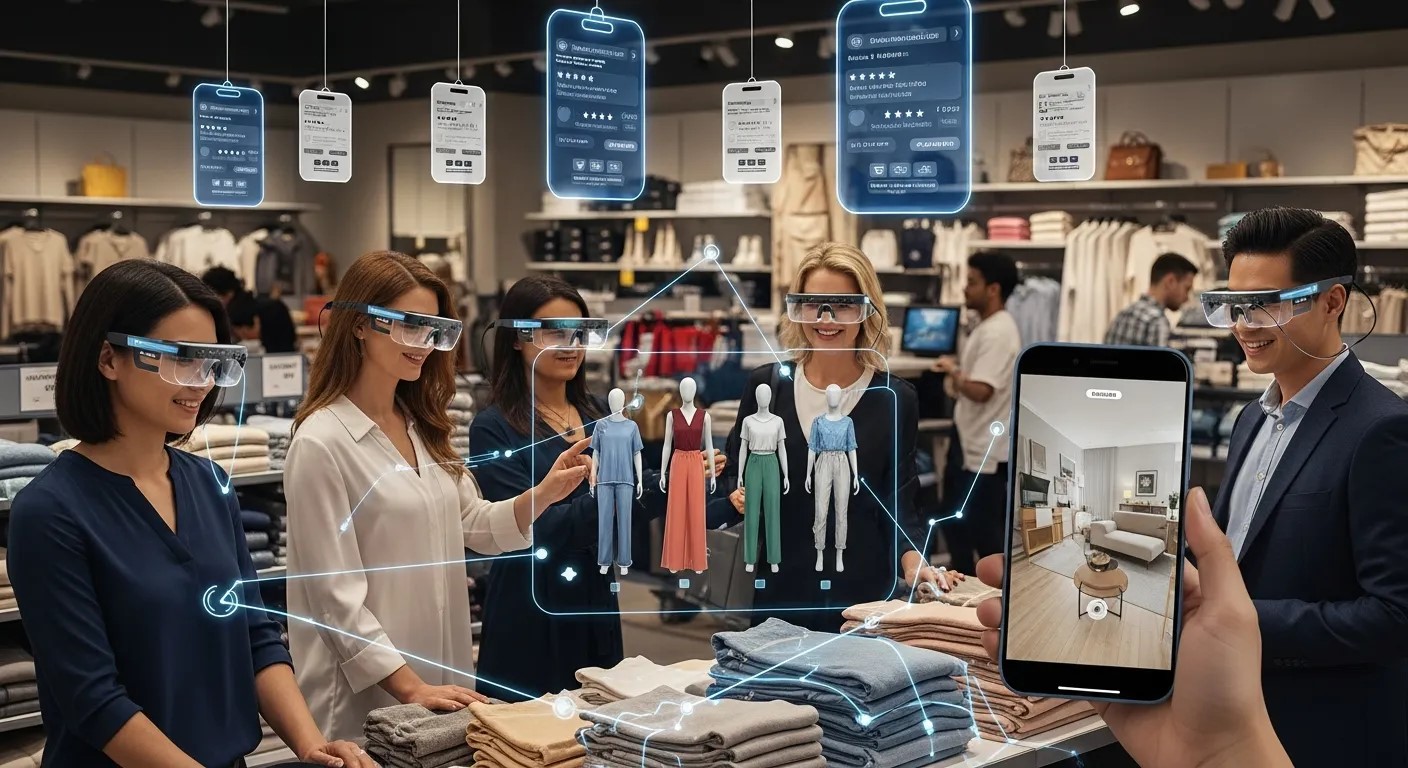
Modern consumers expect a seamless shopping experience across online and offline channels. AR Retail plays a critical role in bridging this gap. For instance, customers can preview products in-store using AR apps and then continue exploring similar options online with the same interactive interface. By maintaining continuity across touchpoints, retailers enhance engagement and reduce friction, turning casual browsers into loyal buyers.
Omnichannel strategies often leverage Transfer Learning in AR to ensure consistency. A virtual try-on model trained for one store location or product line can be adapted for other locations, reducing deployment time while maintaining high accuracy. This approach not only improves customer satisfaction but also boosts operational efficiency.
Gamification in Retail Experiences
Gamification is another powerful application of AR Retail, using game-like mechanics to encourage exploration and purchase. For example, customers might participate in AR scavenger hunts within a store, unlocking discounts or rewards as they interact with products. These experiences tap into intrinsic human motivators such as curiosity, achievement, and social sharing, making the shopping process both fun and memorable.
Retailers integrating gamification often combine AR with AI. AI Adaptive AR UX frameworks can dynamically adjust challenges based on a customer’s engagement level, ensuring that both novices and experienced shoppers enjoy a balanced, rewarding experience.
AR-Enabled Product Customization
Personalization is increasingly vital in retail. With AR Retail, customers can visualize product customizations in real-time, from color changes to material selection. This technology is particularly popular in sectors like furniture, footwear, and automotive. Consumers gain confidence in their choices because they can see exactly how the product will appear in real life.
By incorporating Federated Learning in AR, retailers can learn from aggregated user interactions without centralizing sensitive data. This allows brands to continuously refine customization options, ensuring that the most popular features are highlighted and user preferences are respected.
AR Retail in Experiential Marketing
Immersive Brand Storytelling
Brands are using AR Retail to create immersive narratives that engage consumers on a deeper emotional level. For example, a cosmetics brand might allow users to explore the origins of ingredients through an AR app, blending education with entertainment. Such experiences foster brand loyalty by making shopping more than a transaction—it becomes a story the customer participates in.
Integration with Chatbots
Interactive AR experiences are further enhanced through conversational interfaces. Chatbots in Brand Marketing can guide users through AR storytelling, answering questions about product features, usage tips, or brand values. For instance, a shopper exploring a virtual fashion show can ask a chatbot for recommendations, outfit combinations, or availability in their local store.
Similarly, in B2B contexts, Chatbots in B2B Marketing allow business clients to navigate AR-enabled product demos, compare specifications, and understand deployment possibilities. This integration reduces the cognitive load on users, providing guidance without overwhelming them with excessive information.
Enhancing Customer Engagement with AI
Adaptive User Experiences
AI plays a pivotal role in making AR Retail truly adaptive. By analyzing customer behavior in real-time, AR interfaces can adjust layouts, highlight relevant products, and even suggest complementary items. This creates a fluid, responsive shopping environment that feels personalized without requiring manual intervention.
For example, an AR app in a footwear store might notice that a customer repeatedly tries different running shoes virtually. The system could then highlight top-rated running shoes or suggest related accessories like socks or insoles, subtly guiding purchase decisions. Here, AI Adaptive AR UX ensures the experience is intuitive, enjoyable, and tailored to individual preferences.
Ethical AI Implementation
While personalization enhances engagement, ethical considerations are paramount. Implementing Ethical AI in AR ensures that recommendations are transparent, unbiased, and respectful of privacy. Retailers that prioritize ethical AI not only build trust but also mitigate potential regulatory and reputational risks, creating a secure environment for customers to explore AR experiences.
AR Retail and Data Analytics
Tracking Interactions and Insights
Every gesture and selection in AR Retail generates valuable data. Retailers can track which products are most interacted with, how long customers spend exploring virtual try-ons, and which AR features drive conversions. These insights inform marketing strategies, inventory management, and even store layout optimization.
For example, if an AR-enabled cosmetics app shows that users frequently experiment with a particular lipstick shade, the brand can ensure higher stock levels, feature the product in promotions, or introduce complementary products.
Federated Learning for Privacy-Conscious Insights
To balance personalization with privacy, Federated Learning in AR allows models to learn from interactions without storing raw customer data centrally. By processing insights locally and sharing only anonymized updates, retailers can continuously improve AR experiences while respecting privacy regulations and consumer trust.
The Role of Mobile Devices and Wearables
Smartphones as AR Gateways
Smartphones remain the primary access point for AR Retail. Their widespread adoption, high-resolution cameras, and powerful processors make them ideal for AR applications. Retail apps leverage mobile AR to offer features like virtual try-ons, interactive catalogs, and in-store navigation.
Wearables for Hands-Free Experiences
AR glasses and headsets are slowly entering the retail space, providing hands-free interaction and deeper immersion. In environments such as luxury showrooms or high-tech electronics stores, these devices enable users to engage with products while receiving layered information in real-time. This creates a futuristic, seamless shopping journey that traditional displays cannot match.
AR Retail in Omnichannel Marketing
Bridging Online and Offline
AR Retail strengthens omnichannel strategies by connecting in-store and online experiences. For instance, a customer can scan a QR code in a physical store to unlock an interactive 3D product demo online, or vice versa. This continuity reduces friction and reinforces brand presence across touchpoints.
Personalized Promotions and Offers
By analyzing AR interactions, retailers can deliver targeted promotions that feel personal rather than intrusive. AI-driven insights ensure that each recommendation is relevant, increasing the likelihood of conversion while avoiding customer fatigue.
Industry-Specific Applications of AR Retail
Furniture and Home Decor
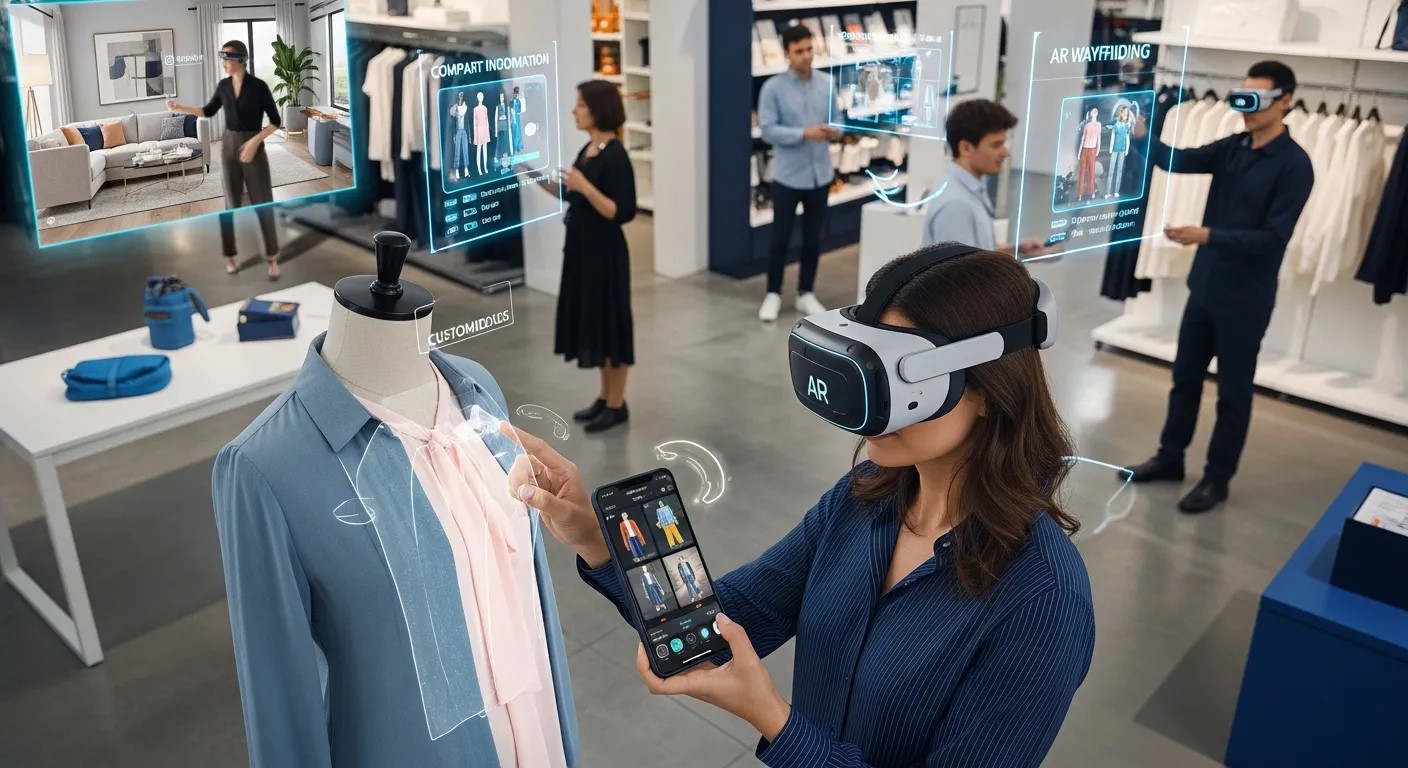
One of the most transformative applications of AR Retail is in furniture and home decor. Purchasing furniture often involves uncertainty—will the sofa fit in the living room? Does the color match the wall? AR apps allow customers to virtually place items in their spaces using precise measurements and realistic textures. By visualizing products in context, shoppers can make informed decisions, reducing returns and enhancing satisfaction.
To optimize these experiences, some retailers are leveraging Federated Learning in AR. This enables personalized recommendations for furniture layouts based on aggregated user interactions without storing sensitive data centrally. For example, an app can suggest complementary chairs or rugs to match the chosen sofa, providing a curated experience that feels both personal and ethical.
Automotive
The automotive sector has embraced AR Retail to improve the buying process. Prospective buyers can use AR apps to explore car interiors, test color combinations, and preview customizations without visiting a showroom. AR allows for interactive comparisons between models, highlighting features and options in real-time.
Here, Transfer Learning in AR is particularly useful. A virtual model trained for one car series can be adapted for another, saving time and ensuring consistency across different models. Customers gain confidence in their purchase decisions, and brands enhance engagement through a futuristic, interactive experience.
Electronics and Gadgets
Electronics retailers use AR Retail to enhance product understanding and usability. For instance, AR can demonstrate how to set up a new device, explore features, or see how it fits into existing setups. These immersive demos reduce the learning curve and boost customer satisfaction.
Integrating AI Adaptive AR UX ensures that the interface responds to user behavior—if a customer frequently explores a device’s camera features, the AR experience can highlight additional related functionalities, creating a tailored and engaging journey.
AR Retail Loyalty Programs and Gamification
Rewarding Engagement
AR is not just about visualization; it also drives engagement through gamification and loyalty programs. Retailers can create AR scavenger hunts, interactive challenges, or virtual badges to reward customer participation. For instance, completing a virtual product exploration could unlock discounts or loyalty points, turning shopping into an engaging, memorable experience.
Gamified experiences are most effective when combined with AI Adaptive AR UX. The system can adjust difficulty levels or challenges based on the customer’s engagement history, ensuring the experience is rewarding without being frustrating. Over time, this approach increases repeat visits and strengthens brand loyalty.
Personalized Loyalty Offers
Through Ethical AI in AR, retailers can ensure that personalized loyalty offers are meaningful and respectful. Rather than bombarding customers with irrelevant promotions, the AR system highlights rewards aligned with individual preferences and behaviors. For example, a customer who frequently explores footwear virtually might receive early access to a new shoe collection, enhancing the perception of exclusivity and value.
AR-Enabled Product Customization
Personalization is one of the strongest drivers of engagement in AR Retail. Customers can visualize custom options for products in real-time, such as changing the color of a sofa, selecting finishes for jewelry, or designing a custom sneaker. This reduces decision anxiety and increases purchase confidence.
Federated Learning in AR supports this by continuously learning from anonymized customer interactions to improve future recommendations. Retailers can identify popular customization trends and highlight them in AR interfaces, subtly guiding users toward choices that are both fashionable and feasible.
Additionally, AR-driven customization can extend to multi-product bundling. For instance, a furniture AR app might suggest matching decor items, while a fashion app could recommend accessories that complement a virtual outfit. This interconnected approach increases average order value while maintaining a natural, immersive shopping experience.
Future Trends in AR Retail
AR Wearables
While smartphones remain dominant, AR wearables like glasses and headsets are gradually entering retail spaces. These devices provide hands-free, immersive experiences, allowing users to explore products while receiving contextual information in real-time. Luxury stores and high-tech showrooms are beginning to experiment with these devices, offering a futuristic shopping journey that differentiates the brand.
AI-Powered Insights
The future of AR Retail lies in combining AR with sophisticated AI models. Predictive analytics can anticipate shopper behavior, while AI Adaptive AR UX can continuously personalize experiences. Retailers can preemptively suggest products, adjust visual displays, or optimize AR interfaces based on aggregated behavior patterns, creating a highly intelligent, responsive environment.
Ethical Considerations
As AR Retail becomes more pervasive, ethical concerns around privacy, data usage, and consumer manipulation will grow. Implementing Ethical AI in AR will be critical for maintaining trust. Retailers that prioritize transparency and fairness will be better positioned to cultivate long-term customer loyalty in an increasingly competitive landscape.
Cross-Industry Integration
The boundaries between industries will continue to blur with AR. Retail experiences will integrate with entertainment, education, and social media. For example, virtual events might allow users to explore AR-enabled product lines, interact with brand ambassadors, or participate in immersive storytelling—all without leaving their homes. This convergence will redefine what it means to shop, making AR an essential component of future retail strategies.
AR Retail and Marketing Innovation
Conversational AR
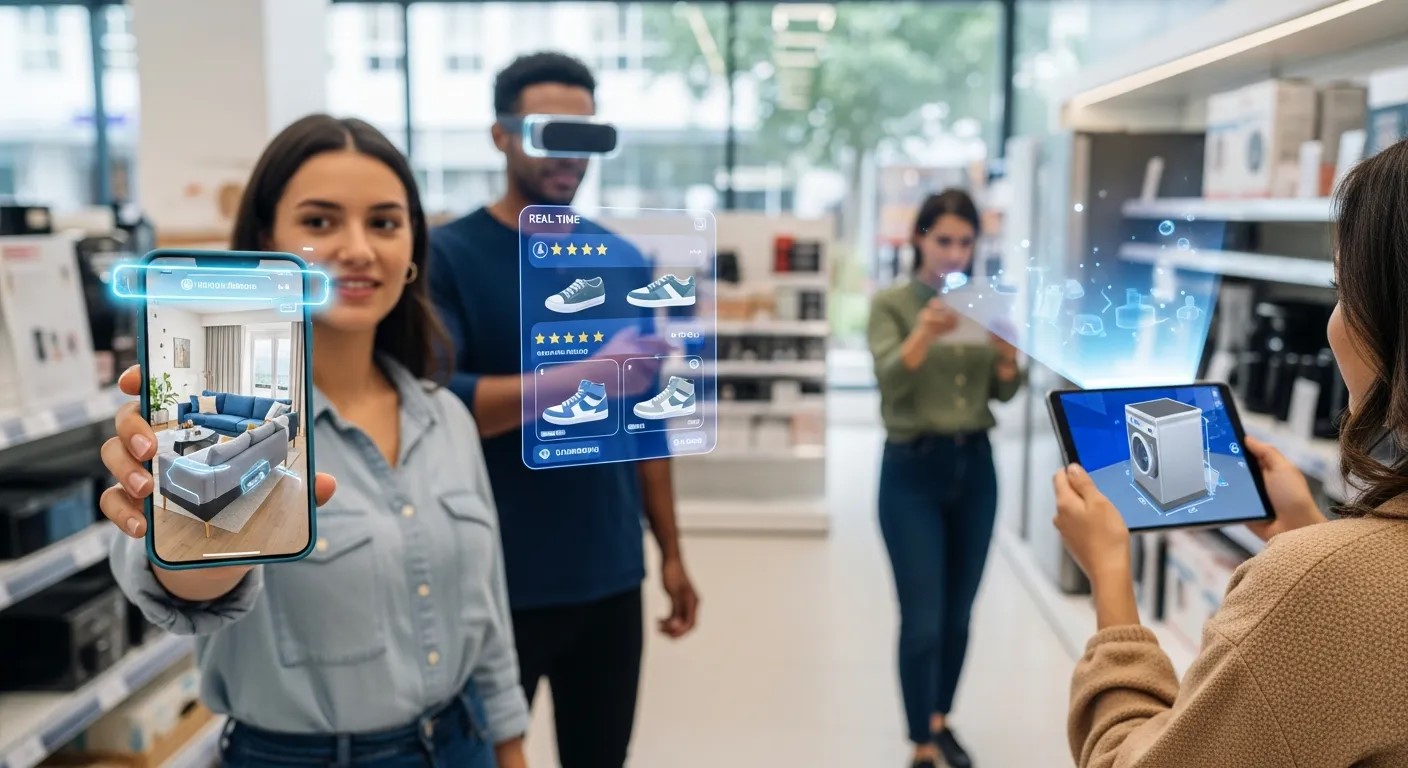
Integrating Chatbots in Brand Marketing and Chatbots in B2B Marketing into AR experiences is revolutionizing customer interaction. Conversational AR allows users to ask questions, get real-time guidance, and receive tailored recommendations within the AR interface. This reduces friction, enhances decision-making, and delivers a customer-centric experience.
Data-Driven Campaigns
AR interactions provide rich behavioral data that marketers can use for targeted campaigns. By analyzing which virtual products users explore most or how they interact with AR features, campaigns can be refined to align with real customer interests. However, maintaining Ethical AI in AR principles ensures these campaigns respect privacy while remaining effective.
Conclusion
The rise of AR Retail marks a transformative era for the shopping experience. By combining immersive technology, AI-driven personalization, and ethical data practices, retailers can engage customers more effectively than ever before. Applications span fashion, furniture, electronics, and beyond, offering virtual try-ons, product customization, gamification, and interactive storytelling. Integration with chatbots and omnichannel strategies ensures a seamless journey from online to in-store interactions. As AR technology evolves, it will continue reshaping consumer expectations, enhancing loyalty, and driving business growth. Retailers who embrace AR Retail now are positioning themselves at the forefront of the shopping revolution.
Frequently Asked Questions
What is AR Retail?
AR Retail uses augmented reality to create interactive, immersive shopping experiences by overlaying digital content onto physical products and spaces.
How does AR enhance customer experience?
It enables virtual try-ons, product visualization, gamification, and personalized recommendations, increasing engagement and purchase confidence.
Which industries benefit most from AR Retail?
Fashion, furniture, electronics, automotive, and luxury retail are leading adopters, with applications in both B2C and B2B contexts.
What role does AI play in AR Retail?
AI enables adaptive user interfaces, predictive analytics, and personalization, enhancing experiences while respecting ethical standards.
Are there privacy concerns with AR Retail?
Yes, but technologies like Federated Learning in AR and Ethical AI in AR ensure data is anonymized and securely processed.
How do chatbots integrate with AR Retail?
Chatbots guide customers through AR experiences, answer queries, and provide recommendations, improving engagement and reducing decision fatigue.
What is the future of AR Retail?
The future includes wearable AR, omnichannel integration, advanced personalization, immersive brand storytelling, and AI-driven insights, redefining how consumers shop globally.