AR in remote work enhances collaboration, productivity, and employee engagement by providing immersive virtual environments. Coupled with AI tools and secure platforms, it enables efficient training, project management, and marketing, reshaping the digital workplace for global teams.
AR in Remote Work: Boost Collaboration & Productivity
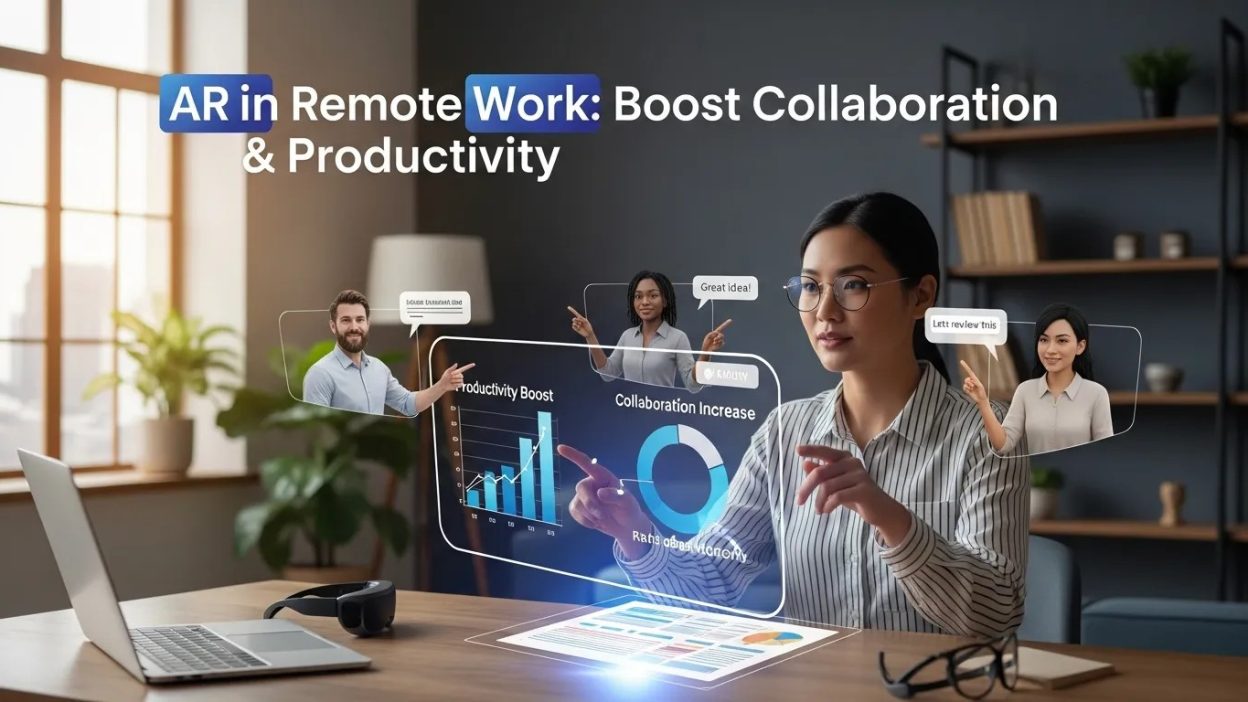
In today’s rapidly evolving digital workplace, the need for effective collaboration tools has never been greater. Businesses are increasingly relying on AR in remote work to bridge the gap between dispersed teams, enabling seamless communication and enhanced productivity. By overlaying digital information onto physical environments, augmented reality allows employees to interact with their workspaces in immersive ways that traditional video conferencing and project management tools cannot provide.
The concept of AR in remote work is not just about novelty; it’s a strategic investment. Teams can visualize complex projects, annotate 3D models in real-time, and troubleshoot issues collectively, regardless of geographical location. This capability significantly reduces misunderstandings, accelerates decision-making, and promotes a more engaged workforce. In industries like manufacturing, healthcare, and engineering, remote collaboration using AR ensures that experts can provide guidance without being physically present, saving time and reducing operational costs.
Transforming Communication in the Digital Workplace

Traditional remote collaboration tools often struggle to convey the full context of tasks. Video calls, chats, and emails can leave critical information ambiguous. AR in remote work addresses this challenge by creating an environment where team members can share interactive visuals, live annotations, and step-by-step guidance. For example, an engineer guiding a technician through machinery repair can highlight specific components in real-time, ensuring clarity and reducing errors.
The integration of AR Privacy and Security measures is essential in this digital transition. As sensitive corporate data is transmitted through AR platforms, organizations must prioritize secure protocols and encryption. Ensuring privacy compliance not only protects intellectual property but also builds trust among remote teams who rely on AR for critical decision-making.
Enhancing Workflow Efficiency
One of the most compelling benefits of AR in remote work is the improvement in workflow efficiency. Tasks that once required extensive back-and-forth communication can now be performed collaboratively in a shared augmented space. Virtual whiteboards, interactive dashboards, and spatial task management tools allow teams to brainstorm, track progress, and allocate resources more effectively.
Additionally, the use of Transfer Learning in AR empowers organizations to leverage existing AI models across multiple AR applications. By training models on one dataset and applying them to similar tasks, companies can accelerate deployment and enhance the accuracy of predictive analytics. This integration ensures that AR-powered collaboration tools continue to evolve intelligently, adapting to the needs of diverse teams and workflows.
Immersive Team Training and Onboarding
Remote training and onboarding are traditionally challenging due to the lack of physical presence and hands-on experience. With AR in remote work, new hires can be immersed in interactive simulations that replicate real-world scenarios. This technology allows employees to explore virtual machinery, practice procedures, and receive instant feedback from mentors located anywhere in the world.
Incorporating AI Adaptive AR UX further personalizes the experience. Adaptive user interfaces analyze individual learning patterns and adjust the complexity of AR tasks in real-time. This ensures that employees are neither overwhelmed nor under-challenged, creating a more effective learning environment.
Cross-Industry Applications
The potential of AR in remote work spans multiple industries:
-
Manufacturing: Engineers can guide on-site technicians through complex assembly processes without traveling. AR overlays ensure precision and minimize costly errors.
-
Healthcare: Surgeons can collaborate on patient cases, using AR to visualize anatomy and surgical plans remotely.
-
Education: Virtual classrooms powered by AR allow students to interact with 3D models, enhancing comprehension and engagement.
-
Marketing & Sales: Teams can co-create interactive presentations or product demos, improving client engagement.
The integration of AR Intelligence into these applications enables real-time analytics, helping organizations track collaboration effectiveness and identify bottlenecks. Predictive insights derived from AR data ensure that teams can make informed decisions quickly, boosting overall productivity.
Real-Time Collaboration Tools
Remote teams increasingly rely on AR platforms for real-time collaboration. Tools that support AR in remote work enable multiple participants to interact simultaneously with the same virtual object, regardless of location. Features such as gesture recognition, voice commands, and haptic feedback enrich the experience, making it more intuitive and effective.
Moreover, modern AR platforms can integrate with existing enterprise software, such as CRM systems and project management tools. This seamless connectivity allows teams to access relevant data, annotate progress, and communicate efficiently within a single interface. By combining AI Chatbot Marketing Funnels, companies can automate routine tasks, providing instant guidance and recommendations to team members in AR environments.
Driving Innovation in Remote Teams
Adopting AR in remote work encourages innovation by enabling teams to prototype, test, and iterate ideas quickly. Virtual product mockups, 3D design reviews, and immersive brainstorming sessions reduce development cycles and encourage creative problem-solving. This approach not only saves time but also fosters a culture of experimentation and collaboration.
In brand management and marketing, Chatbots in Brand Marketing can complement AR initiatives by providing instant insights and data-driven feedback. For example, marketing teams can simulate customer interactions in AR while chatbots provide real-time analytics, enabling rapid refinement of campaigns and strategies.
Leveraging AR in Remote Work for Global Teams
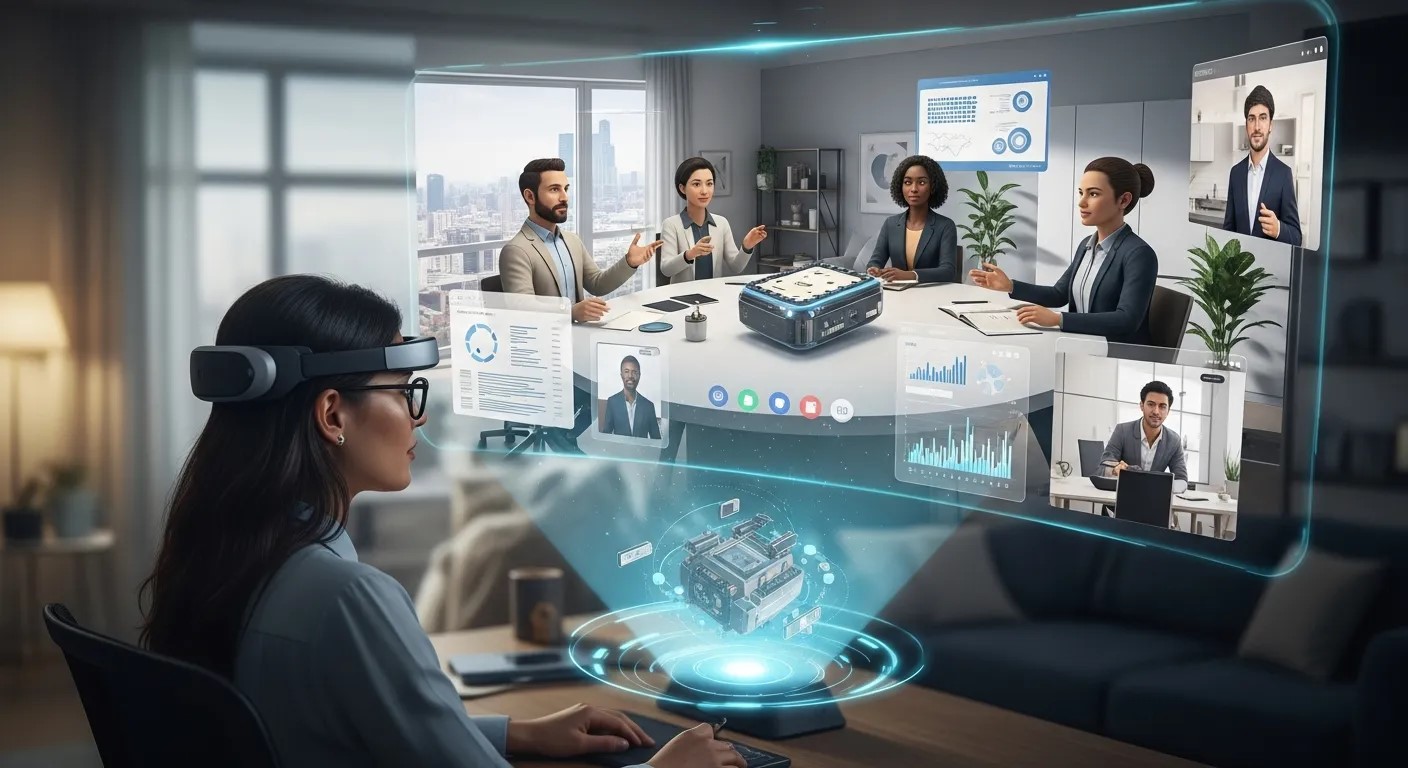
As organizations expand globally, maintaining team cohesion becomes a major challenge. AR in remote work offers a solution by creating shared virtual environments where employees can collaborate as if they were in the same room. By enabling real-time interaction with 3D models, documents, and spatial data, AR transforms the way teams communicate across continents. This immersive approach reduces miscommunication, shortens project timelines, and fosters stronger collaboration.
One of the key advantages of AR in remote work is the ability to conduct interactive meetings that go beyond traditional video calls. Teams can annotate virtual objects, manipulate digital prototypes, and review complex schematics collaboratively. This level of engagement encourages active participation and ensures that every team member fully understands the tasks at hand.
AR-Enabled Project Management
Project management is significantly enhanced when AR in remote work tools are applied. Visualizing project workflows in augmented spaces allows managers to assign tasks spatially, track progress, and identify potential roadblocks before they escalate. Interactive dashboards provide a holistic view of ongoing projects, integrating timelines, milestones, and dependencies in an intuitive 3D environment.
Furthermore, incorporating Transfer Learning in AR enables these platforms to become smarter over time. By learning from historical data, AR-powered project tools can suggest optimized workflows, predict resource requirements, and even anticipate challenges before they arise. This combination of augmented reality and AI-driven insights empowers teams to work more efficiently and proactively.
Enhancing Collaboration Through Immersive Experiences
Immersive experiences facilitated by AR in remote work allow employees to engage in collaborative problem-solving sessions that mimic in-person interactions. For example, design teams can walk through virtual prototypes, discuss modifications in real-time, and test functionalities without physically touching the product. Such capabilities are particularly valuable in industries like architecture, engineering, and product design, where hands-on visualization is crucial.
In addition, AI Adaptive AR UX plays a critical role in personalizing these experiences. By analyzing user behavior and engagement patterns, AR interfaces can adapt to each participant’s workflow preferences, highlighting relevant features and minimizing distractions. This ensures that every team member can contribute effectively, regardless of their experience level with AR technology.
Security Considerations in Remote AR Collaboration
With increased reliance on AR in remote work, ensuring robust AR Privacy and Security measures is essential. Corporate data, intellectual property, and sensitive project information are transmitted across networks during AR sessions. Organizations must implement strong encryption, secure access protocols, and compliance monitoring to protect this information. Proper security practices build trust among team members, encouraging the widespread adoption of AR tools across departments.
Training and Skill Development
Training is another area where AR in remote work excels. Remote employees can participate in immersive learning programs that simulate real-world scenarios. This is particularly beneficial for complex procedures or technical skill development. By engaging with AR-based simulations, employees can learn at their own pace while receiving immediate feedback from mentors or AI systems.
The integration of AR Intelligence enhances these training modules by analyzing performance metrics and identifying areas for improvement. Intelligent systems can recommend customized learning paths, ensuring that training is both efficient and effective. Companies leveraging AR for training report faster onboarding times, higher retention of knowledge, and better overall performance in critical tasks.
Supporting Remote Sales and Marketing Teams
Beyond internal collaboration, AR in remote work has applications in sales and marketing. Remote teams can present products interactively to clients, allowing them to visualize features and explore functionalities in a virtual space. This immersive approach improves engagement and increases the likelihood of conversion, especially in industries where product tangibility is crucial.
In addition, AI Chatbot Marketing Funnels integrated within AR platforms allow teams to automate customer interactions, guide prospects through sales journeys, and gather actionable insights. By combining AR and AI-driven marketing strategies, companies can maintain strong client relationships even when face-to-face meetings are not possible. Similarly, Chatbots in Brand Marketing provide real-time support and feedback during remote presentations, enhancing the overall experience for both employees and clients.
Measuring Impact and ROI
Organizations adopting AR in remote work must measure the impact to justify investment. Key performance indicators include reduced project timelines, improved team engagement, error reduction, and cost savings. AR platforms with analytics capabilities allow managers to track session activity, monitor collaboration patterns, and evaluate the effectiveness of remote interactions. This data-driven approach ensures that AR deployments continuously evolve to meet organizational needs and deliver tangible ROI.
AR in Remote Work: Driving Innovation Across Industries
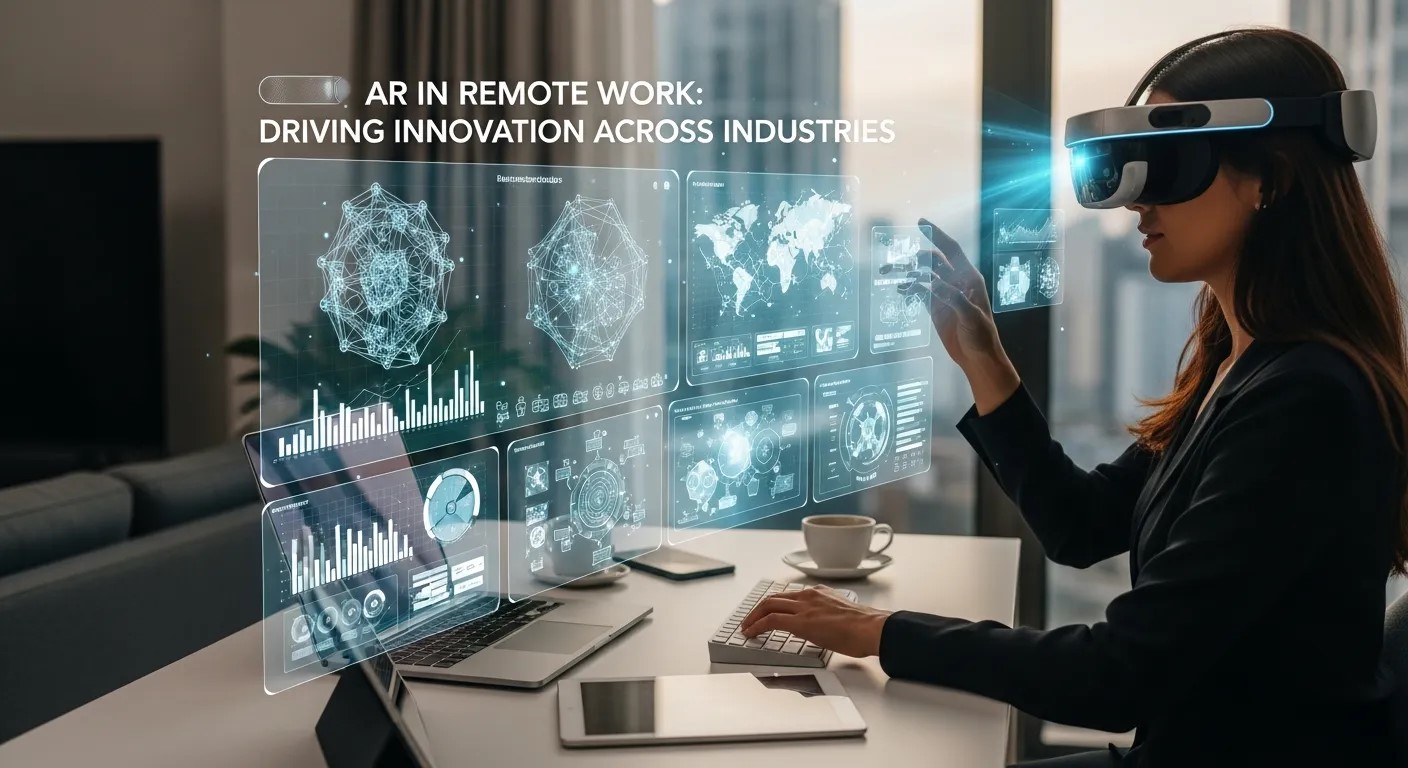
The adoption of AR in remote work is transforming not just individual workflows, but entire industries. From design and engineering to healthcare and marketing, augmented reality enables remote teams to work collaboratively with unprecedented efficiency and precision. This technological shift allows organizations to reimagine traditional workflows, break down geographic barriers, and foster a culture of innovation.
Remote Design and Engineering Collaboration
Design and engineering teams face unique challenges when collaborating remotely. Miscommunications over complex schematics or prototype iterations can lead to costly mistakes. With AR in remote work, teams can overlay 3D designs onto physical spaces, inspect models from multiple angles, and annotate changes in real-time. This immersive capability reduces errors, accelerates product development, and ensures all stakeholders are aligned.
Moreover, Transfer Learning in AR allows AI algorithms to understand patterns from one project and apply them to another. This can include automatically suggesting improvements to design layouts or predicting potential structural issues, making collaboration faster and smarter.
AR Collaboration Benefits in Engineering
| Feature | Traditional Remote Work | AR in Remote Work | Benefit |
|---|---|---|---|
| Prototype Review | Screenshare images or PDFs | Interactive 3D overlay | Faster iteration, fewer errors |
| Task Annotation | Text-based instructions | Real-time AR annotations | Clearer communication |
| Training | Manuals and video tutorials | Hands-on AR simulations | Improved skill retention |
| Decision-Making | Email threads, calls | Immersive collaborative sessions | Quicker consensus |
Healthcare and Remote Consultations
Healthcare professionals also benefit significantly from AR in remote work. Surgeons, therapists, and medical trainers can collaborate across cities and countries, sharing real-time patient data and visual guides during procedures. AR visualizations help teams make more informed decisions, ensuring patient safety and improving outcomes.
The integration of AR Intelligence in medical applications further enhances remote consultations. By analyzing patient data in real-time and providing predictive insights, AR systems support decision-making and allow experts to focus on critical interventions rather than administrative tasks.
Upskilling and Continuous Learning
One of the most powerful applications of AR in remote work is in employee development. Immersive training programs enable staff to gain hands-on experience in complex environments without physical presence. This is particularly valuable for industries requiring specialized skills or compliance training.
AI Adaptive AR UX enhances these programs by tailoring simulations to individual learning patterns. Employees receive personalized guidance, practice difficult tasks repeatedly, and achieve proficiency faster. This adaptive approach ensures maximum engagement and knowledge retention.
Security and Compliance Considerations
As more sensitive data is shared during AR in remote work sessions, ensuring AR Privacy and Security becomes critical. Secure encryption, authentication protocols, and compliance with industry regulations safeguard intellectual property and personal information. Organizations that prioritize security build confidence among employees and clients, fostering a safer remote collaboration environment.
Marketing and Brand Engagement
Marketing teams are finding that AR in remote work can transform client engagement. Teams can co-create immersive product demos, present virtual campaigns, and collaborate on marketing strategies without being on-site.
Integration with AI Chatbot Marketing Funnels allows AR sessions to provide automated guidance to prospects, track engagement metrics, and optimize outreach strategies. Similarly, Chatbots in Brand Marketing assist teams by offering instant insights and interactive support during virtual presentations.
AR for Team Culture and Engagement
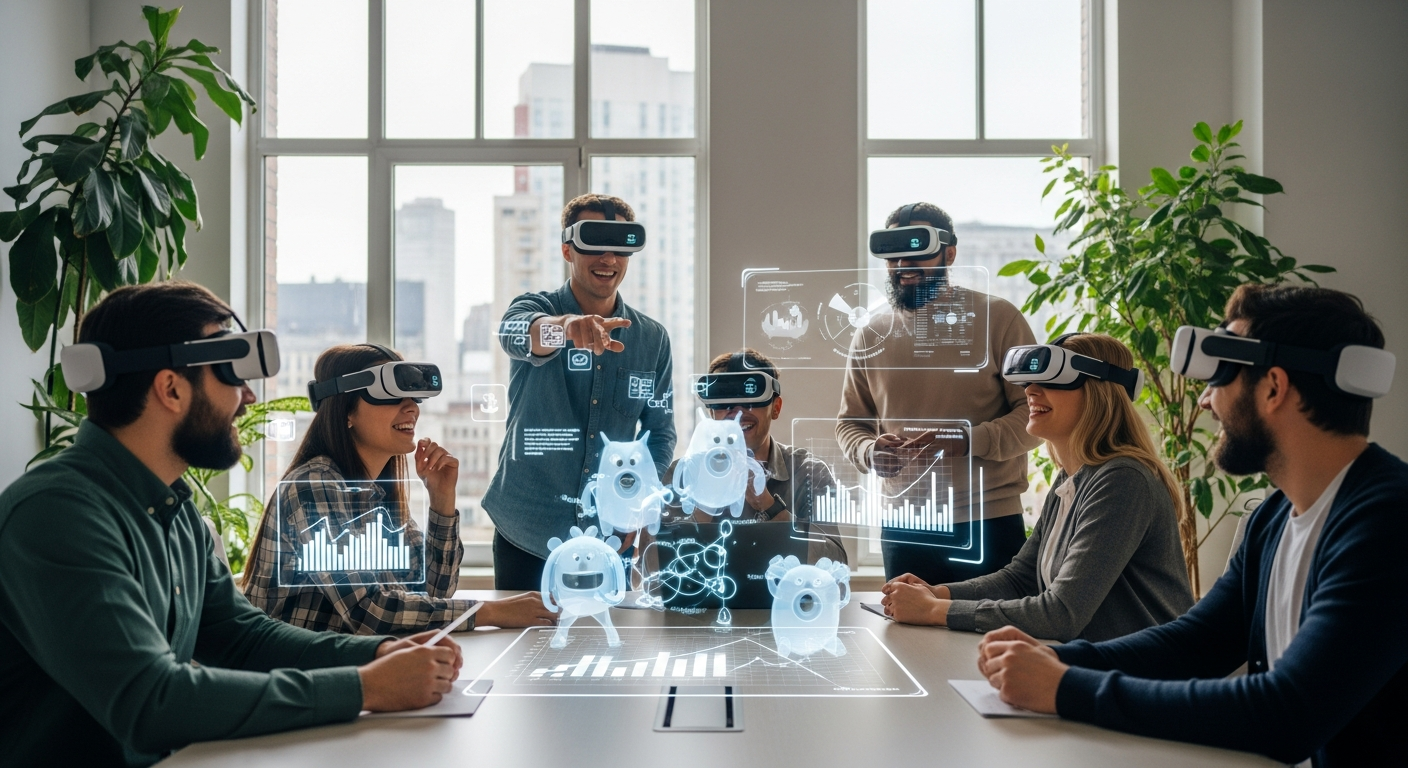
Remote work often challenges team culture and engagement. AR in remote work helps bridge this gap by creating shared virtual spaces where employees can interact informally, celebrate milestones, and participate in team-building exercises. Gamified AR experiences and interactive virtual lounges foster connection and collaboration, even across distant locations.
Future Trends and Innovations
The trajectory of AR in remote work suggests even deeper integration with emerging technologies. Combining AR with AI-driven analytics, Internet of Things (IoT) data, and cloud platforms allows organizations to create a fully interconnected, intelligent workspace. Future applications may include predictive workflow optimization, automated task allocation, and AI-driven mentorship programs in augmented environments.
The combination of immersive experiences, AI intelligence, and secure collaboration platforms ensures that AR in remote work remains not just a tool, but a strategic enabler of productivity and innovation.
Conclusion
AR in remote work is transforming the way organizations operate, bridging the gap between dispersed teams and enabling seamless collaboration. By creating immersive virtual environments, employees can visualize complex projects, annotate in real-time, and communicate more effectively, reducing errors and accelerating decision-making. Integrating AI-driven solutions like AI Adaptive AR UX, AR Intelligence, and AI Chatbot Marketing Funnels enhances productivity, personalizes workflows, and provides actionable insights. Industries such as engineering, healthcare, manufacturing, education, and marketing benefit from faster onboarding, interactive training, and efficient project management. As businesses continue adopting these technologies, AR in remote work is no longer just a tool—it is a strategic enabler that drives innovation, engagement, and operational excellence across the digital workplace.
Frequently Asked Questions (FAQs)
What is AR in remote work?
AR in remote work uses augmented reality technology to create immersive, interactive environments for team collaboration, enabling real-time visualization, annotations, and communication across distances.
How does AR improve team productivity?
It reduces miscommunication, accelerates project timelines, enables interactive training, and allows real-time decision-making, increasing overall efficiency.
Is AR safe for remote collaboration?
Yes, with proper AR Privacy and Security protocols, data is encrypted, and access is controlled, ensuring secure collaboration.
Which industries benefit most from AR in remote work?
Engineering, healthcare, manufacturing, marketing, and education benefit significantly due to visualization needs and complex task management.
How do AI tools enhance AR collaboration?
Tools like AI Adaptive AR UX and AR Intelligence personalize workflows, provide predictive insights, and optimize task performance in AR environments.
Can AR in remote work reduce operational costs?
Yes, by minimizing travel, shortening project cycles, reducing errors, and streamlining training, AR in remote work lowers overall operational expenses.
How easy is it to integrate AR into existing workflows?
Many AR platforms seamlessly integrate with project management, CRM, and communication tools, allowing teams to adopt AR in remote work without disrupting current workflows.