AR Content Generation AI enables dynamic, personalized, and immersive AR experiences across industries. By integrating adaptive UX, emotion recognition, and AI-driven commerce, it transforms content creation, market research, and user engagement while maintaining privacy and scalability.
AR Content Generation AI: Create Dynamic AR Experiences
Augmented Reality (AR) has evolved far beyond simple overlays of digital content onto the physical world. Today, the integration of AR Content Generation AI is transforming how developers, designers, and businesses create dynamic, immersive experiences. By leveraging generative AI, these systems can produce complex environments, responsive objects, and interactive scenarios that adapt seamlessly to user behavior and context.
Understanding AR Content Generation AI
At its core, AR Content Generation AI combines machine learning algorithms, computer vision, and spatial computing to automate the creation of AR content. Traditional AR development often requires labor-intensive modeling, programming, and testing. With AI, much of this process can be streamlined, allowing for faster deployment and more personalized experiences.
One of the key advantages of using AI in AR content generation is its ability to process user data and contextual inputs to produce adaptive environments. For example, AI can analyze how a user interacts with a virtual object and adjust its behavior or appearance accordingly. This level of responsiveness makes experiences feel more natural, engaging, and intuitive, which directly enhances user satisfaction and retention.
The Role of Generative Models in AR
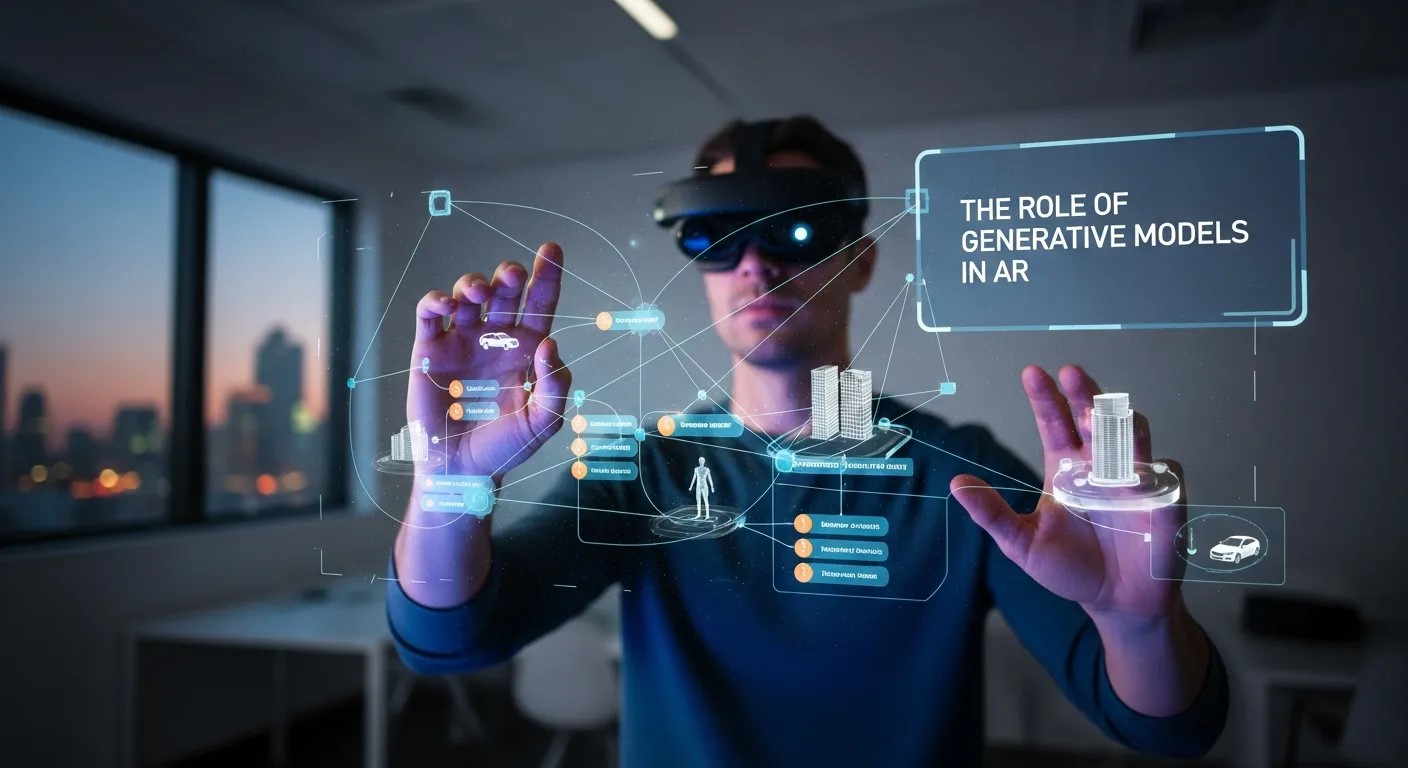
Generative models, such as Generative Adversarial Networks (GANs) and Diffusion Models, are the engines behind AR Content Generation AI. These models can create realistic textures, objects, and environments that were previously impossible or too time-consuming to design manually. By integrating generative AI, developers can produce rich, dynamic content at scale, reducing development costs while improving the depth and quality of AR experiences.
In practice, these AI models can simulate interactive objects that respond to environmental changes, user gestures, or even emotional cues. This is where concepts like Emotion Recognition AI become relevant, as AI can sense a user’s emotional response and modify AR content in real-time, creating a more immersive and personalized experience.
Adaptive Experiences with AI
Modern AR experiences are no longer static. Users expect content that evolves based on their actions, preferences, and surroundings. By combining AR Content Generation AI with adaptive UX principles, developers can craft experiences that learn from the user, anticipate needs, and provide contextually relevant content.
For instance, AI for Contextual AR can detect the environment in which a user is situated—be it an office, a home, or a public space and generate content tailored to that context. This could include dynamically changing virtual furniture in an interior design app or adjusting AR educational simulations based on the user’s current learning progress.
Federated Learning in AR
To achieve this level of personalization without compromising privacy, many AR systems are turning to Federated Learning in AR. This approach allows AI models to learn from multiple users’ data without transmitting raw data to a central server. Instead, models update locally on each device and share only aggregated insights. This method not only enhances privacy but also enables continuous improvement of AR content generation algorithms across large user bases.
By integrating federated learning, AR applications can adapt to regional trends, cultural preferences, or user-specific behaviors, creating an experience that feels uniquely tailored to each individual without storing sensitive personal data centrally.
AI Adaptive AR UX: Personalized Immersive Experiences
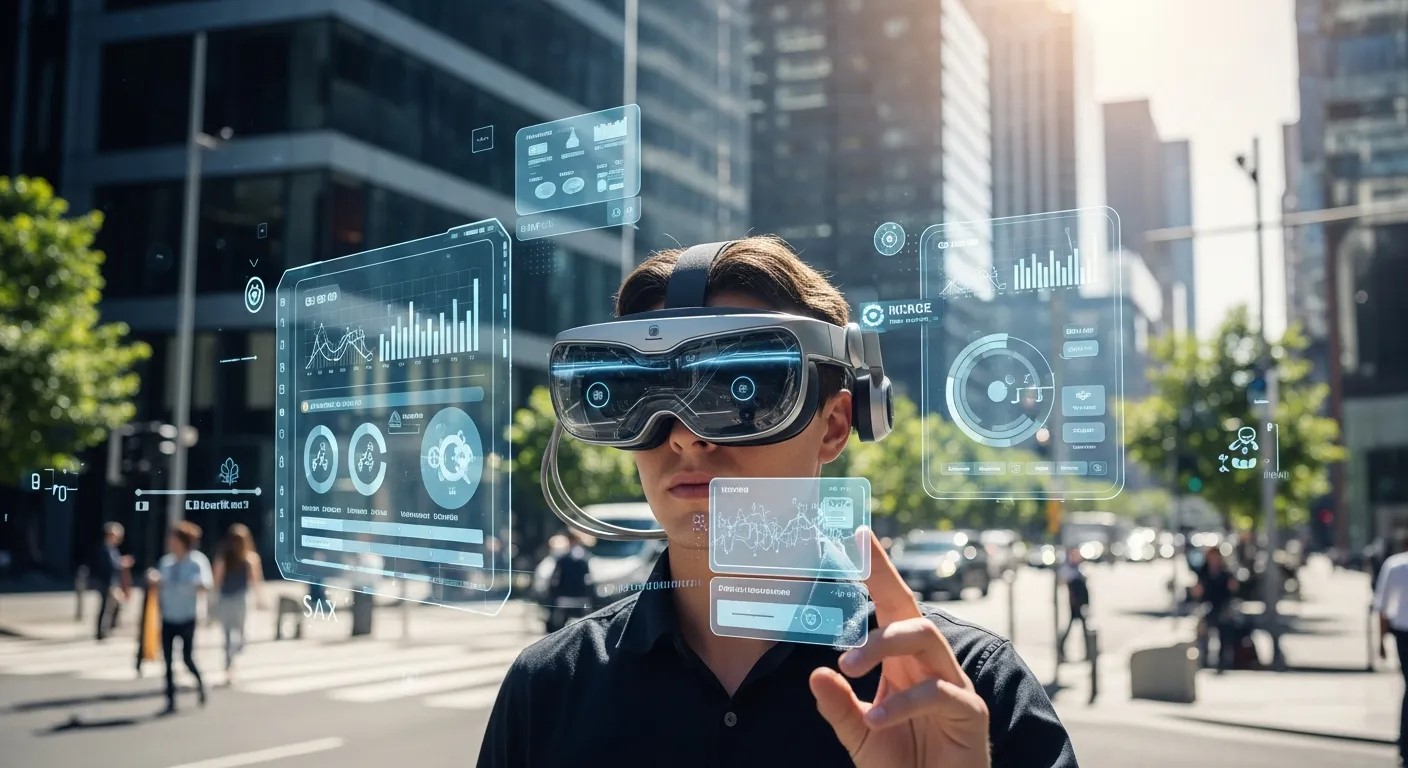
The evolution of AR Content Generation AI has made it possible to craft experiences that adapt not only to the environment but also to individual users. By analyzing user behavior, preferences, and even micro-interactions, AI can modify AR interfaces in real time. This approach is referred to as AI Adaptive AR UX, where the user’s journey through a digital environment is fluid, intuitive, and deeply engaging.
Unlike static AR applications, adaptive UX ensures that content generated by AR systems is not one-size-fits-all. For example, in retail, a virtual shopping assistant powered by AR Content Generation AI can rearrange product displays or highlight items based on a shopper’s interests, creating a more compelling and conversion-oriented experience. Similarly, in educational AR apps, lessons can be dynamically tailored to a student’s pace and understanding, improving both engagement and retention.
Integrating Emotion Recognition AI
To enhance personalization further, Emotion Recognition AI is often combined with AR content generation systems. By analyzing facial expressions, gestures, or even voice tone, AI can detect user emotions and modify AR content accordingly. For instance, if a user shows signs of frustration while navigating an AR interface, the system can simplify interactions or provide helpful hints, all dynamically generated by AR Content Generation AI.
This integration ensures that AR experiences are not only visually impressive but emotionally intelligent, creating a deeper connection between technology and human users. Companies leveraging this approach often report higher user satisfaction and longer engagement times.
AI vs Human in Market Research for AR
One of the most impactful applications of AR Content Generation AI is in AI vs Human in Market Research. Traditionally, market research involved surveys, focus groups, and manual observation, which were time-consuming and prone to bias. By utilizing AI-powered AR environments, companies can simulate real-world scenarios and collect behavioral data at scale, offering insights that are both richer and more actionable.
For example, virtual product trials in an AR setting can reveal how consumers interact with items, their preferences, and their emotional reactions. The AI system can automatically generate varied AR scenarios for different user segments, continuously learning and refining content. This combination of AR Content Generation AI and automated analytics often surpasses traditional human-only research in efficiency and depth.
AI Conversational Commerce in AR
Another area where AR Content Generation AI demonstrates immense potential is AI Conversational Commerce. By integrating AI chatbots within AR environments, users can interact naturally with virtual assistants while exploring products or services. The AI can generate product recommendations, answer queries, and even simulate scenarios, all within immersive AR spaces.
For example, a consumer browsing a virtual store can receive real-time guidance from an AI assistant while the environment adapts dynamically. These AR interactions, powered by AR Content Generation AI, create a frictionless shopping experience, combining the visual appeal of AR with the intelligence of conversational AI.
Key Advantages of AR Content Generation AI
| Advantage | Description |
|---|---|
| Personalization | Tailors AR environments to individual users using behavior and emotion data. |
| Scalability | Automatically generates complex AR content, reducing development time. |
| Immersion | Produces realistic, dynamic environments that enhance engagement. |
| Privacy-Safe Learning | Federated learning allows adaptation without compromising user data. |
| Market Insights | Enables AI-driven market research, outperforming traditional human methods. |
The combination of these advantages demonstrates why AR Content Generation AI is becoming a cornerstone of next-generation AR experiences, across industries such as retail, education, gaming, and healthcare.
Technical Implementation of AR Content Generation AI
Implementing AR Content Generation AI involves multiple layers of technology working in harmony. At the foundation are computer vision algorithms, which enable devices to understand spatial environments and detect objects, surfaces, and movement. These algorithms feed data into generative models, which then produce the virtual content that users see and interact with.
For developers, integrating AR Content Generation AI often involves:
-
Data Collection – Capturing spatial, contextual, and behavioral data.
-
Model Training – Using generative AI techniques like GANs or Diffusion Models to create realistic AR objects and textures.
-
Contextual Adaptation – Applying frameworks such as AI for Contextual AR to ensure that the generated content aligns with the user’s environment.
-
Deployment and Continuous Learning – Leveraging federated learning for privacy-safe model updates, enabling continuous improvement without centralizing sensitive user data.
This approach allows AR applications to dynamically evolve, responding to both environmental changes and user interactions. By embedding generative AI at every stage, developers can ensure that AR content feels immersive, responsive, and lifelike.
Enhancing AR Interactions with AI Adaptive AR UX
The marriage of AR Content Generation AI and AI Adaptive AR UX takes personalization to the next level. Interfaces can dynamically adjust layouts, highlight relevant features, or even introduce new interactive elements based on user behavior. For example, a virtual tour application can adapt pathways and content density depending on how users navigate the space, all generated in real time by AI.
This level of adaptive design not only improves usability but also boosts engagement and retention, as users feel the experience was specifically tailored for them. In commercial applications, this personalization can significantly influence purchase decisions or learning outcomes.
Advanced Applications: Emotion Recognition AI in AR
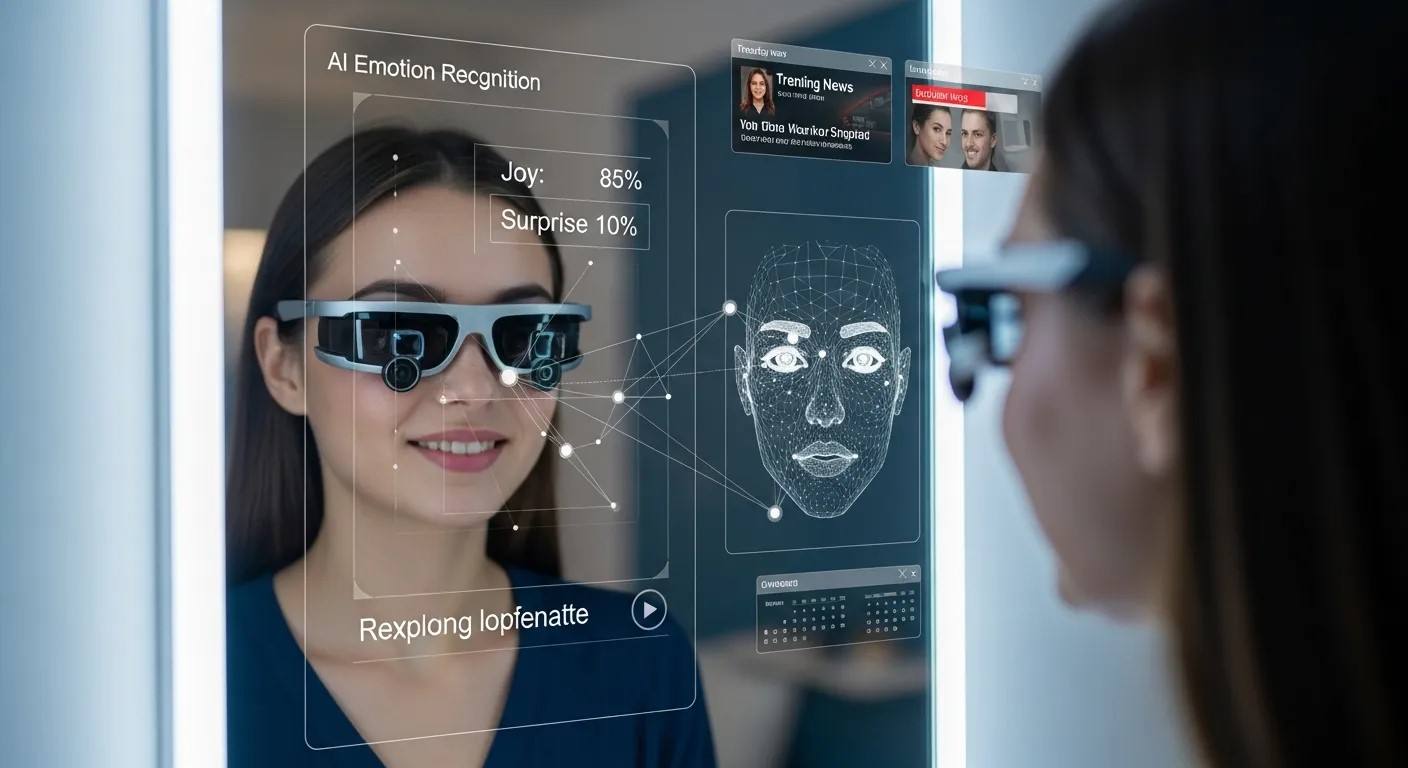
Emotion plays a crucial role in engagement. By integrating Emotion Recognition AI, AR environments can sense user reactions and modulate experiences accordingly. For instance:
-
In training simulations, AR content can adjust difficulty or pacing based on learner stress or confidence levels.
-
In marketing AR campaigns, product displays or messaging can shift in real-time to match user sentiment.
These capabilities, powered by AR Content Generation AI, transform traditional AR from a static visual medium into a truly interactive and emotionally intelligent experience.
AI vs Human in Market Research: Leveraging AR
One of the most strategic uses of AR Content Generation AI is in AI vs Human in Market Research scenarios. By simulating multiple virtual environments, companies can test product interactions, brand positioning, and consumer preferences without the logistical constraints of physical trials. The AI continuously generates variations, tracks user behavior, and produces high-fidelity insights far faster than traditional human-centered methods.
In practice, this means businesses can:
-
Test marketing campaigns in immersive virtual stores.
-
Analyze emotional responses to product designs via Emotion Recognition AI.
-
Refine content in real-time for maximum engagement and insight collection.
This application is particularly valuable in industries where consumer behavior is complex or rapidly evolving, such as fashion, gaming, and experiential retail.
AI Conversational Commerce in AR
The combination of AR Content Generation AI and AI Conversational Commerce enables interactive shopping experiences within AR spaces. Virtual assistants, powered by AI, can respond to voice commands, provide product recommendations, and even simulate real-world interactions.
For example, in a furniture AR app, a user might ask, “How will this couch look in my living room?” The AI not only generates a realistic AR model of the couch but also adapts lighting, textures, and placement dynamically. These intelligent, context-aware interactions make AR shopping experiences more immersive, convenient, and personalized, increasing user satisfaction and conversion rates.
Industry Applications Table
| Industry | AR AI Application | Key Benefits |
|---|---|---|
| Retail | AI-powered virtual stores | Personalized product recommendations, immersive shopping |
| Education | Adaptive AR learning | Real-time difficulty adjustment, increased engagement |
| Gaming | Dynamic AR environments | Procedurally generated worlds, responsive NPCs |
| Healthcare | AR surgical simulations | Safe practice, emotion-aware feedback |
| Marketing | Consumer behavior analysis | AI-driven insights, rapid campaign testing |
The table above illustrates how AR Content Generation AI is being leveraged across sectors, demonstrating its versatility and impact.
Future Trends in AR Content Generation AI
The landscape of AR is rapidly evolving, and AR Content Generation AI sits at the heart of this transformation. Several trends are shaping the next wave of immersive experiences:
-
Real-Time Dynamic Content – Future AR systems will generate environments and objects instantly based on live user interactions, creating experiences that feel truly responsive and alive. This builds upon current AI adaptive systems but pushes the boundaries of immersion.
-
Cross-Platform AR Experiences – Users will move seamlessly between mobile, wearable, and spatial computing devices, with AR Content Generation AI ensuring continuity and context-aware adaptation across platforms.
-
Emotion-Driven Personalization – Building on Emotion Recognition AI, future AR applications will anticipate user needs and emotions, modifying content proactively rather than reactively. For instance, a virtual fitness coach might adapt exercises and motivational cues based on real-time user engagement.
-
AI for Contextual AR Expansion – Contextual awareness will become more sophisticated. AI will factor in location, environment, time of day, and social dynamics to generate content that aligns perfectly with the user’s real-world setting. This opens possibilities for tourism, training, and urban planning applications.
-
Integration with Conversational AI – The combination of AI Conversational Commerce and generative AR will lead to fully interactive virtual assistants, capable of guiding users through complex environments, answering queries, and dynamically generating visual content simultaneously.
Challenges in Implementing AR Content Generation AI

Despite its promise, AR Content Generation AI faces several challenges:
-
Computational Demands – Generating complex AR content in real time requires high-performance hardware and efficient AI models. Developers need to balance visual fidelity with latency to maintain seamless experiences.
-
Data Privacy Concerns – While Federated Learning in AR offers privacy-preserving solutions, widespread adoption requires robust security protocols and user trust.
-
Content Accuracy and Reliability – Automatically generated AR content must be precise and contextually appropriate. Errors or misalignments can disrupt user immersion and reduce trust in the system.
-
Ethical Considerations – The ability to influence user behavior, detect emotions, and generate personalized content raises ethical questions. Developers must ensure transparent AI practices and user consent.
Addressing these challenges is crucial for the long-term adoption of AR technologies powered by generative AI. Companies investing in AR Content Generation AI must consider not only technical feasibility but also social responsibility and ethical design.
Emerging Innovations
Several innovations are pushing the boundaries of AR Content Generation AI:
-
Procedural Environment Generation – AI algorithms can now create vast, explorable AR environments with minimal input, generating rich and diverse landscapes for gaming, training, or educational applications.
-
Hybrid Human-AI Collaboration – By combining human creativity with AI generative capabilities, designers can rapidly iterate on AR content, blending artistic intuition with algorithmic efficiency.
-
Adaptive Learning in AR Applications – Educational AR experiences are increasingly integrating AI Adaptive AR UX to monitor learner progress and dynamically adjust lessons, improving engagement and outcomes.
-
Cross-Sensory Immersion – Some AR applications now incorporate haptics, sound, and spatial audio, generated and adapted in real-time by AI, enhancing the sense of presence.
These innovations demonstrate that AR Content Generation AI is not just a tool for efficiency; it is a driver of entirely new forms of interaction, changing how users learn, shop, play, and engage with digital content.
Industry Spotlight: AR in Market Research
An emerging application of AR Content Generation AI is in sophisticated market research scenarios. By simulating realistic retail environments, product placements, or service interactions, companies can conduct AI vs Human in Market Research studies more effectively. AI can generate multiple variations of a virtual scenario, track user responses, and derive actionable insights faster than traditional methods.
For instance, in a virtual grocery store, AI-generated product arrangements can be tested with different demographic groups simultaneously. Responses are captured in real time, analyzed, and used to refine future AR campaigns all without the logistical constraints of physical environments.
Conclusion
AR Content Generation AI is revolutionizing the way immersive experiences are designed, deployed, and personalized. By leveraging generative models, adaptive UX principles, and context-aware AI, developers can create AR environments that are dynamic, responsive, and highly engaging. Integrations such as Emotion Recognition AI, Federated Learning in AR, and AI Conversational Commerce enable experiences that not only adapt to user behavior but also respect privacy and enhance interaction quality.
Frequently Asked Questions (FAQ)
What is AR Content Generation AI?
AR Content Generation AI is the use of artificial intelligence to automatically create, adapt, and optimize augmented reality content and environments. It combines generative models, computer vision, and adaptive UX techniques to produce dynamic, personalized AR experiences.
How does AR Content Generation AI improve user experiences?
By analyzing user behavior, context, and even emotional responses through Emotion Recognition AI, AR Content Generation AI creates AR environments that adapt in real time. This leads to more engaging, intuitive, and immersive experiences for users across education, retail, gaming, and more.
Can AR Content Generation AI replace human designers?
While AI can automate large parts of content creation, human creativity remains essential. The best results often come from hybrid human-AI collaboration, where designers guide AI systems, refine outputs, and ensure that content meets aesthetic and functional standards.
What is AI Adaptive AR UX?
AI Adaptive AR UX refers to the use of AI to tailor AR interfaces and interactions to each user. This can include adjusting content layout, modifying virtual objects, or generating personalized AR scenarios in real time, enhancing usability and engagement.
How does Federated Learning in AR enhance privacy?
Federated Learning in AR allows AI models to learn from user data without transmitting raw personal data to a central server. Instead, updates are processed locally and aggregated securely, enabling personalized AR content while maintaining user privacy.
How is AI used in market research with AR?
In AI vs Human in Market Research, AR Content Generation AI simulates real-world scenarios to test products, services, or experiences. AI can generate multiple variations, capture behavioral and emotional data, and deliver actionable insights faster and more accurately than traditional methods.
What industries benefit from AR Content Generation AI?
Industries such as retail, education, healthcare, gaming, and marketing benefit greatly. From AI Conversational Commerce in virtual stores to adaptive AR learning modules, businesses can create immersive, personalized, and scalable experiences for their users.
What is AI for Contextual AR?
AI for Contextual AR ensures that AR content aligns with the user’s environment, location, or situation. For example, it can adjust AR simulations based on room layout, lighting conditions, or user activity, enhancing realism and usability.
How does Emotion Recognition AI enhance AR?
Emotion Recognition AI detects user emotions through facial expressions, gestures, or other signals. Integrating this with AR Content Generation AI allows AR experiences to adapt emotionally, creating more engaging and human-centered interactions.
What are the future trends in AR Content Generation AI?
Future trends include real-time dynamic content generation, cross-platform AR experiences, emotion-driven personalization, and deeper integration with AI Conversational Commerce. These innovations promise more immersive, adaptive, and intelligent AR environments in the coming years.