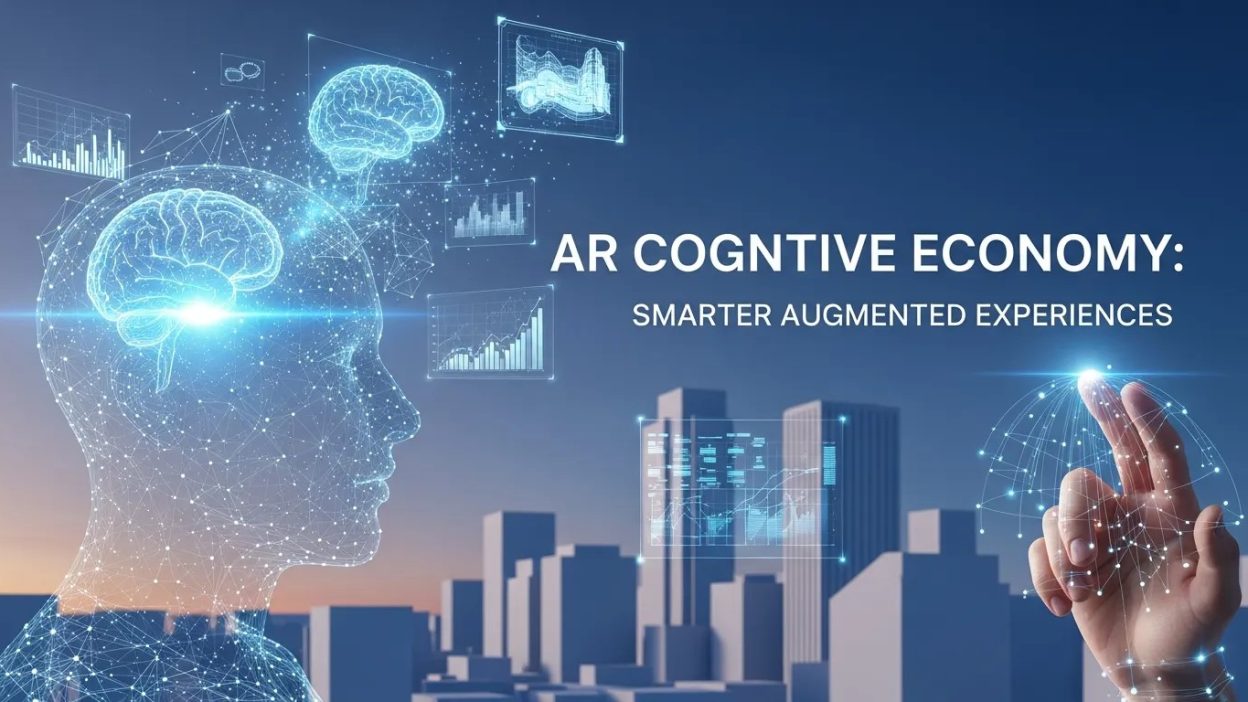
AR Cognitive Economy enhances augmented experiences by reducing mental load through Inclusive AR, AR Intelligence, predictive analytics, and hyper-personalization. It ensures efficient, engaging, and ethical AR interactions across industries while balancing innovation with human cognitive limits.
Understanding AR Cognitive Economy
Augmented Reality (AR) is no longer just a futuristic concept or a novelty in gaming; it has become a vital tool in industries, education, and daily human interactions. Yet, as AR experiences grow more immersive, the cognitive demands on users also increase. This intersection of human mental effort and augmented experiences is what we refer to as the AR Cognitive Economy. Understanding it is crucial for designing AR systems that are efficient, engaging, and sustainable in the long term.
Within this framework, developers and researchers aim to create experiences that minimize unnecessary mental strain while maximizing engagement and learning. Whether it’s through Inclusive AR designs that cater to diverse user needs, or leveraging AR Intelligence to anticipate user behavior, the goal is to balance innovation with cognitive feasibility.
The Foundations of AR Cognitive Economy

At its core, AR Cognitive Economy focuses on the mental load imposed on users during augmented interactions. The human brain can process only a limited amount of information at once, and overloading users with excessive stimuli can lead to frustration, errors, and disengagement.
Key principles of AR Cognitive Economy include:
- Information Prioritization – Presenting users only with contextually relevant data.
- Predictive Guidance – Anticipating user needs through Harnessing Predictive Analytics to reduce cognitive friction.
- Adaptive Interfaces – Interfaces that adapt dynamically to a user’s skill level, cognitive state, and environmental context.
By adhering to these principles, AR systems can ensure that every interaction feels natural, intuitive, and meaningful. For instance, in industrial environments, AR in Manufacturing can streamline workflows by displaying only critical operational data, reducing mental overload, and increasing efficiency.
Inclusive AR: Designing for All Minds
Inclusivity in AR is more than just accessibility; it’s about designing experiences that respect the cognitive diversity of users. Inclusive AR ensures that whether a user has limited attention capacity, visual impairments, or different learning preferences, the augmented experience remains effective.
Designers can achieve this by:
- Offering multiple modes of interaction, including voice, gesture, and gaze control.
- Reducing clutter and visual noise on heads-up displays (HUDs).
- Providing adjustable information layers that allow users to control how much data they see at once.
By integrating inclusive practices, AR not only becomes more accessible but also enhances the overall cognitive economy, allowing users to focus on meaningful tasks rather than navigating complex interfaces.
AR Intelligence and Predictive Design
The next frontier of AR involves leveraging AR Intelligence to proactively support users. By analyzing user behavior, environmental cues, and task context, intelligent AR systems can deliver exactly what the user needs, precisely when they need it.
For example, in retail, AR apps can suggest products based on past browsing behavior without overwhelming the shopper. Similarly, in educational environments, AR Intelligence can adjust content difficulty in real-time, optimizing learning outcomes while respecting cognitive limitations.
The use of Harnessing Predictive Analytics plays a crucial role here. By anticipating user needs, AR systems can reduce decision fatigue, streamline workflows, and maintain user engagement over extended periods. This predictive capability is a cornerstone of maintaining a sustainable AR Cognitive Economy.
AR in Manufacturing: Reducing Cognitive Overload on the Job
Industrial applications are perhaps the clearest example of AR Cognitive Economy in action. In modern factories, AR can overlay instructions directly onto machinery, highlight safety hazards, or provide real-time operational metrics.
Benefits include:
- Reduced errors and training time for new employees.
- Lower cognitive load when performing complex assembly or maintenance tasks.
- Integration with AR Edge and Quantum Computing systems to provide near-instant data analysis.
By combining AR with edge computing capabilities, factories can offer real-time feedback without the latency issues that might otherwise disrupt cognitive flow. Employees experience smarter workflows, making AR Cognitive Economy not just a theoretical concept but a practical operational advantage.
AR Edge and Quantum Computing: The Future of Smart AR
The convergence of AR with AR Edge and Quantum Computing promises a leap in cognitive efficiency. Edge computing reduces latency by processing data closer to the user, enabling AR systems to deliver instantaneous feedback. Quantum computing, meanwhile, allows for massive parallel computations, unlocking predictive insights that were previously impossible.
Applications include:
- Real-time optimization of industrial processes.
- Hyper-personalized AR educational modules.
- Advanced simulations in healthcare and engineering.
Together, these technologies ensure that augmented experiences remain cognitively manageable, supporting the broader AR Cognitive Economy principle of minimizing mental load while maximizing utility.
Hyper-Personalization at Scale
A key trend in AR Cognitive Economy is Hyper-Personalization at Scale. By tailoring experiences to individual user preferences, learning speeds, and cognitive styles, AR can deliver information in the most digestible format possible.
For example:
- AR fitness apps adjust visual cues based on the user’s heart rate and fatigue level.
- Enterprise AR platforms modify dashboards and notifications according to task priority and employee expertise.
- Educational AR systems customize lesson pacing to maintain engagement without cognitive overload.
Hyper-personalization ensures that AR systems scale effectively across diverse users while preserving mental clarity and operational efficiency.
Human Factors and Cognitive Load Management

Understanding human psychology is central to designing AR experiences that align with the AR Cognitive Economy. Key human factors include:
- Attention Span – AR systems must respect limited attention resources.
- Memory Load – Only essential information should be displayed to avoid cognitive fatigue.
- Decision Fatigue – Predictive and context-aware interfaces reduce unnecessary choices.
Designers can use real-time analytics to monitor cognitive load indicators such as gaze patterns, response time, and error rates. This data informs adjustments to interface complexity, ensuring AR interactions remain smooth and intuitive.
AR in Healthcare: Minimizing Cognitive Strain for Practitioners
Healthcare is one of the most critical domains where AR Cognitive Economy has a direct impact on outcomes. Surgeons, nurses, and medical trainees face immense cognitive loads during complex procedures. Augmented Reality can provide real-time overlays of patient anatomy, vital statistics, and procedural guides, allowing clinicians to focus on essential decisions rather than juggling multiple information sources.
In practice, Inclusive AR in healthcare ensures that AR tools are accessible to practitioners with different levels of experience and specialties. For instance, AR-assisted surgery systems can adjust display complexity based on the user’s expertise, showing more detailed visualizations for experts while providing simplified guidance for trainees.
Moreover, Harnessing Predictive Analytics in medical AR applications can alert clinicians to potential complications before they occur, helping manage mental load and improve patient outcomes. By anticipating procedural steps or patient responses, predictive AR systems reduce cognitive friction and support decision-making under pressure.
AR in Education: Enhancing Learning Without Overload
In educational contexts, AR transforms traditional learning into immersive experiences, but cognitive overload is a real concern. AR Cognitive Economy ensures that students engage with augmented content efficiently, retaining information without feeling overwhelmed.
Key strategies include:
- Layered learning experiences where information is revealed progressively.
- Context-aware AR overlays that focus only on relevant content during a lesson.
- Hyper-Personalization at Scale, adapting content pace and complexity to individual student needs.
For example, AR anatomy apps can highlight organs or physiological systems interactively while filtering out non-essential details. Predictive analytics can monitor student engagement, adjusting the difficulty of interactive exercises to maintain an optimal cognitive load. By integrating these principles, AR can make learning more intuitive, interactive, and effective.
AR in Entertainment: Balancing Immersion and Mental Load
Entertainment experiences, from gaming to live events, are increasingly adopting AR to deliver immersive narratives. However, AR Cognitive Economy reminds designers that too much sensory input or complex interface mechanics can diminish enjoyment.
AR developers use AR Intelligence to adapt experiences in real-time:
- Dynamic difficulty adjustment in AR games based on user performance.
- Smart content curation in live AR events, displaying information relevant to the viewer’s location or preferences.
- Personalized storytelling that changes depending on the user’s interactions.
By applying cognitive economy principles, AR entertainment remains engaging, avoids sensory overload, and encourages prolonged interaction. This approach not only improves user satisfaction but also ensures that AR experiences are sustainable for repeated use.
AR in Manufacturing
Consider a leading automotive manufacturer that adopted AR to streamline assembly line operations. Using AR in Manufacturing, workers received real-time visual overlays showing the correct placement of components, torque specifications, and error alerts.
- Before AR: Workers relied on manuals and static diagrams, increasing errors and training time.
- After AR: Cognitive load decreased as workers focused only on relevant information, efficiency improved by 35%, and training duration reduced by 50%.
Edge computing integration, via AR Edge and Quantum Computing, ensured that overlays appeared instantaneously without latency, while predictive analytics forecasted potential bottlenecks on the assembly line. This practical example highlights how AR Cognitive Economy translates directly into productivity and reduced mental strain.
The Role of AR Edge and Quantum Computing in Cognitive Optimization

Advanced AR systems increasingly rely on AR Edge and Quantum Computing to manage large-scale, real-time data. Edge computing brings processing closer to the user, reducing latency and delivering instant feedback. Quantum computing provides the computational power to simulate multiple scenarios simultaneously, enabling predictive insights that guide user interactions.
Applications include:
- Real-time optimization of AR training simulations.
- Dynamic task allocation in industrial AR workflows.
- Adaptive educational content powered by predictive modeling.
Together, these technologies ensure that augmented experiences remain cognitively manageable, making AR Cognitive Economy not just a design principle but a technological reality.
Hyper-Personalization at Scale in Everyday AR
One of the most transformative aspects of modern AR is Hyper-Personalization at Scale. This approach tailors every aspect of an augmented experience to the user’s unique cognitive and behavioral profile.
Examples include:
- AR navigation apps that highlight the most relevant route information based on a user’s familiarity with an area.
- AR shopping assistants that display product details aligned with a user’s interests and past behavior.
- Interactive learning modules that adapt both content and pacing to maintain optimal engagement.
By adjusting content dynamically, AR systems minimize cognitive overload while maximizing usability and satisfaction. Hyper-personalization reinforces the broader AR Cognitive Economy by ensuring that mental effort is directed toward meaningful interactions.
Design Principles for Cognitive-Friendly AR
Creating AR experiences that respect human cognitive limits involves several core principles:
- Prioritize Contextual Relevance – Only show information that is necessary for the task.
- Reduce Multitasking Requirements – Avoid forcing users to juggle multiple streams of input simultaneously.
- Leverage Predictive Analytics – Anticipate user needs and provide information proactively.
- Support Multiple Interaction Modes – Gesture, voice, and gaze inputs cater to diverse cognitive preferences.
- Monitor Cognitive Load – Use analytics to measure mental effort and adjust interfaces in real-time.
These principles are applicable across industries, from AR in Manufacturing to healthcare and entertainment, ensuring that the AR Cognitive Economy remains at the center of user experience design.
Ethical Considerations in AR Cognitive Economy
As AR becomes more pervasive, ethical concerns around mental load, privacy, and cognitive manipulation emerge. The concept of AR Cognitive Economy is not just about efficiency; it also encompasses the responsibility of designers and organizations to ensure augmented experiences do not overburden or exploit users.
Excessive information, hyper-personalized stimuli, or predictive interfaces that anticipate behavior can lead to subtle cognitive stress if not carefully managed. To uphold ethical standards, developers must:
- Prioritize Inclusive AR designs to cater to diverse users.
- Ensure transparency when AR Intelligence predicts user actions or preferences.
- Avoid manipulative notifications or cues that encourage overuse.
A well-executed AR Cognitive Economy strategy balances innovation with human well-being, creating systems that enhance productivity, learning, or entertainment without compromising cognitive health. By considering ethics as a central design pillar, AR experiences become not only efficient but trustworthy and sustainable.
AR in Retail: Cognitive Load Meets Consumer Experience
Retail is another domain where AR Cognitive Economy provides a tangible benefit. Shoppers increasingly use augmented reality apps to visualize products in their homes, compare features, or receive personalized recommendations. When designed correctly, these systems reduce the mental effort needed to make purchasing decisions.
For example, apps leveraging Harnessing Predictive Analytics can anticipate which products a user might like based on prior behavior, reducing decision fatigue. Similarly, Hyper-Personalization at Scale ensures the AR interface adapts to each shopper’s preferences, showing relevant product overlays while filtering out unnecessary information.
By implementing AR Cognitive Economy principles, retailers can improve engagement, increase conversion rates, and foster a more enjoyable shopping experience. Smart AR design helps customers focus on the decision itself rather than navigating complex digital interfaces.
AR in Professional Training: Maximizing Retention
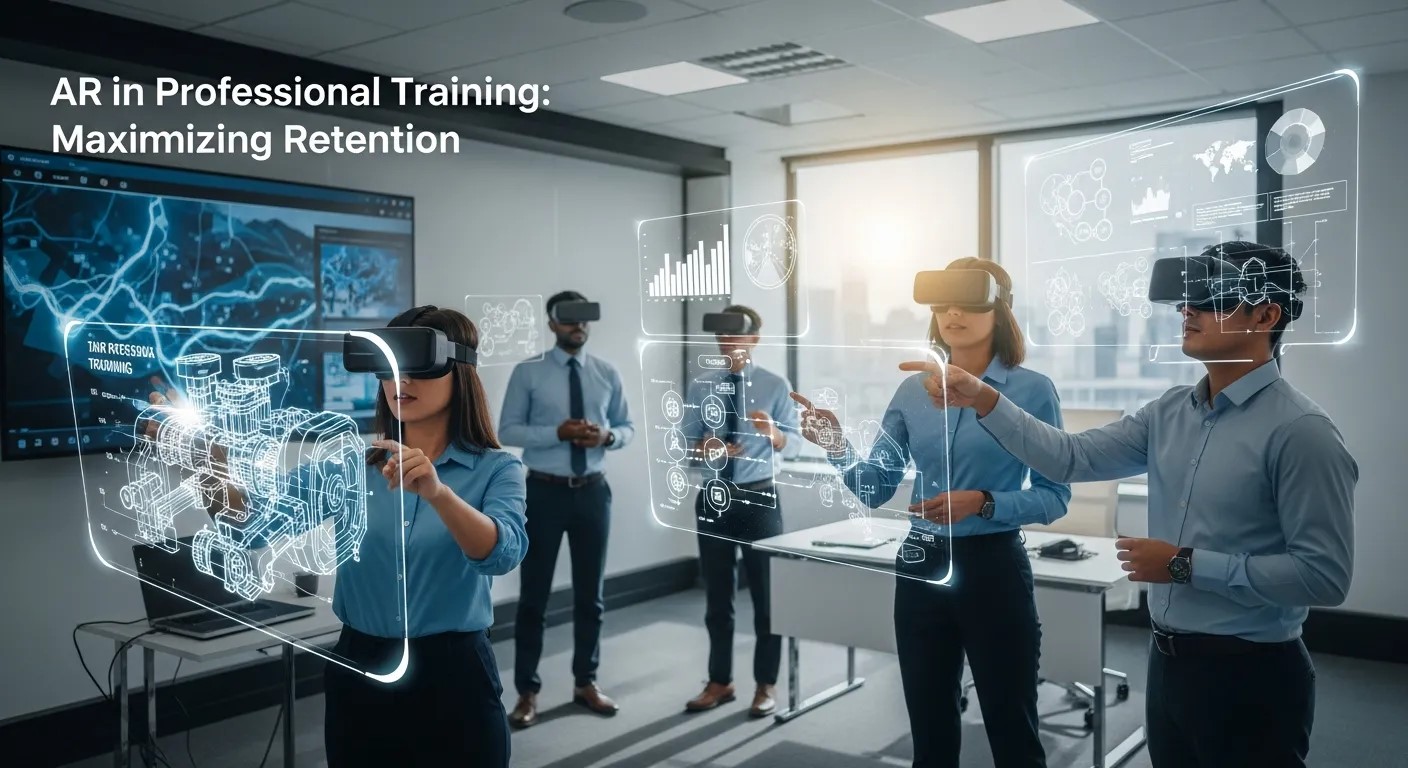
One of the most impactful applications of AR Cognitive Economy is in professional training. Whether in aviation, healthcare, or industrial sectors, AR simulations can deliver realistic, interactive scenarios while carefully managing cognitive load.
Key strategies include:
- Breaking complex procedures into smaller, digestible AR modules.
- Using AR Edge and Quantum Computing to process real-time simulations without lag.
- Integrating AR Intelligence to provide context-aware hints or feedback.
For example, in aviation training, AR overlays can highlight critical instrument readings and procedural steps, allowing trainees to focus on learning rather than tracking multiple information sources. A thoughtfully designed AR Cognitive Economy ensures that learners retain knowledge more effectively while avoiding overload-induced mistakes.
Measuring Cognitive Load in AR Systems
To implement AR Cognitive Economy effectively, measuring cognitive load is essential. Researchers and developers use a combination of physiological and behavioral metrics to monitor user mental effort:
| Metric | Measurement Method | AR Application Example |
|---|---|---|
| Eye-tracking | Gaze duration, saccades | AR training simulations for surgeons |
| Heart rate variability | Sensor-based monitoring | AR fitness apps adjusting exercise intensity |
| Response time & errors | Task performance analysis | AR industrial assembly guidance |
| Subjective workload | Questionnaires (NASA-TLX, etc.) | Educational AR experiences assessing learning overload |
By continuously monitoring these metrics, AR systems can adjust overlays, notifications, and content dynamically, creating a smarter AR Cognitive Economy where users maintain high performance without unnecessary stress.
AR Cognitive Economy in Smart Cities
As cities become smarter, AR plays a pivotal role in urban navigation, infrastructure maintenance, and citizen engagement. A cognitive-aware AR design can reduce mental fatigue when interacting with complex urban data.
Applications include:
- AR pedestrian navigation that highlights safe paths and points of interest.
- Real-time maintenance overlays for city workers using AR in Manufacturing principles applied to urban infrastructure.
- Predictive traffic guidance using Harnessing Predictive Analytics, reducing decision-making stress for commuters.
In all these scenarios, the goal is to maintain a balanced AR Cognitive Economy, where city residents and workers interact with augmented systems efficiently, intuitively, and safely.
Future Trends in AR Cognitive Economy
The evolution of AR Cognitive Economy is closely tied to emerging technologies:
- Edge AI Integration – Reduces latency in AR interactions, enhancing real-time decision-making.
- Quantum-Powered AR Analytics – Offers predictive insights at unprecedented speeds, optimizing mental load management.
- Neuroadaptive Interfaces – AR systems that respond directly to neural or physiological indicators, adjusting complexity and guidance in real-time.
- Collaborative AR Environments – Multi-user AR systems that balance information for all participants to prevent cognitive overload in group settings.
These trends show that AR Cognitive Economy is not static; it evolves as technology enables smarter, faster, and more context-aware augmented experiences. The principles of cognitive optimization, ethical design, and personalized user experiences will remain central to its advancement.
Conclusion
The AR Cognitive Economy is essential for creating augmented experiences that respect human cognitive limits while maximizing engagement and efficiency. By integrating Inclusive AR, AR Intelligence, predictive analytics, and hyper-personalization, industries can deliver smarter, immersive, and ethical AR interactions that enhance learning, productivity, and entertainment.
Frequently Asked Questions (FAQ)
What is AR Cognitive Economy?
AR Cognitive Economy refers to designing augmented reality experiences that minimize mental load while maximizing user engagement, efficiency, and usability.
Why is AR Cognitive Economy important?
It ensures that users can interact with AR systems effectively without cognitive overload, improving learning, productivity, and overall experience across industries.
How does Inclusive AR relate to AR Cognitive Economy?
Inclusive AR designs cater to diverse user needs, supporting cognitive accessibility and reducing mental strain, which is a key aspect of AR Cognitive Economy.
What technologies support AR Cognitive Economy?
Technologies like AR Intelligence, AR Edge and Quantum Computing, predictive analytics, and hyper-personalization help optimize cognitive load in augmented experiences.
Can AR Cognitive Economy be applied in multiple industries?
Yes. It’s applied in healthcare, manufacturing, education, retail, entertainment, and smart cities to create efficient, engaging, and ethically responsible AR experiences.