
Understanding the Role of AI in Augmented Reality
The evolution of technology has dramatically shifted the way we interact with information. One of the most groundbreaking advancements in recent years is the integration of artificial intelligence with augmented reality. This combination is giving rise to AI for Contextual AR, a paradigm where digital content adapts intelligently based on user behavior, environment, and context. Unlike traditional AR applications that rely on static overlays, AI for Contextual AR ensures that the information delivered is dynamic, personalized, and actionable in real time.
In educational environments, for example, students can use AR headsets to interact with historical simulations. Here, AI algorithms determine which aspects of the content are most relevant to the student’s learning progress, making the experience both immersive and informative. Similarly, in industrial training, AI for Contextual AR enables employees to receive step-by-step guidance on complex machinery, reducing errors and improving efficiency. The intelligence embedded in these systems allows for the delivery of highly targeted information without overwhelming the user, balancing cognitive load and engagement.
The Science Behind Contextual Intelligence
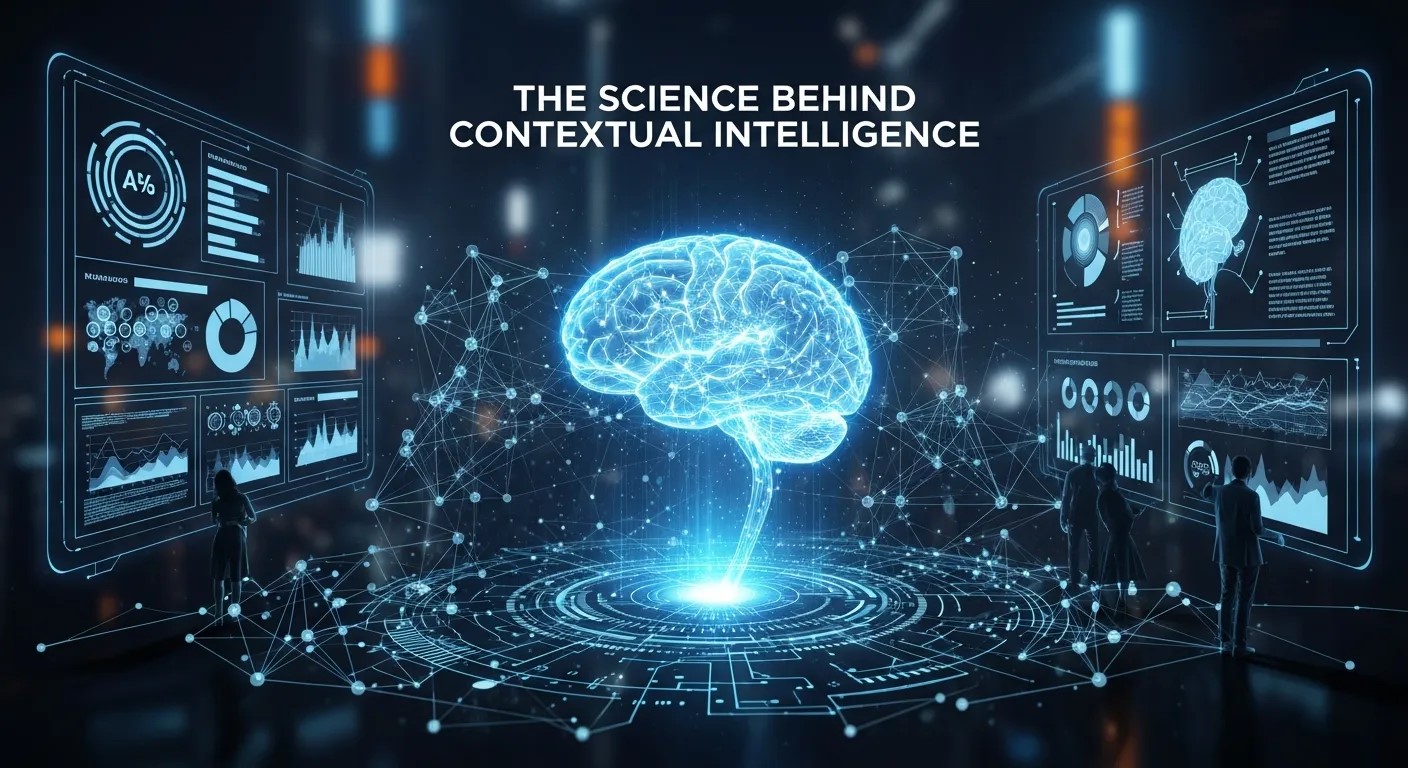
Contextual intelligence in AR relies on understanding the user’s environment, intentions, and previous interactions. This is where Emotion Recognition AI plays a crucial role. By analyzing subtle facial expressions, voice tonality, and body language, AI systems can gauge user engagement and adapt content accordingly. For instance, if a user seems confused during a training session, the system can present additional visual cues or simplify instructions. When combined with AI for Contextual AR, this capability ensures that users receive the most relevant information at the right time.
Another critical component of this ecosystem is Federated Learning in AR, which allows AI models to learn from multiple users without centralizing sensitive data. This decentralized approach ensures privacy while enabling continuous improvement in contextual understanding. By training models locally on devices and aggregating knowledge safely, AR applications can evolve to provide smarter, context-aware interactions. Companies deploying AR for customer support or technical maintenance benefit from this approach, as the AI adapts to diverse scenarios while respecting privacy constraints.
Transforming Business Operations
Businesses across industries are beginning to recognize the potential of AI for Contextual AR in improving operational efficiency and customer engagement. Retailers, for instance, can use AR to overlay product information and recommendations in physical stores. AI algorithms analyze customer preferences and shopping patterns, presenting highly relevant suggestions directly in the user’s visual field. This not only enhances the shopping experience but also increases conversion rates and customer satisfaction.
In parallel, organizations are exploring AI Conversational Commerce as a way to merge AR experiences with intelligent chat interfaces. By integrating conversational AI with contextual AR, users can ask questions, receive instant product information, and even complete purchases seamlessly within the augmented environment. This creates a fluid, frictionless user experience that leverages the natural strengths of both AR and AI, while subtly reinforcing brand loyalty.
The Emergence of AR Autonomous Agents
Another key development in this space is the rise of AR Autonomous Agents. These are intelligent virtual assistants capable of navigating the augmented environment, providing guidance, and making real-time decisions on behalf of the user. Imagine an AR agent in a manufacturing plant that proactively identifies potential issues with machinery and alerts the technician with step-by-step repair instructions. When paired with AI for Contextual AR, these agents can understand the context, anticipate needs, and deliver precise information exactly when it is required.
Autonomous agents are not limited to industrial settings. In healthcare, AR agents can guide surgeons during complex procedures, highlighting critical information and reducing the likelihood of errors. By offloading cognitive tasks to these agents, professionals can focus more on decision-making and execution, enhancing both safety and productivity.
Addressing AR Inequality
Despite the promise of AI-enhanced AR experiences, a significant challenge persists AR Inequality. Access to high-quality AR hardware, software, and connectivity remains uneven across regions and demographics. This creates a two-tiered landscape where only a subset of users benefits from advanced features like AI for Contextual AR. Addressing this gap is crucial to ensuring equitable access to immersive technologies, particularly in education, healthcare, and workforce training.
Innovators are exploring solutions such as lightweight AR devices and cloud-based processing to bridge this divide. By offloading computation to cloud servers and streaming contextually enriched experiences to more affordable devices, companies can expand access while maintaining the intelligence and responsiveness of AI for Contextual AR. Initiatives aimed at reducing hardware dependency and improving affordability are critical to closing the AR experience gap and preventing technological exclusion.
Enhancing Market Research with AI
Market research has traditionally relied on surveys, focus groups, and manual data analysis. However, the integration of AI vs Human in Market Research is reshaping the landscape. By leveraging AI for Contextual AR, researchers can observe how users interact with products in augmented environments, capturing behavior in real time rather than relying solely on self-reported data. This allows for richer insights into preferences, pain points, and decision-making patterns.
For example, a consumer electronics brand could use AR to let users virtually interact with a new device in their home. The AI system monitors which features attract attention, how users navigate interfaces, and where they encounter friction. By combining contextual observation with analytics, companies gain actionable insights far beyond what traditional research methods offer. This approach represents a fusion of human intuition and AI precision, optimizing both data collection and interpretation.
Applications in Training and Education
One of the most transformative applications of AI for Contextual AR is in training and education. Traditional learning methods often struggle to engage students fully or adapt to individual learning styles. Contextual AR addresses these challenges by creating immersive simulations that respond to user actions and preferences. In a medical classroom, for example, students can practice surgical techniques on virtual patients. The AI monitors performance, provides guidance, and adapts scenarios to ensure optimal learning outcomes.
Emotion Recognition AI can further enhance these experiences by detecting when learners are frustrated or disengaged. In response, the system can introduce motivational prompts, alter task difficulty, or provide personalized feedback. This dynamic approach not only improves retention but also makes learning more enjoyable and effective. By embedding intelligence in the AR layer, educators can create personalized, context-aware learning journeys that go far beyond static textbooks or videos.
Industry-Specific Applications of AI for Contextual AR
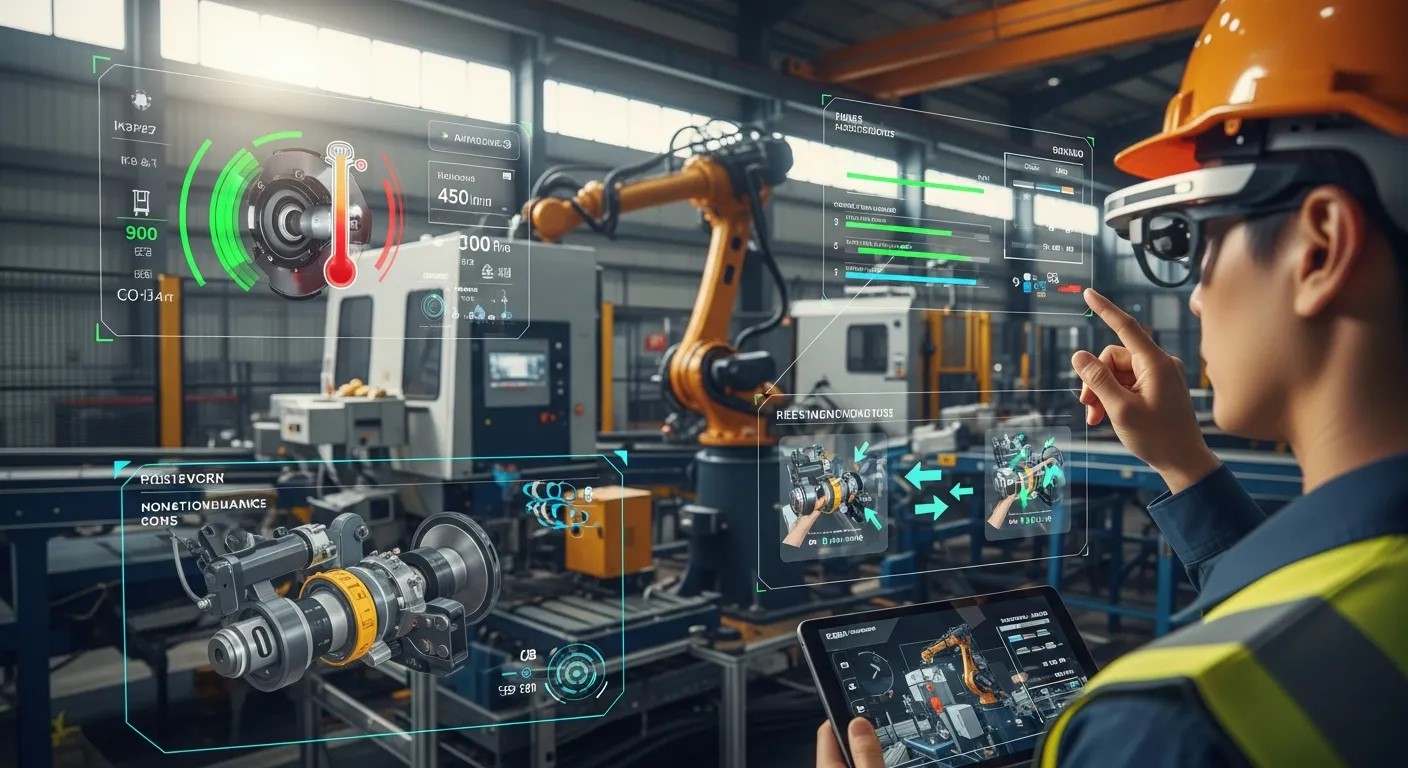
The deployment of AI for Contextual AR is rapidly expanding across industries, transforming how organizations operate and how users engage with information. One of the most visible impacts is in the healthcare sector. Surgeons now leverage AR glasses equipped with AI to overlay patient data, real-time imaging, and procedural guidance directly onto their field of view. AI for Contextual AR ensures that only the most relevant information appears at the right moment, reducing cognitive load and enabling faster, more precise decision-making. This shift not only improves patient outcomes but also optimizes the workflow of medical teams.
Similarly, the manufacturing sector has embraced AI for Contextual AR to enhance productivity and reduce downtime. Technicians wearing AR headsets receive real-time guidance when assembling or repairing machinery. The AI dynamically adjusts instructions based on the technician’s progress, learning curves, and environmental factors. By combining Federated Learning in AR, these systems continuously improve without compromising sensitive data, enabling smarter, context-aware solutions across multiple facilities. Companies adopting this approach report significant reductions in errors and operational costs, demonstrating the tangible value of AI-driven augmented reality.
Enhancing Retail Experiences with AI
Retail and e-commerce are also being transformed by AI for Contextual AR. Shoppers can point their devices at products to receive instant, context-aware recommendations, personalized promotions, or visualizations of items in their homes. This immersive approach not only increases engagement but also directly influences purchase decisions. Integrating AI Conversational Commerce with these AR experiences allows customers to ask questions, explore options, and complete transactions seamlessly, bridging the gap between digital and physical retail.
For brands, AI for Contextual AR provides a rich source of behavioral insights. By analyzing how customers interact with virtual products, retailers can refine merchandising strategies, optimize store layouts, and personalize marketing campaigns. Unlike traditional methods, which often rely on post-purchase feedback, AI-enabled AR captures in-the-moment behavior, giving businesses a deeper understanding of customer preferences and potential barriers to conversion.
Smart Cities and Urban Planning
Urban planning is another field benefiting from AI for Contextual AR. City planners can overlay data on physical spaces, such as traffic patterns, pedestrian flows, or environmental metrics, to make informed decisions. AI for Contextual AR ensures that planners view only the most relevant layers of information depending on the scenario. For instance, during a disaster response simulation, AI can prioritize emergency routes, building vulnerabilities, and population density in real time. This approach allows urban planners to anticipate challenges and optimize infrastructure for safety and efficiency.
Moreover, AR Autonomous Agents are starting to assist in smart city environments. These agents can guide maintenance crews, monitor environmental sensors, or provide interactive public services. By combining autonomous decision-making with context-aware information delivery, cities can operate more efficiently while improving the citizen experience. Integrating AI-driven AR into urban infrastructure promises a future where cities are not only smart but adaptive, predictive, and responsive.
Entertainment and Media Innovation
The entertainment industry has leveraged AI for Contextual AR to create immersive experiences that were previously unimaginable. Theme parks, live concerts, and interactive exhibitions now use AI to tailor content to individual visitors. For example, a visitor walking through an AR-enhanced museum might receive historical context, personalized narratives, or interactive challenges based on their engagement patterns. Emotion Recognition AI can detect excitement or curiosity, prompting the system to adjust experiences dynamically, making each visit unique.
In gaming, AI for Contextual AR transforms how players interact with virtual worlds overlaid onto physical spaces. Enemies, rewards, and environmental elements adapt in real time to player behavior, location, and previous actions. This creates an engaging and unpredictable gameplay experience that keeps users immersed while subtly training problem-solving and decision-making skills. By analyzing interactions, developers can refine game mechanics to better match user preferences, further enhancing retention and enjoyment.
Transportation and Logistics
Transportation and logistics also benefit from AI for Contextual AR. Delivery personnel equipped with AR devices receive real-time routing, package information, and hazard alerts. The AI prioritizes tasks based on context, such as traffic conditions, package urgency, or environmental hazards. Fleet managers can monitor operations, predict delays, and optimize workflows using aggregated AR data. This integration reduces errors, improves efficiency, and enhances safety across the supply chain.
In public transportation, AI for Contextual AR enables drivers and operators to receive real-time contextual alerts. For example, visual cues about passenger density, road conditions, or potential obstacles can appear directly in the operator’s view. This minimizes response times, reduces accidents, and improves service reliability. By embedding intelligence into augmented interfaces, transportation systems become smarter, more adaptive, and safer for both operators and passengers.
Overcoming Challenges in Adoption
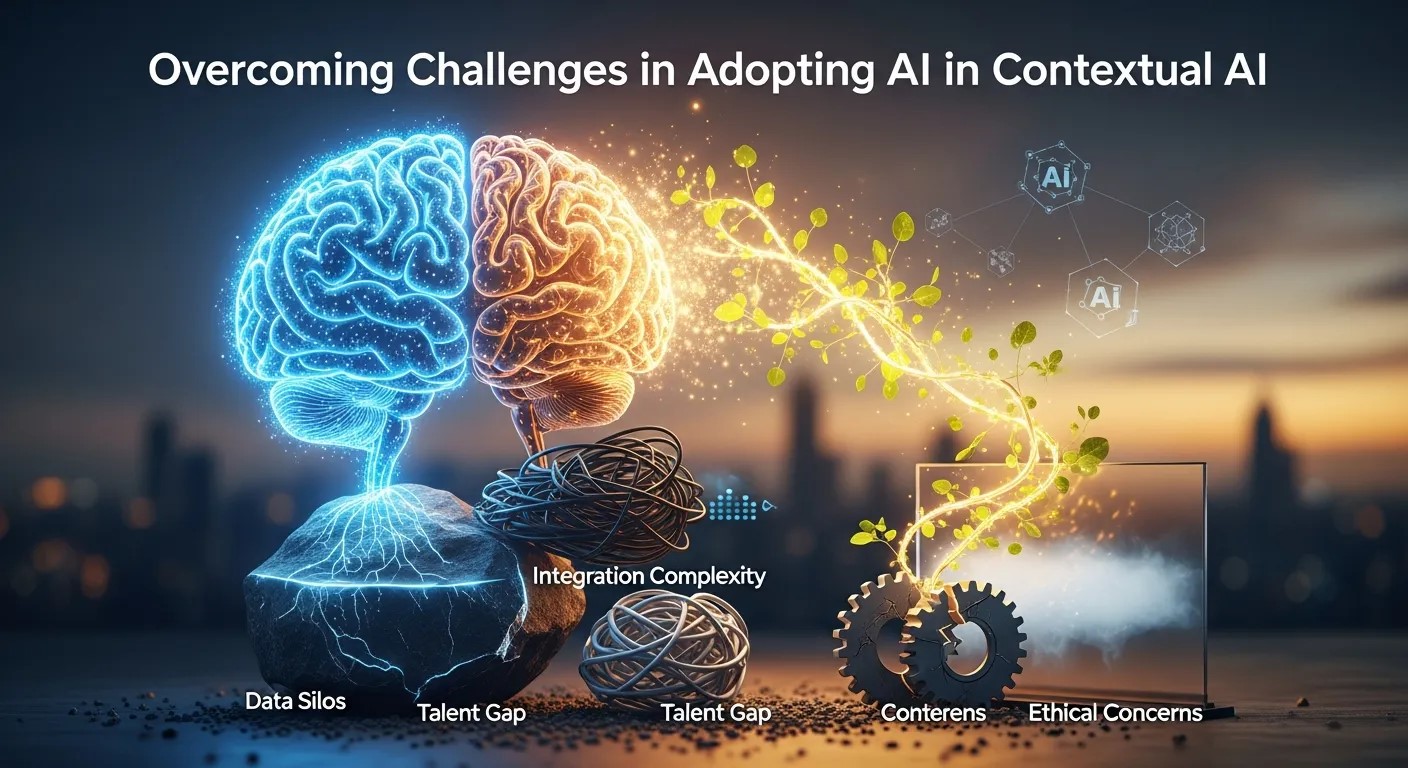
Despite its transformative potential, widespread adoption of AI for Contextual AR faces several challenges. Hardware limitations remain a critical concern, as high-quality AR devices can be expensive and require significant processing power. Software development is complex, involving the integration of multiple AI models, real-time data streams, and user experience considerations. Additionally, AR Inequality continues to pose a barrier, with uneven access to devices, connectivity, and training resources across different regions and demographics.
Privacy and security are also pressing issues. As AR systems capture vast amounts of user data, including behavioral and biometric information, robust safeguards are essential. Federated Learning in AR provides a solution by allowing models to learn from distributed devices without centralizing sensitive information. This ensures that AI can improve over time while protecting user privacy—a critical factor in encouraging adoption and building trust.
Transforming Corporate Training
Corporate training is another area where AI for Contextual AR excels. Organizations can create immersive learning modules that adapt to employee performance and engagement. For instance, new hires in technical fields can practice tasks in a safe virtual environment where AI monitors errors, provides guidance, and adjusts difficulty in real time. By combining Emotion Recognition AI, these systems detect frustration or confusion, allowing the content to adjust dynamically. This ensures that employees receive optimal learning experiences, reducing onboarding time and improving skill acquisition.
The integration of AI vs Human in Market Research complements training by providing insights into how learners interact with content. By observing behavior in augmented simulations, companies can refine materials, identify gaps in comprehension, and personalize learning pathways. This human-AI synergy ensures that training is not only efficient but also highly relevant to individual employees.
Scientific Research and Exploration
AI for Contextual AR is also accelerating scientific discovery. Researchers in fields like astronomy, biology, and environmental science use AR to visualize complex datasets in real-world contexts. For example, astronomers can overlay celestial data onto the night sky, while biologists can interact with 3D models of ecosystems or molecular structures. AI ensures that only the most relevant data is highlighted based on user focus, research goals, and context, making exploration more intuitive and efficient.
Collaborative research benefits from AR Autonomous Agents, which can mediate experiments, monitor environmental conditions, and coordinate data collection. These agents act as intelligent assistants, providing contextual recommendations and automating repetitive tasks. This combination of human expertise and AI-driven AR enhances accuracy, reduces workload, and accelerates the pace of discovery.
Conclusion
AI for Contextual AR is reshaping the way we interact with digital information, making experiences more personalized, adaptive, and efficient. By integrating technologies like Emotion Recognition AI, Federated Learning in AR, and AR Autonomous Agents, it enhances education, business, healthcare, and research. While challenges like AR Inequality and hardware limitations exist, the potential to revolutionize industries, improve decision-making, and deliver context-aware insights is immense. As adoption grows, organizations leveraging AI for Contextual AR will gain a strategic advantage, driving smarter, more immersive, and human-centric augmented reality experiences.
Frequently Asked Questions (FAQ)
What is AI for Contextual AR?
AI for Contextual AR combines artificial intelligence with augmented reality to deliver information that adapts to the user’s environment, behavior, and context, creating more personalized and immersive experiences across industries.
How does Emotion Recognition AI enhance AR experiences?
By detecting facial expressions, voice tone, and body language, Emotion Recognition AI allows AR systems to adjust content dynamically, ensuring users receive the most relevant information and maintain engagement.
What are AR Autonomous Agents?
AR Autonomous Agents are intelligent virtual assistants that navigate augmented environments, provide guidance, and make real-time decisions, enhancing productivity and supporting context-aware information delivery.
How is Federated Learning in AR used?
Federated Learning in AR enables AI models to learn from multiple users locally without centralizing sensitive data, improving context-aware AR experiences while protecting privacy.
Can AI for Contextual AR help in business and market research?
Yes, integrating AI in AR allows businesses to observe user interactions in real time, offering insights beyond traditional surveys. This complements approaches like AI vs Human in Market Research for richer data-driven decisions.
Does AI for Contextual AR address AR Inequality?
While AI for Contextual AR improves accessibility and personalization, AR Inequality remains a challenge due to uneven access to devices, connectivity, and training resources. Efforts like cloud-based processing help bridge this gap.
How does AI Conversational Commerce integrate with AR?
By combining AR with intelligent chat interfaces, AI Conversational Commerce allows users to explore products, ask questions, and complete transactions seamlessly, creating a frictionless shopping experience.
Which industries benefit most from AI for Contextual AR?
Healthcare, education, retail, transportation, entertainment, and scientific research are among the key sectors, leveraging context-aware AI to enhance decision-making, training, customer engagement, and immersive experiences.