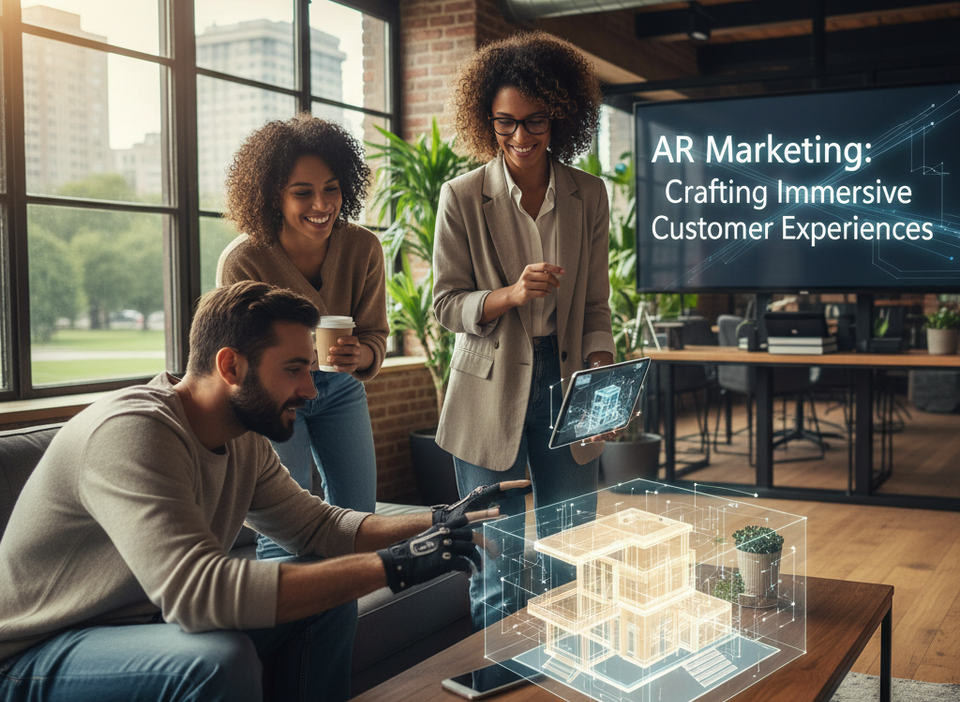
In today’s digital landscape, brands face the constant challenge of standing out amid a sea of content and competing messages. AR Marketing offers a groundbreaking way to cut through the noise by merging digital assets with the physical environment, creating memorable, interactive experiences that captivate audiences. Through augmented reality overlays—ranging from virtual try-ons to location-based activations—businesses can engage prospects in authentic, immersive interactions that build emotional connections and drive measurable results.
This year (2026), AR Marketing continues to gain traction as both consumer demands and technological capabilities evolve. Research from Stanford University’s Human–Computer Interaction Group (https://hci.stanford.edu/) underscores the impact of immersive experiences on decision-making, while industry leaders leverage AR to showcase products, educate customers, and reinforce brand narratives. In the sections that follow, we will delve into the transformative power of AR Marketing, explore five key areas of application, review essential tools and metrics, and outline a clear roadmap to integrate augmented reality into your marketing strategy. By the end of this guide, you will have a comprehensive understanding of how to harness AR Marketing to elevate engagement, optimize conversions, and foster long-term customer loyalty.
Section 1: The Growing Influence of AR Marketing Today
Augmented reality is no longer a novelty. It has evolved into a mainstream channel that brands leverage to differentiate themselves and deliver value in real time. According to a report from the Consumer Technology Association, interactive AR experiences can boost user engagement by up to 40 percent, significantly enhancing brand recall and purchase intent. Today’s consumers crave experiences over static content, and AR Marketing answers this demand by inviting users to interact, explore, and customize offerings in their own surroundings.
One of the most compelling outcomes of AR Marketing is its ability to reduce uncertainty in the purchase process. When customers can virtually try on eyewear, preview furniture in their living room, or experiment with cosmetic shades, they develop greater confidence in their decisions—translating into higher conversion rates and lower return levels. This aligns with research conducted by the National Retail Federation, which highlights that immersive shopping tools can cut product returns by as much as 30 percent.
Major brands across industries are embracing AR Marketing to craft novel touchpoints. A luxury fashion house might deploy an AR filter on social media that overlays digital garments onto user selfies, sparking word-of-mouth buzz and social sharing. Meanwhile, an automotive manufacturer could embed AR markers at dealerships, enabling prospective buyers to visualize different paint finishes and interior trims in real time. These applications demonstrate the versatility of augmented reality in stimulating curiosity and driving engagement.
Beyond retail, AR Marketing finds powerful use cases in education, healthcare, and tourism. Educational institutions integrate AR visualizations into campus tours to highlight facilities and student life, while healthcare providers use interactive overlays to educate patients about anatomy and treatment options. Tourism boards employ location-based AR guides that enrich visitor experiences with historical facts and immersive storytelling at landmarks. As more sectors adopt this technology, AR Marketing cements its role as a transformative engagement tool.
Section 2: Core Strategies to Enhance Customer Engagement with AR

To maximize impact, brands should align AR Marketing initiatives with clear objectives—whether that’s boosting awareness, driving conversions, or cultivating brand advocacy. Below are five core strategies proven to elevate customer engagement:
1. Virtual Try-Ons
Virtual try-on experiences empower consumers to test products without physical interaction. Cosmetics brands can integrate AR makeup filters, allowing users to sample lip colors or foundation shades via their smartphone camera. Eyewear companies deploy similar tools to let customers preview frames from the comfort of home. By removing barriers to trial, virtual try-ons increase shopper confidence and reduce hesitancy, ultimately leading to higher sales.
2. Interactive Packaging
Adding AR triggers—such as QR codes or image markers—on product packaging transforms static boxes into engaging portals. Scanning the code might unlock a tutorial video, an animated story, or a gamified experience that rewards loyalty points. Not only does this extend post-purchase engagement, but it also reinforces brand messaging long after checkout.
3. Location-Based Experiences
Leveraging geolocation, brands can deliver contextual AR content at specific venues. Retailers might set up digital treasure hunts in-store to guide shoppers through product zones, while event organizers deploy AR wayfinding tools at conferences and festivals. Location-based AR fosters exploration and adds a layer of excitement to in-person visits, driving foot traffic and dwell time.
4. User-Generated AR Campaigns
Encouraging customers to create and share their own AR content boosts organic reach. Companies can design branded filters or lenses for platforms like Spark AR or Lens Studio and invite followers to use them on social media. User-generated AR campaigns tap into community creativity, generate social proof, and cultivate a sense of ownership among participants.
5. Story-Driven Immersion
Rather than deploying AR as a standalone gimmick, integrate it into a broader narrative. A museum exhibit might use AR to bring historical artifacts to life with layered audio, video, and 3D animations, guiding visitors through an engaging storyline. By weaving storytelling into AR experiences, brands can forge deeper emotional bonds and encourage repeat interactions.
Section 3: Platforms and Tools Powering AR Campaigns
Building AR Marketing campaigns no longer requires extensive coding expertise. A new wave of platforms offers intuitive interfaces, comprehensive templates, and analytics dashboards that democratize immersive content creation. Below are some leading tools to consider:
Spark AR Studio
Developed by Meta, Spark AR Studio allows creators to design filters and effects for Instagram and Facebook. Its user-friendly drag-and-drop workflow and extensive library of assets streamline the process, while built-in analytics reveal engagement metrics such as impressions, captures, and shares.
Lens Studio
Snap’s Lens Studio empowers brands to craft AR lenses for Snapchat. With real-time previews and a vast community of templates, marketers can prototype and publish interactive AR experiences quickly. Integration with Snapchat’s ad platform also facilitates targeted deployment and measurement.
8th Wall
8th Wall specializes in web-based AR, enabling users to access experiences directly through mobile browsers—no app installation required. This platform supports image recognition, world tracking, and multiplayer AR scenarios. A robust analytics suite tracks play rates, session durations, and custom events to inform optimization.
Unity and Unreal Engine
For advanced projects, game engines like Unity and Unreal Engine offer unparalleled flexibility. These environments support high-fidelity graphics and complex interactions, making them ideal for large-scale installations, training simulations, and immersive brand experiences. Numerous plugins and AR SDKs simplify the integration of tracking, rendering, and user interface components.
Institutional Resources
Academic institutions and research centers continue to advance AR capabilities. For example, NASA’s AR initiatives (https://www.nasa.gov/) explore novel applications for astronaut training and remote collaboration. Tapping into open-source libraries and scholarly publications can provide valuable insights and accelerate innovation in your AR Marketing efforts.
Section 4: Evaluating Effectiveness and ROI in AR Marketing

As with any marketing channel, rigorous measurement is essential to justify investments and refine strategies. AR Marketing introduces unique engagement metrics that complement traditional KPIs. Below are key performance indicators to track:
Play Rate
Play rate measures the percentage of users who initiate an AR experience relative to those who view the trigger point—such as scanning a code or clicking an ad. A high play rate indicates compelling entry points and clear calls-to-action.
Session Duration
Average session duration reveals how long users engage with an AR experience. Longer sessions often signify immersive content that holds attention, while brief interactions may signal usability or load-time issues.
Click-Through Rate (CTR)
CTR tracks how many users proceed to a desired action—like visiting a product page or signing up for a newsletter—after completing the AR experience. This metric links immersion to tangible outcomes and informs funnel optimization.
Conversion Lift
Compare conversion rates between users exposed to AR Marketing and a control group to assess the incremental impact. Brands have reported up to a 30 percent lift in online conversions when incorporating AR product previews.
Return Reduction
By enabling virtual trials, AR Marketing can reduce product returns. Monitor return rates pre- and post-AR implementation to quantify confidence gains and cost savings in reverse logistics.
Integration with CRM and Analytics
Ensure AR engagement data flows into your broader marketing technology stack. Connecting AR analytics with your CRM and marketing automation platform provides a unified view of customer behavior, enabling personalized follow-up and lifecycle marketing.
Section 5: Integrating AR Marketing into Your Brand’s Roadmap
Launching a successful AR Marketing program requires careful planning, cross-functional collaboration, and iterative refinement. Follow this five-step roadmap to embed augmented reality into your marketing blueprint:
1. Define Clear Objectives
Start by outlining your primary goals: brand awareness, lead generation, sales acceleration, or loyalty enhancement. Establish specific targets, such as a percentage uplift in engagement or a reduction in return rates.
2. Select the Right AR Format
Choose formats that align with both user preferences and your objectives. Virtual try-ons excel for fashion and beauty, while interactive packaging suits product tutorials and loyalty programs. Location-based AR works well for events and retail spaces.
3. Build and Prototype
Partner with internal developers or external agencies to create prototypes. Conduct usability tests to gather feedback on performance, clarity of instructions, and overall enjoyment. Rapid iterations ensure the final experience meets user expectations.
4. Promote Across Channels
Drive adoption by integrating AR Marketing into your omnichannel strategy. Announce new AR features via social media ads, email campaigns, in-store signage, and website banners. Provide clear instructions and incentives—such as exclusive discounts—to encourage trial.
5. Analyze and Optimize
Continuously monitor engagement metrics and business outcomes. Identify drop-off points within the experience and deploy A/B tests to refine content, calls-to-action, and technical performance. Ongoing optimization fosters sustained ROI and elevates user satisfaction.
Frequently Asked Questions
What is AR Marketing?
AR Marketing is the use of augmented reality technology to overlay digital content onto the physical world, creating interactive experiences that engage customers and enhance brand storytelling.
How can AR reduce product returns?
By offering virtual try-ons and previews, AR Marketing helps customers make confident purchase decisions—leading to fewer surprises upon delivery and lower return rates.
Which platforms are best for launching AR campaigns?
Popular platforms include Spark AR Studio for Facebook and Instagram, Lens Studio for Snapchat, 8th Wall for web-based AR, and game engines like Unity and Unreal Engine for advanced projects.
How do I measure the success of AR initiatives?
Key metrics include play rate, session duration, click-through rate (CTR), conversion lift, and return reduction. Integrating AR data into your CRM and analytics stack provides a holistic view of performance.
Conclusion
AR Marketing represents a paradigm shift in how brands interact with consumers, offering immersive, personalized touchpoints that drive engagement, conversions, and loyalty. By understanding current trends, implementing proven strategies, leveraging powerful platforms, and rigorously measuring outcomes, businesses can harness augmented reality to create differentiated experiences in today’s competitive environment. As this year (2026) unfolds, AR Marketing will continue to evolve—rewarding innovators who integrate immersive storytelling into their brand narratives and deliver value at every stage of the customer journey.
Embark on your AR Marketing journey today, experiment with virtual try-ons, interactive packaging, and location-based activations, and watch as your brand captures attention, fosters deeper connections, and achieves sustainable growth.