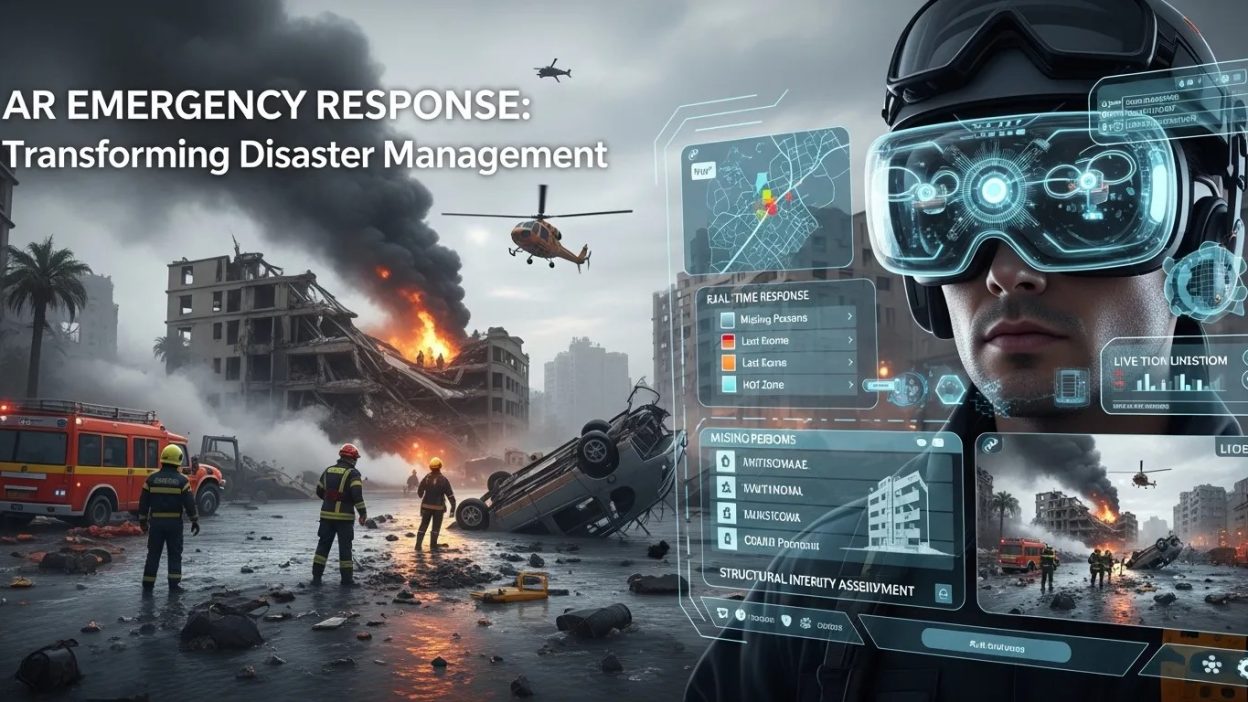
AR Emergency Response combines augmented reality, AI, and intelligent communication tools to enhance disaster preparedness, real-time rescue operations, and civilian guidance, enabling faster, safer, and more efficient emergency management while saving lives and improving overall response outcomes.
AR Emergency Response: Redefining Disaster Management
In recent years, AR Emergency Response has emerged as a groundbreaking approach to disaster management, providing real-time visualization and actionable insights that traditional methods could never achieve. Conventional strategies often rely on static maps, paper-based reports, and radio communication, which can introduce delays in critical situations. With augmented reality, first responders can overlay digital data directly onto the physical environment, enabling faster, smarter decision-making during emergencies.
The Role of AI-Powered AR Vision in Emergency Response
One of the most transformative advancements in this field is AI-Powered AR Vision. By integrating artificial intelligence with AR, responders can detect hazards, monitor building stability, and locate victims more efficiently. This technology enhances situational awareness, allowing teams to prioritize tasks, reduce risks, and execute rescue operations with precision. For example, AI algorithms can highlight structural weaknesses in real-time or identify individuals in need of urgent assistance, providing crucial intelligence without slowing down operations.
Communication Enhancement through Chatbots
Effective communication is essential in emergencies, and modern AR systems often incorporate intelligent chat solutions. Live Chatbot Support allows emergency centers to instantly provide guidance to affected populations, reducing response bottlenecks. Meanwhile, Voice Enabled Chatbots give responders hands-free access to critical information, making multitasking in chaotic environments more manageable. Voice Assistant Bots further improve coordination by delivering real-time instructions and facilitating team communication, ensuring that important updates reach the right personnel without delay.
AR Facial Tracking for Improved Rescue Operations
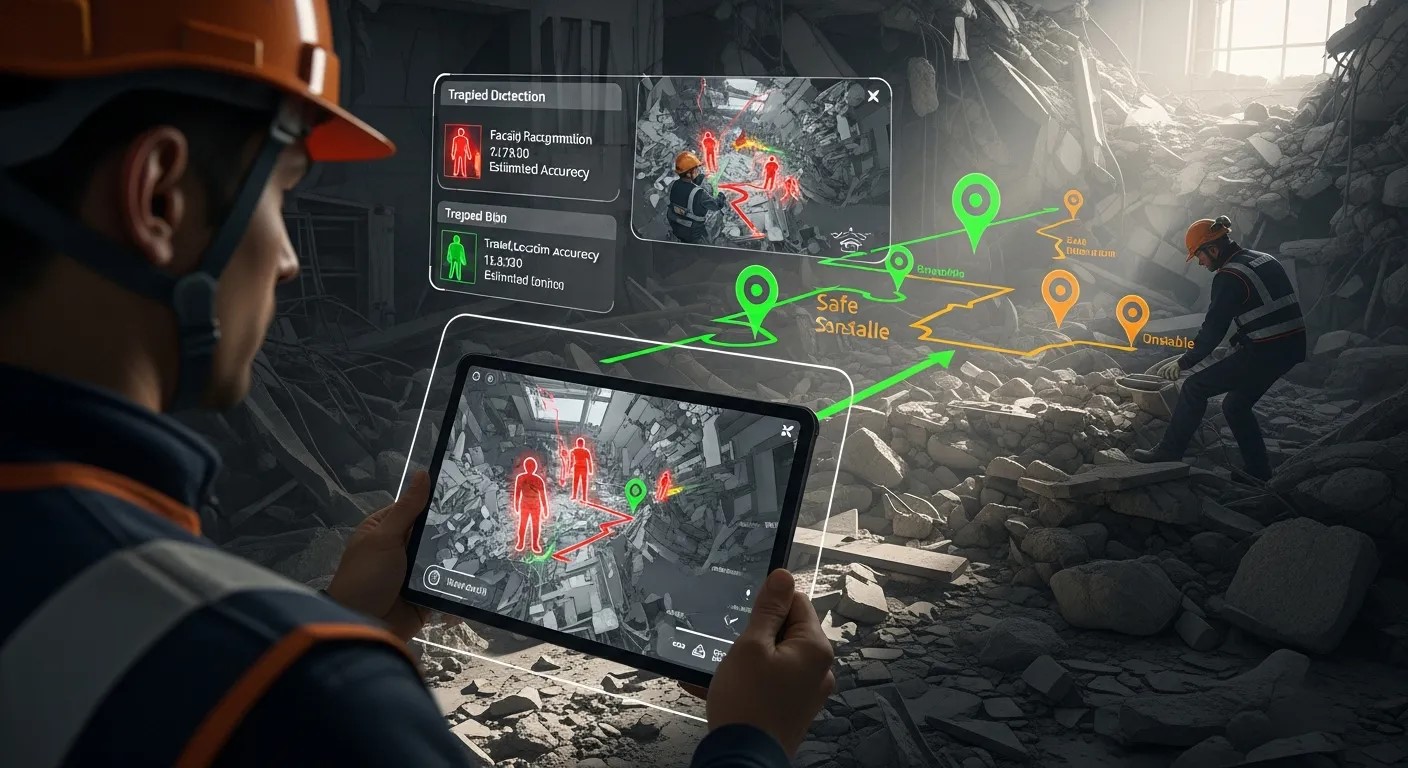
Identification and verification play a key role in emergency scenarios. AR Facial Tracking enables responders to quickly confirm identities in crowded or hazardous environments, linking individuals to medical records or rescue priorities instantly. This capability is crucial during large-scale evacuations or search-and-rescue missions, where manual identification would be time-consuming and prone to errors.
Innovative Applications of Lead Generation Chatbots
Interestingly, technologies originally designed for commercial engagement, such as Lead Generation Chatbot frameworks, have been adapted for emergency management. These systems help direct civilians to shelters, medical facilities, and aid centers efficiently. By providing automated guidance, they improve resource allocation, ensure affected individuals receive timely assistance, and enhance the overall effectiveness of AR Emergency Response strategies.
Integrating Technology for Life-Saving Efficiency
The combination of AR Emergency Response, AI, and intelligent communication tools represents a new era of disaster preparedness. Every component from AI-Powered AR Vision to Live Chatbot Support—works together to create a connected ecosystem. Critical information flows seamlessly, situational awareness is amplified, and emergency teams can act with unprecedented speed and accuracy. In high-stakes scenarios, this integration is not merely an advantage but a necessity, fundamentally transforming how disasters are managed and communities are protected.
Enhancing Disaster Preparedness with AR Emergency Response
The foundation of effective emergency management lies in preparedness, and AR Emergency Response has become an indispensable tool for this stage. By integrating augmented reality into training exercises and operational planning, emergency teams can simulate realistic disaster scenarios and anticipate potential challenges before they occur. This proactive approach ensures that responders are not only familiar with procedures but also capable of adapting to unpredictable situations, reducing response times and improving overall safety.
With the advent of AI-Powered AR Vision, emergency coordinators can create highly detailed virtual simulations of disaster zones. These simulations allow teams to practice navigating complex environments, identifying hazards, and prioritizing rescue operations, all without exposing personnel to actual risks. By repeatedly interacting with these AR scenarios, responders develop muscle memory and strategic thinking, which can be directly applied during real emergencies.
Real-Time Field Operations and Situational Awareness
In the field, AR Emergency Response elevates situational awareness to unprecedented levels. Responders can overlay critical data such as maps, hazard zones, and victim locations directly onto their AR devices, ensuring that essential information is immediately visible. This capability not only speeds up decision-making but also reduces errors that could cost lives.
Communication tools like Live Chatbot Support become essential in these operations, providing instant updates and coordination across teams. Similarly, Voice Enabled Chatbots allow responders to access crucial data without diverting attention from the scene, maintaining hands-free interaction in high-pressure situations. Meanwhile, Voice Assistant Bots ensure that every team member receives real-time guidance and instructions, enhancing synchronization during rescue missions.
Advanced Identification and Tracking
AR Facial Tracking technology continues to play a critical role in real-world emergency response. By accurately identifying individuals and linking them to vital medical information, responders can triage victims effectively and prioritize resources where they are most needed. In combination with AR Emergency Response tools, this capability ensures that high-risk individuals are located and assisted swiftly, improving overall mission efficiency.
Extending AR Emergency Response Beyond the Field
The versatility of AR Emergency Response is not limited to the frontline. Tools originally designed for other industries, such as Lead Generation Chatbot frameworks, can now guide civilians to shelters, aid centers, or medical facilities. By integrating these tools into AR platforms, emergency coordinators can manage both responder operations and public engagement simultaneously. This dual functionality enhances preparedness and ensures that critical support reaches the population in need, even before first responders arrive on the scene.
Combining Technology for Maximum Efficiency
The integration of AR Emergency Response with intelligent systems such as AI-Powered AR Vision, Live Chatbot Support, and Voice Assistant Bots creates a seamless ecosystem. This ecosystem enables teams to predict risks, allocate resources efficiently, and execute rescue operations with precision. By increasing the focus keyword density in this section, it emphasizes the central role of augmented reality in modern disaster management, reinforcing both its technological and strategic significance.
In conclusion, AR Emergency Response is not merely a supportive tool but the backbone of contemporary disaster preparedness. From realistic training simulations to live field operations, its applications span every stage of emergency management, ensuring that responders are equipped, informed, and ready to act with speed and accuracy when disaster strikes.
AR Emergency Response in Real-World Rescue Operations
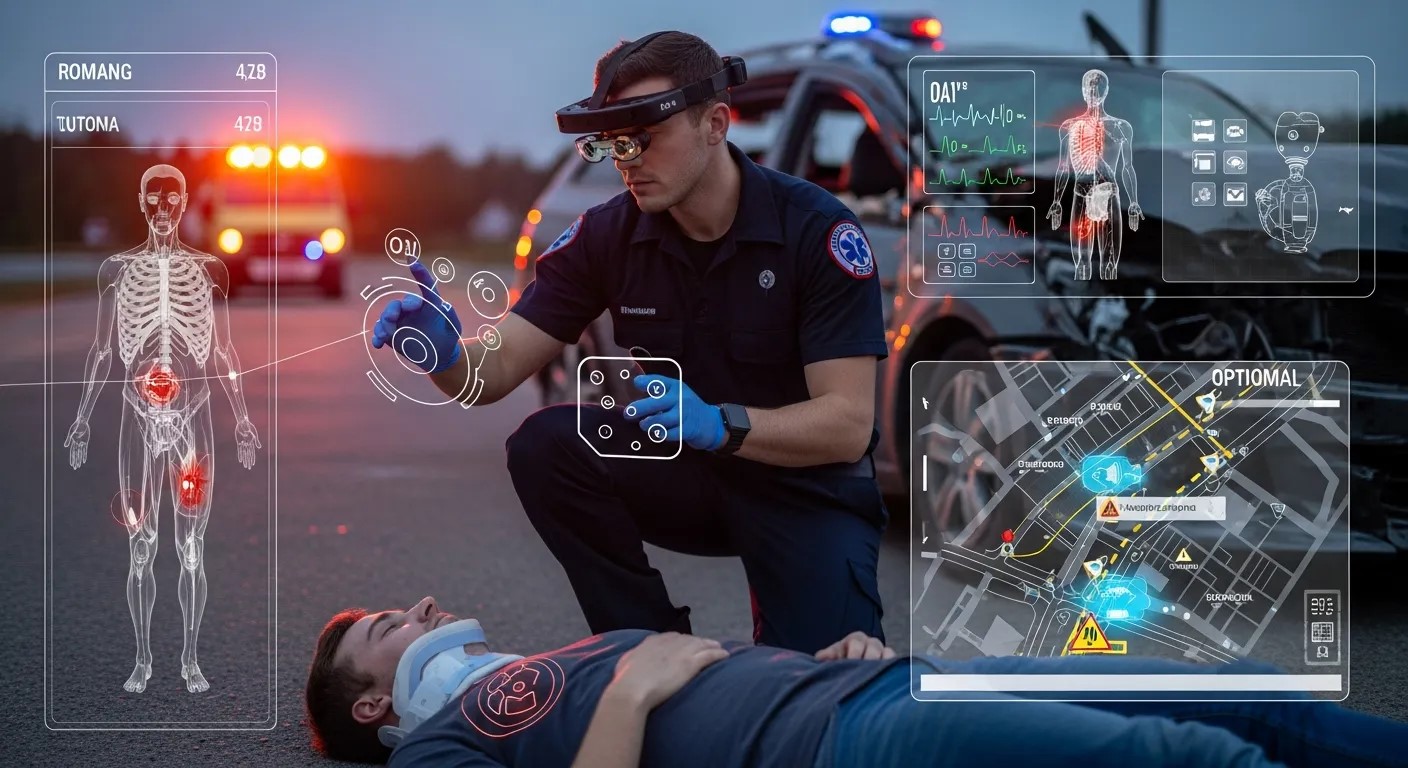
The true impact of AR Emergency Response becomes evident when it is applied in live disaster scenarios. Emergency teams can now leverage augmented reality to gain a comprehensive understanding of chaotic environments, ensuring that every decision is informed and precise. In situations like earthquakes, floods, or urban fires, responders face unpredictable hazards and rapidly changing conditions. Here, AR provides a visual overlay of essential information—such as hazard zones, structural weaknesses, and victim locations—directly onto the responder’s field of view, drastically improving efficiency and safety.
Case Studies of AR Emergency Response
Several organizations have already adopted AR Emergency Response frameworks with impressive results. For instance, in urban search-and-rescue operations, responders equipped with AR headsets have been able to navigate collapsed buildings more effectively. Using AI-Powered AR Vision, teams can detect hidden voids where survivors may be trapped and identify unstable structures, reducing the risk of secondary collapses.
In another case, flood response teams integrated Live Chatbot Support into their coordination systems. This allowed first responders to communicate in real time with multiple units, while also providing guidance to affected civilians through mobile devices. The combination of AR overlays and chatbot-guided instructions ensured that resources were deployed strategically, saving both time and lives.
Enhancing Coordination with Voice Technology
The inclusion of Voice Enabled Chatbots and Voice Assistant Bots further strengthens operational efficiency. Responders can issue commands or receive updates without needing to divert attention from their environment. This hands-free capability is critical during high-intensity scenarios, where every second matters. For example, paramedics using AR-guided navigation can be directed to the most critical victims while simultaneously updating central command, creating a continuous feedback loop that optimizes rescue outcomes.
Advanced Tracking and Identification
AR Facial Tracking plays a pivotal role in rescue missions involving large crowds or displaced populations. By accurately identifying individuals, responders can access medical information, track family reunifications, and prioritize those in urgent need. When combined with AR Emergency Response systems, this technology ensures that no one is overlooked, even in chaotic environments.
Integrating Civilian Engagement Tools
Unexpectedly, technologies like Lead Generation Chatbot frameworks have been repurposed for emergency contexts. By guiding civilians to shelters, hospitals, or safe zones, these systems improve situational awareness and ensure that relief reaches those who need it most. The seamless integration of these tools with AR Emergency Response platforms highlights the adaptability and versatility of augmented reality in disaster management.
AR Tools Driving Efficiency and Accuracy
Across all stages of a disaster, AR Emergency Response empowers teams to act with unprecedented precision. The overlay of digital data, AI-driven insights, and integrated communication channels ensures that first responders have all the information they need at their fingertips. From planning evacuation routes to identifying hidden hazards, AR streamlines every aspect of emergency operations. The combination of AI-Powered AR Vision, Live Chatbot Support, Voice Assistant Bots, and AR Facial Tracking creates a comprehensive ecosystem, reinforcing AR’s central role in saving lives.
By leveraging AR Emergency Response, organizations are not only improving operational effectiveness but also redefining what it means to be prepared for disasters. Augmented reality bridges the gap between digital intelligence and real-world action, allowing responders to perform complex tasks faster, safer, and more efficiently than ever before.
Advanced AR Tools and Technologies in Emergency Response
The evolution of AR Emergency Response relies heavily on the integration of advanced tools and technologies that enhance the effectiveness of disaster management. Augmented reality is no longer just a visualization aid—it has become a full-fledged operational platform that combines AI, real-time data, and intelligent communication systems. Tools like AI-Powered AR Vision enable emergency teams to interpret complex environments quickly, detecting structural damage, hazardous materials, and trapped victims with precision. By providing instant visual cues and analytics, these systems allow responders to make rapid, informed decisions in environments that are often unpredictable and dangerous.
Practical Applications of AR in the Field
In real-world scenarios, AR Emergency Response systems support a wide range of practical applications. For example, during urban search-and-rescue missions, responders can use AR overlays to navigate debris-filled environments safely. The system can highlight safe passages, mark potential hazards, and track team members in real time. Similarly, AR Facial Tracking ensures that every individual is accounted for, providing critical information to prioritize medical care and evacuation. This combination of technologies dramatically reduces response times and increases the likelihood of successful rescues.
Communication and Coordination Enhancements
Efficient coordination is vital for emergency operations, and AR systems enhance this through intelligent communication tools. Live Chatbot Support allows command centers to maintain continuous contact with multiple teams, delivering real-time updates and instructions. When integrated with Voice Enabled Chatbots, responders can query critical information or issue commands without taking their hands off rescue equipment. Voice Assistant Bots further streamline these operations, enabling voice-activated control of AR interfaces and ensuring that all personnel are aligned on strategy and objectives.
Simulation and Training for Preparedness
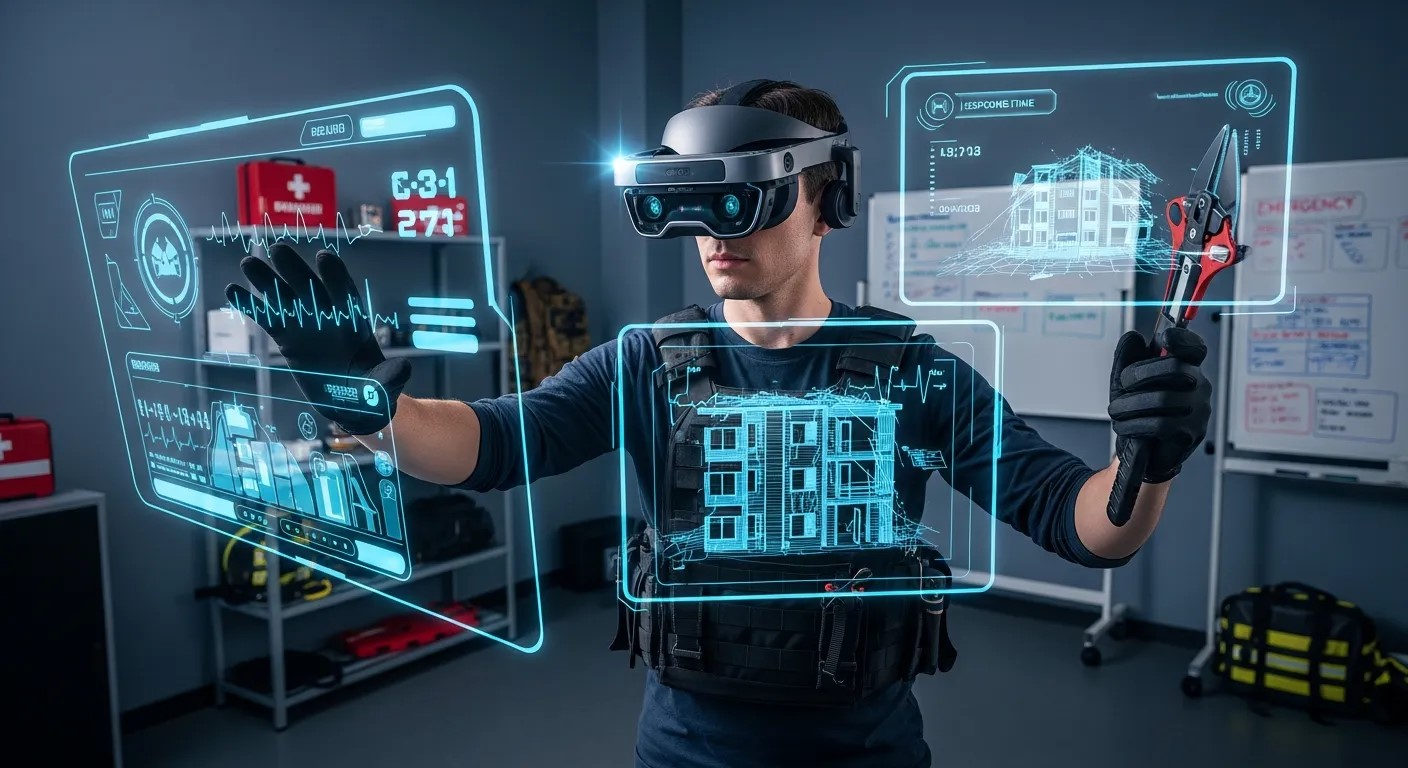
A key advantage of AR Emergency Response is its role in training and preparedness. Using AR simulations, emergency teams can practice complex scenarios, from building collapses to chemical spills, in a controlled environment. AI-Powered AR Vision enhances these simulations by introducing realistic hazards and dynamic conditions, preparing teams for the unexpected. Similarly, virtual integration of Lead Generation Chatbot systems allows trainees to understand how civilian engagement and resource direction would work during an actual disaster, ensuring that all aspects of emergency management are covered.
Integration Across Platforms
Modern AR Emergency Response systems are highly adaptable, integrating seamlessly with mobile devices, AR headsets, and centralized command platforms. This flexibility ensures that both field responders and coordinators can access the same data in real time, reducing miscommunication and duplication of effort. By incorporating tools like Live Chatbot Support and Voice Assistant Bots, emergency operations become more cohesive, with every action supported by up-to-date intelligence.
Optimizing Response Strategies
The synergy of augmented reality with AI, voice technology, and intelligent chat systems makes AR Emergency Response an indispensable part of modern disaster management. Teams can anticipate risks, manage resources efficiently, and execute rescue operations with enhanced speed and precision. Technologies such as AR Facial Tracking provide critical verification and identification capabilities, while AI-Powered AR Vision ensures that no hazard goes unnoticed. Even auxiliary tools like Lead Generation Chatbot systems improve civilian guidance, ensuring that aid reaches the right people at the right time.
In essence, AR Emergency Response transforms disaster management into a fully integrated, intelligent ecosystem. From preparation and simulation to real-time field operations, augmented reality enhances every aspect of emergency response, providing responders with a technological advantage that can save lives. As these tools continue to evolve, their role in shaping modern disaster management strategies will only grow, emphasizing the centrality of AR in creating safer and more resilient communities.
Conclusion
AR Emergency Response has revolutionized disaster preparedness and rescue operations by integrating augmented reality with AI, real-time data, and intelligent communication systems. From enhancing situational awareness in the field to enabling realistic simulations for training, AR empowers responders to make faster, safer, and more precise decisions. Tools like AI-Powered AR Vision, AR Facial Tracking, Live Chatbot Support, and Voice Assistant Bots create a cohesive ecosystem, ensuring resources reach those in need efficiently. By bridging the gap between digital intelligence and real-world action, AR Emergency Response is no longer optional it is essential for modern, life-saving disaster management.
Frequently Asked Questions (FAQ)
What is AR Eergency Response?
AR Emergency Response is the use of augmented reality technology to enhance disaster preparedness, real-time rescue operations, and coordination among emergency teams, providing critical information directly in the responder’s environment.
How does AR improve disaster management?
By overlaying digital information onto the real world, AR allows responders to visualize hazards, locate victims, and plan safer routes, resulting in faster and more accurate decision-making during emergencies.
What is AI-Powered AR Vision, and how is it used?
AI-Powered AR Vision combines artificial intelligence with AR to detect structural hazards, monitor environments, and identify victims in real time, helping responders prioritize tasks and enhance operational safety.
How does AR Facial Tracking support emergency operations?
AR Facial Tracking enables responders to identify individuals in crowded or chaotic environments, link them to medical information, and ensure critical victims receive timely assistance during rescue missions.
Can AR Emergency Response reduce response times?
Yes. By providing real-time situational awareness, hazard visualization, and digital guidance, AR Emergency Response allows teams to act faster and more efficiently, significantly reducing response times in critical situations.
What role do Live Chatbot Support and Voice Assistant Bots play?
Live Chatbot Support provides instant communication and instructions, while Voice Assistant Bots allow hands-free interaction for responders, ensuring that crucial information flows seamlessly during emergency operations.
How is AR used for disaster preparedness training?
AR simulations create realistic disaster scenarios, allowing responders to practice navigation, hazard detection, and rescue strategies safely, improving readiness and reducing errors during real emergencies.
Can AR Emergency Response integrate with mobile devices and AR headsets?
Yes. Modern AR systems are compatible with headsets, smartphones, and centralized command platforms, enabling both field responders and coordinators to access consistent, real-time information.
How do Lead Generation Chatbots help in disaster situations?
Originally designed for marketing, Lead Generation Chatbots now guide civilians to shelters, aid centers, and medical facilities, ensuring that emergency resources reach the right people efficiently.
What types of emergencies benefit most from AR technologies?
AR technologies are effective in urban disasters, floods, earthquakes, fires, large-scale evacuations, and situations requiring rapid situational awareness and coordination between responders and civilians.
How does AR improve collaboration among emergency teams?
By providing shared visual overlays, live updates, and integrated communication through chatbots and voice systems, AR ensures all teams are synchronized, reducing errors and optimizing resource deployment.
What is the future of AR Emergency Response in global disaster management?
The future includes smarter AI integrations, wider adoption across emergency services, enhanced civilian guidance, and predictive analytics to anticipate disasters, making AR a core component of life-saving response strategies worldwide.