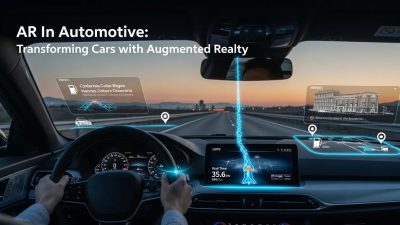
Advanced AR marketing strategies are transforming how brands engage audiences through immersive, interactive experiences that go beyond traditional content. By understanding what AR marketing is, how it elevates brand presence, supports B2B content strategies, and enables accurate ROI measurement, brands can turn AR into a scalable, performance-driven growth channel.
Advanced AR Marketing Strategies to Boost Engagement
Augmented Reality marketing is no longer an emerging trend reserved for experimental campaigns or short-term brand stunts. It has matured into a powerful, scalable marketing discipline that enables brands to build deeper connections with audiences while generating measurable performance outcomes. As digital environments become increasingly crowded and consumer attention continues to decline, immersive technologies such as AR offer a clear advantage by transforming passive viewers into active participants.
Modern audiences expect more than static visuals or linear video content. They want to interact, explore, personalize, and experience products and stories in ways that feel natural and valuable. Advanced AR marketing strategies address this expectation by blending digital content seamlessly into real-world environments, allowing users to engage with brands on their own terms. This shift fundamentally changes how engagement is created, measured, and optimized across the marketing funnel.
This in-depth guide explores advanced AR marketing strategies designed to boost engagement, strengthen brand perception, and support long-term growth. It examines how AR elevates brand communication, how it is reshaping both consumer and B2B marketing, and how performance can be measured accurately to justify investment and scale success.
The Changing Nature of Digital Engagement

Digital engagement has evolved significantly over the past decade. Early digital marketing relied on reach and repetition, assuming that frequent exposure would drive awareness and recall. Over time, however, audiences became desensitized to traditional display ads, interruptive messaging, and one-way communication. Even video content, once considered highly engaging, now competes in environments where attention spans are measured in seconds.
This shift has pushed marketers to rethink engagement itself. Engagement is no longer about views or impressions alone; it is about meaningful interaction. Brands must now earn attention by delivering experiences that feel useful, entertaining, or informative. Augmented Reality marketing fits naturally into this new engagement model because it requires active participation rather than passive consumption.
When users place a product in their own environment, explore features in three dimensions, or interact with digital elements overlaid on the physical world, they invest time and cognitive effort. This deeper level of involvement increases memory retention, emotional connection, and purchase confidence—outcomes that traditional formats struggle to achieve consistently.
How AR Elevates Brand Communication and Value Perception
Many marketers still explore What Is AR Marketing and How It Can Elevate Your Brand as they evaluate immersive technologies within their broader strategy. At its core, AR marketing uses augmented reality to enhance real-world experiences with digital overlays such as 3D models, animations, contextual information, or interactive elements. These experiences can be delivered through mobile browsers, social platforms, native apps, or AR-enabled devices.
What makes AR uniquely powerful is its ability to communicate value visually and interactively. Instead of describing features, AR allows users to experience them. Instead of asking consumers to imagine outcomes, AR shows those outcomes in real time. This approach reduces uncertainty, clarifies benefits, and builds trust—especially for products or services that are complex, customizable, or high-consideration.
From a brand perspective, AR positions companies as innovative, customer-centric, and forward-thinking. It signals a willingness to invest in better experiences rather than relying solely on traditional promotional tactics. Over time, this perception contributes to stronger brand equity and differentiation in competitive markets.
Advanced AR Experiences That Drive Meaningful Engagement

As AR adoption increases, the quality and depth of experiences become critical. Basic filters and novelty effects may generate short-term interest, but they rarely deliver sustained engagement or measurable ROI. Advanced AR marketing strategies focus on usefulness, relevance, and seamless integration into the user journey.
Immersive product visualization remains one of the most effective advanced applications of AR. By allowing users to place products in real-world environments at true scale, brands help consumers make more confident decisions. Advanced implementations go beyond simple placement by incorporating realistic lighting, material textures, customization options, and feature-level interaction. These enhancements transform AR from a visual aid into a decision-support tool.
Personalization further increases engagement by tailoring AR experiences to individual users. Context-aware AR can adapt content based on location, time, device type, or previous interactions. Behavior-driven personalization can highlight features that matter most to each user, making the experience feel more relevant and valuable. This level of relevance significantly increases dwell time and interaction depth.
Web-based AR has also become central to advanced AR strategies. By removing the requirement for app downloads, WebAR lowers barriers to entry and expands reach. Users can access immersive experiences directly from search results, social media, emails, or QR codes. This frictionless access is especially important for Performance-Driven Marketing where scale and conversion efficiency matter.
AR as a Catalyst for B2B Content Marketing Transformation
AR marketing is not limited to consumer-facing brands. In fact, many organizations now recognize How AR Marketing is Transforming B2B Content Marketing Strategies by addressing long-standing challenges in complex sales environments. B2B buyers often struggle to visualize solutions, understand technical specifications, or evaluate value without physical demonstrations.
AR helps bridge this gap by enabling interactive product walkthroughs, virtual demonstrations, and immersive storytelling tailored to professional audiences. Complex systems can be visualized layer by layer. Industrial products can be explored without physical prototypes. Sales teams can deliver consistent, high-impact presentations regardless of location.
These capabilities improve lead quality by educating prospects more effectively before sales conversations begin. Decision-makers enter discussions with greater clarity and confidence, which shortens sales cycles and increases close rates. AR also supports trade shows, virtual events, training programs, and onboarding initiatives, making it a versatile tool across the B2B marketing ecosystem.
Aligning AR Experiences With the Buyer Journey

Advanced AR marketing delivers the greatest impact when aligned with the full buyer journey rather than isolated touchpoints. At the awareness stage, AR captures attention through interactivity and novelty. Social AR experiences, interactive ads, and immersive storytelling introduce brands in ways that stand out from traditional formats.
During consideration, AR helps users evaluate options more thoroughly. Interactive demos, virtual try-ons, and product configurators answer practical questions and reduce uncertainty. At the decision stage, AR supports final validation by showing how a product fits into a user’s life or workflow.
Post-purchase, AR continues to add value through onboarding experiences, tutorials, and support content. These experiences improve satisfaction, reduce support costs, and increase long-term loyalty. When AR is integrated across stages, engagement becomes continuous rather than episodic.
Measuring Performance Beyond Traditional Metrics
As AR becomes more deeply integrated into marketing strategies, Measuring AR Marketing ROI becomes a critical requirement. Traditional digital metrics such as clicks and impressions fail to capture the richness of immersive interactions. AR generates new types of behavioral data that reflect intent, interest, and confidence more accurately.
Advanced AR measurement focuses on engagement depth, session duration, interaction frequency, and feature usage. These metrics reveal how users explore experiences rather than simply whether they clicked. Assisted conversions are particularly important, as AR often influences decisions without being the final touchpoint.
By integrating AR analytics with web analytics platforms, CRM systems, and business intelligence tools, brands can track how AR engagement contributes to downstream outcomes such as conversions, revenue, and lifetime value. This holistic view enables more accurate attribution and smarter optimization decisions.
Optimizing AR Campaigns for Long-Term Growth

Optimization is an ongoing process rather than a one-time task. Advanced AR strategies rely on continuous testing, performance Performance analysis, and refinement. Small changes to interaction flows, asset quality, or messaging can significantly impact engagement and conversion rates.
Reusability plays a key role in long-term ROI. Modular 3D assets, standardized interaction components, and consistent analytics frameworks reduce production costs while improving measurement consistency. Over time, this approach transforms AR from a series of experiments into a scalable marketing capability.
Performance optimization is equally important. Load speed, device compatibility, and intuitive UX determine whether users stay engaged or drop off. Advanced AR marketing prioritizes accessibility and usability to ensure experiences perform well across devices and environments.
Overcoming Barriers to AR Adoption
Despite its advantages, AR marketing presents challenges that must be addressed strategically. Device fragmentation, development costs, and data privacy concerns can limit effectiveness if not managed properly. However, these challenges are increasingly manageable with modern tools, best practices, and thoughtful planning.
Web-based delivery, optimized assets, and transparent data practices help ensure AR remains accessible and compliant. Clear objectives and measurement frameworks prevent AR from becoming a novelty and keep it aligned with business goals.
The Future of Engagement Through AR

As AR technology continues to evolve, its role in marketing will expand further. Advances in artificial intelligence, spatial computing, and real-time personalization will enable even more adaptive and intelligent experiences. Engagement will become more contextual, predictive, and seamless across digital and physical touchpoints.
Brands that invest now in advanced AR strategies, measurement infrastructure, and scalable frameworks will be well positioned to lead as immersive marketing becomes mainstream. AR is not replacing traditional marketing channels; it is enhancing them by adding depth, interactivity, and meaning.
Closing Perspective
Advanced AR marketing strategies represent a fundamental shift in how brands engage audiences and measure success. By focusing on immersive experiences, personalization, frictionless access, and data-driven optimization, AR becomes a powerful driver of engagement rather than a temporary trend.
For a platform like AR Marketing Tips, creating authoritative, long-form content around advanced AR strategies strengthens both search visibility and thought leadership. As brands seek deeper engagement and measurable results, AR marketing stands out as one of the most effective tools for the future of digital communication.
Conclusion
Advanced AR marketing strategies are redefining how brands connect with modern audiences by turning passive attention into active participation. By blending immersive technology with data-driven insights, AR enables brands to deliver meaningful experiences that increase engagement, influence decision-making, and strengthen brand trust.
When AR marketing is aligned with clear objectives, integrated analytics, and scalable assets, it evolves from experimentation into a sustainable growth engine. Brands that invest in advanced AR experiences today position themselves ahead of the curve, unlocking higher engagement, measurable ROI, and long-term competitive advantage in an increasingly interactive digital landscape.
Frequently Asked Questions
What makes advanced AR marketing strategies more effective than basic AR campaigns?
Advanced AR marketing strategies focus on deeper interactivity, personalization, and data integration rather than simple visual effects. These strategies connect immersive experiences with real business goals like engagement quality, lead generation, and conversion optimization.
How does AR marketing improve customer engagement compared to traditional digital ads?
AR marketing encourages active participation instead of passive viewing. Users can explore products, interact with 3D elements, and experience real-world simulations, which significantly increases attention, dwell time, and brand recall.
Can AR marketing be used effectively for B2B brands?
Yes, AR marketing is increasingly transforming B2B content marketing strategies by enabling virtual product demos, interactive case studies, training simulations, and complex solution visualization. These experiences help simplify decision-making and support longer sales cycles.
What role does personalization play in advanced AR marketing experiences?
Personalization allows AR experiences to adapt based on user behavior, location, preferences, or device data. Personalized AR content feels more relevant, increases interaction depth, and leads to higher engagement and conversion rates.
How can brands measure AR marketing ROI accurately?
Measuring AR marketing ROI requires tracking engagement depth, session duration, feature usage, assisted conversions, and revenue attribution. Integrating AR analytics with existing marketing and CRM platforms helps provide a clearer performance picture.
Is WebAR better than app-based AR for marketing campaigns?
WebAR often delivers higher reach because users can access experiences directly through a browser without downloading an app. This lower friction improves participation rates, especially for awareness and engagement-focused AR marketing campaigns.
What industries benefit the most from advanced AR marketing strategies?
Retail, eCommerce, B2B technology, real estate, automotive, education, healthcare, and manufacturing benefit significantly from AR marketing. Any industry that relies on visualization, product education, or experience-based decision-making can gain value.
How does AR marketing support long-term brand growth?
Beyond short-term engagement, AR marketing strengthens brand perception, increases memorability, and positions brands as innovative. Over time, these benefits contribute to stronger loyalty, higher lifetime value, and competitive differentiation.
What are the biggest challenges in scaling AR marketing campaigns?
Common challenges include asset production costs, analytics integration, device compatibility, and attribution complexity. However, reusable 3D assets, standardized tracking, and continuous optimization help overcome these barriers.
What should brands prioritize when starting with advanced AR marketing?
Brands should begin with clear objectives, user-focused experience design, measurable KPIs, and scalable AR platforms. Starting simple and optimizing based on real user data leads to more sustainable success.